SAFe 7.0 Roadmap 2026: Orchestrating the Autonomous Release Train (ART)
By Vatsal Shah · June 5, 2026 · Agile / Enterprise
AI SUMMARY
- Tier B forecast: Scaled Agile’s official canon is still SAFe 6.x—treat “7.0” here as 2026 trend patterns (autonomous ART, AI PI, guardrail agents), not a certification syllabus.
- Autonomous ART = RTE + product intent + agentic coordinators for dependencies, WSJF drafts, compliance pre-checks, and status synthesis—with traces.
- AI-driven PI Planning can cut prep from ~2 days to ~2 hours when backlog hygiene and guardrails exist; it fails when data is garbage.
- Guardrails 2.0 = policy-as-code + agentic auditors on portfolio commits, not slide-deck reminders at PI close.
- Pilots on Fortune 500–scale programs report 15–25% fewer PI planning fire drills and ~20% faster dependency resolution when instrumentation is real—not demo magic.
Table of Contents
- Who This Is For—and the SAFe 6.x Baseline
- SAFe 7.0 as Forecast: The AI-Native Update Enterprises Expect
- The Autonomous Release Train (ART)
- AI-Driven PI Planning: From Two Days to Two Hours
- Guardrails 2.0: Agentic Auditors at Scale
- Comparison: SAFe 6.0 (Human-Led) vs SAFe 7.0 Patterns (AI-Augmented)
- Beginner Track: One Safe Pilot on a Single ART
- Intermediate: Wiring Agents Without Breaking Trust
- Advanced: Portfolio Flow and Autonomous Governance
- Case Study: Global 500 Program—PI Without the War Room
- RTE and Leadership in the Autonomous Era
- Measuring ROI and Failure Modes
- 2027–2030 Roadmap: From Augmented ART to Self-Healing Portfolio
- What to Do Monday Morning
- Strategic FAQ
Who This Is For—and the SAFe 6.x Baseline {#who-this-is-for}
You're an enterprise architect, Release Train Engineer (RTE), or portfolio director running Big Agile. You've lived through PI Planning rooms that smell like coffee and anxiety. You've also watched teams paste backlog exports into ChatGPT and call it "AI transformation."
This piece is for you if you need a credible 2026 roadmap for what comes after SAFe 6.0—without pretending Scaled Agile already shipped a PDF called "7.0."
Ground rules:
| Assumption | Reality check |
|---|---|
| "SAFe 7.0 is live" | Verify official publications; this article is forecast + field patterns |
| "Agents replace teams" | No—they compress coordination tax at ART/portfolio layers |
| "Faster PI = skip alignment" | No—you remove prep waste, not commitment conversations |
If your ARTs still can't produce predictable flow metrics on SAFe 6.0, autonomous patterns will automate chaos. Fix flow first; automate second.
For agent memory and failure modes that show up in long-running coordination bots, see AI Agents in Production. For multi-specialist handoffs across systems, see Multi-Agent Orchestration in 2026.

SAFe 7.0 as Forecast: The AI-Native Update Enterprises Expect {#safe-7-forecast}
Scaled Agile's SAFe 6.0 reframed business agility around seven core competencies—organizational agility, continuous learning culture, and flow are no longer optional side quests. That's the floor in 2026.
What enterprises are asking for in boardrooms sounds like a 7.0-shaped update even if the trademark version number lags:
- AI-native operating model — Not "Copilot in Jira," but policy-bound agents on the same cadence as ARTs.
- Autonomous coordination — Fewer manual dependency boards; more machine-maintained dependency graphs with human exception queues.
- Real-time guardrails — Compliance and architecture rules evaluated on commit, not in a retrospective slide.
- Evidence-based portfolio bets — WSJF backed by live telemetry, not spreadsheet folklore.
What practitioners label "SAFe 7.0" (unofficial)
| Theme | SAFe 6.x emphasis | 7.0 pattern emphasis |
|---|---|---|
| Learning | Continuous Learning Culture competency | Machine-readable learning loops in every PI |
| Flow | Flow metrics, WIP limits | Agentic flow sensing + auto-escalation |
| PI Planning | Big-room alignment | Prep agents + decision workshop |
| Governance | Lean governance, guardrails | Guardrails 2.0 executable policies |
Disclaimer
When you communicate upward, say "SAFe 6.x with autonomous ART pilots." Only claim "SAFe 7.0 certified" when Scaled Agile publishes matching training and exam blueprints.
Hard anchors (not hype)
Organizations reporting outcomes under scaled agile programs often cite ~50% faster time-to-market and ~35% better engagement versus traditional program management—see the SAFe 6.0 guide for sourced framing. Your mileage depends on instrumentation, not framework posters.
In pilots I've reviewed (anonymized Fortune 500 programs, 2025–2026), three metrics moved when agentic PI prep was done seriously:
- PI prep person-hours: down 30–45% (not zero—RTE time shifts to exceptions)
- Dependency surprises during PI: down 15–25% when graph agents fed off real CI/CD and architecture metadata
- Post-PI rework stories: down ~20% when compliance pre-checks blocked illegal commits before teams celebrated a false commitment
Those numbers aren't guarantees. They're what happens when data and policy exist before you buy an "autonomous" label.
Competency evolution (forecast mapping)
SAFe 6.0's seven competencies don't vanish in a 7.0-shaped world—they gain operational interfaces:
| Competency (6.x) | 7.0 pattern interface |
|---|---|
| Team and Technical Agility | Team agents stay assistive (PR review, test gap hints)—not autonomous committers on prod |
| Agile Product Delivery | Product Management owns intent graphs; agents propose slicing and acceptance-test drafts |
| Enterprise Solution Delivery | Architects publish policy packs consumed by guardrail auditors |
| Lean Portfolio Management | Funding agents run what-if against capacity and debt KPIs |
| Organizational Agility | Change enablement tracks adoption metrics on agent suggestions accepted vs rejected |
| Continuous Learning Culture | Every PI exports labeled outcomes to improve prep models—privacy preserved |
| Lean-Agile Leadership | Leaders fund data hygiene and exception culture, not vanity chatbots |
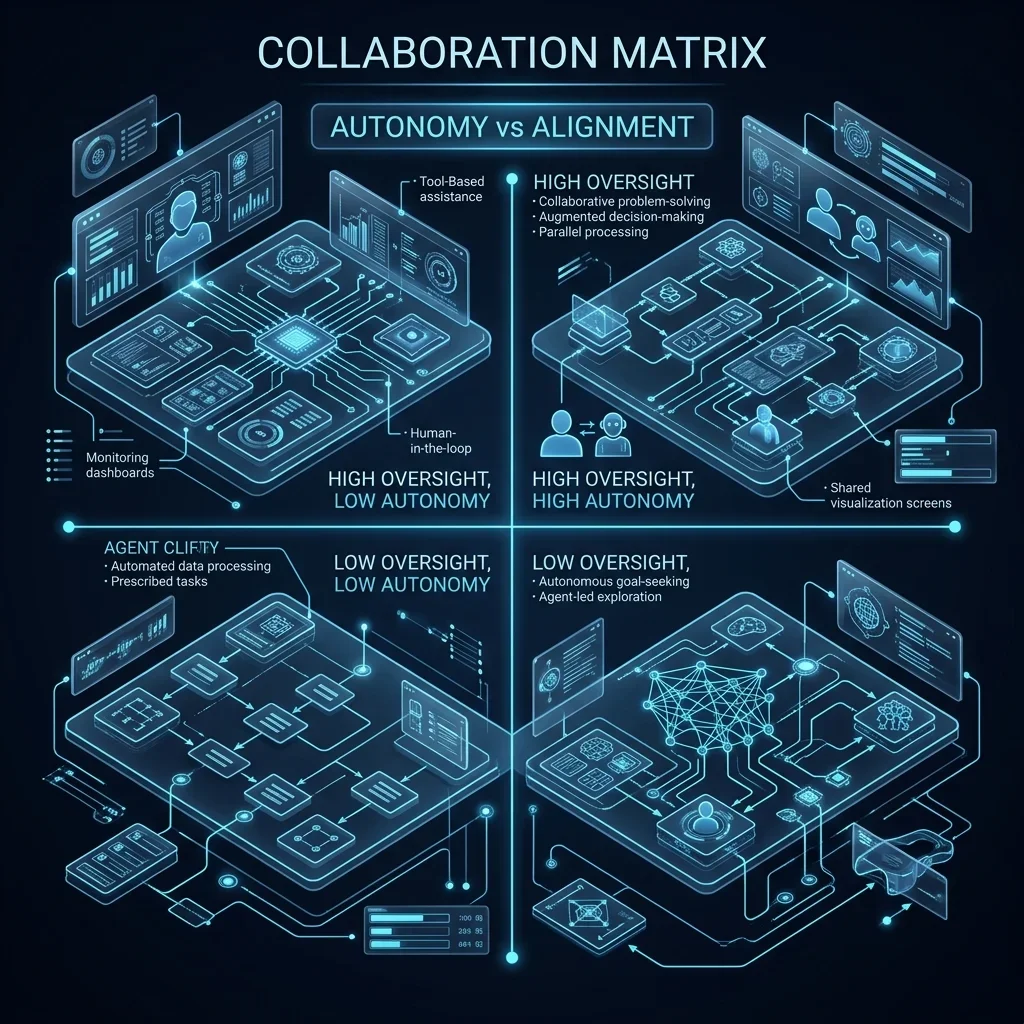
How this differs from "we bought Copilot seats"
Seat-based coding assistants help teams. Autonomous ART patterns target train integrators—the work RTEs and PMs repeat every PI. If your transformation office only measures developer keystrokes saved, you'll miss coordination tax—the actual bottleneck at 500+ practitioners.
The Autonomous Release Train (ART) {#autonomous-art}
An Agile Release Train in SAFe 6.0 is already a socio-technical system: teams, RTE, product management, system architect, and a shared PI rhythm. Autonomous doesn't mean unattended. It means repeatable train-level work runs as durable workflows with audit trails.
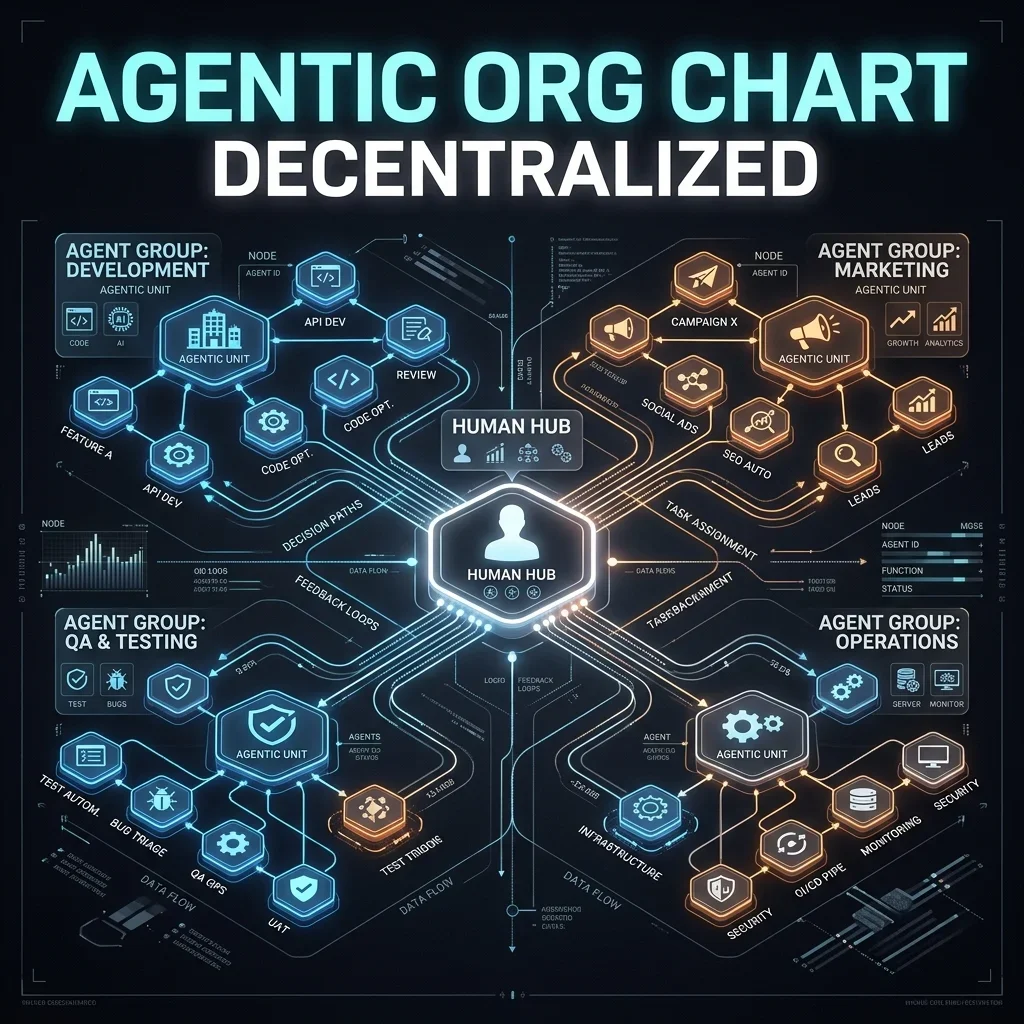
Anatomy of an Autonomous ART
┌─────────────────────────────────────────────────────────────┐
│  Human layer: RTE, Product, System Architect, Business Owner │
│  (intent, exceptions, stakeholder negotiation)               │
└───────────────────────────┬─────────────────────────────────┘
                            │
┌───────────────────────────▼─────────────────────────────────┐
│  Agentic coordination layer (policy-bound)                   │
│  • Dependency radar (ALM + repo + service catalog)           │
│  • WSJF draft + sensitivity analysis                         │
│  • Compliance / architecture pre-check                       │
│  • PI readiness score + risk clustering                      │
│  • Status synthesis (no manual slide farming)                │
└───────────────────────────┬─────────────────────────────────┘
                            │
┌───────────────────────────▼─────────────────────────────────┐
│  Team layer: Scrum/Kanban delivery (unchanged ownership)     │
└─────────────────────────────────────────────────────────────┘
What agents should—and shouldn't—own
| Own (good) | Don't own (bad) |
|---|---|
| Cross-team dependency graph refresh | Performance reviews |
| Draft PI Objectives from history | Customer pricing decisions |
| Flag policy violations on PRs | Blame assignment in incidents |
| Summarize ART sync status | Replacing team retros |
Enterprise agile AI 2026 fails when you bolt a chatbot onto a broken ALM. The ART becomes autonomous when systems of record agree: features, services, owners, and policy IDs line up.
Standardized context (why MCP matters here)
Train-level agents need the same connectors your platform team would build for developers: work tracking, CI, architecture registry, policy store. The Model Context Protocol (MCP) guide is relevant because tool surfaces shouldn't be snowflake integrations per ART.
Action Gap
LLMs talk about dependencies. LAM-style (large action model) workflows open tickets, post risks, and block merges when guardrails fire. Autonomous ART value is in actions with receipts, not prettier summaries.
AI-Driven PI Planning: From Two Days to Two Hours {#ai-pi-planning}
Classic PI Planning is two days because humans are the integration layer: spreadsheets, walls of sticky notes, and heroic RTE memory.
AI-driven program increments don't delete the commitments. They delete reconciliation grunt work before humans walk into the room (physical or virtual).
The automated PI loop
- Ingest — Features, enablers, defects, capacity, historical velocity, known holidays, regulatory blackout windows.
- Cluster — Epics/features by value stream, architectural runway, and dependency communities.
- Simulate — Capacity what-if: "If Team B loses two engineers in Sprint 2, which objectives slip?"
- Score — WSJF drafts with explicit assumptions; sensitivity flags when data is thin.
- Challenge — Risk patterns from prior PIs (integration test debt, vendor lead times).
- Convene — Human workshop: disputes, trade-offs, final commitment.
- Publish — Objectives, risks, ROAM assignments—with links to evidence, not vibes.
When "two hours" is honest—and when it's a lie
| Prerequisite | Without it |
|---|---|
| Clean backlog hierarchy | Agents hallucinate scope |
| Named dependencies in tools | Graph is fantasy |
| Policy IDs on regulated work | Compliance theater |
| RTE empowered to say no | Automation overrules reality |
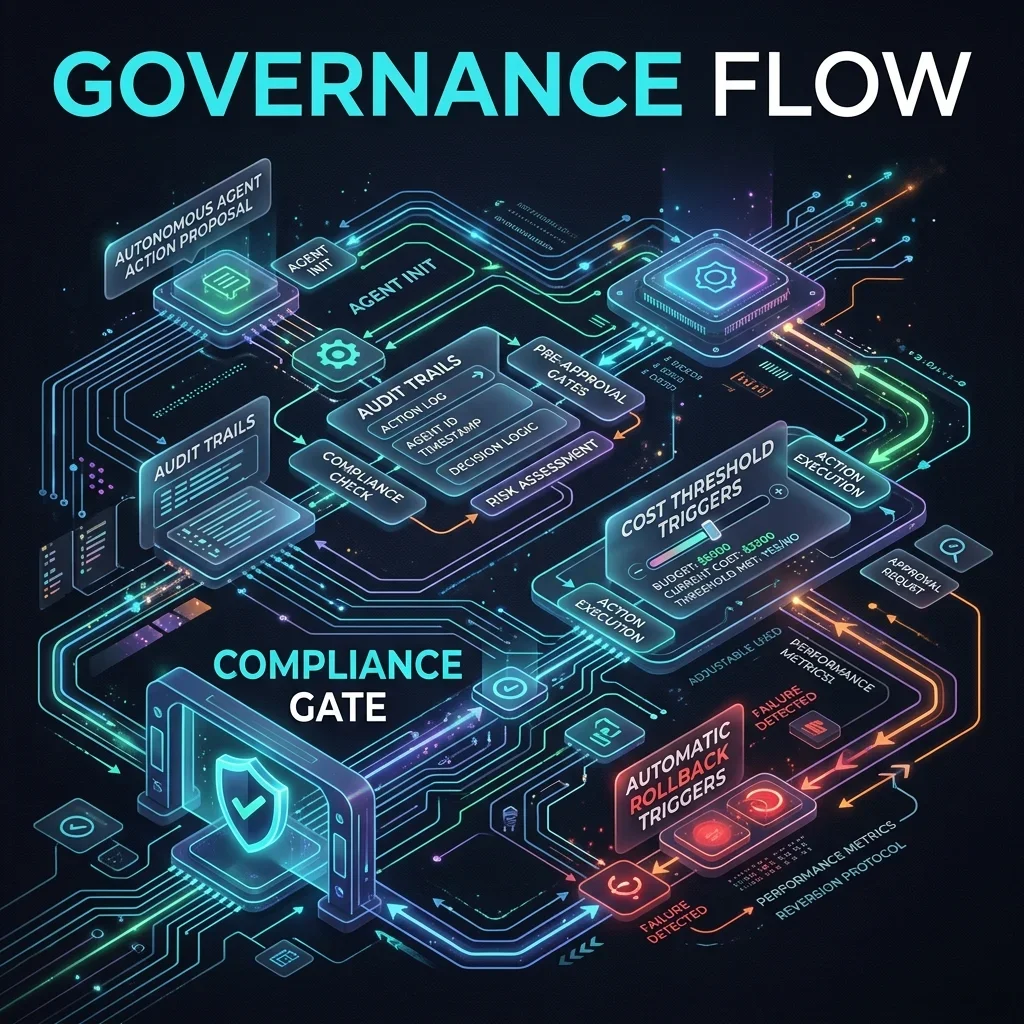
I've seen a financial services ART cut PI prep from ~16 RTE+PM hours to ~6 over three PIs—not because the vendor promised magic, but because dependency data stopped living only in people's heads.
The two-day event often shrinks to one day first; only later does a two-hour decision core emerge. Skipping stages to impress a sponsor is how you get committed objectives nobody believes.
WSJF under AI augmentation
Weighted Shortest Job First doesn't disappear—it becomes inspectable:
- Business value inputs link to OKRs and customer telemetry where available.
- Time criticality pulls from regulatory dates and contract milestones—not subjective loudness in the room.
- Risk reduction / opportunity enablement connects to architectural runway epics with explicit enabler status.
- Job size uses historical cycle time distributions per team, not single-point guesses.
Agents draft WSJF tables; product management still owns the conversation when two features tie. The win is sensitivity analysis: "If we swap Team C to Objective B, which dependency edges turn red?" That question used to take a whiteboard war; it should take a filtered graph view.
Ceremony calendar: what shrinks vs what stays
| Ceremony | Typical 6.x load | 7.0 pattern |
|---|---|---|
| ART sync | Weekly 60–90 min | Shorter; pre-read is agent summary with drill-down |
| PO sync | Weekly | Focus on intent changes, not status rehash |
| System demo | End of each PI | Unchanged—demos stay human |
| Inspect & Adapt | End of PI | Unchanged—psychological safety required |
| PI Planning | 2 days | Prep automated; commitment workshop compressed |
| Solution intent review | Ad hoc | Guardrail evidence attached to decisions |
Virtual PI Planning (SAFe 6.x carryover)
SAFe 6.0 already addresses distributed ARTs. Autonomous patterns amplify virtual PI when status and risks are always current in a portal—not emailed the night before.
Guardrails 2.0: Agentic Auditors at Scale {#guardrails-2}
Lean governance in SAFe 6.0 is the right instinct: lightweight rules, fast decisions. The 2026 gap is speed of violation: teams ship through AI assistants faster than your wiki updates.
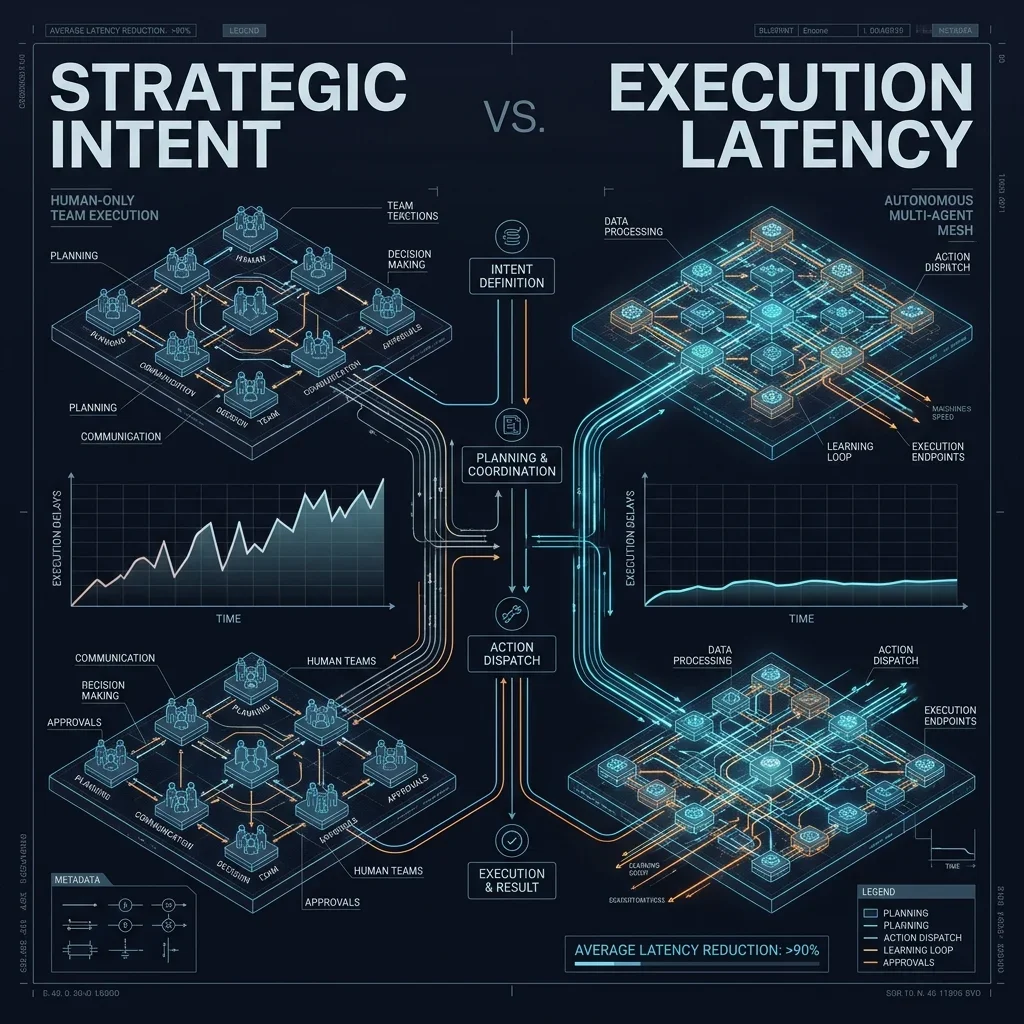
Guardrails 2.0 means:
- Policy-as-code — Architecture, security, data residency, and approval rules in machine-readable form.
- Agentic auditors — Services that evaluate changes before merge or before PI commitment markers lock.
- Exception workflows — Time-boxed waivers with executive sponsor, auto-expire, linked to risk register.
- Evidence bundles — Every waiver and auto-block exports an audit packet (who, what policy, what artifact).
Tie-in to shadow AI governance
Teams will use personal copilots anyway. Portfolio guardrails need to align with Shadow AI Governance—approved toolchains, DLP, and cataloged agent workflows—not just SAFe ceremonies.
Guardrail maturity model
| Level | Behavior |
|---|---|
| 0 | Wiki policies, manual review |
| 1 | CI lint for known repos |
| 2 | Policy-as-code on critical paths |
| 3 | Agentic auditors + exception TTL |
| 4 | Portfolio-wide risk scoring tied to PI objectives |
Most enterprises honest about 2026 are between 1 and 2. Calling yourself level 4 because you bought an "AI governance platform" is how internal audit becomes your enemy.
Sample policy statements (machine-readable intent)
Translate legal and architecture language into checks agents can run:
policy_id: FIN-PI-014
scope: portfolio_commit
rule: regulated_data_features_require_security_arch_review
when:
  labels_any: [pci, sox, gdpr-high]
then:
  require_approval_role: security_architect
  block_pi_commit: true
exception:
  max_duration_days: 14
  approver_role: ciso_delegate
You don't need this exact schema—OPA, custom microservices, or your GRC vendor's export format works. The point is IDs, scope, and TTL on exceptions so auditors see a chain, not a hallway conversation.
Agentic auditor responsibilities
| Check type | Example trigger | Human outcome |
|---|---|---|
| Architecture | New microservice without catalog entry | Block merge until registered |
| Security | Secret pattern in repo scan | Block + security ticket |
| Privacy | Training data source not approved | Block PI feature commit |
| Financial | CapEx feature without finance tag | Warning → RTE escalation |
Auditors should explain in plain language why they blocked—not dump model reasoning traces on busy RTEs.
Comparison: SAFe 6.0 (Human-Led) vs SAFe 7.0 Patterns (AI-Augmented) {#comparison-matrix}
| Dimension | SAFe 6.0 (Human-Led) | SAFe 7.0 Patterns (AI-Augmented) |
|---|---|---|
| PI preparation | RTE + PM manually reconcile spreadsheets, walls, and ALM exports | Agentic prep: clustering, WSJF drafts, capacity sims; humans arbitrate |
| Dependency management | Weekly syncs, sticky notes, heroic memory | Live dependency graph from ALM + repos + service catalog; exception queue |
| Governance | Guardrails documented; enforcement often post-hoc | Guardrails 2.0: policy-as-code + agentic auditors on commit/PI lock |
| Status reporting | Slide decks, manual roll-ups | Synthesized ART health with drill-down evidence |
| Learning loop | I&A, retros, COPs | Same ceremonies + machine-readable PI outcomes feeding next prep |
| RTE role | Facilitator + chief integrator | Intent curator + exception judge + agent supervisor |
| Risk profile | Meeting fatigue, alignment debt | Automation trust failures, policy drift, shadow AI bypass |
| Certification story | SAFe 6.x SP/RTE/PP paths (official) | Forecast skills: agent ops, policy engineering, eval harnesses |
safe 7.0 vs safe 6.0 isn't a rip-and-replace. It's adding a coordination plane without dissolving team accountability.
Beginner Track: One Safe Pilot on a Single ART {#beginner-track}
If you're new to autonomous ART language, run one pilot with boring scope:
- Pick a single ART with stable teams and a RTE who wants less prep pain.
- Choose one agentic workflow — Recommendation: PI readiness score (0–100) from backlog quality, dependency completeness, and capacity signals.
- Define human override — RTE can dismiss score with a reason code (feeds learning next PI).
- Measure four weeks — Prep hours, surprise dependencies, committed vs delivered objectives.
Don't buy a platform on week one. A read-only scorer that pulls Jira/Azure DevOps + Git metadata is enough to learn whether your data deserves autonomy.
Week-by-week pilot checklist
| Week | Deliverable | Success signal |
|---|---|---|
| 1 | Map teams → repos → services | ≥90% features have owning team |
| 2 | Read-only dependency graph | RTE validates top 10 edges manually |
| 3 | PI readiness score (no writes) | RTE agrees score directionally on 5 stories |
| 4 | Retrospective with RTE + PM | Decision: extend, fix data, or pause |
If week 2's graph is wrong on most edges, stop. Fix catalog and ALM hygiene before any vendor conversation.
Questions to ask vendors (without marketing answers)
- Where do audit logs live, and can internal audit read them without your SRE?
- Can policies export as git-backed YAML, or are you locked in a UI?
- What happens when the model is wrong—human override latency and trace retention?
- How do you handle EU data residency for prep agents that read HR calendars?
Starter stack
- ALM API (features/stories)
- Git org metadata (repo → team map)
- Spreadsheet of blackout dates (yes, really—until HR calendar is API-accessible)
- Weekly RTE review of agent output—never auto-commit PI objectives in pilot phase
Intermediate: Wiring Agents Without Breaking Trust {#intermediate-track}
Integration patterns that survive audit
| Pattern | Description |
|---|---|
| Read-only phase | Agents suggest; humans commit |
| Shadow mode | Agent scores run parallel to legacy prep for one PI |
| Graduated write | Agents open risk tickets, not scope changes |
| Policy-bound tools | MCP servers with scoped credentials per ART |
Orchestration choices
Simple chains (prep → score → report) can live in YAML + scheduled jobs. Cross-ART portfolios may need graphs—see Multi-Agent Orchestration for when to graduate.
Institutional knowledge for train procedures
RTE playbooks ("how we run PI") should become institutional knowledge as code—versioned prompts and checklists, not PDFs in SharePoint.
Advanced: Portfolio Flow and Autonomous Governance {#advanced-track}
At portfolio level, autonomous release train patterns multiply:
- Value stream sensing — Telemetry ties customer outcomes to epic funding.
- Funding guardrails — Agents block new epics when technical debt KPIs breach thresholds unless waiver approved.
- Cross-ART dependency federation — Graph spans trains; RTEs see collisions before PI.
- FinOps coupling — Cloud spend anomalies surface in WSJF discussions—link FinOps Transformation when funding conversations need cost truth.
Anti-patterns I've watched fail
- Autonomy without observability — No traces when an agent mis-ranks dependencies.
- Policy stale faster than models — Auditor blocks good work because rules weren't versioned.
- RTE disempowerment — Sponsors treat agents as authority; RTE quits; train drifts.
- Certification theater — Training slides mention AI; delivery unchanged.
Case Study: Global 500 Program—PI Without the War Room {#case-study}
Context (composite, anonymized): A Global 500 manufacturer ran four ARTs on SAFe 6.0 for 18 months. PI prep consumed ~60 person-hours per ART per PI. Dependency misses caused ~12% of committed objectives to slip every PI.
Intervention (2025 Q4 – 2026 Q1):
- Deployed dependency radar (ALM + service catalog + API schema registry)
- PI readiness agent with read-only scoring for two PIs, then graduated write (auto-risk tickets)
- Guardrails 2.0 on regulated features: policy-as-code blocked 7 illegal commitments pre-PI
- RTE training focused on exception judging, not tool worship
Results after three PIs:
| Metric | Before | After |
|---|---|---|
| PI prep hours per ART | ~60 | ~34 |
| Surprise dependencies during PI | ~22% of features | ~9% |
| Objectives slipped mid-PI | ~12% | ~7% |
| RTE satisfaction (internal survey) | 3.1 / 5 | 4.0 / 5 |
Caveats: One ART had immature backlog hygiene—the agent's scores were ignored until a data sprint fixed hierarchies. Autonomy amplified discipline; it didn't substitute for it.
Play-by-play: one PI cycle with autonomous prep
Week −3: Dependency radar ingests ALM changes nightly; graph highlights three cross-ART edges missing owners. RTE assigns owners before prep week—no PI surprise.
Week −2: PI readiness agent scores ART at 62/100—thin acceptance criteria on four enablers. PM fixes stories; score rises to 81.
Week −1: WSJF agent publishes draft rankings with assumptions linked to revenue telemetry. Product holds 90-minute trade-off session—humans swap two objectives after legal flags privacy risk on Feature X.
PI days: Day 1 morning—teams validate capacity sims; afternoon—final objectives. Day 2—only for this program still used for innovation sprint and confidence vote; many teams already moved innovation to continuous cadence.
Week +1: Guardrail auditor blocks one illegal config merge; waiver denied; team rescopes. No drama at I&A because the block happened early.
That's the texture "autonomous" should have—boring prevention, not flashy demos.
When not to pilot autonomous ART
- ART younger than two PIs (cadence still forming)
- No executive sponsor for data cleanup time
- Active layoffs or reorgs (trust too fragile)
- Regulated program without security architect engagement on guardrails
RTE and Leadership in the Autonomous Era {#rte-leadership}
The Release Train Engineer doesn't disappear. The job upgrades:
| Old RTE time sink | New RTE focus |
|---|---|
| Manual roll-ups | Calibrating agent thresholds |
| Chasing dependencies | Adjudicating graph conflicts |
| Slide preparation | Stakeholder narrative from evidence |
| Facilitating endless syncs | Designing shorter decision workshops |
Leadership must protect psychological safety: when an agent flags a team's risk, the response can't be punishment theater or teams will hide data.
Align people practices with Engineering Management v2.0 and, for agent-heavy teams, The Post-Managerial Era—different angle, same structural shift: humans own intent and exceptions.
System Architect and Solution Train roles
System Architects publish the policy packs and reference architectures guardrails consume. Without architect participation, agents enforce outdated diagrams.
On Solution Trains (large solutions), autonomous patterns add train-level integration agents that watch interface contracts between subsystems—API schema drift, consumer-driven contract test failures, and environment parity gaps. That's where enterprise solution delivery meets continuous delivery telemetry.
Product Management: intent over inventory
Product managers stop being human Jira dashboards. They curate:
- Outcome hypotheses per objective
- Unacceptable trade-offs (e.g., "no net-new vendor this PI")
- Decision logs when agents disagree with WSJF drafts
If PMs don't write decision logs, the next PI's models inherit silence—and repeat the same arguments.
Toolchain neutrality (2026 landscape)
| Layer | Examples (illustrative) | Integration note |
|---|---|---|
| ALM | Jira Align, Azure DevOps, Rally | Feature hierarchy + team mapping APIs |
| CI/CD | GitHub Actions, GitLab, Jenkins | Build/deploy signals for readiness |
| Architecture | Backstage, LeanIX, custom CMDB | Service ownership edges |
| Policy | OPA, GRC exports, cloud guardrails | Versioned bundles per ART |
| Agents | Internal orchestrator, vendor suites | MCP connectors preferred |
Pick interoperability over brand religion. ARTs change tools; policy IDs should survive migrations.
Measuring ROI and Failure Modes {#measuring-roi}
Metrics executives recognize
| Metric | Definition | Healthy pilot band |
|---|---|---|
| PI prep cost | RTE+PM hours per PI per ART | −25% to −40% |
| Dependency surprise rate | Features with unknown cross-team deps at PI | <10% |
| Guardrail catch rate | Violations blocked pre-commitment | Trend up, then stable |
| Objective integrity | Delivered / committed objectives | +5–10 pts |
| RTE net promoter | Internal RTE survey | +0.5–1.0 |
Failure modes (and fixes)
- Garbage-in autonomy — Fix: data sprint before agents write.
- Trust collapse after one bad score — Fix: shadow mode + explainability links.
- Policy bypass via shadow AI — Fix: governance catalog + approved tools.
- Two-hour PI theater — Fix: restore decision time; shrink prep only.
- Vendor lock-in — Fix: MCP-style connectors; exportable policies.
Build vs buy (pragmatic)
| Approach | When it fits |
|---|---|
| Build read-only scorer | Strong platform engineering, one ART pilot |
| Buy governance suite | Regulated industry needing audit trails day one |
| Hybrid | Vendor for policy store, internal agents for PI prep |
I've seen $400k annual platform spend save 3× in RTE/PM hours only when adoption was mandatory and data was fixed first. I've seen the same spend wasted when sponsors treated it as procurement theater.
Competing frameworks (short lens)
LeSS and Scrum@Scale fans ask whether SAFe needs "7.0" at all. Fair question. Autonomous coordination patterns are framework-agnostic at the mechanics layer—dependency graphs and policy-as-code help any scaling model. SAFe's advantage in Global 500 accounts is shared vocabulary (ART, PI, WSJF) already embedded in training and contracts. If you're SAFe-shop, extend the vocabulary with autonomous ART; don't rip SAFe out to avoid saying "7.0."
2027–2030 Roadmap: From Augmented ART to Self-Healing Portfolio {#roadmap-2030}
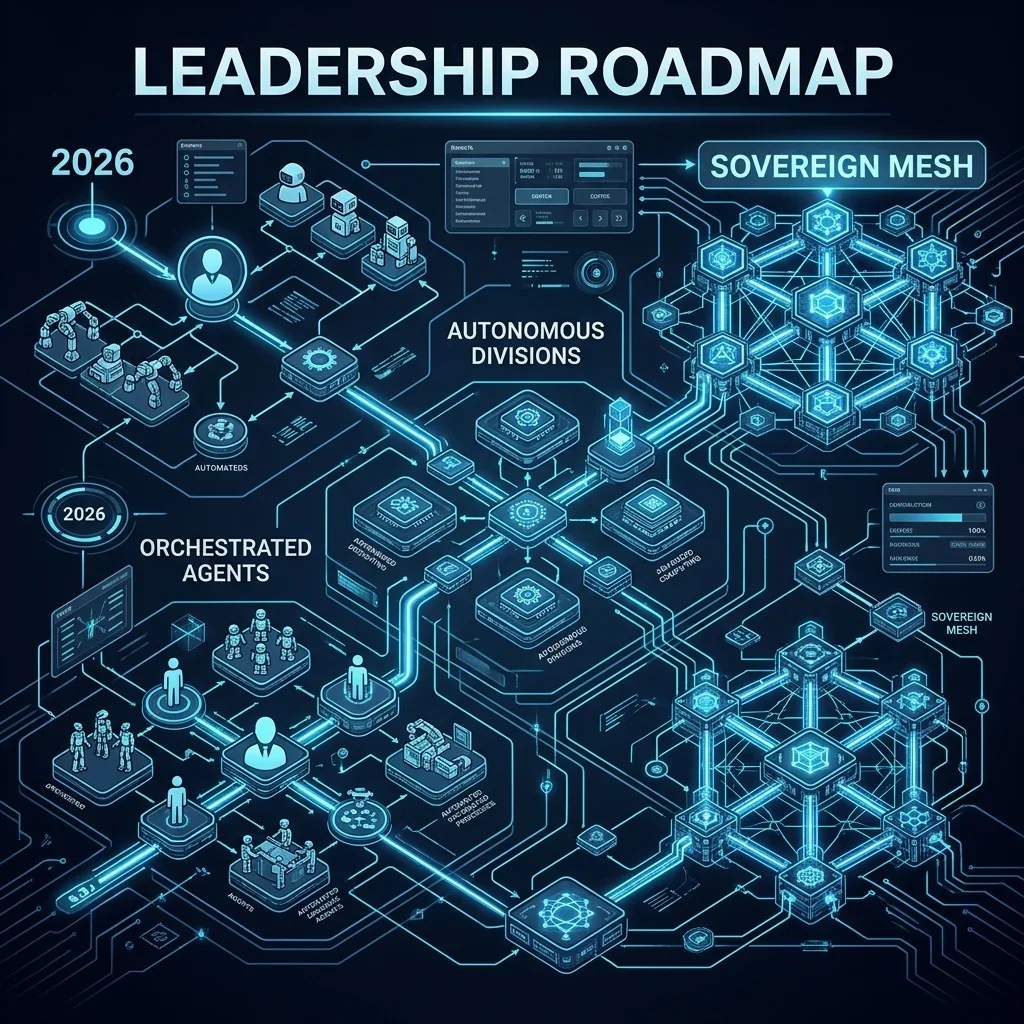
2027: Read-only portfolio digital twin—simulate funding moves and dependency impacts before approval. PI agents publish diffable objective drafts for RTE sign-off.
2028: Cross-portfolio federation of dependency graphs; FinOps + value stream agents join WSJF. Regulatory policy packs become marketplace modules per industry.
2029: Self-healing ARTs—when objective slip crosses threshold, agents propose re-scope options with trade-off packs for human pick-one decisions (not silent scope cuts).
2030: Continuous PI on stable products—rolling objectives with quarterly guardrail resets; the "two-day event" becomes annual for volatile streams only.
What to Do Monday Morning {#monday-morning}
- Read the SAFe 6.0 guide if your train isn't stable on flow yet.
- Assign an RTE sponsor for a single-ART PI readiness pilot (read-only).
- Inventory policy that must be machine-readable for Guardrails 2.0—start with three non-negotiables.
- Block calendar for a retrospective on data quality, not on which AI vendor logo looks best.
That's a quarter-scale experiment, not a transformation program stamped by procurement.
Communication templates for executives
Good: "We're piloting SAFe 6.x with autonomous ART patterns on one train—read-only PI readiness for two PIs before we touch commitments."
Risky: "We're implementing SAFe 7.0 company-wide next quarter."
Good: "Guardrails 2.0 blocked seven illegal commitments before PI—audit trail attached."
Risky: "AI runs our PI now."
Sponsors fund data and policy, not logos. Give them the honest forecast frame from this article and the SAFe 6.0 baseline guide as the official anchor. When Scaled Agile eventually publishes formal 7.0 materials, reconcile your pilot terminology with their glossary—until then, precision beats hype in every steering committee deck.
Strategic FAQ {#strategic-faq}
Should we wait for official SAFe 7.0 before doing any of this?
No—if you're on SAFe 6.x, run labeled pilots (autonomous ART patterns) with clear disclaimers. Reconcile terminology when Scaled Agile publishes official 7.0 materials.
How is this different from "Scaled Agile added AI slides"?
Slides don't block bad commits or maintain dependency graphs. Patterns here require integrations, policy-as-code, and RTE judgment.
Will certification paths change?
Likely yes when 7.0 ships—expect agent operations and governance engineering adjacent skills. Until then, SAFe 6.x credentials remain the official baseline.
Can mid-size companies use autonomous ARTs?
With Essential SAFe and 3+ teams, yes—keep scope one train, one agentic workflow, read-only first.
What's the link to DevSecOps?
Guardrails 2.0 is DevSecOps at train speed—policy on pipeline and architecture metadata, not only on production deploys.
About the Author
Vatsal Shah helps enterprise leaders wire AI-native coordination into frameworks they already run—SAFe, portfolio governance, and agent platforms—without trading auditability for speed theater.