STRATEGIC OVERVIEW
Practitioner breakdown of SAFe 6.0 Complete Guide: What Changed and Why It Matters in 2026 — written for CTOs, VP Engineering, and India GCC leads shipping production AI with measurable ROI.
SAFe 6.0 Complete Guide: What Changed and Why It Matters in 2026
Table of Contents
- What Is SAFe 6.0?
- Why SAFe 6.0 Matters in 2026
- The 7 Core Competencies --" Revised
- Key Changes from SAFe 5.0 to SAFe 6.0
- PI Planning in SAFe 6.0
- Real-World SAFe 6.0 Implementation Examples
- SAFe 6.0 Adoption Roadmap
- Common SAFe Mistakes to Avoid
- SAFe 6.0 vs Competing Frameworks
- Key Takeaways
- FAQ
- Conclusion
What Is SAFe 6.0?
SAFe 6.0 is the sixth major version of the Scaled Agile Framework, released by Scaled Agile Inc. in 2023 and now widely adopted in 2026. It is the world's most adopted framework for scaling agile across large enterprises.
Think of SAFe like an operating system for enterprise teams. Just as you upgrade your OS to get better performance and security, SAFe 6.0 upgrades the way large organizations deliver value --" faster, with less waste, and closer to customer needs.
The framework sits at the intersection of lean thinking, agile principles, and systems thinking. It is designed specifically for organizations where multiple teams need to work together toward a shared business outcome --" not just ship code.
Who Uses SAFe?
SAFe is used by companies like:
- Lowe's --" scaled to 5,000+ practitioners
- Cisco --" reduced time-to-market by 40%
- US Department of Defense --" adopted SAFe for mission-critical programs
- Philips --" cut product development cycles from 5 years to 18 months
These aren't small experiments. They are massive organizational rewirings --" and SAFe 6.0 is the playbook they follow.
Why SAFe 6.0 Matters in 2026
The enterprise technology landscape has shifted dramatically. Three forces make SAFe 6.0 more relevant now than any previous version:
1. AI is entering every value stream.
Enterprise teams are now integrating LLMs, AI agents, and automation into products. SAFe 6.0's emphasis on continuous learning and flow directly supports this rapid-change environment.
2. Remote and hybrid work is the new default.
SAFe 5.0 was designed with co-location in mind. SAFe 6.0 explicitly addresses distributed ARTs (Agile Release Trains) with updated PI Planning guidance for virtual environments.
3. Speed versus stability is the core tension.
Organizations need to move at startup speed while maintaining enterprise-grade compliance, security, and reliability. SAFe 6.0's DevSecOps integration directly addresses this.
Statistic: Organizations using SAFe report 50% faster time-to-market and 35% improvement in employee engagement compared to traditional project management --" Scaled Agile State of Agile Business 2025.
SAFe 6.0 reorganizes the framework around 7 core competencies for Business Agility. Understanding these is non-negotiable if you're implementing SAFe.
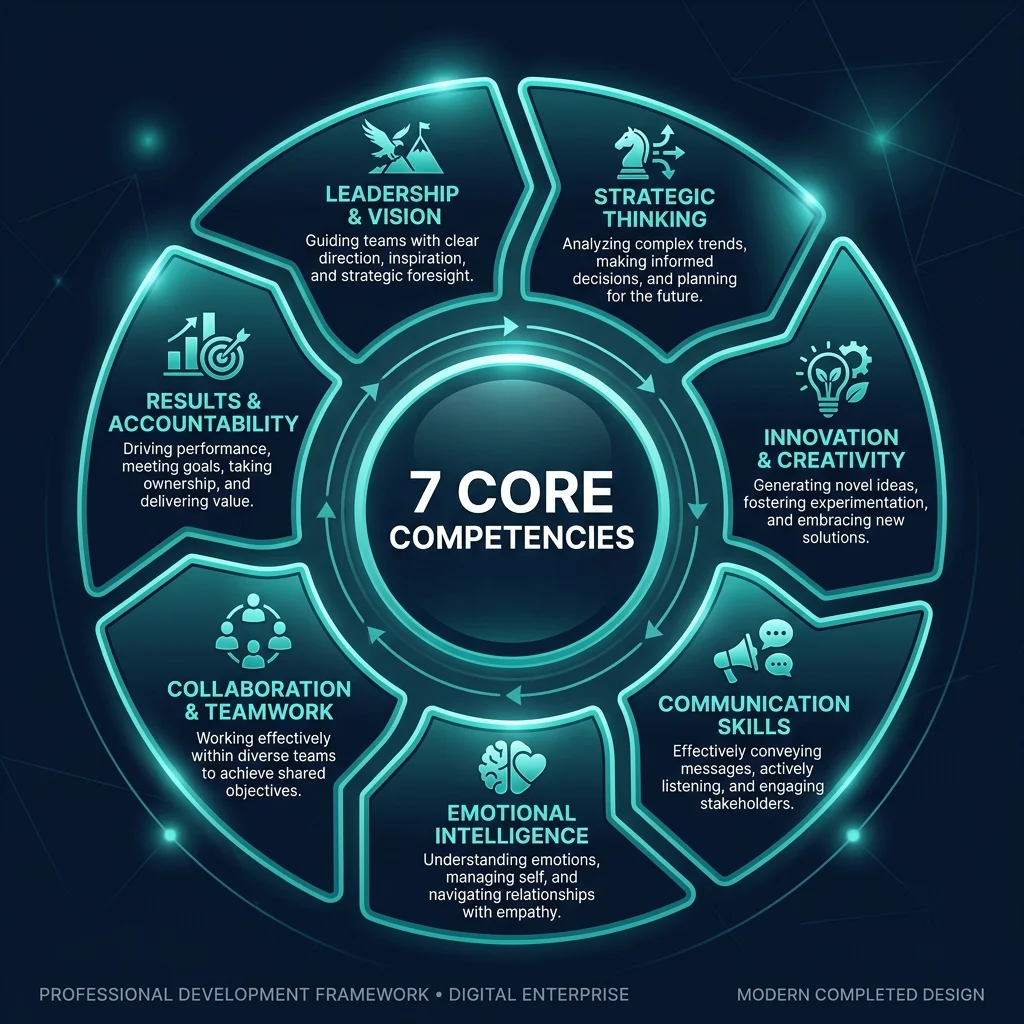
1. Lean-Agile Leadership
Leaders must model and coach lean-agile mindset --" not just mandate it. This means executives actively participating in PI Planning, removing impediments, and leading with a growth mindset.
2. Team and Technical Agility
Teams must master both Agile practices (Scrum, Kanban) AND technical practices (TDD, CI/CD, pair programming). SAFe 6.0 is more explicit that technical excellence is not optional.
3. Agile Product Delivery
Customer-centricity is the engine. This competency covers continuous delivery pipelines, design thinking, and prioritizing customer outcomes over feature output.
4. Enterprise Solution Delivery
For organizations building large, complex solutions (multi-ART programs), this competency provides coordinating constructs like the Solution Train.
5. Lean Portfolio Management
Connect strategy to execution. LPM ensures that investment decisions align with strategic themes and that value streams are funded for flow --" not projects.
6. Organizational Agility
New emphasis in SAFe 6.0. Organizations must be able to pivot quickly. This includes lean business operations, restructuring value streams, and empowering decentralized decision-making.
7. Continuous Learning Culture
Elevated to core in SAFe 6.0. Organizations must institutionalize learning through Communities of Practice, Innovation and Planning (IP) sprints, and psychological safety. Without this, all other competencies stagnate.
Key Changes from SAFe 5.0 to SAFe 6.0
Here are the changes that will actually affect your day-to-day implementation:
Change 1: Business Agility as the North Star
SAFe 5.0 treated Business Agility as an aspiration. SAFe 6.0 makes it the explicit goal of the entire framework. Every competency now maps to a business agility outcome, not just a delivery outcome.
What this means for you: Your transformation success metrics must include business outcomes --" revenue velocity, market responsiveness, customer NPS --" not just sprint velocity and defect rates.
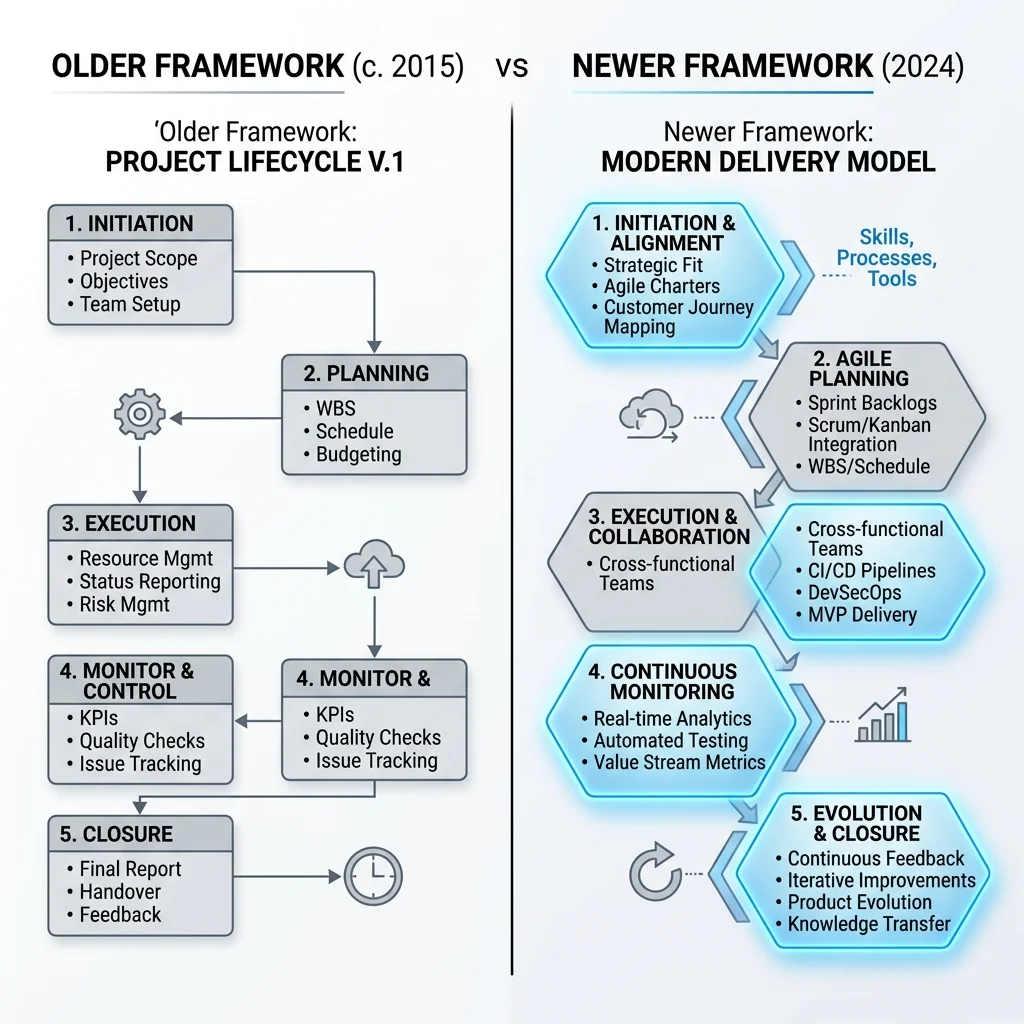
Change 2: Team Topologies Integration
SAFe 6.0 explicitly references Team Topologies (by Matthew Skelton and Manuel Pais). The framework now distinguishes between:
- Stream-aligned teams --" own a full value stream end-to-end
- Enabling teams --" help other teams adopt new capabilities
- Platform teams --" provide shared capabilities
- Complicated subsystem teams --" handle high-complexity components
This is a huge shift. Your ART structure should now map to these topologies, not just dev/QA/infra silos.
Change 3: Flow-Based Metrics Replace Velocity
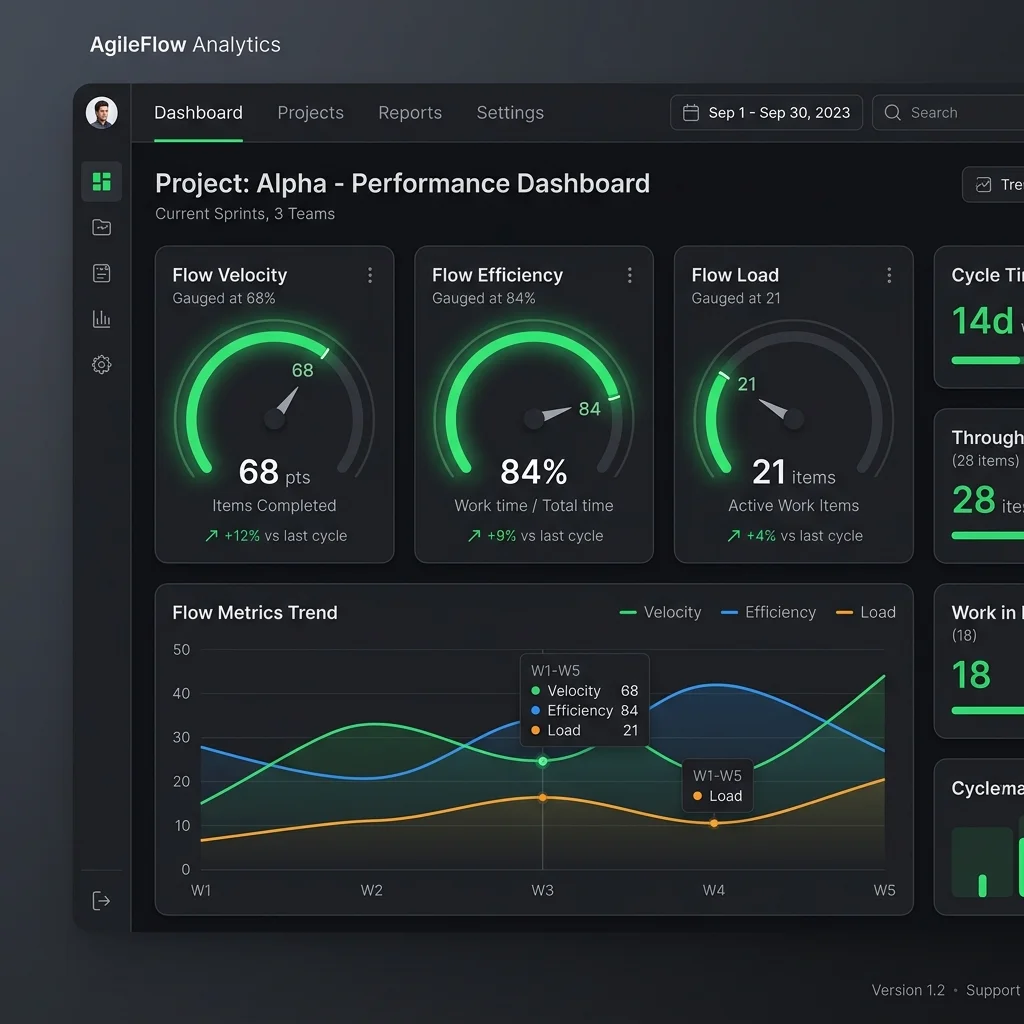
SAFe 5.0 relied heavily on velocity. SAFe 6.0 promotes flow metrics:
- Flow Velocity --" features completed per PI
- Flow Efficiency --" active vs. wait time
- Flow Load --" WIP relative to capacity
- Flow Distribution --" mix of features, bugs, debt, enablers
- Flow Time --" end-to-end delivery time
This is the DORA/Flow framework integration. Teams using these metrics catch bottlenecks 3x faster than velocity-only teams.
Change 4: DevSecOps Is Now Non-Negotiable
Security is no longer a gate at the end of the pipeline. SAFe 6.0 embeds security practices into every stage of the Continuous Delivery Pipeline: threat modeling in exploration, security scanning in CI, compliance automation in CD.
Change 5: Shorter PI Cycles Supported
SAFe 6.0 acknowledges that some organizations cannot run full 10--"12 week PIs. It now provides guidance for 6-week PI cadences for fast-moving product teams, removing the rigidity that frustrated many early adopters.
PI Planning in SAFe 6.0
PI Planning (Program Increment Planning) is the heartbeat of SAFe. Every 10--"12 weeks (or 6 in compressed mode), all teams in an ART come together to plan the next increment of work.
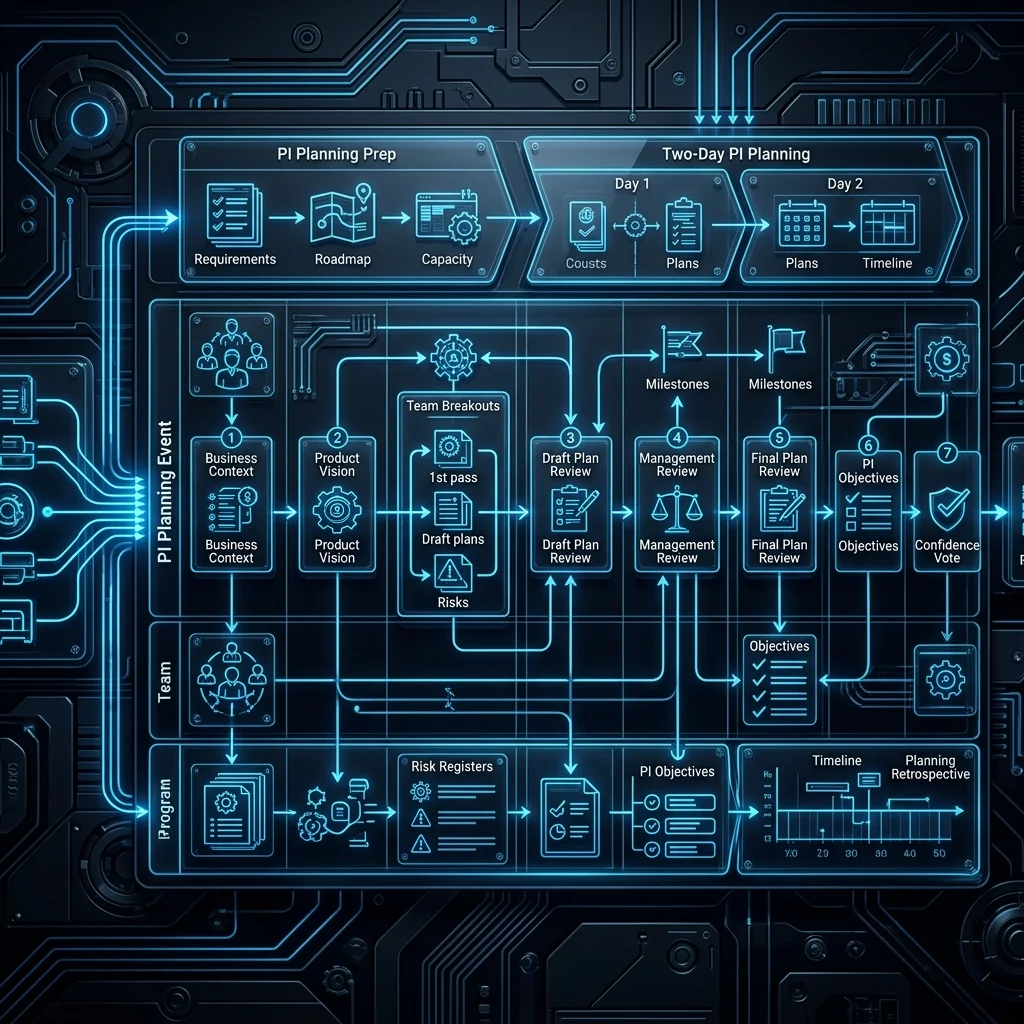
Running PI Planning Virtually in SAFe 6.0
SAFe 6.0 provides this concrete guidance for distributed teams:

Before PI Planning:
- Pre-PI Planning call (2 hours) --" vision, objectives, known dependencies
- Shared backlog refinement asynchronously across time zones
During PI Planning (2 days):
- Day 1: Business context, product vision, architecture briefing
- Day 1 Afternoon: Team breakouts using collaboration tools (Miro, Jira Plans)
- Day 2: Draft review, risk identification (ROAMing), confidence vote
After PI Planning:
- Program Board digitized and published
- Team PI objectives signed off
- ART sync cadence set for the PI
Real-World SAFe 6.0 Implementation Examples
Example 1: Financial Services Firm, 800 Engineers
Challenge: 42 teams across 6 business units working on the same core banking platform. Releases took 6 months and required 3-week freeze windows.
SAFe 6.0 Approach:
- Restructured 42 teams into 4 ARTs using Team Topologies model
- Implemented Lean Portfolio Management with value stream funding
- Deployed Continuous Delivery Pipeline --" automated compliance checks
Results after 18 months:
- Release frequency: 6 months â†' 2 weeks
- Compliance defects: down 68%
- Employee engagement score: up 22 points
Example 2: Healthcare Technology Company, 300 Engineers
Challenge: Regulatory environment meant every feature needed traceability from requirement to test. Waterfall was too slow, but compliance teams blocked full agile adoption.
SAFe 6.0 Approach:
- Implemented "Compliance as a Capability" --" automated audit trails
- Used IP (Innovation & Planning) sprints for regulatory reviews
- Trained 6 RTEs and 18 Product Managers in SAFe 6.0
Results after 12 months:
- Feature delivery: 3x faster
- Audit preparation time: cut by 55%
- NPS from product teams: up 40 points
SAFe 6.0 Adoption Roadmap

Phase 1: Foundation (Months 1--"3)
- Executive alignment workshop (1 day)
- Value stream identification (2 weeks)
- ART structure design
- First cohort of SAFe certifications: 10--"15 people minimum (POPM, RTE, SA)
Phase 2: First ART Launch (Months 3--"6)
- ART training (2 days) for all first ART members
- System Architect / Team Architect engagement
- PI Planning 1 execution
- DevOps pipeline assessment and roadmap
Phase 3: Scaling (Months 6--"18)
- Launch additional ARTs (one per quarter)
- Implement Lean Portfolio Management
- Establish Communities of Practice (CoPs)
- Flow metrics dashboards operational
Common SAFe Mistakes to Avoid
1. Treating SAFe as a process, not a mindset.
The biggest failure mode. Teams follow the ceremonies but ignore the principles. SAFe without lean-agile thinking is just expensive Waterfall with extra steps.
2. Skipping the Continuous Learning Culture competency.
This is the foundation layer. Without psychological safety and a learning culture, teams will never honestly surface impediments or adapt.
3. Letting PI Planning become a status show.
PI Planning is a planning event, not a PowerPoint presentation. If teams aren't negotiating dependencies and flagging risks in real time, you've turned PI Planning into theater.
4. Funding projects, not value streams.
The old model allocates budget to projects with fixed scope and deadlines. SAFe requires funding value streams with dedicated teams --" a political battle that must be won at the CFO level.
5. Ignoring technical enablers.
Business features get all the attention. Enablers (infrastructure, architecture, DevOps tooling) get deprioritized. Within 2 PIs, technical debt buries velocity.
SAFe 6.0 vs Competing Frameworks
| Dimension | SAFe 6.0 | LeSS | Spotify Model | Scrum@Scale |
|---|---|---|---|---|
| Best for | Large enterprise (300+ people) | Mid-size (50--"200) | Product companies | Any size |
| Prescriptiveness | High | Low | Very Low | Medium |
| PI Planning | Mandatory | Optional | None | None |
| Portfolio Mgmt | Yes (LPM) | No | No | No |
| Learning curve | Steep | Moderate | Low | Low |
| Certification | Extensive | Limited | None | Limited |
STRATEGIC CONCLUSION: If you have 300+ engineers across multiple business units and need coordinated delivery --" SAFe 6.0 is the right choice. If you have one product with 5--'10 teams, LeSS or Scrum@Scale will serve you better with less overhead.
Key Takeaways
- SAFe 6.0 elevates Business Agility as the primary goal --" not just delivery velocity
- The 7 core competencies now include Organizational Agility and Continuous Learning Culture as mandatory, not optional
- Flow metrics (velocity, efficiency, load, time) replace simple sprint velocity as the primary health indicator
- Team Topologies are now officially integrated, reshaping how ARTs should be structured
- PI Planning guidance has been updated for distributed and hybrid teams
- DevSecOps is embedded --" security is a built-in capability, not a final gate
- Shorter 6-week PI cadences are now supported for fast-moving organizations
- Successful adoption requires executive behaviors to change first --" frameworks don't transform organizations, leaders do
FAQ
What is the biggest change in SAFe 6.0?
SAFe 6.0 introduces Business Agility as a first-class citizen, restructures the competencies, and makes Organizational Agility and Continuous Learning Culture central to the framework, not optional extensions.
Is SAFe 6.0 certification worth it in 2026?
Yes. SAFe certifications remain among the most recognized in enterprise environments. SAFe 6.0 certifications signal that you understand the latest thinking in scaling agile at organizational levels.
How does SAFe 6.0 differ from SAFe 5.0?
SAFe 6.0 reduces prescriptiveness, places stronger emphasis on flow, introduces updated guidance on team topologies, enhances focus on DevSecOps, and makes Continuous Learning Culture a core competency.
Can a small company use SAFe 6.0?
SAFe is designed for larger organizations (100+ people). Smaller teams typically get more value from vanilla Scrum, Kanban, or LeSS. However, SAFe's Essential tier can work for mid-size companies with 3+ teams.
How long does a SAFe 6.0 implementation take?
Most enterprises see initial ART launches in 90--"120 days. Full organizational transformation typically takes 18--"36 months depending on team size, current culture, and leadership commitment.
Does SAFe 6.0 work with remote teams?
Yes. SAFe 6.0 includes updated guidance for distributed PI Planning and remote ARTs, including virtual big-room planning tools and async refinement techniques.
Conclusion
Change 4: DevSecOps Is Now Non-Negotiable
Security is no longer a gate at the end of the pipeline. SAFe 6.0 embeds security practices into every stage of the Continuous Delivery Pipeline: threat modeling in exploration, security scanning in CI, compliance automation in CD.
Change 5: Shorter PI Cycles Supported
SAFe 6.0 acknowledges that some organizations cannot run full 10--"12 week PIs. It now provides guidance for 6-week PI cadences for fast-moving product teams, removing the rigidity that frustrated many early adopters.
PI Planning in SAFe 6.0
PI Planning (Program Increment Planning) is the heartbeat of SAFe. Every 10--"12 weeks (or 6 in compressed mode), all teams in an ART come together to plan the next increment of work.
Running PI Planning Virtually in SAFe 6.0
SAFe 6.0 provides this concrete guidance for distributed teams:
Before PI Planning:
- Pre-PI Planning call (2 hours) --" vision, objectives, known dependencies
- Shared backlog refinement asynchronously across time zones
During PI Planning (2 days):
- Day 1: Business context, product vision, architecture briefing
- Day 1 Afternoon: Team breakouts using collaboration tools (Miro, Jira Plans)
- Day 2: Draft review, risk identification (ROAMing), confidence vote
After PI Planning:
- Program Board digitized and published
- Team PI objectives signed off
- ART sync cadence set for the PI
Real-World SAFe 6.0 Implementation Examples
Example 1: Financial Services Firm, 800 Engineers
Challenge: 42 teams across 6 business units working on the same core banking platform. Releases took 6 months and required 3-week freeze windows.
SAFe 6.0 Approach:
- Restructured 42 teams into 4 ARTs using Team Topologies model
- Implemented Lean Portfolio Management with value stream funding
- Deployed Continuous Delivery Pipeline --" automated compliance checks
Results after 18 months:
- Release frequency: 6 months â†' 2 weeks
- Compliance defects: down 68%
- Employee engagement score: up 22 points
Example 2: Healthcare Technology Company, 300 Engineers
Challenge: Regulatory environment meant every feature needed traceability from requirement to test. Waterfall was too slow, but compliance teams blocked full agile adoption.
SAFe 6.0 Approach:
- Implemented "Compliance as a Capability" --" automated audit trails
- Used IP (Innovation & Planning) sprints for regulatory reviews
- Trained 6 RTEs and 18 Product Managers in SAFe 6.0
Results after 12 months:
- Feature delivery: 3x faster
- Audit preparation time: cut by 55%
- NPS from product teams: up 40 points
SAFe 6.0 Adoption Roadmap
Phase 1: Foundation (Months 1--"3)
- Executive alignment workshop (1 day)
- Value stream identification (2 weeks)
- ART structure design
- First cohort of SAFe certifications: 10--"15 people minimum (POPM, RTE, SA)
Phase 2: First ART Launch (Months 3--"6)
- ART training (2 days) for all first ART members
- System Architect / Team Architect engagement
- PI Planning 1 execution
- DevOps pipeline assessment and roadmap
Phase 3: Scaling (Months 6--"18)
- Launch additional ARTs (one per quarter)
- Implement Lean Portfolio Management
- Establish Communities of Practice (CoPs)
- Flow metrics dashboards operational
Common SAFe Mistakes to Avoid
1. Treating SAFe as a process, not a mindset.
The biggest failure mode. Teams follow the ceremonies but ignore the principles. SAFe without lean-agile thinking is just expensive Waterfall with extra steps.
2. Skipping the Continuous Learning Culture competency.
This is the foundation layer. Without psychological safety and a learning culture, teams will never honestly surface impediments or adapt.
3. Letting PI Planning become a status show.
PI Planning is a planning event, not a PowerPoint presentation. If teams aren't negotiating dependencies and flagging risks in real time, you've turned PI Planning into theater.
4. Funding projects, not value streams.
The old model allocates budget to projects with fixed scope and deadlines. SAFe requires funding value streams with dedicated teams --" a political battle that must be won at the CFO level.
5. Ignoring technical enablers.
Business features get all the attention. Enablers (infrastructure, architecture, DevOps tooling) get deprioritized. Within 2 PIs, technical debt buries velocity.
SAFe 6.0 vs Competing Frameworks
| Dimension | SAFe 6.0 | LeSS | Spotify Model | Scrum@Scale |
|---|---|---|---|---|
| Best for | Large enterprise (300+ people) | Mid-size (50--"200) | Product companies | Any size |
| Prescriptiveness | High | Low | Very Low | Medium |
| PI Planning | Mandatory | Optional | None | None |
| Portfolio Mgmt | Yes (LPM) | No | No | No |
| Learning curve | Steep | Moderate | Low | Low |
| Certification | Extensive | Limited | None | Limited |
STRATEGIC CONCLUSION: If you have 300+ engineers across multiple business units and need coordinated delivery --" SAFe 6.0 is the right choice. If you have one product with 5--'10 teams, LeSS or Scrum@Scale will serve you better with less overhead.
Key Takeaways
- SAFe 6.0 elevates Business Agility as the primary goal --" not just delivery velocity
- The 7 core competencies now include Organizational Agility and Continuous Learning Culture as mandatory, not optional
- Flow metrics (velocity, efficiency, load, time) replace simple sprint velocity as the primary health indicator
- Team Topologies are now officially integrated, reshaping how ARTs should be structured
- PI Planning guidance has been updated for distributed and hybrid teams
- DevSecOps is embedded --" security is a built-in capability, not a final gate
- Shorter 6-week PI cadences are now supported for fast-moving organizations
- Successful adoption requires executive behaviors to change first --" frameworks don't transform organizations, leaders do
What is the biggest change in SAFe 6.0?
SAFe 6.0 introduces Business Agility as a first-class citizen, restructures the competencies, and makes Organizational Agility and Continuous Learning Culture central to the framework, not optional extensions.
Is SAFe 6.0 certification worth it in 2026?
Yes. SAFe certifications remain among the most recognized in enterprise environments. SAFe 6.0 certifications signal that you understand the latest thinking in scaling agile at organizational levels.
How does SAFe 6.0 differ from SAFe 5.0?
SAFe 6.0 reduces prescriptiveness, places stronger emphasis on flow, introduces updated guidance on team topologies, enhances focus on DevSecOps, and makes Continuous Learning Culture a core competency.
Can a small company use SAFe 6.0?
SAFe is designed for larger organizations (100+ people). Smaller teams typically get more value from vanilla Scrum, Kanban, or LeSS. However, SAFe's Essential tier can work for mid-size companies with 3+ teams.
How long does a SAFe 6.0 implementation take?
Most enterprises see initial ART launches in 90--'120 days. Full organizational transformation typically takes 18--'36 months depending on team size, current culture, and leadership commitment.
Does SAFe 6.0 work with remote teams?
Yes. SAFe 6.0 includes updated guidance for distributed PI Planning and remote ARTs, including virtual big-room planning tools and async refinement techniques.