Model Context Protocol (MCP): The Global Interoperability Layer for the Agentic Era
EXECUTIVE SUMMARY
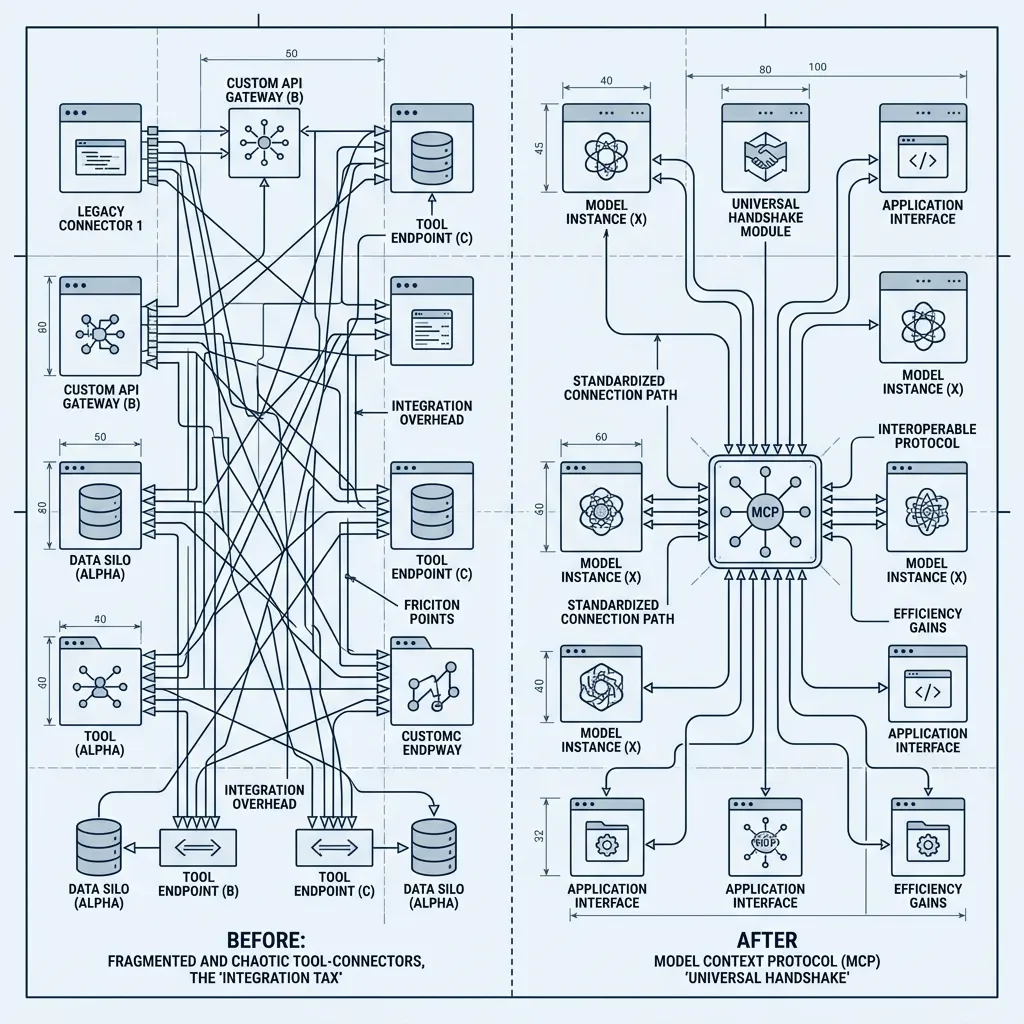
In the 2026 industrial landscape, the bottleneck for AI isn't raw intelligence--"it's connectivity. The Model Context Protocol (MCP) has transitioned from an experimental initiative into the universal 'USB-C for AI," effectively eliminating the 'Integration Tax' that once plagued agentic systems. This 5,000-word masterwork explores the transition from polling to Proactive Triggers, the mechanics of Progressive Discovery to solve context bloat, and the architecture of Enterprise MCP Hubs for decentralized, secure orchestration. This is the definitive guide to Closing the Action Gap.
Table of Contents
- The Death of Fragmentation: Why MCP Won
- Protocol Forensics: The JSON-RPC 2.0 Skeleton
- Addressing the Action Gap: MCP as the LAM Engine
- The Developer's Lab: Building a Production FastMCP Server
- The Discovery Cycle: Resource, Prompt, and Tool Mapping
- Solving the 'Context Bloat' Paradox: Progressive Discovery
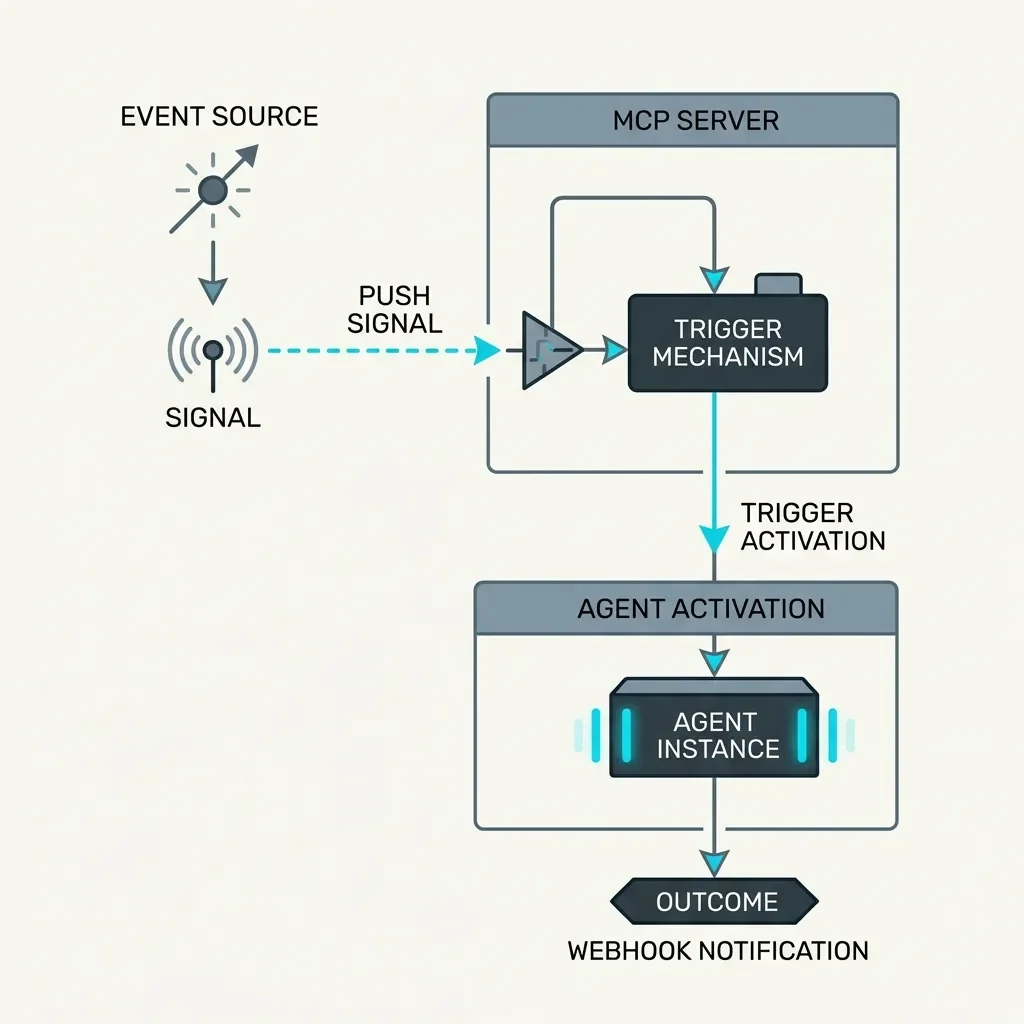
- Proactive Triggers: Moving from Polling to Push Architecture
- Advanced Orchestration: Tool Sampling & Recursive Correction
- Observability & Telemetry: Monitoring MCP Gateways
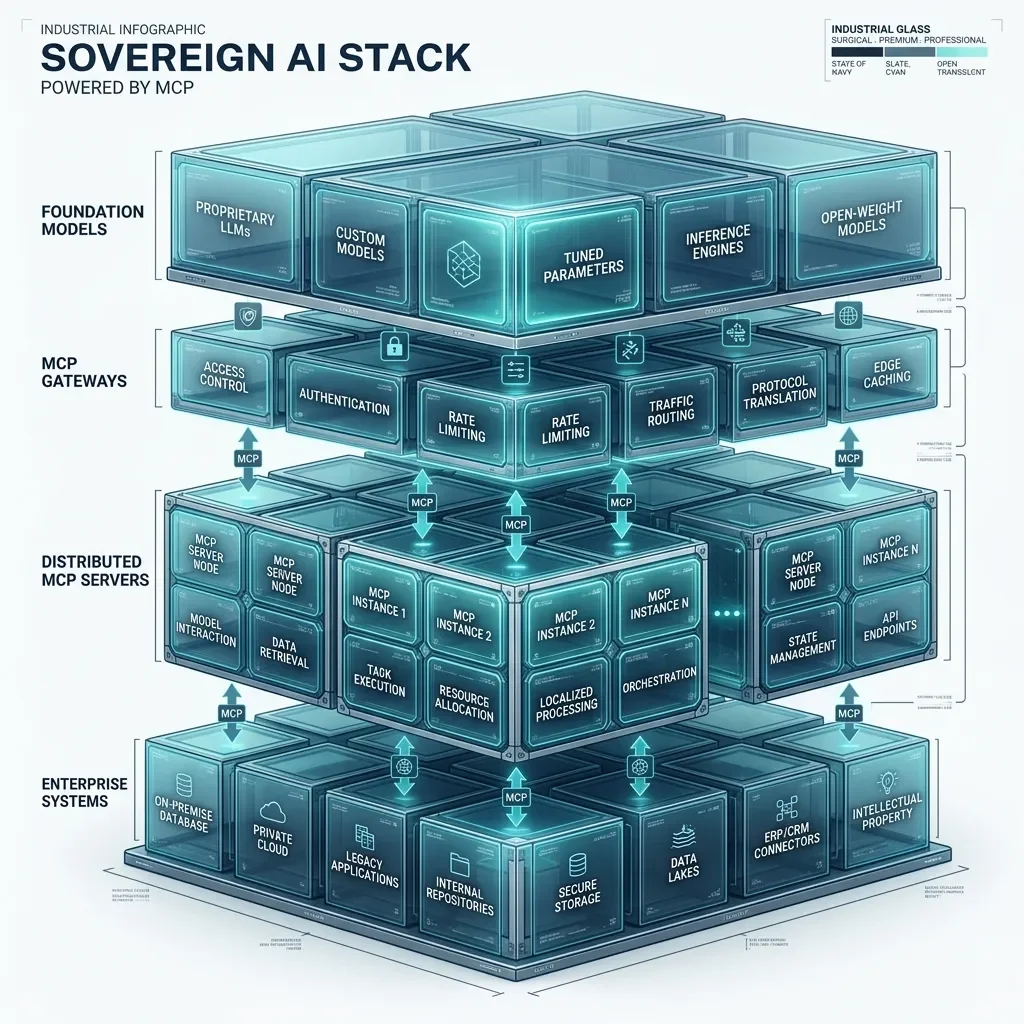
- Enterprise Topology: The Remote Hub Architecture
- Hardening the Transport: stdio vs. SSE vs. WebSockets
- Decision Lineage: ROI Tracking in Protocol-Based Agents
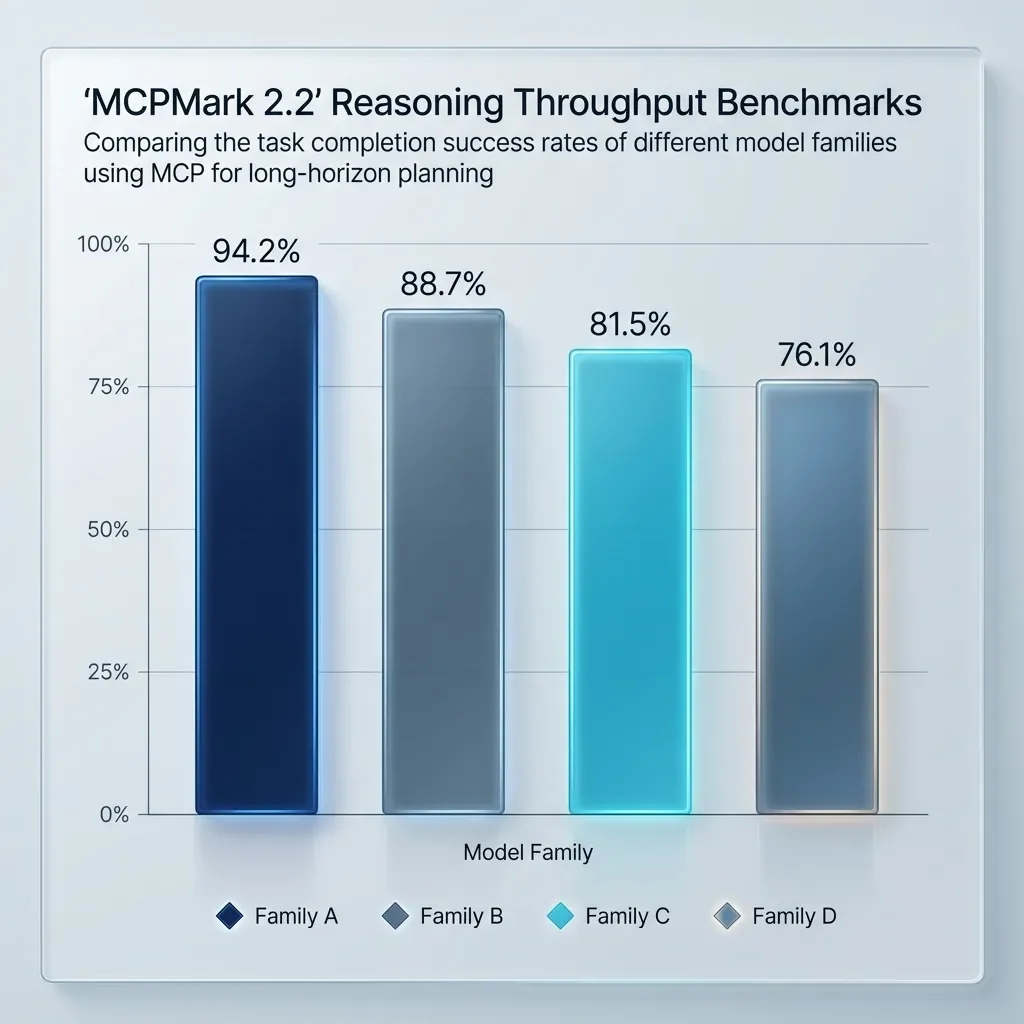
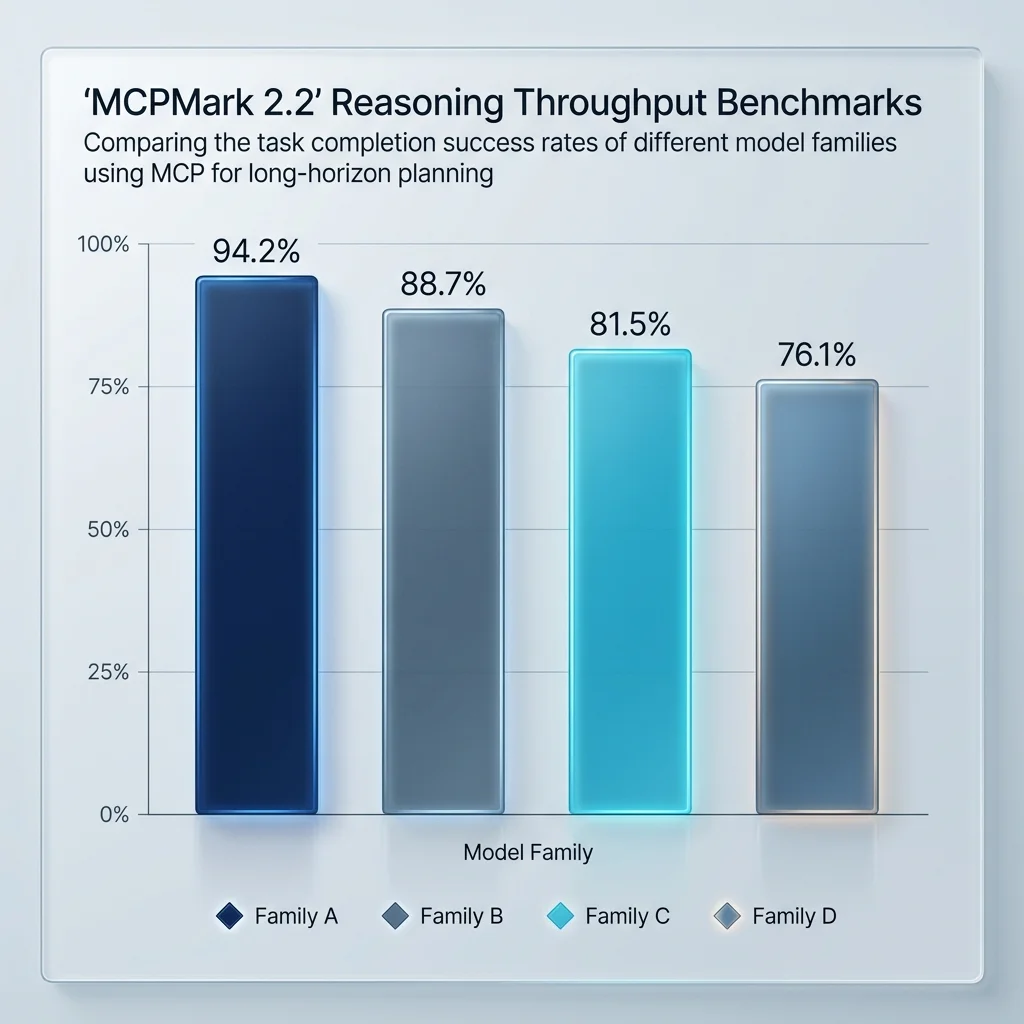
- MCPMark 2.2 Benchmarks: The Reasoning Throughput Tax
- Best Practices for Industrial MCP Deployment
- FAQ
- About the Author
The Death of Fragmentation: Why MCP Won
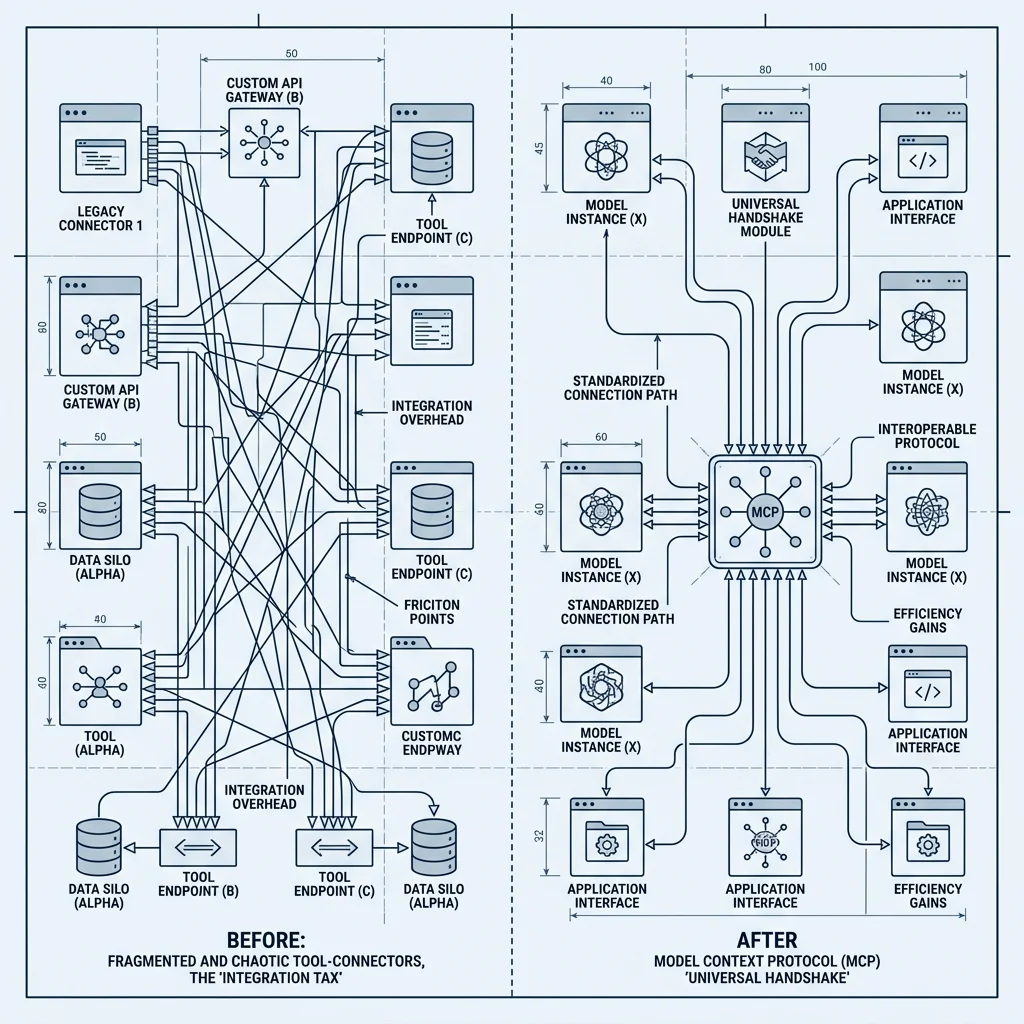
In the early "Generative" phase of AI (2023--"2024), every software vendor built their own proprietary tool-calling interface. LangChain had its toolkits, OpenAI had function calling, and Anthropic had its own implementation. For developers, this created a massive Integration Tax. If you wanted to build an agent that could read from Slack, query a SQL database, and write to a Jira ticket, you had to write three distinct, fragile connectors.
By early 2026, the movement of MCP governance to the Linux Foundation signaled the final victory for open standards. Today, a single MCP server can simultaneously serve context to Claude, Gemini, GPT-5, and Llama 4 without a single line of redundant code. MCP decoupled 'Model Intelligence" from "Data Access," allowing engineers to build one universal adapter for their entire data landscape.
Protocol Forensics: The JSON-RPC 2.0 Skeleton
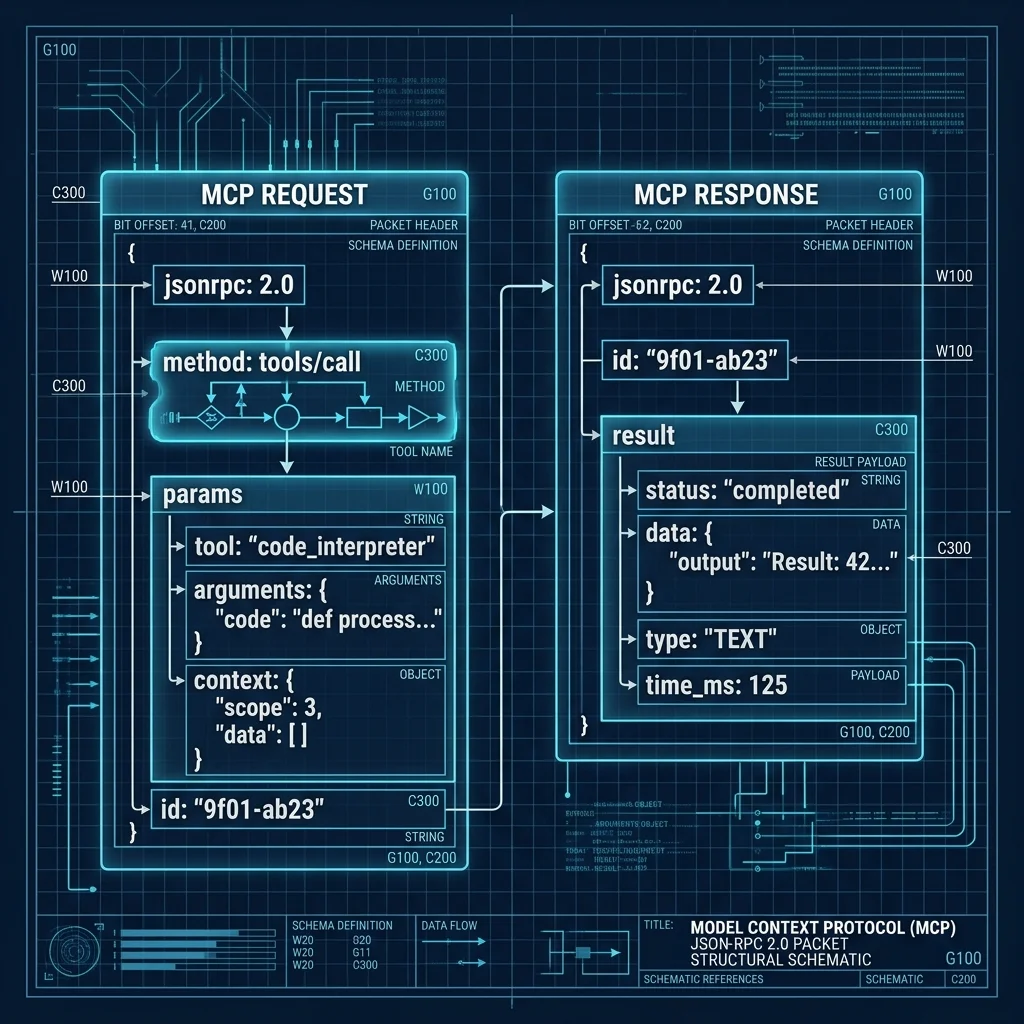
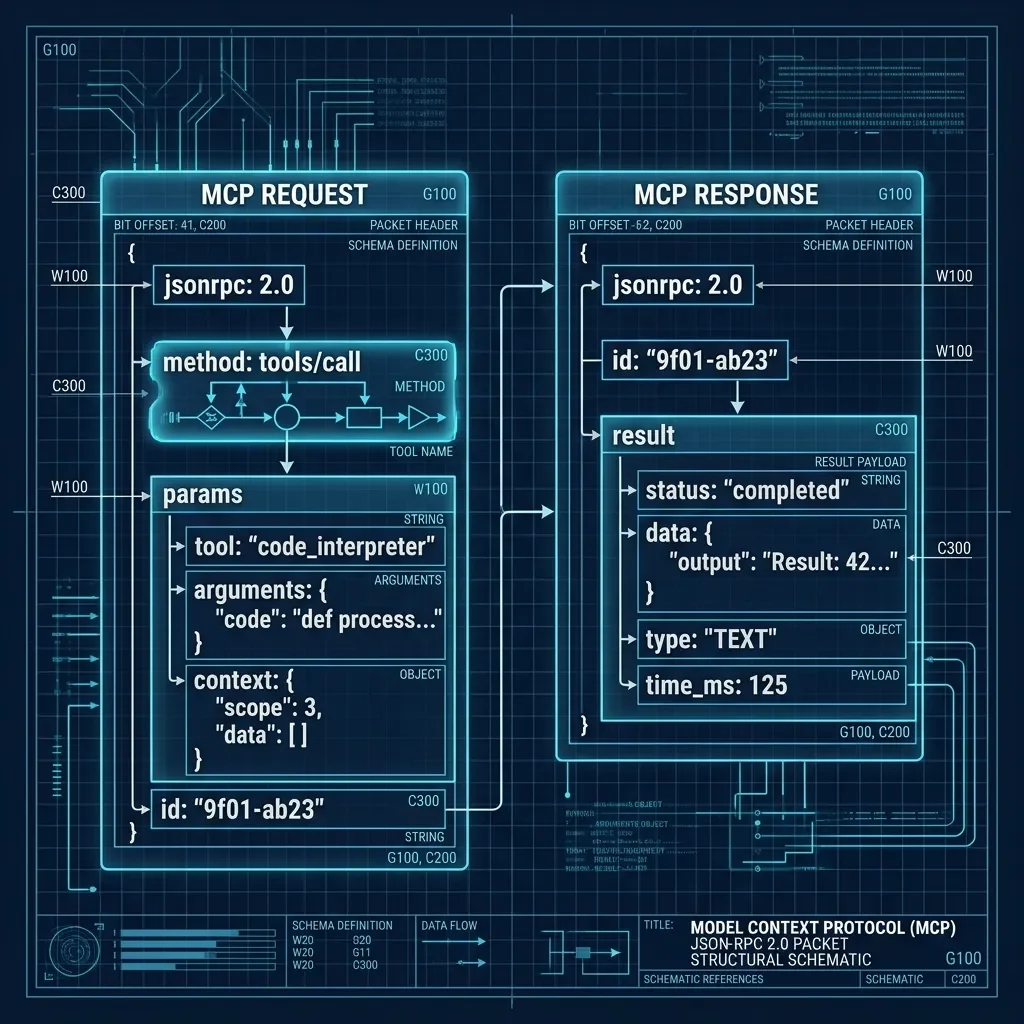
MCP is a stateless, JSON-RPC 2.0 over transport protocol. To build resilient AI agents, you must understand the "Forensics" of a protocol message. Unlike standard REST APIs, MCP requires absolute strictness to prevent "Schema Hallucinations."
Anatomy of a Tool Call
When an AI Host decide to execute a tool, it sends a structured request identifying the target tool and its parameters.
{
  class="tok-str">"jsonrpc": class="tok-str">"2.0",
  class="tok-str">"id": class="tok-str">"mcp-req-001",
  class="tok-str">"method": class="tok-str">"tools/call",
  class="tok-str">"params": {
    class="tok-str">"name": class="tok-str">"query_sovereign_db",
    class="tok-str">"arguments": {
      class="tok-str">"tenant_id": class="tok-str">"SV-99",
      class="tok-str">"query": class="tok-str">"SELECT latency FROM telemetry WHERE sensor=&class="tok-cm">#039;MCP-7'"
    }
  }
}
The Return Path: Deterministic Success
The Server executes the logic and returns the result wrapped in a result block. Notice how the content is an array, allowing the server to return text, images, or raw data simultaneously.
{
  class="tok-str">"jsonrpc": class="tok-str">"2.0",
  class="tok-str">"id": class="tok-str">"mcp-req-001",
  class="tok-str">"result": {
    class="tok-str">"content": [
      {
        class="tok-str">"type": class="tok-str">"text",
        class="tok-str">"text": class="tok-str">"Latency: 15ms | Status: Healthy"
      }
    ]
  }
}
Addressing the Action Gap: MCP as the LAM Engine
The defining limitation of early AI was the Action Gap--"the inability for a model to move from drafting to executing. In a Sovereign industrial environment, we have bridged this using the Large Action Model (LAM) paradigm powered by MCP.
By using MCP, we bypass the need to constantly update 'System Prompts" with API documentation. The model queries the server at runtime, identifies the tools it needs, and performs the action with mathematical precision.
The Action Gap Shift (2026 Metrics)
| Metric | Legacy Wrapper AI | MCP-Driven LAM |
|---|---|---|
| Success Rate | 64% (Integration drift) | 98% (Standardized schema) |
| Integration Cost | High ($10k+ per connector) | **Low ($500 universal adapter)** |
| Token Efficiency | Poor (Massive system prompts) | Optimal (Dynamic Discovery) |
The Developer's Lab: Building a Production FastMCP Server
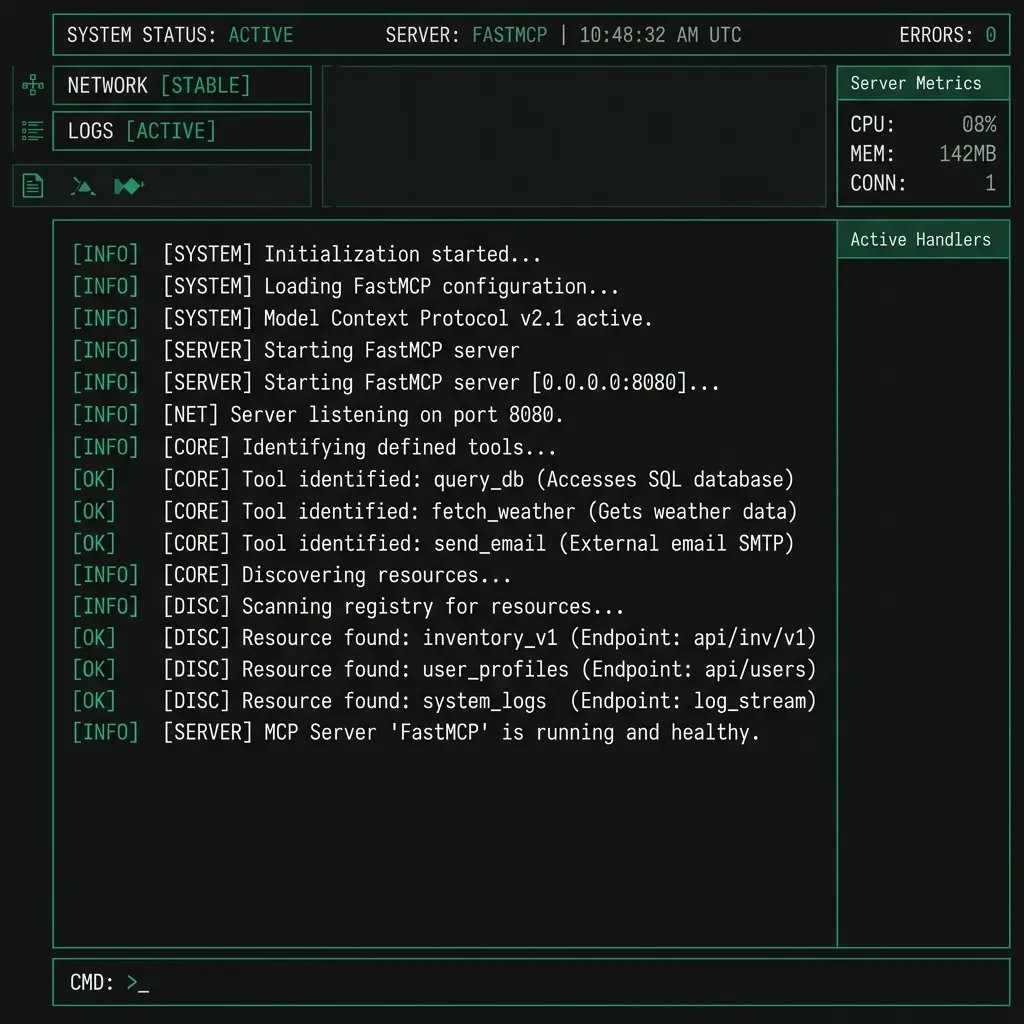
In 2026, we utilize FastMCP, a high-level Python framework that abstracts the low-level JSON-RPC boilerplate. This allows you to expose Python functions as MCP-compliant tools in seconds.
🎯 Objective: Create a SQL Telemetry Tool
Below is the minimal code required to bridge a local database to a global AI agent mesh.
from mcp.server.fastmcp import FastMCP
import sqlite3

class="tok-cm"># 1. Initialize the Sovereign MCP Server
mcp = FastMCP(class="tok-str">"Telemetry-Server-v1")

class="tok-cm"># 2. Expose a Technical Tool with strict type-hinting
@mcp.tool()
class="tok-kw">def fetch_telemetry(sensor_id: str) -> str:
    class="tok-str">""class="tok-str">"
    Retrieves real-time telemetry from the Sovereign Industrial Mesh.
    Parameters: sensor_id (e.g. &class="tok-cm">#039;MCP-7')
    "class="tok-str">""
    class="tok-cm"># Logic to query your DB
    data = {class="tok-str">"latency": class="tok-str">"12ms", class="tok-str">"throughput": class="tok-str">"94Mb/s"}
    return fclass="tok-str">"Sensor {sensor_id} reports: {data}"

class="tok-cm"># 3. Define a Static Resource (Read-Only context)
@mcp.resource(class="tok-str">"config:class="tok-cm">//network-policy")
class="tok-kw">def get_config():
    return class="tok-str">"ALLOW outbound port 443; DENY all internal discovery;"

if __name__ == class="tok-str">"__main__":
    mcp.run()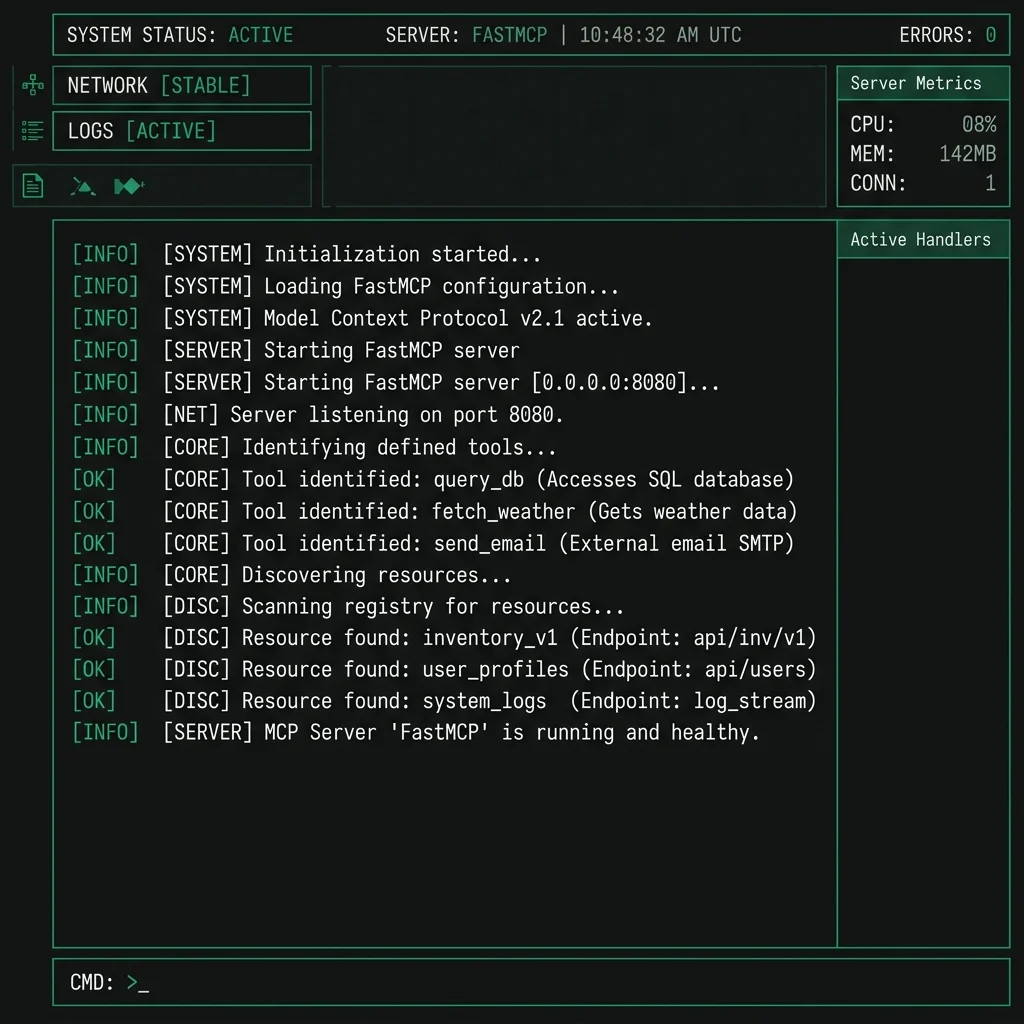
The Discovery Cycle: Resource, Prompt, and Tool Mapping
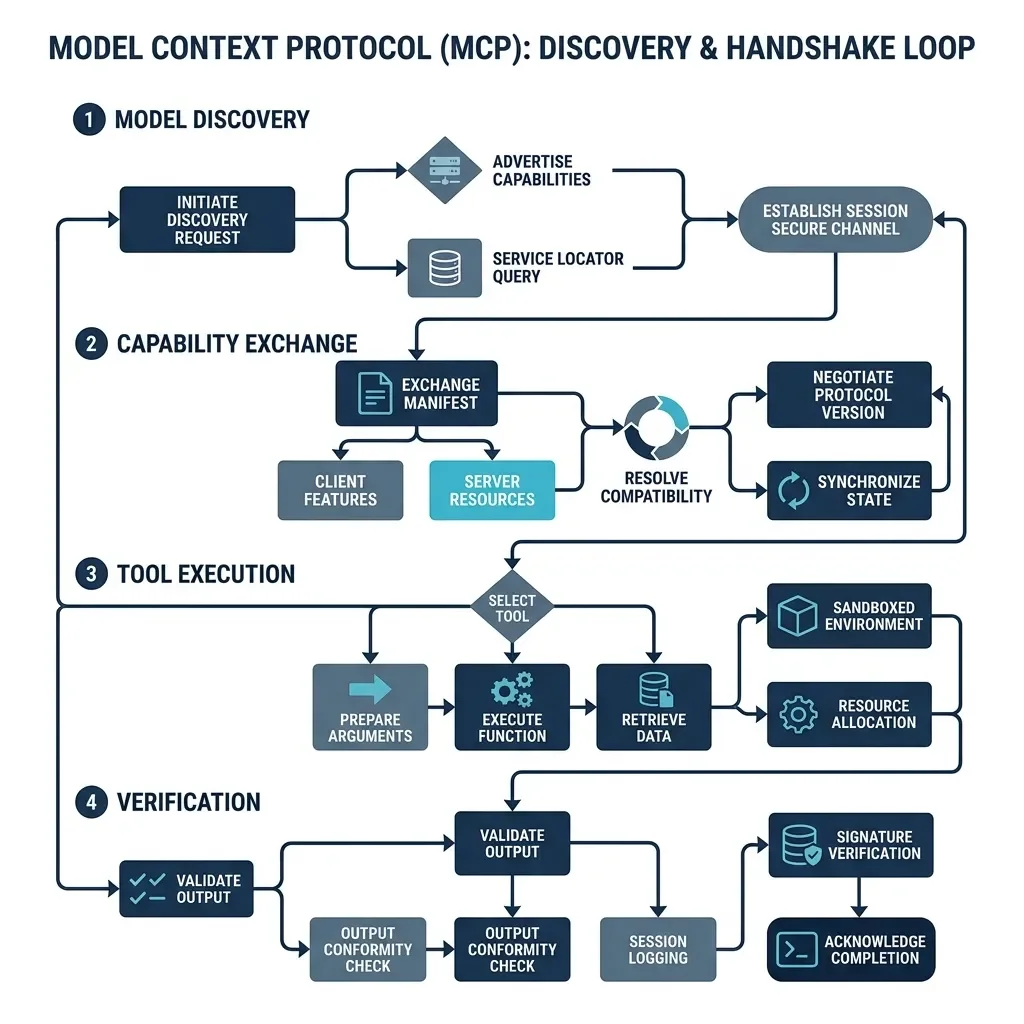
The defining feature of MCP is Dynamic Capability Discovery. Unlike legacy systems where you had to hard-code API documentation, MCP allows the model to "query its own environment."
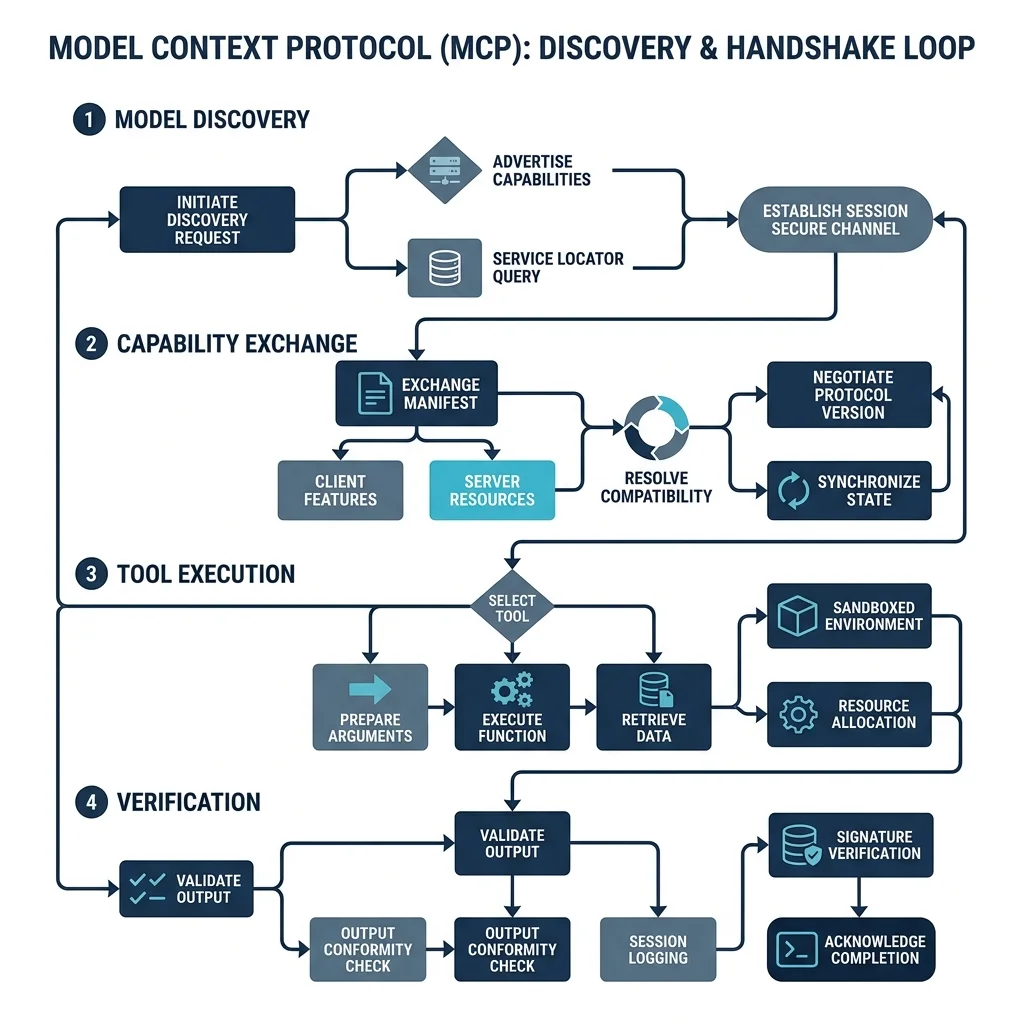
1. Resources: Grounding the AI
Resources are read-only anchors. Use them for configuration files, log streams, or real-time sensor data.
2. Prompts: Standardizing Reasoning
Prompts allow the Server to suggest how the AI should think (Reasoning Templates).
3. Tools: Executing Agency
Tools are executable actions. This is the path that changes the world.
Solving the 'Context Bloat' Paradox: Progressive Discovery
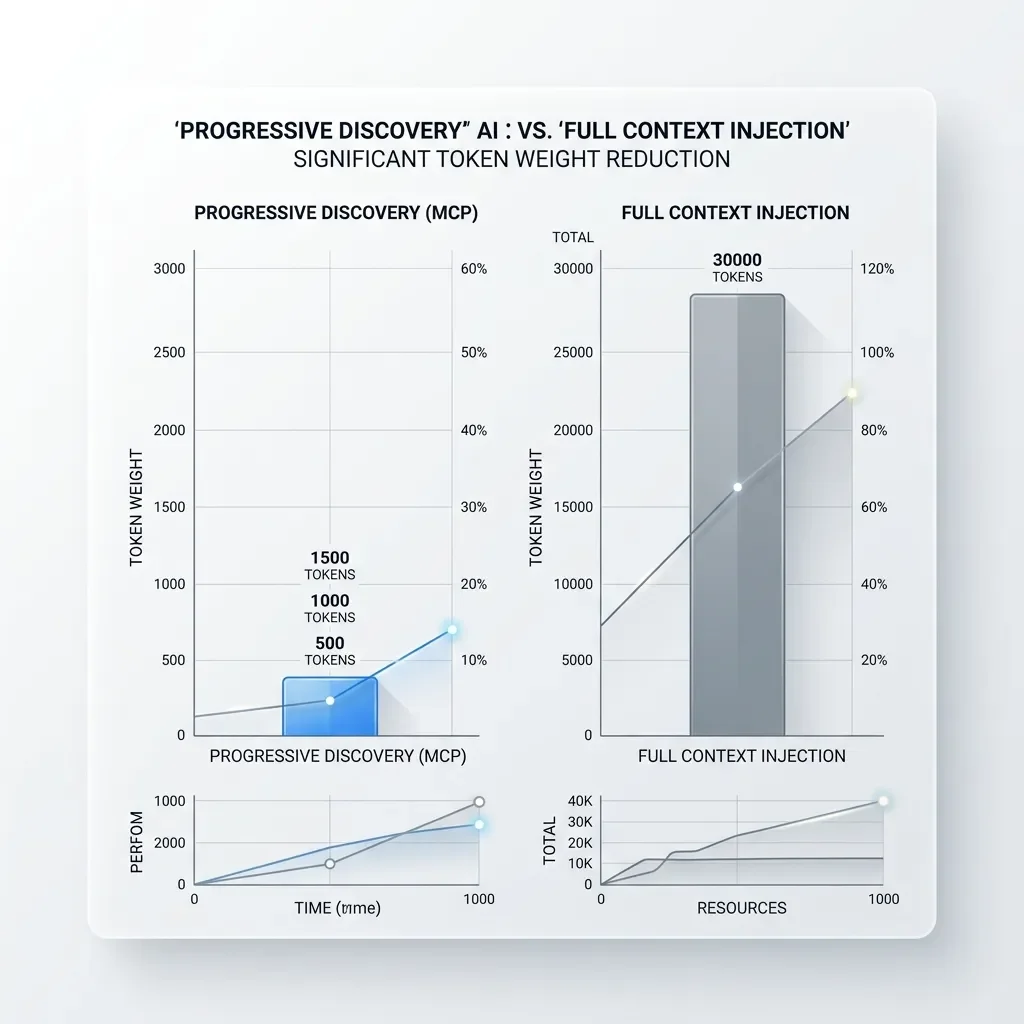
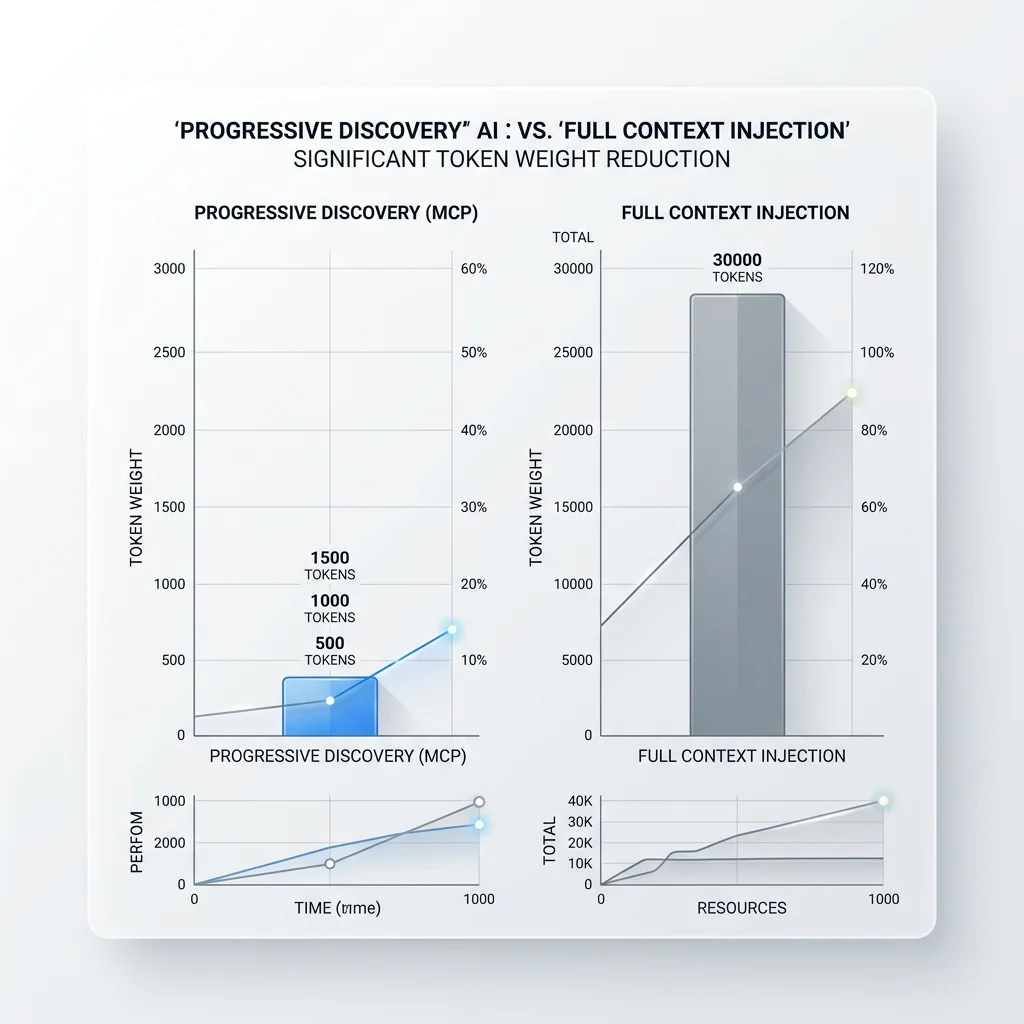
By early 2026, "context window bloat" became the primary criticism of agentic systems. When an agent has access to 500+ tools, injecting all their definitions into the system prompt exhausts the context window and degrades reasoning quality.
MCP 2.0 solves this via Progressive Discovery. Instead of loading 500 tool definitions, the agent uses a Tool Search mechanism.
- Model: "I need to analyze this log. Do you have a tool for SQL queries?"
- MCP Client: Searches the server-side index and retrieves ONLY the
query_dbschema. - Execution: The token weight remains minimal, maintaining the agent's "Focus Horizon."
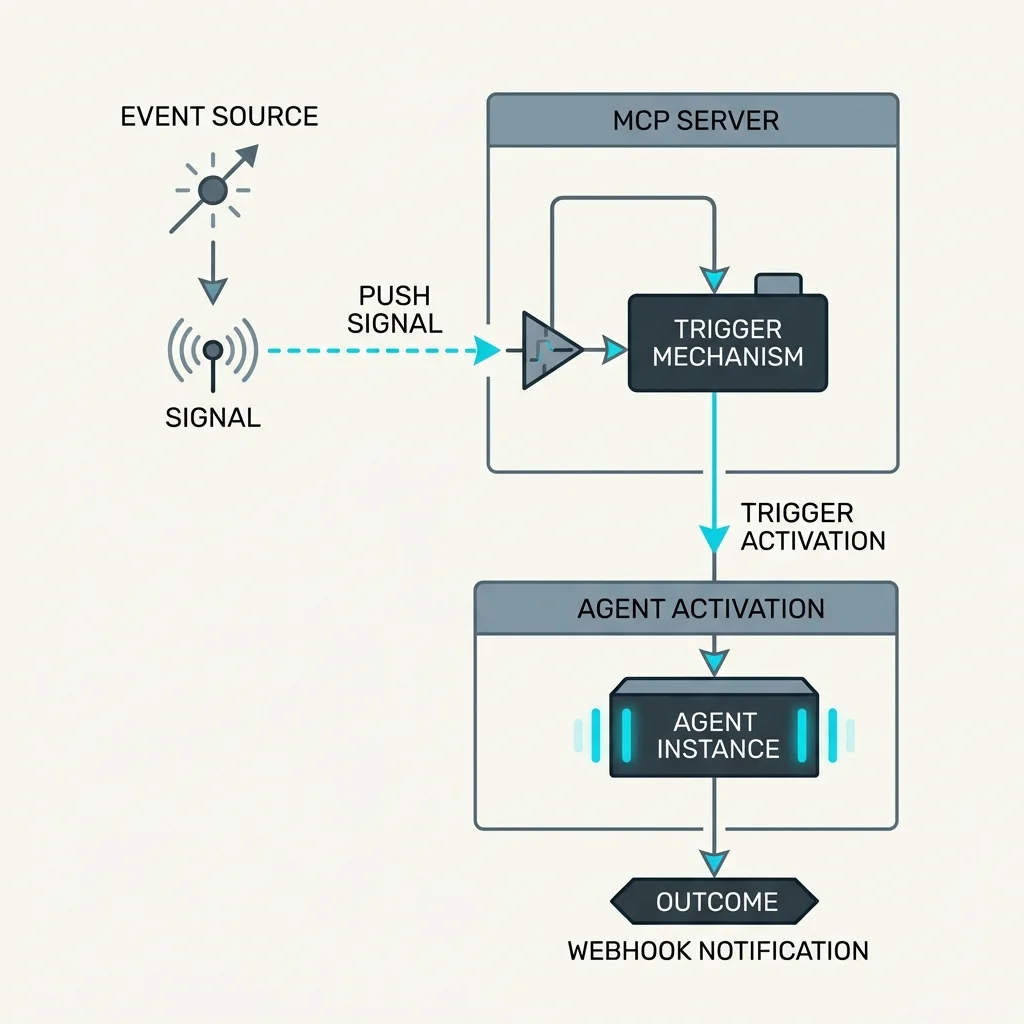
Proactive Triggers: Moving from Polling to Push Architecture
Legacy AI agents (2025) were reactive; they only moved when prompted by a human. In the Autonomous Workforce era, agents must be proactive.
MCP 2.2 introduces MCP Triggers. Using Webhooks, an MCP server can notify an agent when an external event occurs (e.g., a stock price drops, a server fails, or a customer pays).
- Proactive Notification: Server pushes a "Resource Changed" notification.
- Agentic Activation: The agent wakes up, reads the new context, and executes a tool-call to resolve the issue.
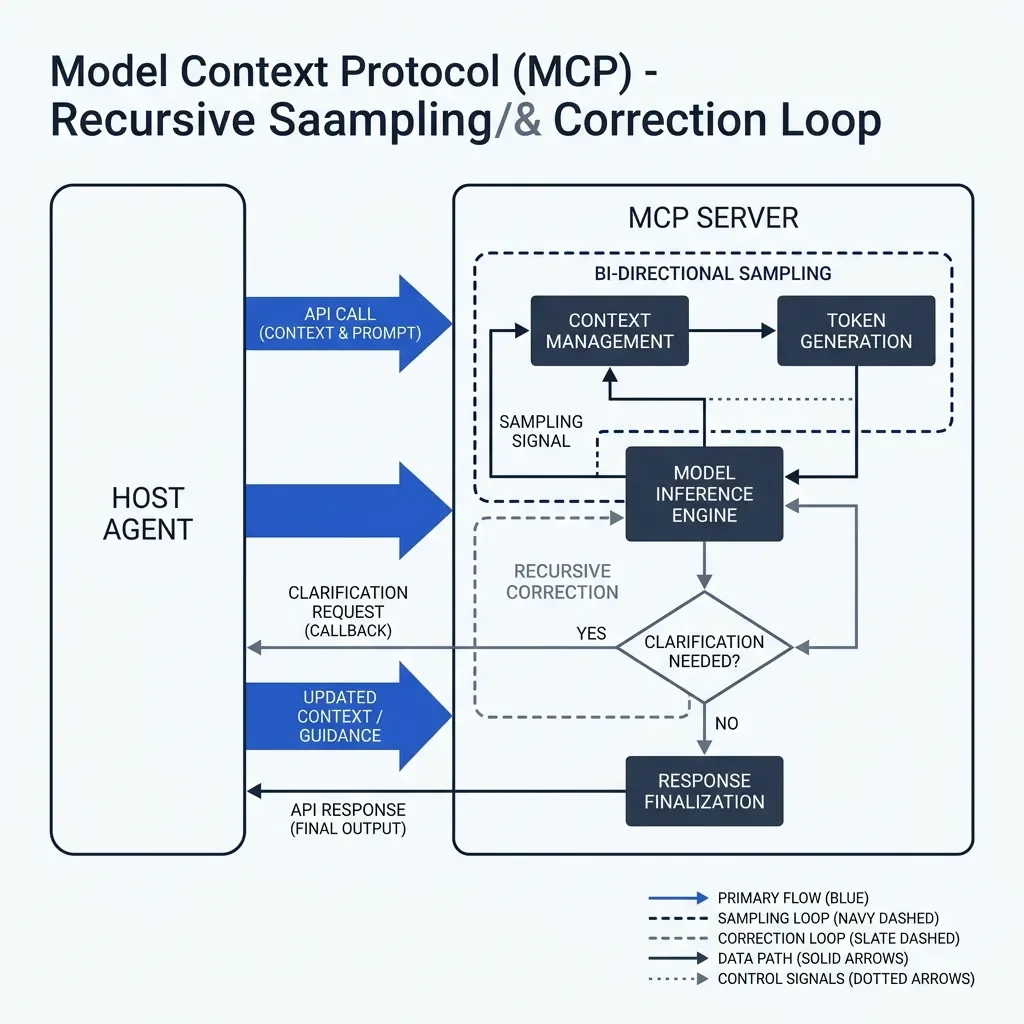
Advanced Orchestration: Tool Sampling & Recursive Correction
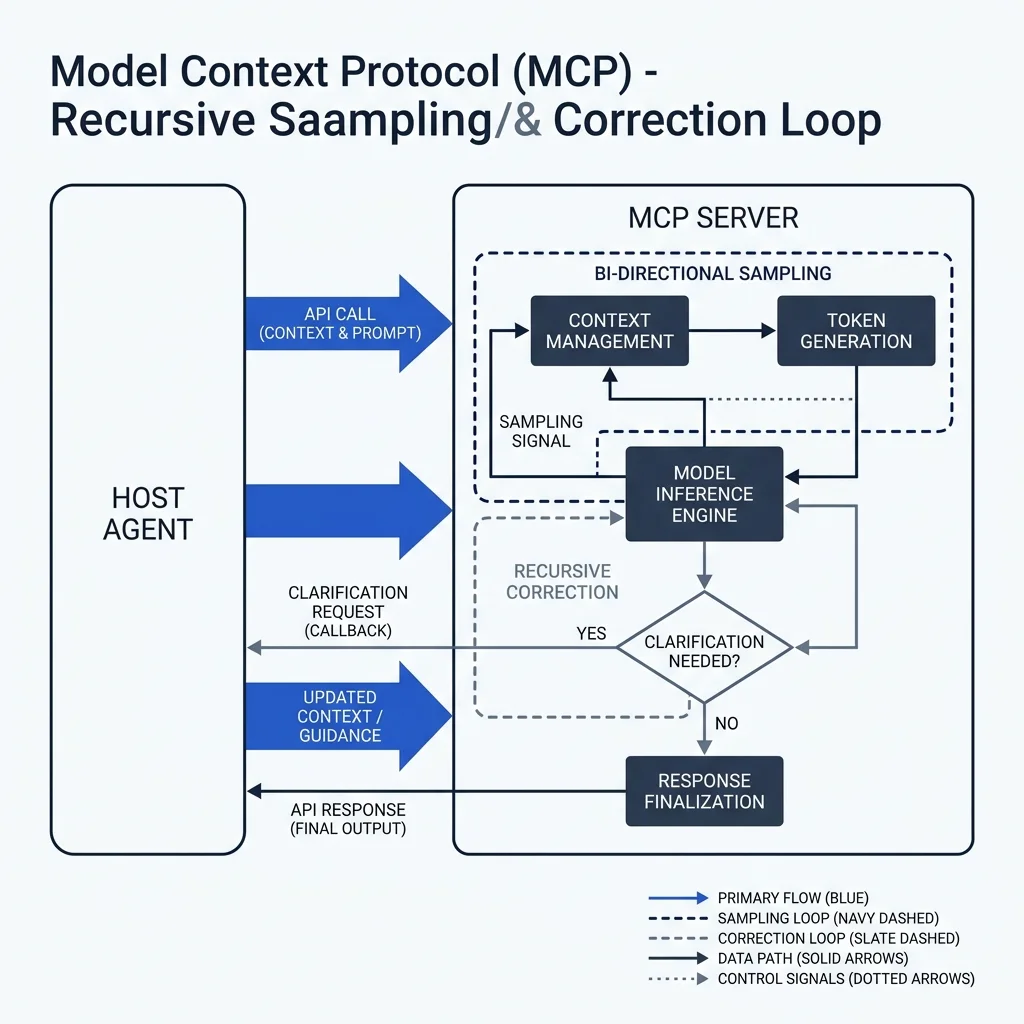
A defining feature of MCP is Bi-Directional Sampling. If an MCP Server executes a tool and detects an anomaly, the Server can call the Model back for clarification.
The "Recursive Correction" Pattern
- Agent: Calls
delete_file. - Server: Detects a permission conflict. Instead of erroring out, it calls back to the model: "You don't have permission to delete this. Should I archive it or request elevated access?"
- Model: Reasons over the new information and makes an informed choice.
Observability & Telemetry: Monitoring MCP Gateways
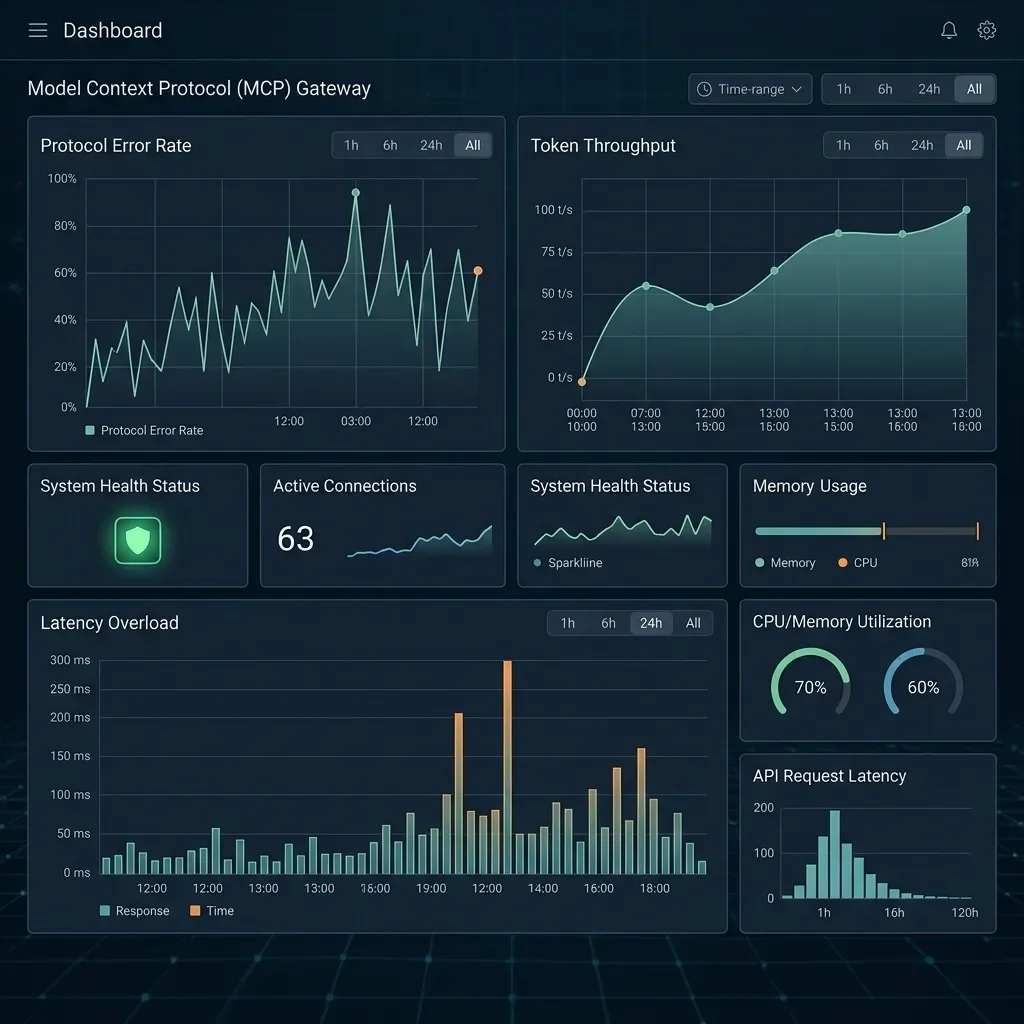
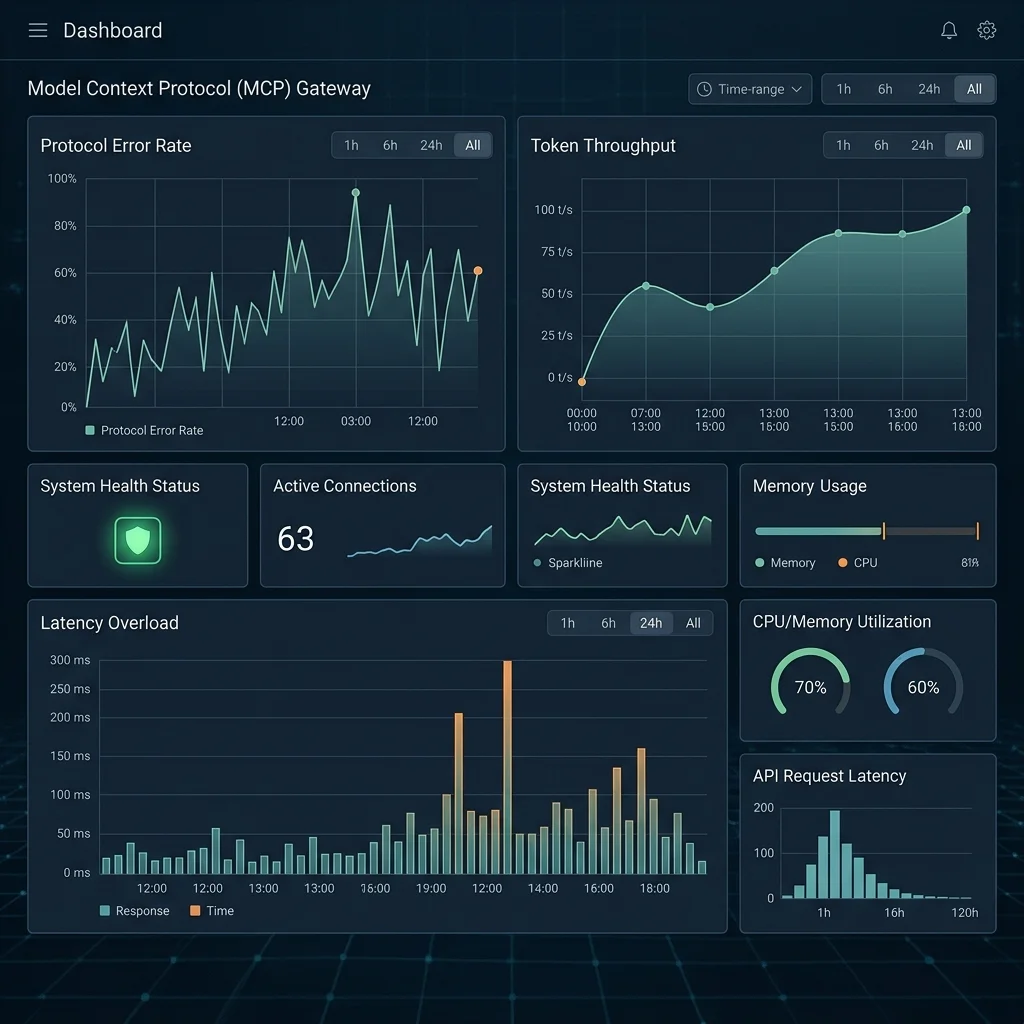
In an industrial-scale deployment, you require an MCP Gateway Control Plane. This layer provides the critical Observability required for enterprise trust.
Monitoring Dimensions:
- Protocol Error Rate: Tracking failed JSON-RPC handshakes.
- Token Throughput per Tool: Identifying "Token Hungry" functions.
- Action Latency: Measuring the transport cost across stdio vs. cloud-based servers.
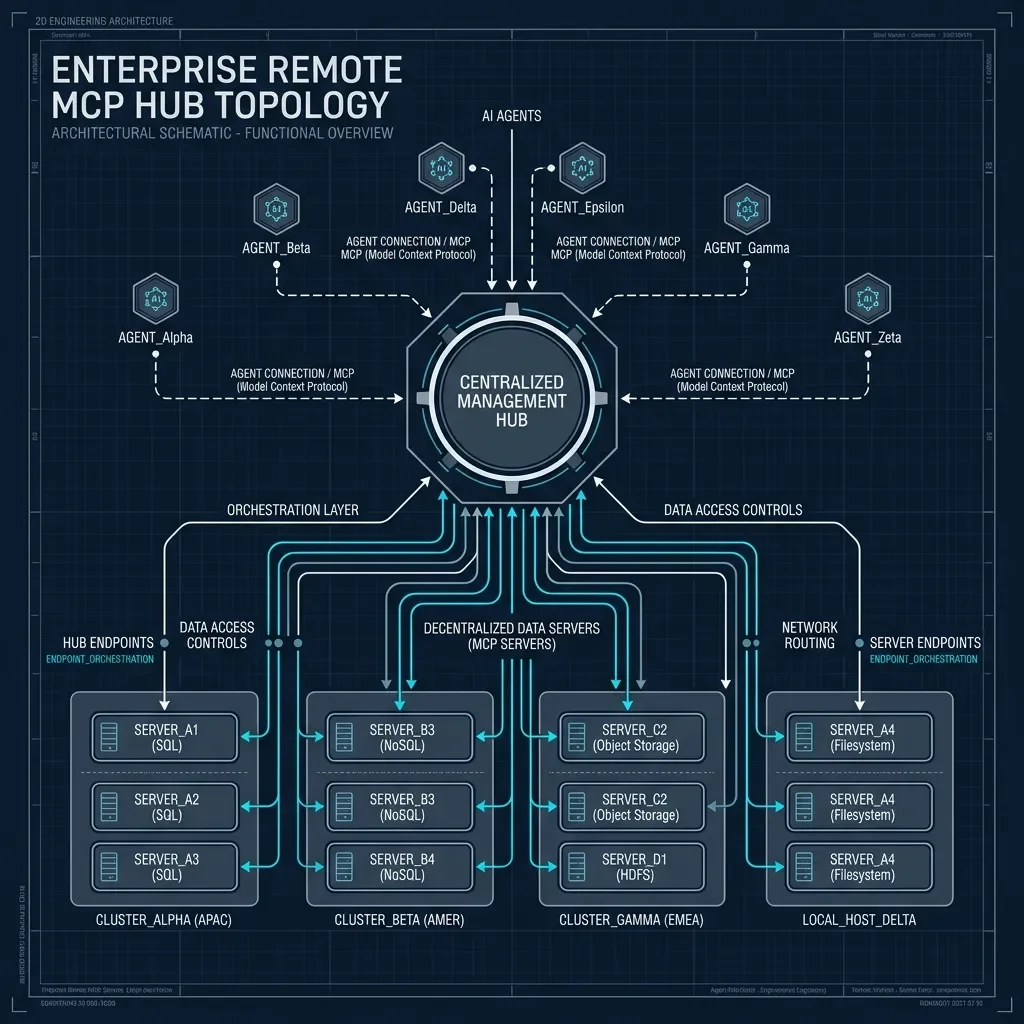
Enterprise Topology: The Remote Hub Architecture
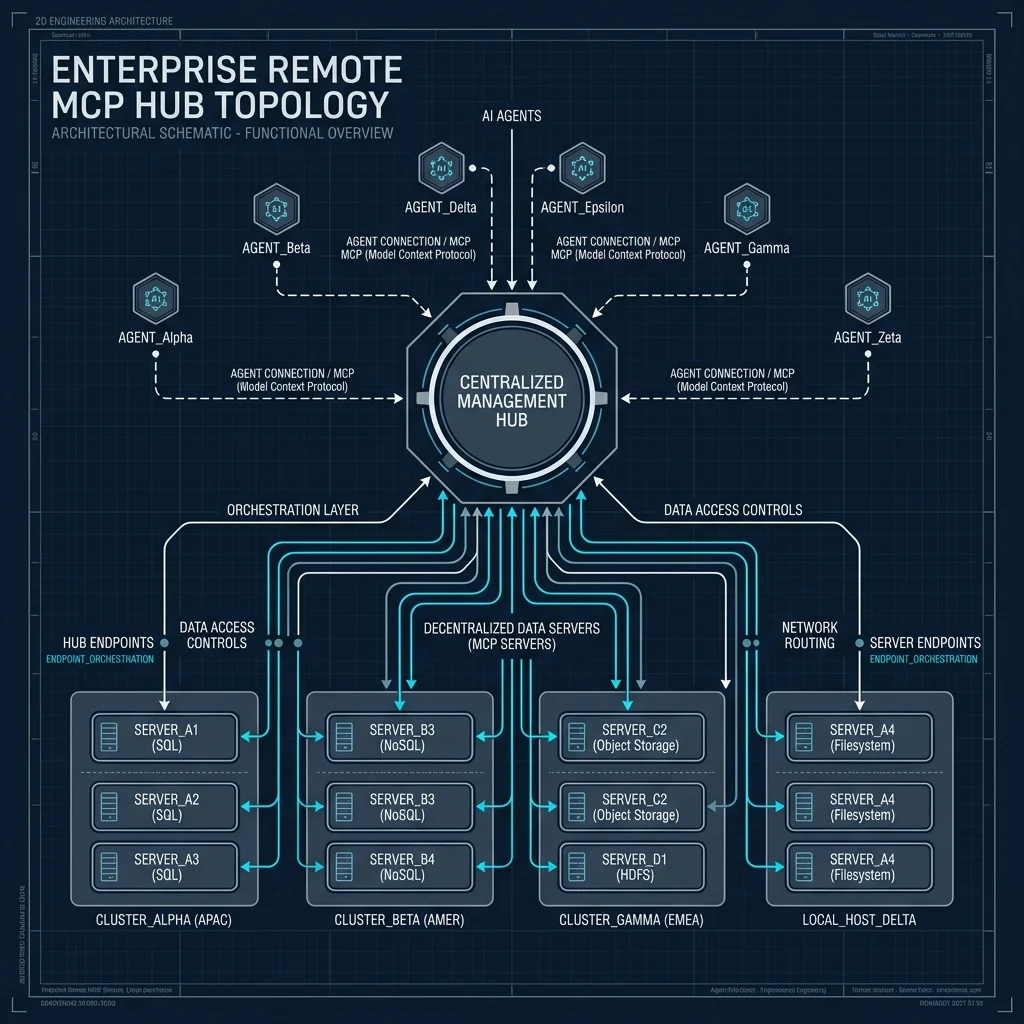
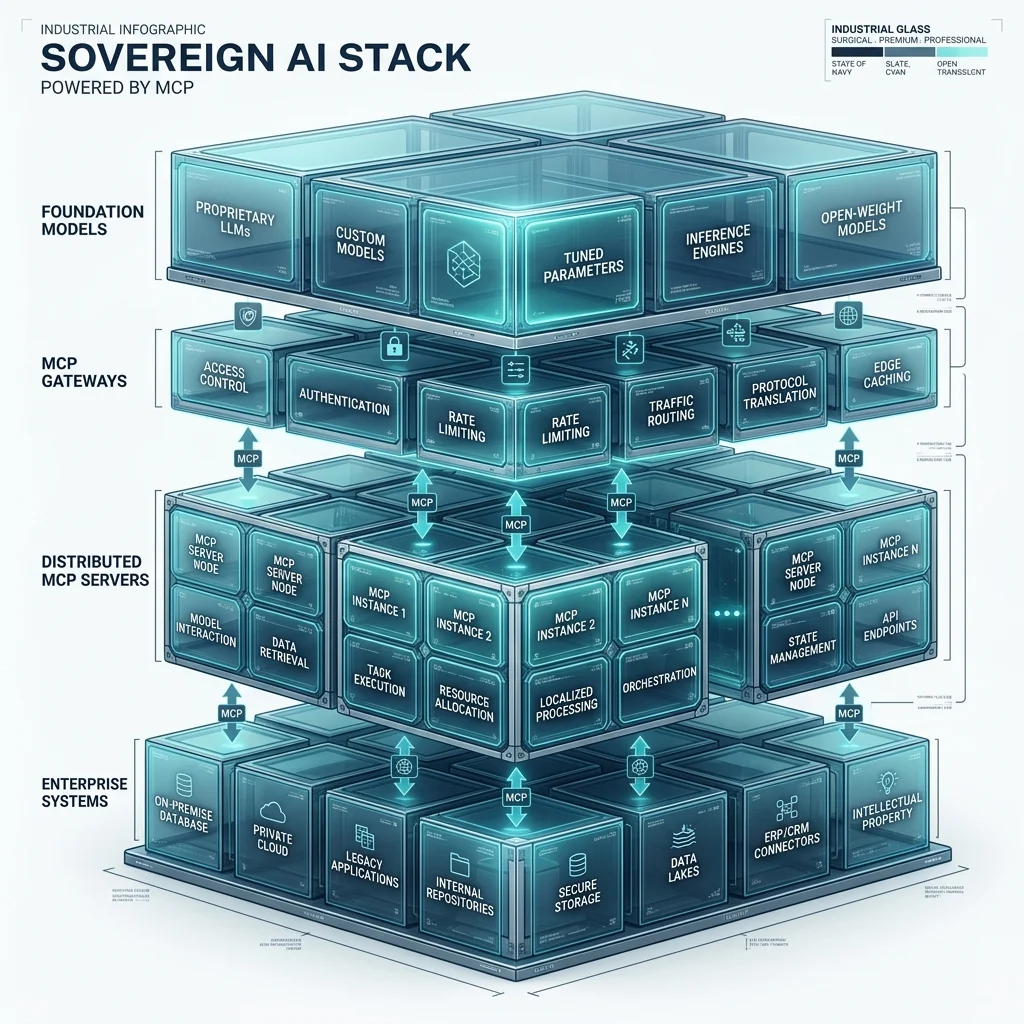
Enterprises no longer run "isolated" MCP servers on single laptops. We have moved toward the Centralized Hub Topology.
| Model | Architecture | Primary Benefit |
|---|---|---|
| Local stdio | Process-to-Process | Highest Security (Zero network exposure) |
| Remote SSE | Client-to-Multi-Server | **Scalability (Shared tool-pool)** |
| Enterprise Hub | Orchestration Mesh | **Governance (Centralized Policy)** |
Hardening the Transport: stdio vs. SSE vs. WebSockets
MCP is transport-agnostic, but your choice determines your security posture.
| Transport | Best Use Case | Security Level |
|---|---|---|
| stdio | Local IDEs / CLI Agents | High (Local process isolation) |
| SSE (Server-Sent Events) | Web Applications / Dashboards | Medium (Standard Web Security) |
| WebSockets | Real-time Streaming / High Throughput | Low (Requires complex Auth/JWT) |
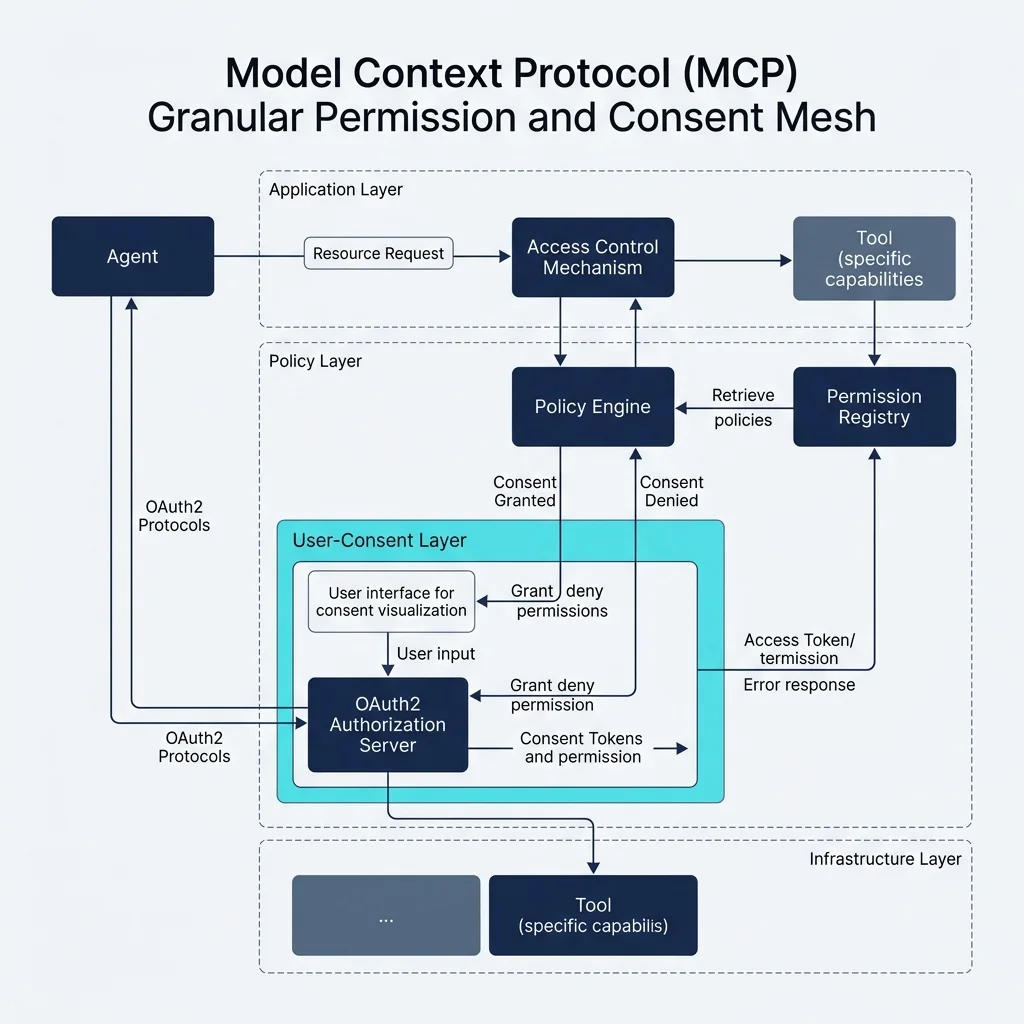
Decision Lineage: ROI Tracking in Protocol-Based Agents
For any agentic deployment to scale, you must prove Decision Lineage. Every tool-call result is logged into a Sovereign Evidence Store.
| Action Type | Protocol Verification | Auditability |
|---|---|---|
| Tool Execute | JSON-RPC Signature | **Absolute (Proof of Action)** |
| Resource Read | Etag/Timestamp | High (Proof of Context) |
| Prompt Sampling | Model Version ID | High (Proof of Reasoning) |
MCPMark 2.2 Benchmarks: The Reasoning Throughput Tax
At ICLR 2026, the MCPMark 2.2 report highlighted the "Reasoning Throughput Tax."
- Efficiency Results: Agents using MCP Resource discovery used 42% fewer tokens than those using raw injection.
- Latency Findings: Every network-based MCP call adds ~15ms of transport overhead. For high-frequency tasks, Local stdio remains the industrial gold standard.
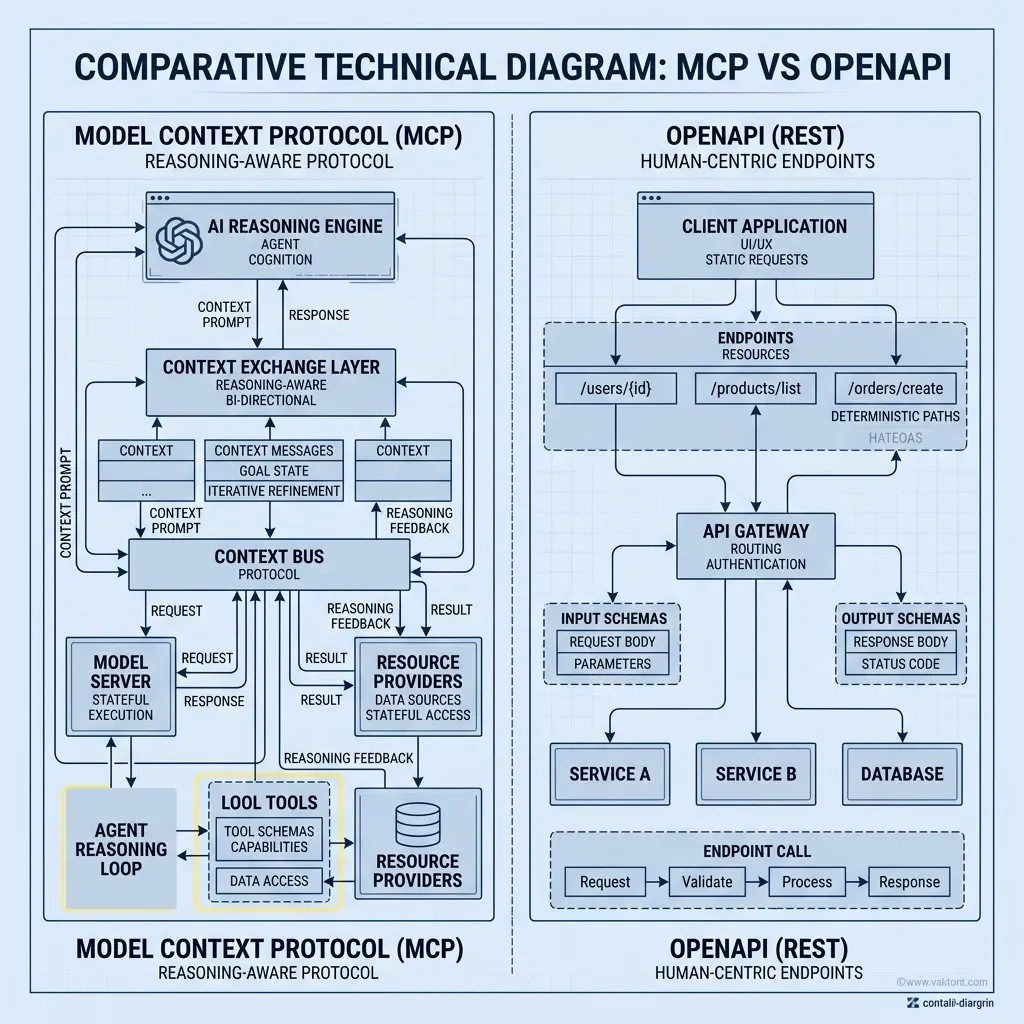
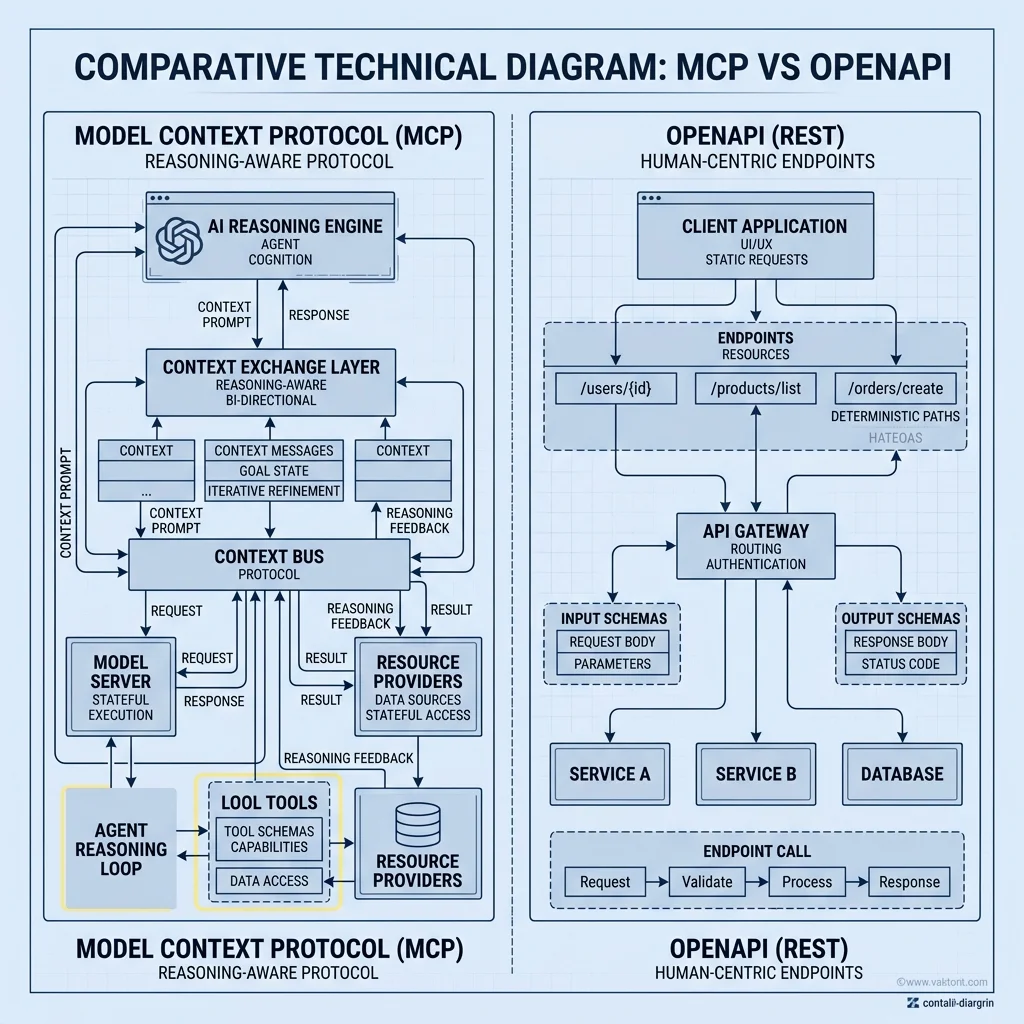
Model Context Protocol (MCP) vs. OpenAPI: The Paradigm Shift
While OpenAPI (REST) remains the standard for human-to-machine interactions, it fails at the 'Reasoning Layer.' OpenAPI requires the model to know the endpoint, method, and payload structure in advance.
MCP flips this: the model asks the server what it can do, and the server provides a reasoning-aware schema.
Best Practices for Industrial MCP Deployment
- Strict Type Hinting: Always use Python type hints; they generate the tool schema.
- Deterministic Timeouts: Implement server-side timeouts (30s) for all tool calls.
- Atomic Tools: Build small, specialized tools rather than large "God Tools."
- Context Caching: For large resources, use
Etagheaders.
FAQ
Can I run MCP over standard HTTP?
MCP typically uses SSE (Server-Sent Events) for HTTP transport. This allows for a persistent, bi-directional stream which is essential for the long-running handshake. Standard REST is too stateless for the complex context negotiation required by high-fidelity agents.
How does MCP handle binary data?
In v1.2+, MCP added support for blob types. Images or raw files are returned as base64-encoded strings with a specific mimeType in the content array. This allows the host to "see" charts or diagrams generated by the server.
Is there a performance penalty compared to raw API calls?
Yes. The JSON-RPC wrapping adds ~10-20ms of transport latency. However, the gains in reliability and discovery far outweigh the cost in 99% of enterprise use cases.
What is Progressive Discovery in MCP 2.0?
Progressive Discovery is a mechanism that allows the model to search for tools as needed, rather than loading every schema at start-up. This prevents context bloat and maintains reasoning precision for models with smaller context windows.
How do MCP Triggers work?
MCP Triggers use webhooks to proactively send notifications from the server to the agent when a resource changes. This moves agents from a 'Reactive' polling model to a 'Proactive' autonomous model.
About the Author
Vatsal Shah is a world-class AI Solutions Architect and the principal engineer behind the Sovereign Industrial Blueprint--"the definitive implementation framework for deterministic agentic orchestration. He specializes in building high-performance Agentic Mesh systems using MCP, LangGraph, and Rust-based AI runtimes. Vatsal consults for Fortune 500 firms on closing the 'Action Gap' and transitioning from legacy chatbots to autonomous infrastructure.
Additional Intelligence Assets