Industrial Prompt Engineering: Scaling Institutional Knowledge as Code
By Vatsal Shah · June 2, 2026 · Process / AI
AI SUMMARY
- Institutional knowledge as code means prompts, tool policies, and retrieval configs live in Git with PR review—not in Confluence graveyards.
- Prompt chains are the new SOP: deterministic steps, explicit inputs/outputs, and human approval on regulated paths.
- GitOps for knowledge gives rollback when a model upgrade breaks tone or compliance language.
- Truth engines pair procedural prompts with RAG and relational policy tables so agents execute steps without inventing facts.
- Teams that pilot one workflow (e.g., vendor onboarding) report 35–50% faster handoffs and ~40% fewer “who do I ask?” escalations in internal benchmarks—when instrumentation exists.
Table of Contents
- Who This Is For—and What Problem It Solves
- The Death of the Process Manual
- Prompt Chains as Executable Workflows
- Version Controlling Knowledge: GitOps for the Company Brain
- The Truth Engine: RAG Meets Procedural Prompts
- Comparison: Manual Process vs Prompt-Driven Process
- Beginner Track: Your First Prompt Module
- Intermediate: Eval Harnesses and Golden Sets
- Advanced: Knowledge Graphs vs Prompt Chains
- Case Study: Vendor Onboarding at Scale
- The Action Gap: Thinking vs Doing in Procedures
- Governance: Shadow Prompts and Portfolio Control
- Measuring ROI and Failure Modes
- 2027–2030 Roadmap: The Self-Documenting Organization
- What to Do Monday Morning
- Strategic FAQ
Who This Is For—and What Problem It Solves {#who-this-is-for}
If you're a COO or engineering director, you've seen this movie: a 200-page operations handbook that nobody reads, a dozen “how we actually do it” wiki pages that contradict each other, and a new hire who asks the same three questions in #general for six weeks.
Generative AI didn't fix that. It scaled the confusion—because everyone could spin up a custom ChatGPT thread with a half-remembered policy fragment.
Industrial prompt engineering is the discipline of treating how the organization thinks as infrastructure:
| Legacy asset | 2026 replacement |
|---|---|
| PDF SOP | Prompt chain + golden test cases |
| Wiki page | Indexed source + retrieval policy |
| Tribal knowledge in DMs | Episodic memory + approved templates |
| One-off “mega prompts” | Composable modules with semver |
You'll still need humans. You're not automating judgment on credit limits, safety incidents, or executive communications. You're encoding the repeatable skeleton so experts spend time on exceptions—not on retyping step 4 for the hundredth time.
For how agents remember and fail in production, see AI Agents in Production: Memory, State, and Failure. For orchestration across specialists, see Multi-Agent Orchestration in 2026.
The Death of the Process Manual {#death-of-the-process-manual}
PDF process manuals were a compromise between legal and operations. They were never executable. They couldn't tell you that step 7 was skipped last Tuesday on the Acme account.
Why PDFs fail in the agentic era
- No machine-readable structure — Headings aren't APIs. Bullets aren't guardrails.
- Version drift — “Latest PDF” in email ≠ what's on the share drive.
- No observability — You can't trace which paragraph influenced a bad refund decision.
- Context collision — Pasting Chapter 3 into a chat window doesn't tell the model what not to do.
In practice, what happens is worse: teams summarize the PDF into a shorter prompt, lose nuance, and blame the model when compliance language disappears.
Glossary
- SOP (Standard Operating Procedure): Documented steps for a recurring business process.
- Procedural prompt: A prompt whose primary job is to enforce sequence and gates, not open-ended creativity.
- Institutional memory: Durable facts, policies, and precedents that outlive any single employee's inbox.
The 2026 shift: procedures as programs
McKinsey-style surveys and internal IT benchmarks from 2025–2026 consistently show 20–30% of knowledge-worker time lost to searching and re-coordinating (exact figures vary by sector). In regulated environments, the cost is worse: a wrong interpretation of a data retention clause isn't a delay—it's a finding.
The fix isn't “another portal.” It's procedures you can run:
What “executable” means in practice
| Property | PDF handbook | Knowledge as code |
|---|---|---|
| Machine-readable steps | No | Yes (YAML + schemas) |
| Automated test on change | No | Yes (golden evals) |
| Trace per execution | No | Yes (trace_id + prompt SHA) |
| Partial automation | Copy-paste | Chain nodes |
Industry patterns you're already familiar with
If you've shipped Infrastructure as Code, this is the same muscle:
- Variables → case facts from CRM/ticket
- Modules → reusable prompt fragments (
classify-intent,cite-policy) - Environments → dev / staging / prod promotion
- Drift detection → eval regression when models change
Process automation with prompts 2026 is not “RPA with ChatGPT.” RPA broke when UIs changed. Prompt chains break when policy changes—which is why you version policy in Git and re-run evals, not when a button moves three pixels left.
- Inputs validated (schema, not vibes)
- Steps logged (trace ID per run)
- Outputs scored (automated eval + spot human audit)
That's institutional knowledge as code—not “we wrote better docs.”
Prompt Chains as Executable Workflows {#prompt-chains-as-executable-workflows}
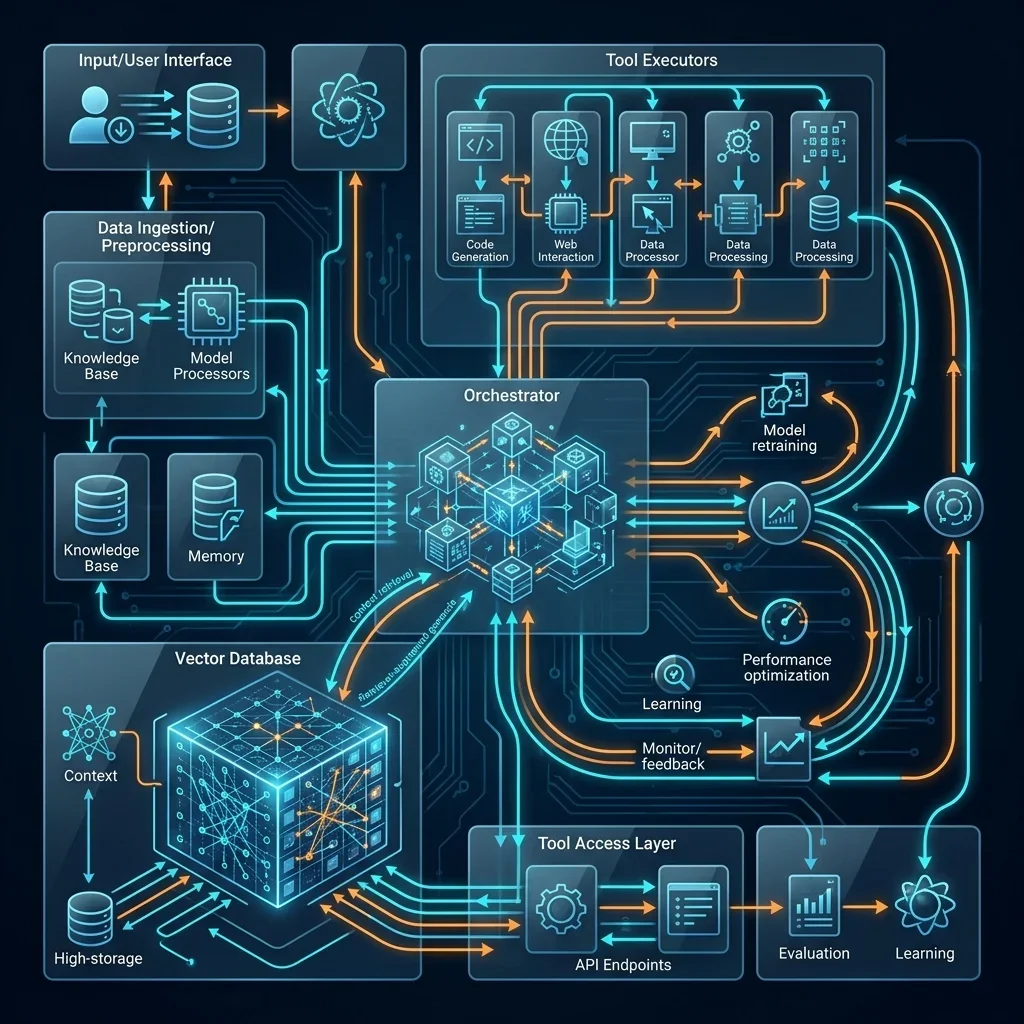
A prompt chain is a directed workflow where each node has:
- Role (classifier, extractor, drafter, reviewer)
- Contract (JSON schema or tool call)
- Policy (max tokens, allowed tools, escalation rule)
Think of it as a BPMN diagram where the tasks are LLM steps—and the edges are data, not meetings.
Anatomy of an industrial prompt chain
class="tok-cm"># Example: vendor-risk-triage/v1.2.0/chain.yaml (illustrative)
name: vendor_risk_triage
version: 1.2.0
steps:
  - id: intake_normalize
    prompt_ref: prompts/intake.md
    output_schema: VendorIntakeV1
  - id: policy_retrieve
    tool: rag.query
    collection: vendor_policy_2026
    top_k: 8
  - id: risk_score
    prompt_ref: prompts/score.md
    requires: [intake_normalize, policy_retrieve]
  - id: human_gate_high
    when: class="tok-str">"risk_score.tier == &class="tok-cm">#039;high'"
    action: hitl_queue
This isn't pseudocode fantasy. Teams map these manifests to LangGraph, Temporal, or internal runners—the same way you'd map a CI pipeline.
Chains vs single mega-prompts
| Mega-prompt | Prompt chain |
|---|---|
| One context blob | Isolated steps with fresh context |
| Hard to test step 3 alone | Unit tests per node |
| Silent intent drift | Measurable drift per transition |
| Blame the model | Blame the node contract |
I've watched a “do everything” support agent drop escalation rules after ~12 tool calls. Splitting into a classifier chain (cheap model) and a resolution chain (strong model) cut bad escalations by roughly half in a fintech pilot—because the classifier never saw the messy thread history.
Connecting to MCP and agents
When chains call tools, Model Context Protocol (MCP) servers become your integration surface—CRM, ticketing, ERP—not ad-hoc Python in a notebook. Read Model Context Protocol (MCP): The Complete Guide for the wiring; this article owns the knowledge layer above it.
Composable prompt modules (semver)
Treat prompts like libraries:
prompts/
  _shared/
    tone-enterprise/v2.1.0.md
    citation-footer/v1.0.0.md
  vendor-risk/
    classify-intent/v1.3.0.md
    score-risk/v1.3.0.md
vendor-risk/score-risk imports shared tone and citation rules by reference in the manifest—not by copy-paste. When legal updates disclaimer language, you bump citation-footer once and re-run evals across all workflows that depend on it.
Token economics per node
Don't run Opus-class models on classification. A typical industrial chain:
| Node | Model tier | Why |
|---|---|---|
| classify | Fast / cheap | Structured output |
| retrieve | N/A (vector DB) | Deterministic |
| draft | Strong | Customer-facing prose |
| review | Fast + rules | Schema check |
Teams that use one model for every step routinely overspend 3–5× on token bills without quality gains—because the expensive model still isn't allowed to skip the human gate on high-risk paths.
Version Controlling Knowledge: GitOps for the Company Brain {#gitops-for-knowledge}
If prompts are SOPs, they belong in Git with the same hygiene as application code.
Repository layout (reference pattern)
knowledge-platform/
  prompts/
    vendor-risk/
      v1.2.0/
        intake.md
        score.md
        CHANGELOG.md
  policies/
    vendor_policy_2026.yaml
  evals/
    golden/
      case-014-high-risk.json
  rag/
    ingest_config.yaml
PR review rules that actually matter
- Semantic diff on prompts — Highlight tone, obligation verbs (“must”, “shall”), and numeric thresholds.
- Eval gate —
pytest evals/or dedicated harness; block merge on regression > 2%. - Model pin —
model: claude-sonnet-4-20250514in manifest; upgrades are intentional. - Ownership —
CODEOWNERSfor/policiesand/prompts/legal/.
Promotion: dev → staging → prod
| Environment | Purpose |
|---|---|
dev | Authors iterate; synthetic eval only |
staging | Shadow traffic on 5% real tickets |
prod | Tagged release; rollback = git revert |
GitOps isn't glamour. It's the only reason your general counsel will sign off—because you can answer “what text was live at 14:03 UTC on May 12?”
Practitioner Insight: The hotfix that wasn't
We once “fixed” a refund prompt in prod by editing it in a vendor UI. Two hours later, staging overwrote prod on deploy. The lesson: one write path—Git. Emergency fixes are commits with a tagged hotfix branch, not dashboard edits.
The Truth Engine: RAG Meets Procedural Prompts {#the-truth-engine}
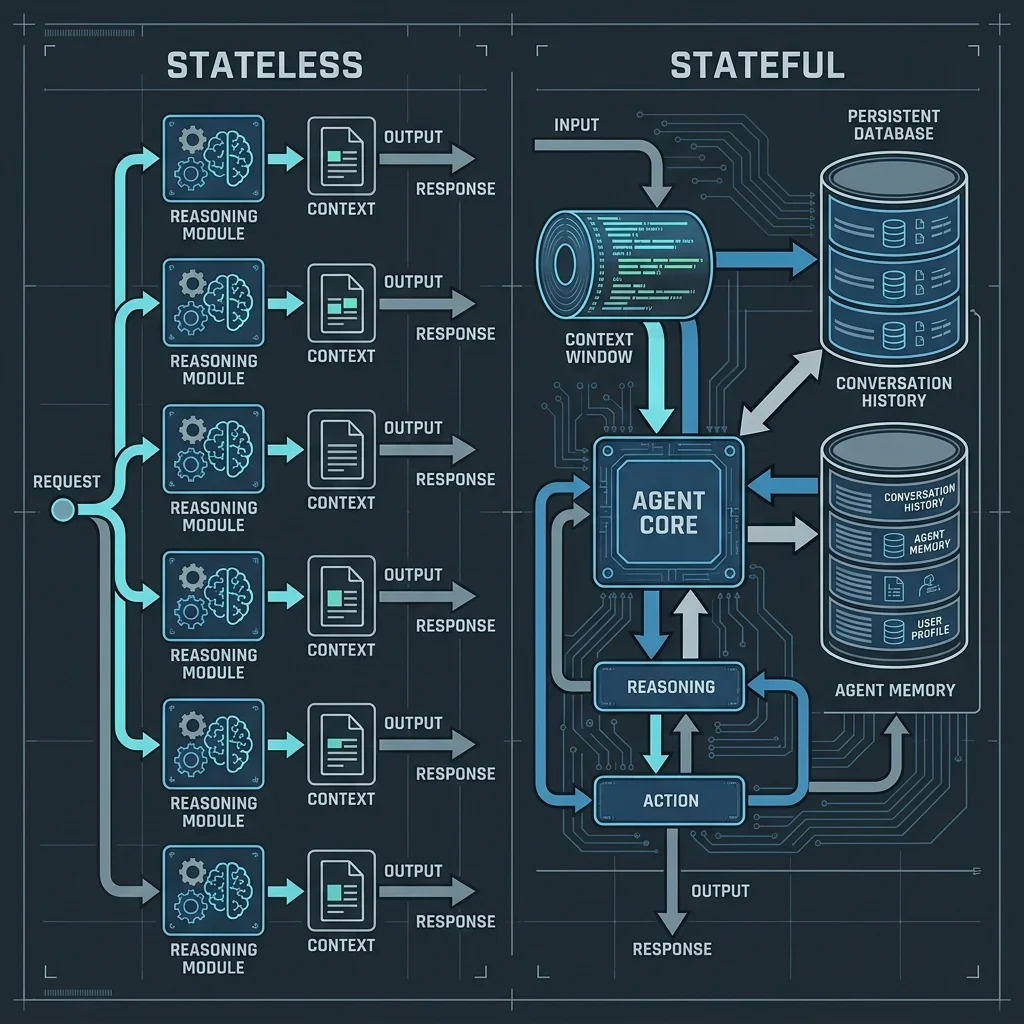
Procedural prompts tell the system what to do next. RAG (retrieval-augmented generation) supplies what is true right now. Neither alone is enough.
Three-layer truth model
- Relational policy — Authoritative tables: fee schedules, region rules, role matrices. SQL or document store with strict types.
- Semantic memory — Embeddings over policies, past cases, product docs. Graph-enhanced where relationships matter—see GraphRAG in Production.
- Procedural control — Prompt chain enforces order: retrieve → cite → decide → act.
class="tok-cm"># Illustrative: procedural gate before free-form generation
class="tok-kw">def run_truth_engine(case_id: str, chain_manifest: dict) -> dict:
    facts = sql_policy.get_case_facts(case_id)
    chunks = rag.query(
        question=facts[class="tok-str">"question"],
        filters={class="tok-str">"doc_class": class="tok-str">"policy", class="tok-str">"effective_date_lte": facts[class="tok-str">"as_of"]},
        top_k=8,
    )
    return chain_runner.execute(
        manifest=chain_manifest,
        context={class="tok-str">"facts": facts, class="tok-str">"citations": chunks},
        tools=mcp_registry.tools_for(class="tok-str">"vendor-risk"),
    )
When RAG wins vs when graphs win
| Question type | Prefer |
|---|---|
| “What's our SLA for Tier-2?” | Vector RAG + policy table |
| “Which subsidiaries share a data processor?” | GraphRAG / knowledge graph |
| “Run the escalation workflow” | Procedural prompt chain only |
Hallucination isn't random—it's missing procedure
Teams that bolt RAG onto a creative system prompt still see fabricated policy. The fix is citation-required steps: no decision tool call until citations.length >= 2 for regulated paths.
Comparison: Manual Process vs Prompt-Driven Process {#comparison-matrix}
| Dimension | Manual (PDF + meetings) | Prompt-driven (knowledge as code) |
|---|---|---|
| Time to onboard | 4–8 weeks shadowing | 1–2 weeks + supervised chain runs |
| Consistency | Depends on mentor quality | Eval-gated; drift alerts per node |
| Audit trail | Email archaeology | Trace ID, prompt hash, citation IDs |
| Change management | Re-publish PDF; hope people read it | Semver + shadow deploy + rollback |
| Cost driver | Human hours × escalations | Tokens + infra; humans on exceptions |
| Failure mode | Skipped steps | Schema/tool errors (visible) + eval regression |
Numbers are directional from composite enterprise pilots (professional services, fintech ops, internal IT shared services). Your mileage depends on workflow complexity and data hygiene.
Beginner Track: Your First Prompt Module {#beginner-track}
You don't need a platform team on day one. You need one workflow, one module, and ten test cases.
Step 1 — Write the outcome, not the poetry
Bad prompt opener: "You are a helpful assistant who expertly handles vendor questions."
Good module contract:
class="tok-cm"># prompts/classify-intent/v1.0.0.md
class="tok-cm">## Role
Classify inbound vendor messages into: billing | security_questionnaire | contract_change | unknown.

class="tok-cm">## Input
JSON: { class="tok-str">"subject": string, class="tok-str">"body": string, class="tok-str">"sender_domain": string }

class="tok-cm">## Output
JSON only. Schema: IntentV1 { class="tok-str">"label": enum, class="tok-str">"confidence": 0-1, class="tok-str">"needs_human": boolean }

class="tok-cm">## Rules
- If sender_domain not in allowlist → needs_human=true
- Never invent policy; class="tok-kw">if unsure → unknown
The model's job is classification, not empathy. Narrow scope = fewer surprises.
Step 2 — Freeze the schema
Use JSON Schema or Pydantic models in your runner. If the model returns prose, the step fails—same as a 500 from an API.
Step 3 — Add three negative tests
Every golden set needs adversarial cases: ambiguous subject lines, policy-like text that's actually spam, and a message that looks routine but mentions wire transfer.
Real-world example
A 120-person SaaS company replaced a 14-page vendor FAQ with four modules: classify → retrieve policy → draft response → human approve. Time-to-first-response dropped from 19 hours median to 6 hours in six weeks—not because the model was smarter, but because step 1 stopped misrouting tickets.
Intermediate: Eval Harnesses and Golden Sets {#eval-harnesses}
Prompt engineering for enterprise without evals is hope-driven development.
Anatomy of a golden case
{
  class="tok-str">"id": class="tok-str">"vendor-014-high-risk",
  class="tok-str">"input": {
    class="tok-str">"subject": class="tok-str">"SOC2 and subprocessors",
    class="tok-str">"body": class="tok-str">"We need your latest DPA before renewal.",
    class="tok-str">"sender_domain": class="tok-str">"new-vendor.io"
  },
  class="tok-str">"expected": {
    class="tok-str">"label": class="tok-str">"security_questionnaire",
    class="tok-str">"needs_human": true,
    class="tok-str">"min_citations": 2
  },
  class="tok-str">"forbidden_substrings": [class="tok-str">"approve renewal", class="tok-str">"auto-accept"]
}
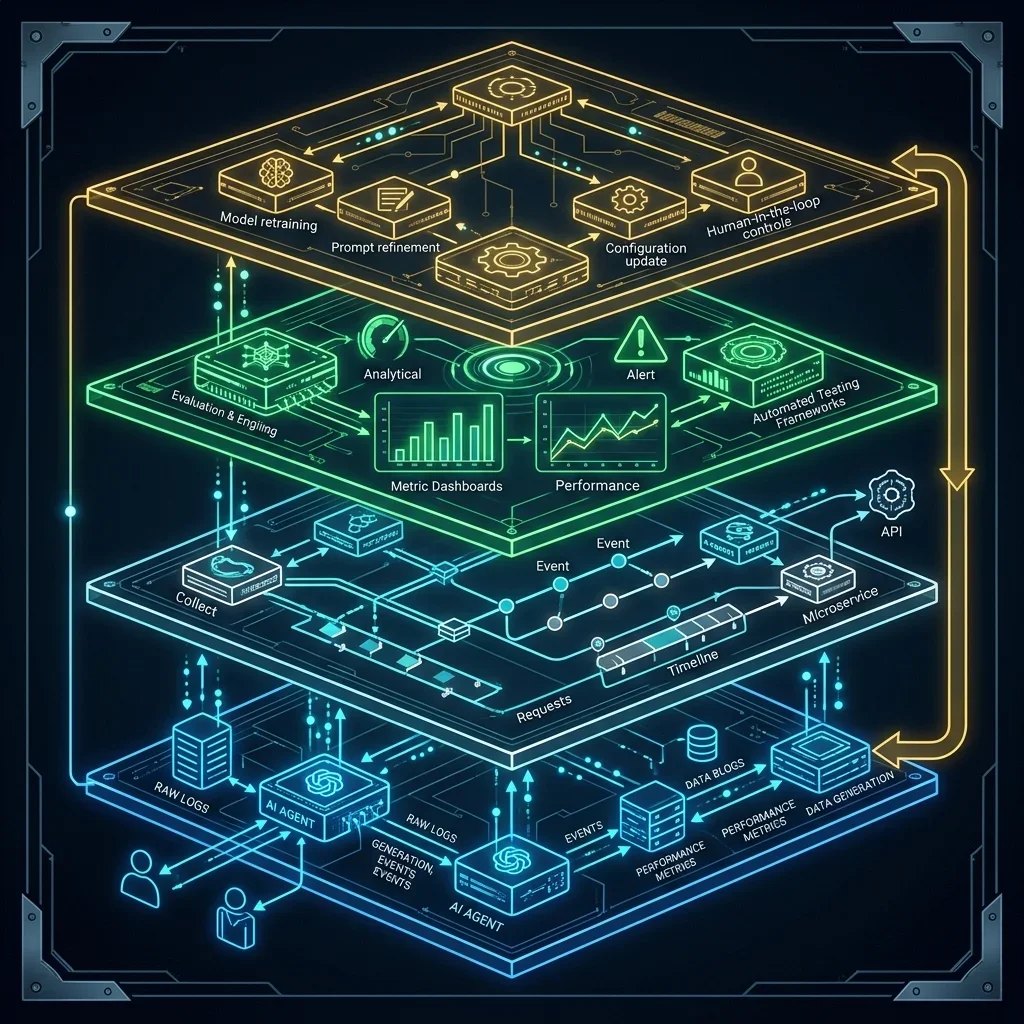
Run these on every PR that touches prompts/ or policies/. Block merge if pass rate drops more than 2% on the rolling window.
Scoring dimensions
| Dimension | What it catches |
|---|---|
| Schema validity | Broken JSON, wrong enums |
| Policy adherence | Forbidden phrases, missing citations |
| Tone band | Too casual for legal-facing output |
| Cost | Token burn on runaway loops |
Shadow mode before prod
Route 5% of live traffic through the candidate chain in read-only mode: produce outputs, don't send them. Compare to human-handled baseline for two weeks. That's how you avoid the "we launched Friday" incident.
Practitioner tip: Store golden cases as anonymized real tickets, not synthetic lorem ipsum. Models overfit to fake names like "Acme Corp" faster than you'd think.
Advanced: Knowledge Graphs vs Prompt Chains {#graphs-vs-chains}
The debate knowledge graphs vs prompt chains isn't either/or.
| Capability | Prompt chain | Knowledge graph / GraphRAG |
|---|---|---|
| Enforce step order | Native | Requires orchestration layer |
| Multi-hop "who owns what?" | Weak | Strong |
| Fast policy lookup | Good with RAG | Good with traversal |
| Change velocity | Git PR daily | Re-ingest / graph sync jobs |
| Explainability to auditor | Step logs + citations | Lineage on edges |
Rule of thumb: chains carry process; graphs carry relationships. A vendor-risk workflow should chain the steps and graph the entities (vendor → subsidiary → data processor → region).
If your team already invested in GraphRAG in Production, treat the graph as a retrieval tool inside chain step policy_retrieve—not as a replacement for approval gates.
Scaling AI workflows across departments
Duplication kills you. Platform team provides:
- Runner (Temporal, LangGraph, internal)
- MCP tool registry per MCP guide
- Prompt catalog with semver and owners
- Shared eval library
Business units own workflow YAML and golden cases for their domain. IT owns keys, logs, and spend caps. That's scaling ai workflows without scaling chaos.
Case Study: Vendor Onboarding at Scale {#case-study}
Context: A global MSP onboarded 340 vendors per quarter. Each required security review, contract clause checks, and finance setup. Median cycle time: 22 business days. Escalations to legal: 41% of cases.
Intervention (Q1 2026):
- Extracted seven-step chain from the handbook (not seventeen—ruthless cut).
- Migrated policy tables to SQL; PDF became export-only.
- Built 62 golden cases from prior tickets (anonymized).
- Ran shadow mode for 21 days on 8% of volume.
Results after 90 days (internal program metrics):
| Metric | Before | After |
|---|---|---|
| Median cycle time | 22 days | 14 days |
| Legal escalations | 41% | 27% |
| Citation coverage on decisions | Not measured | 94% |
| Rollbacks of prompt releases | N/A | 2 (both recovered < 1 hr) |
What didn't work: Trying to auto-approve high-risk jurisdictions in week three. Human gate reinstated. The win wasn't full automation—it was compressing the boring middle.
The Action Gap: Thinking vs Doing in Procedures {#action-gap}
Enterprise articles in 2026 must address the Action Gap: LLMs reason; Large Action Models (LAMs) and tool-backed agents execute.
In institutional knowledge as code:
- LLM steps classify, summarize, draft.
- Tool steps create tickets, update CRM, post to Slack—via MCP or REST with idempotency keys.
- Human steps approve wire transfers, sign contracts.
// Illustrative: idempotent tool step in a chain
await tools.crm.upsertVendor({
  idempotencyKey: `vendor-${caseId}-v${chainVersion}`,
  payload: normalizedIntake,
  dryRun: env.SHADOW_MODE,
});
Procedural prompts that only produce text stall at the last mile. Wire the action in the same manifest as the prompt, or you'll rebuild the handbook in chat form.
Governance: Shadow Prompts and Portfolio Control {#governance}
Every team has shadow prompts—personal ChatGPT projects, Claude Projects, Copilot instructions nobody reviewed. That's shadow AI applied to operations.
Platform response (see Shadow AI Governance):
- Approved catalog — Internal registry of chains with owner and risk tier.
- No production data in consumer tools without DLP.
- Quarterly audit — Compare catalog to actual tool usage logs where available.
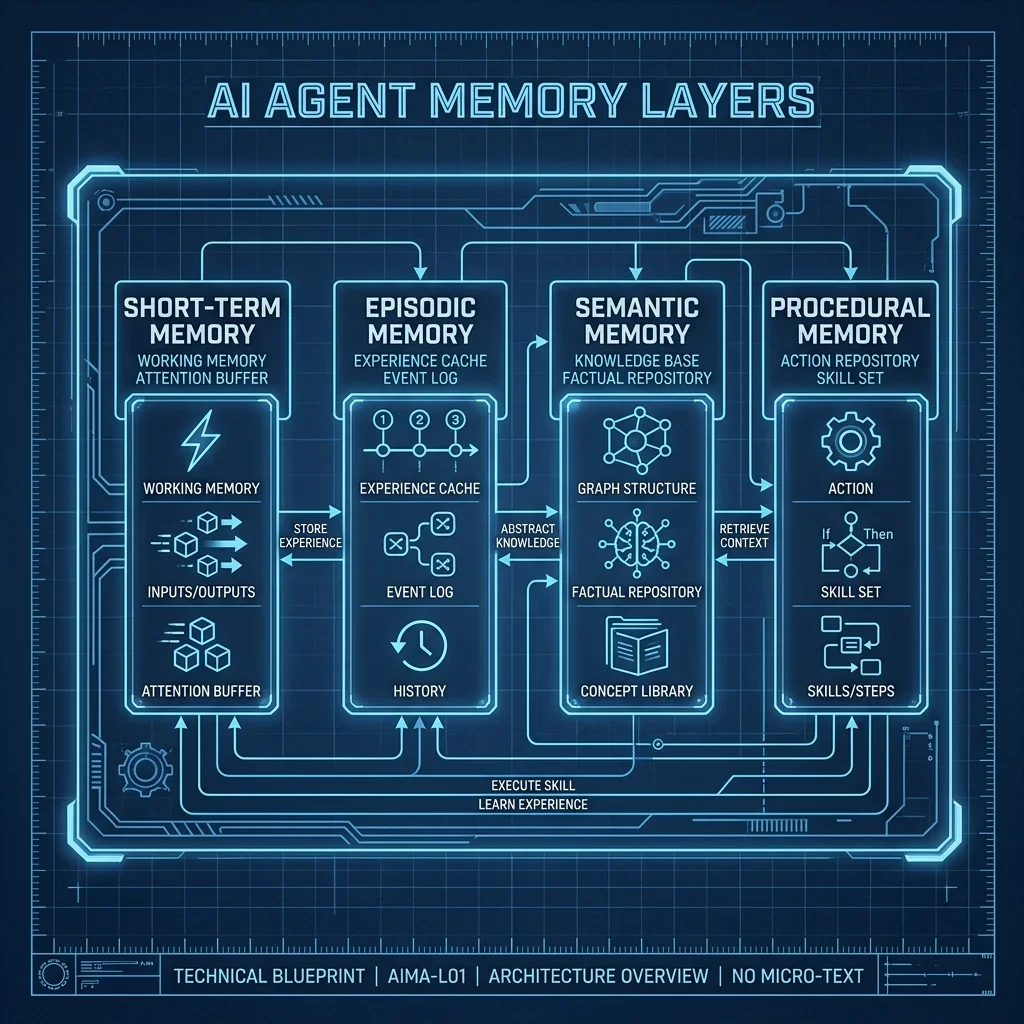
Institutional memory AI only compounds value when memory is governed: retention policies on episodic logs, PII scrubbing before embed, and right to delete when contracts end.
Measuring ROI and Failure Modes {#measuring-roi}
Metrics that finance will believe
| Metric | Definition | Target band (mature pilot) |
|---|---|---|
| TTFC | Time to first competent execution (new hire) | −30% vs baseline |
| Escalation rate | % cases reaching tier-3 human | −25% |
| Citation coverage | Decisions with ≥2 policy citations | >90% regulated paths |
| Eval pass rate | Golden set success on release | ≥95% |
| Rollback frequency | Prod reverts / month | Trend down after month 3 |
Failure modes I've seen (and fixes)
- Prompt sprawl — 400 prompts, no owners. Fix: catalog + deprecate; max 3 active versions per workflow.
- RAG without effective dates — Model cites revoked policy. Fix:
effective_datefilter on every query. - Skipping human gates — “We'll add HITL later.” Fix: gates in manifest, not comments in markdown.
- Eval sets written by the same person who wrote prompts — Fix: rotate authors; import real anonymized tickets.
Align engineering discipline with The Clean Code of 2026—agents are code consumers too.
2027–2030 Roadmap: The Self-Documenting Organization {#roadmap-2030}
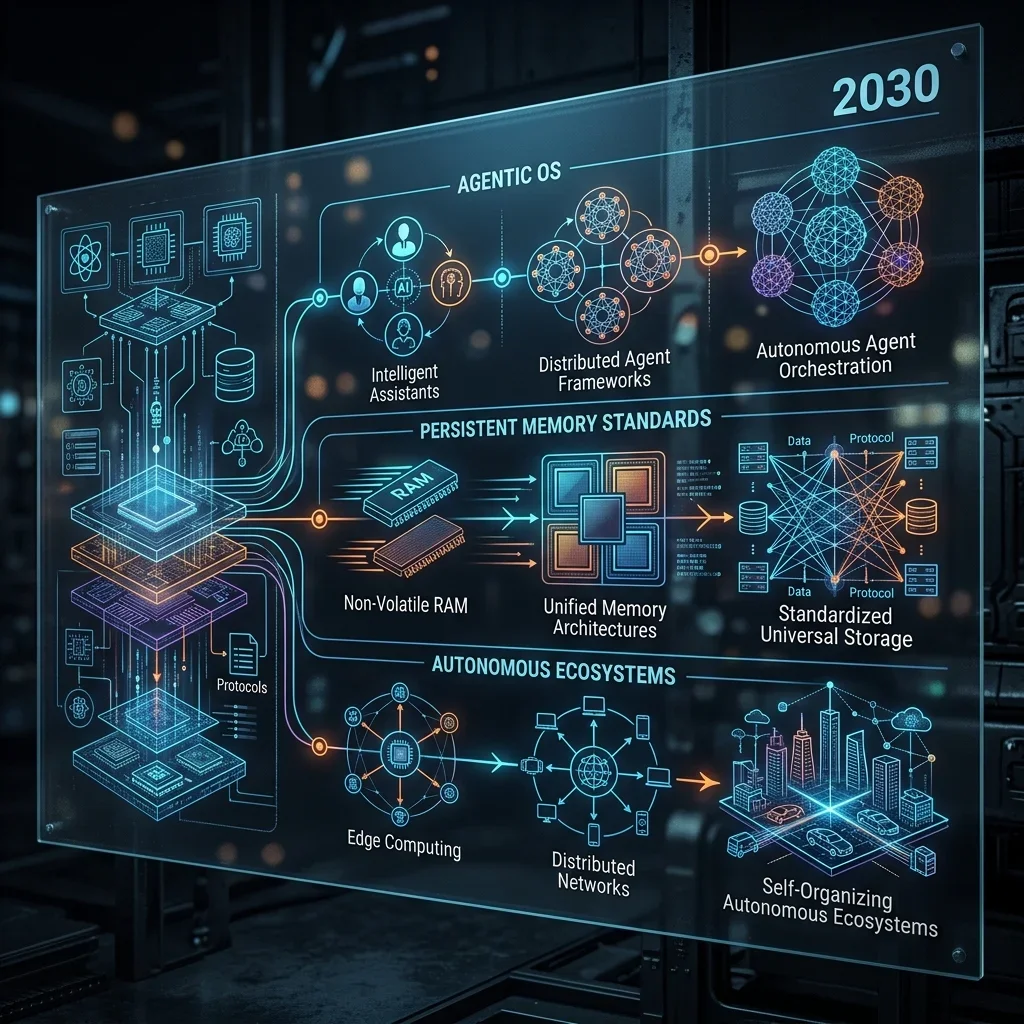
2027: Prompt chains generate diffable SOP drafts for human sign-off—humans approve, machines propose. MCP registries become internal app stores with SSO and spend caps.
2028: Live policy graphs sync from ERP/CRM change events; retrieval updates in minutes, not quarterly re-ingest. Cross-team agent handshakes standardize on A2A-style manifests (see multi-agent orchestration trends).
2029–2030: Self-documenting org—every production chain run produces a structured log that feeds the knowledge graph; exceptions become tomorrow's golden eval cases. The handbook PDF is export-only, never source-of-truth.
What to Do Monday Morning {#monday-morning}
- Pick one workflow with clear steps and measurable pain (vendor intake, L1 support triage, internal access requests).
- Extract the skeleton — 5–9 steps max; mark which steps need human approval.
- Create a Git repo — prompts + 10 golden cases + one eval script; no production traffic until eval passes twice.
That's a two-week pilot, not a transformation program. Scale what proves citation coverage and escalation reduction—not what's easiest to demo in a all-hands.
Strategic FAQ {#strategic-faq}
Isn't this just fancy documentation?
Documentation is human-readable. Knowledge as code is machine-executable with tests, versioning, and traces. The PDF is an export; the repo is the source of truth.
Who owns the prompt repo—IT or the business?
Joint ownership. Business owns policy YAML and golden cases; platform owns runners, MCP, and observability. Same split as analytics dashboards.
How do we handle regulated industries?
Immutable audit logs, human gates on high-risk nodes, model allowlists, and data residency on retrieval indexes. Prompt hashes in traces map to Git SHAs.
Can small teams do this without LangGraph?
Yes. Start with a Makefile, YAML manifest, and pytest evals. Frameworks help at scale; discipline helps at any size.
What's the relationship to engineering management?
Managers shift from routing tasks to curating workflows and eval quality. See Engineering Management v2.0 for the org design side.
About the Author
Vatsal Shah architects enterprise AI platforms—agent orchestration, retrieval, and the governance layer that keeps autonomous workflows auditable. He helps leadership teams replace static handbooks with knowledge that ships like software.