
STRATEGIC OVERVIEW
Practitioner breakdown of The 'Clean Code' of 2026: Architecting Deterministic AI Workflows — written for CTOs, VP Engineering, and India GCC leads shipping production AI with measurable ROI.
1. The Death of the 'Chat' Wrapper
For years, developers treated LLMs as black-box "genies"--"you send a string, you get a string, and you pray the string is JSON. This pattern is to the 2026 AI era what 'Spaghetti Code" was to the 1970s.
The "Chat Wrapper" model fails because it lacks Inter-Node Predictability. When you chain five agents together, a 1% error rate in the first node becomes a catastrophic failure by the fifth. In 2026, we have moved from "Chatting" to Orchestrating.
Clean Code today is not about how elegant your Python is; it's about how Deterministic your AI nodes are.
2. Context Engineering: The Standard for Type-Safe Prompting
"Prompt Engineering" (the art of writing clever prose) has been replaced by Context Engineering (the science of structuring data).
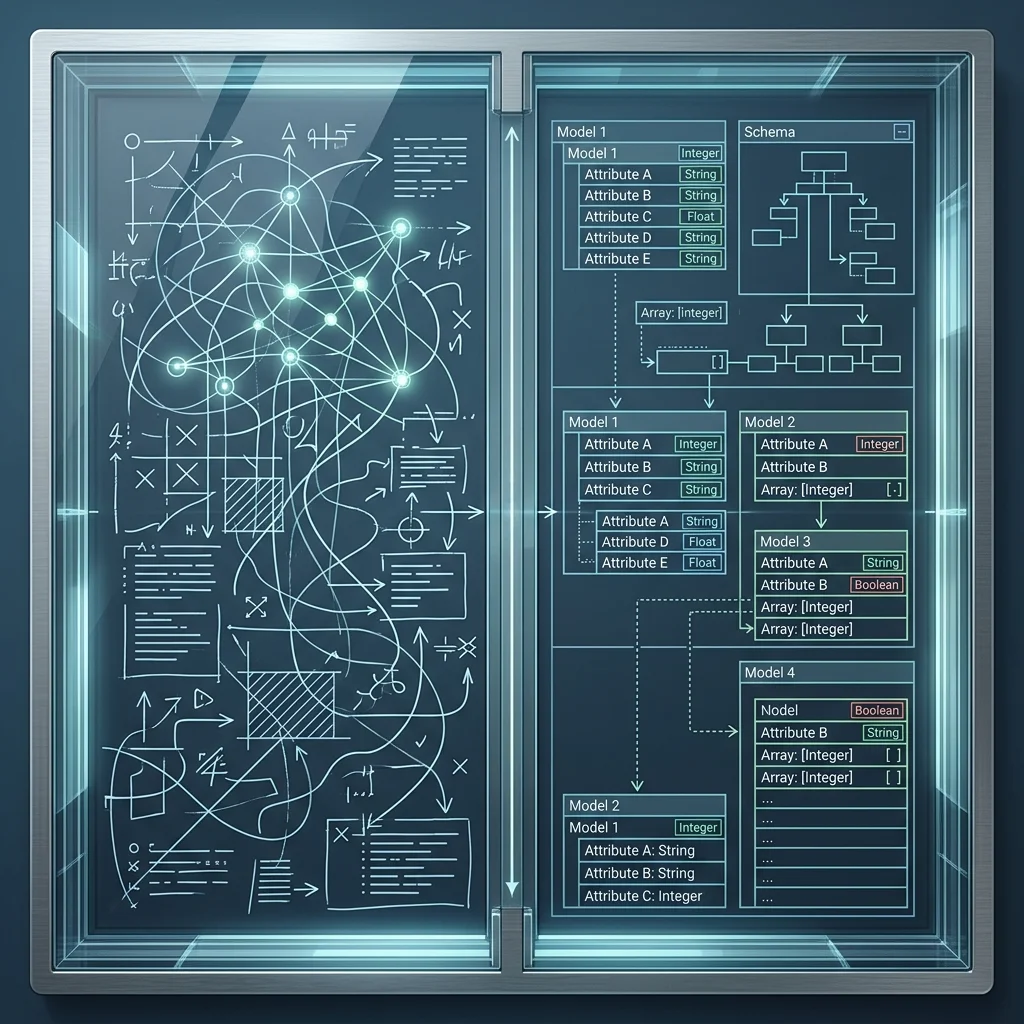
In a modern 2026 stack, we never send "naked strings." Instead, we use Type-Safe Prompting. This means every prompt is backed by a schema (usually Pydantic, TypeScript, or JSON-LD) that defines the exact structure of the input and the required structure of the output.
The Type-Safe Pattern
- Strict Schema Definition: Define the exact JSON structure you need.
- Linguistic Enforcement: Using LSI-hardened system instructions.
- Deterministic Validation: Using standard code (not AI) to re-parse the output against the schema instantly.
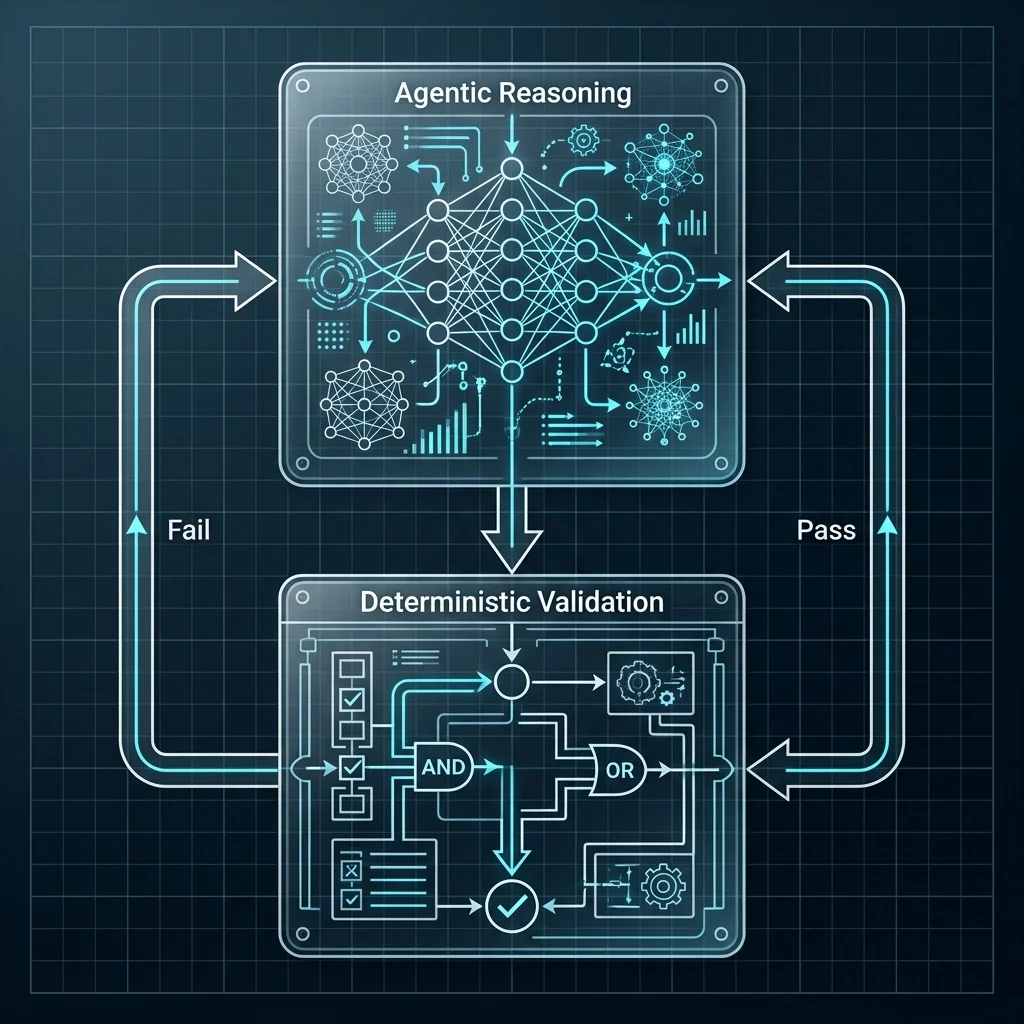
If the AI fails the schema check, the system doesn't crash--"it enters a Refinement Loop or triggers a human signature.
3. EDD: Evaluation-Driven Development
We have moved past TDD (Test-Driven Development) into EDD (Evaluation-Driven Development). Because LLM outputs are probabilistic, a "Pass/Fail" unit test is often too binary for the complexity of human-like reasoning.
The Golden Test Set
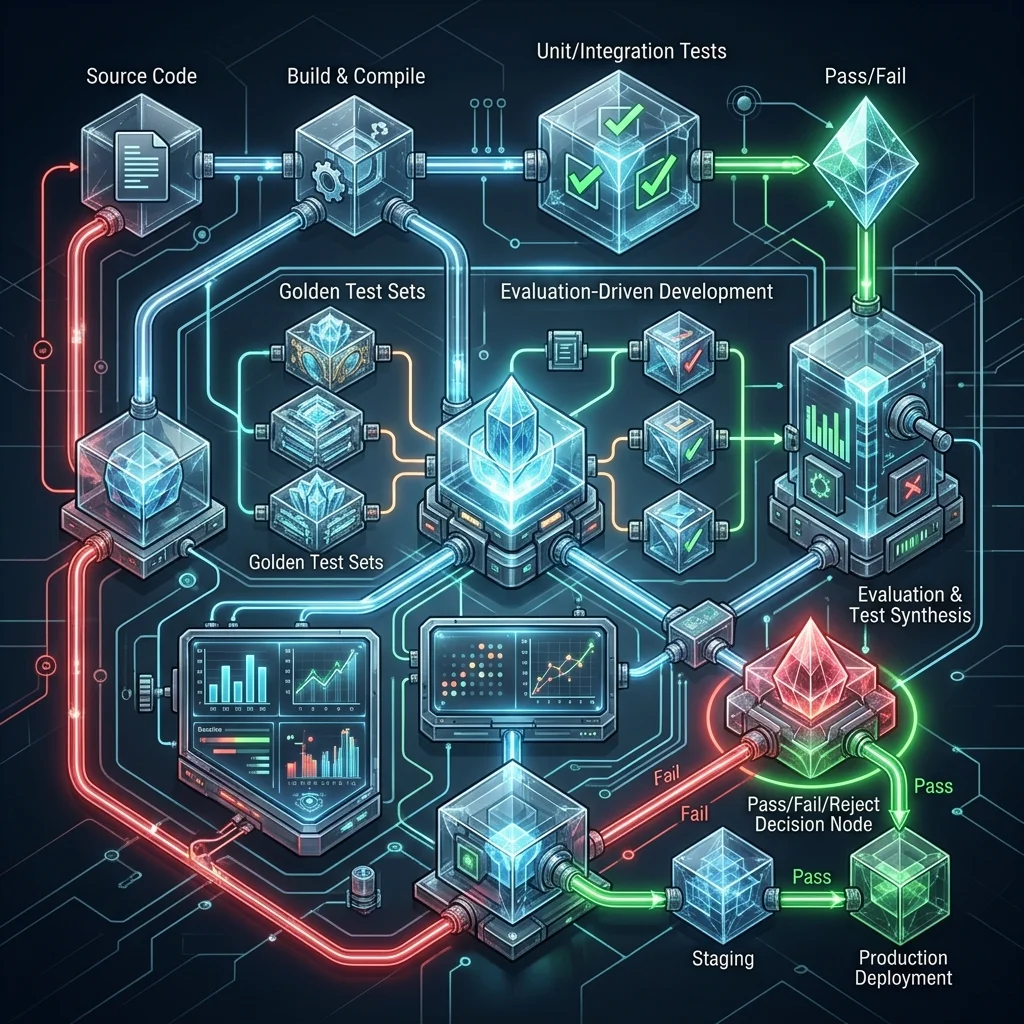
In EDD, we maintain a "Golden Test Set"--"a curated database of representative inputs and their 'ideal" outputs. Every time we update a system prompt or a model version, our CI/CD pipeline runs an autonomous Eval Suite.
We benchmark against:
- Schema Adherence: Did it return valid JSON?
- Latency Jitter: Is the reasoning speed consistent?
- Trust Velocity: Does the output match the "Golden" logic?
If the "Eval Score" drops below 0.98, the build is rejected. We treat prompts with the same version-control rigor as production binaries.
Practitioner Note: The 100% Determinism Myth
Don't try to make the LLM 100% deterministic--"that's what a Python if statement is for. The goal of Clean Code 2026 is to use the LLM for its Intelligence (the creative/reasoning parts) and use your code for Validation. If you can solve it with a regex, don't use a billion-parameter model.
4. The Hybrid Deterministic Model
The most effective design pattern in 2026 is the Hybrid Workflow. We stop asking the AI to 'do everything" and instead use it for "Selective Intelligence."
The Logic Split
- Agentic Node (LLM): Intent extraction, reasoning, and creative synthesis. Output is always structured JSON.
- Deterministic Node (Code): Calculation, data manipulation, external API triggers, and state persistence.
By decoupling intelligence from execution, we ensure that while the reasoning might be probabilistic, the action is always 100% predictable. This is the cornerstone of Sovereign Reliability.
5. Traceability & Reasoning Audits
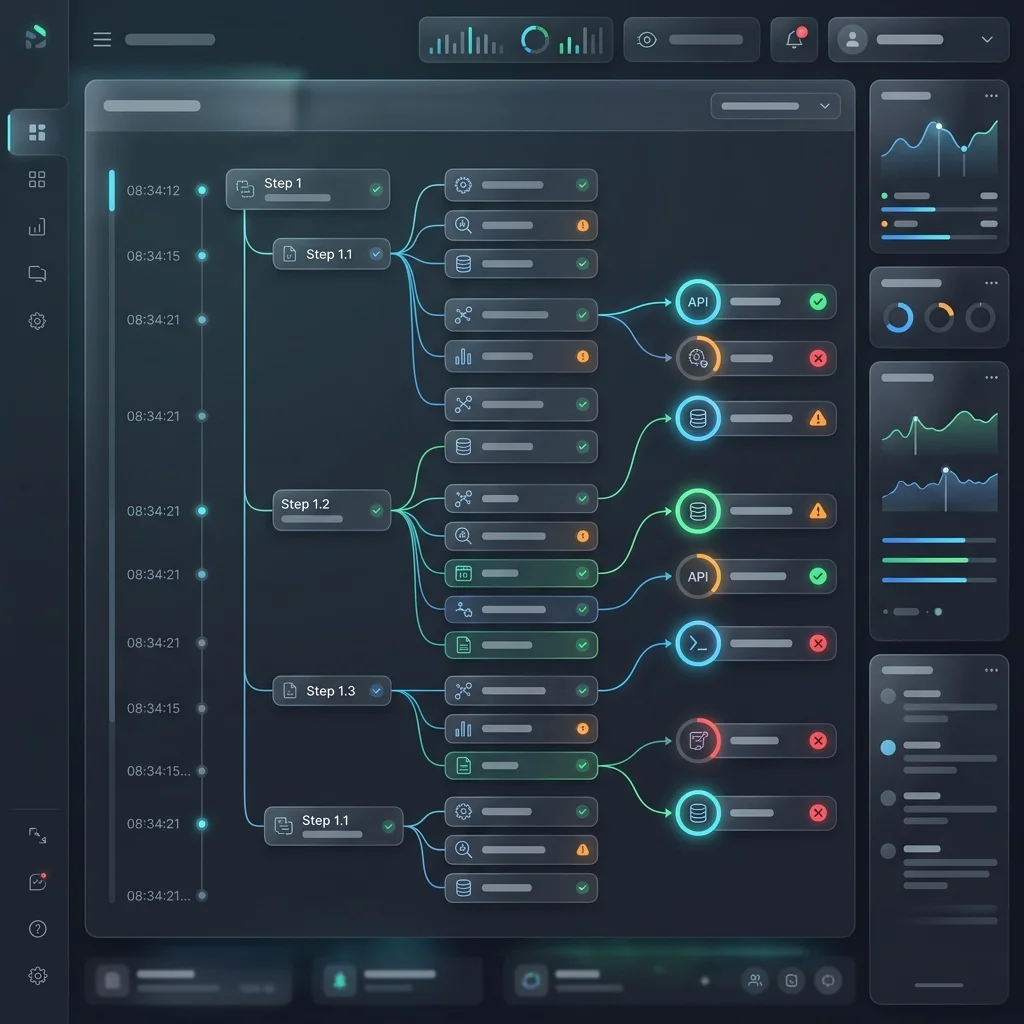
In the age of agents, "Clean Code" includes the ability to audit an agent's logic after the fact. We call this Reasoning Traceability.
Every agentic task in 2026 is accompanied by a Trace Log that records:
- State Capture: What did the agent know before starting?
- Tool-Call Lineage: Exactly which functions were called and why?
- Refinement Cycles: How many self-correction loops were required?
A "Dirty" AI workflow is a black box. A "Clean" AI workflow is a transparent logic tree that can be audited by a human architect in seconds.
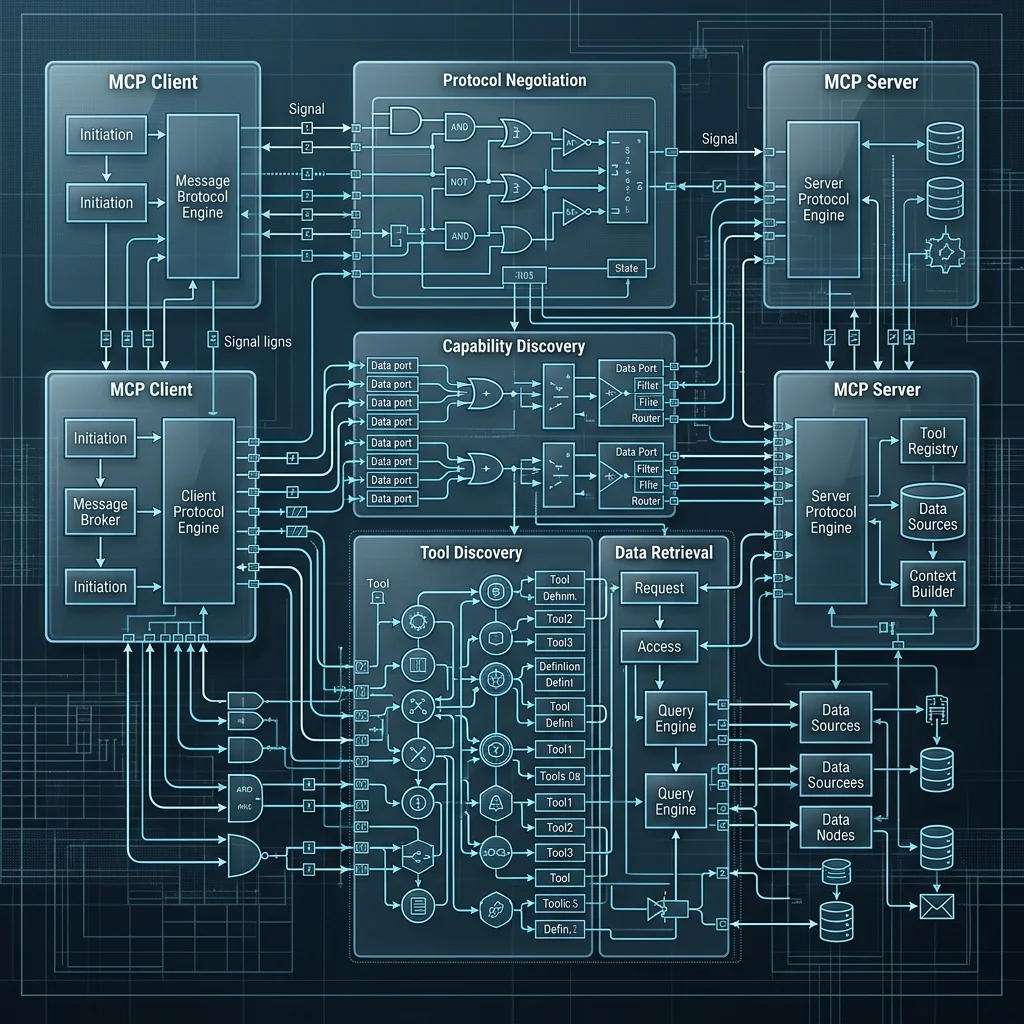
6. Context Management via MCP (Model Context Protocol)
The chaos of fragmented data sources has been resolved by MCP. "Clean" AI code now uses standardized protocols to fetch data. Instead of hardcoding API calls into prompts, we provide agents with Context Handshakes.
This allows the agent to discover tools and data dynamically, while the engineer maintains centralized control over the permissions and the "Surface Area" of the context.
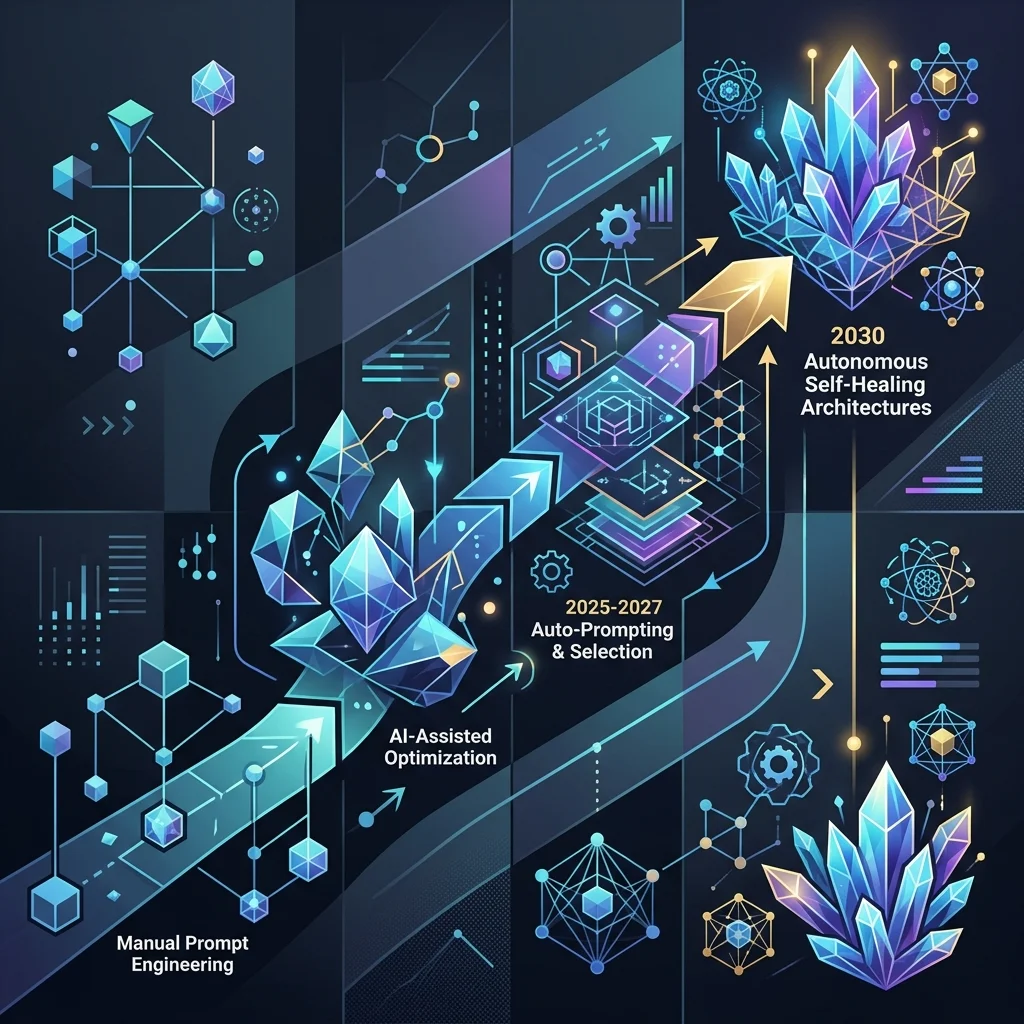
The 2030 Horizon: Toward Self-Healing Architectures
By 2030, the "Clean Code" we write today will evolve into Self-Healing Architectures. Systems will use "Meta-Evaluators" to detect their own reliability drifts and autonomously refine their prompt logic and validation loops without human intervention. The engineer's role will shift entirely to defining the Objective Functions of the system.
What is the difference between Prompt Engineering and Context Engineering?
Prompt Engineering is largely "prose-based" and focuses on how to speak to the model. Context Engineering is "architecturally-based"--"it focuses on how to structure data (schemas), manage state (persistence), and formalize tool-use (MCP) for deterministic results.
Why do I need Type-Safe Prompting?
Because probabilistic strings are the enemy of scale. Type-safe prompts ensure that an agent's output can be instantly parsed, validated, and used by downstream deterministic code without causing runtime errors or logical 'cascade failure."
What is Evaluation-Driven Development (EDD)?
EDD is the AI-native evolution of TDD. Instead of testing for Pass/Fail, we use "Golden Test Sets" to benchmark the performance, accuracy, and latency of a prompt over hundreds of iterations, ensuring that model updates don't cause logical regressions.
How does the Hybrid Deterministic Model work?
It's an architecture where you use the LLM solely for reasoning and intent extraction (returning structured JSON), and then use standard, deterministic code for the actual execution (API calls, database writes, math). This ensures actions are always 100% predictable.
Can I implement 'Clean Code' in 2026 without an evaluation framework?
No. In 2026, if you aren't measuring your AI nodes with automated benchmarks (Evals), you aren't engineering; you are guessing. Reliability in the agentic era requires a continuous feedback loop of evaluation and refinement.
About the Author
Vatsal Shah is a world-class AI Solutions Architect specializing in Deterministic Orchestration. He designs the high-reliability agentic meshes that allow global enterprises to ship AI native software with the same safety and predictability as legacy systems. Vatsal is a pioneer in the field of Context Engineering and Evaluation-Driven Development (EDD).
Additional Intelligence Assets