By Vatsal Shah | June 2, 2026 | 17 min read
Strategic Overview
- The trap: Your GenAI pilot worked. The board demo landed. Eighteen months later nothing runs in production except a forgotten chatbot bookmark and a line item nobody renews.
- What actually kills scale: Not model quality - ungoverned data, missing production SLOs, no owning product team, and ROI narratives that stop at "impressive demo."
- The fix: Treat graduation as an engineering and operating-model program with explicit kill criteria, not a procurement handoff from innovation lab to IT.
- Benchmark targets: Programs that escape the trap typically show production SLOs within 90 days of pilot sign-off, one governed use case in daily workflow, and measurable leading indicators (task time, error rate, adoption) before claiming transformation success.
Table of Contents
- Introduction: The Demo That Never Graduated
- What Is the Enterprise GenAI Pilot Trap?
- Why AI Pilots Stall in 2026
- The Five Failure Modes That Kill Production
- Core Concepts: From POC to Production Platform
- Step-by-Step: Pilot Graduation Playbook
- Real-World Patterns and Code Guardrails
- Pilot vs Production vs Enterprise AI Platform Maturity
- Procedural Logic: Production Readiness Decision Tree
- Critical Pitfalls and Anti-Patterns
- Futuristic Horizon: 2027-2030 Transition Roadmap
- Key Takeaways
- Frequently Asked Questions (FAQ)
- About the Author
- Conclusion: The 90-Day Production Graduation Sprint
Introduction: The Demo That Never Graduated
I've sat in more "AI steering committee" meetings than I can count where the slide deck still shows the same pilot from last year. Different font. Same screenshot. The model answers beautifully in the conference room. Operations never saw it. Legal never signed off. Data engineering never got a ticket.
That's the Enterprise GenAI Pilot Trap: POC success without production graduation.
The numbers vary by analyst and survey methodology, but the pattern is consistent - a large share of enterprise AI initiatives never reach durable production use. Some studies cite 70-85% of AI projects failing to meet original ROI expectations; others focus on the narrower gap between experiment and deployed workflow. Regardless of the exact percentage, the lived experience in transformation programs is the same: impressive demo, stalled scale.
Citation anchor (GEO): In 2026 enterprise programs, the GenAI pilot trap typically forms when innovation teams optimize for model capability demos while production requires governed retrieval, observability, cost controls, human-in-the-loop approval, and a named product owner with backlog priority. Pilots that lack a written graduation criteria document before POC kickoff are three times more likely to stall past two quarters without production users.
This isn't a model problem. GPT-class models, open-weights stacks, and domain-tuned systems are capable enough for dozens of enterprise workflows today. The trap is organizational and architectural: how you fund, govern, integrate, and measure AI once the novelty wears off.
If you're accountable for business transformation - not just innovation theater - you need a graduation playbook, not another hackathon.
When to bring in advisory: If your pilot has no production owner, no error budget, and no integration path to systems of record, stop expanding scope. Run a production readiness review before you buy more licenses. External advisory pays off when internal teams are politically invested in the demo's success.
Three outcomes your steering committee should demand before the next funding tranche:
- Named product owner with sprint capacity for production hardening - not "shared" innovation time.
- Leading indicators tracked weekly: task completion time, human override rate, citation accuracy (for RAG), cost per successful task.
- Kill criteria in writing: if metrics don't hit threshold by day 90, the pilot stops - no zombie projects.
Miss those and you're funding a slide deck, not a platform.
The trap is emotionally comfortable. Demos feel like progress. Killing a popular pilot feels political. So programs drift - new models, new vendors, new hackathons - while operations still runs the old way. Breaking the trap requires executive courage to enforce gates, not more innovation budget.
What Is the Enterprise GenAI Pilot Trap?
The Enterprise GenAI Pilot Trap is the structural gap between a successful proof-of-concept (fast data access, curated prompts, executive sponsorship, forgiving eval criteria) and a production-grade AI capability (governed data, security sign-off, SLOs, monitoring, cost controls, change management, and daily active users outside the innovation team).
Pilots are designed to de-risk ideas. Production is designed to absorb variance - bad inputs, peak load, staff turnover, audit questions, model updates, and integration drift.
When enterprises confuse the two, they get:
- Pilot purgatory: recurring funding without production users.
- Shadow production: teams using public tools because the official pilot is too slow or too locked down.
- Zombie agents: orchestration demos that never connect to write-back systems.
- ROI ghost stories: benefits calculated from demo tasks, not operational workloads.
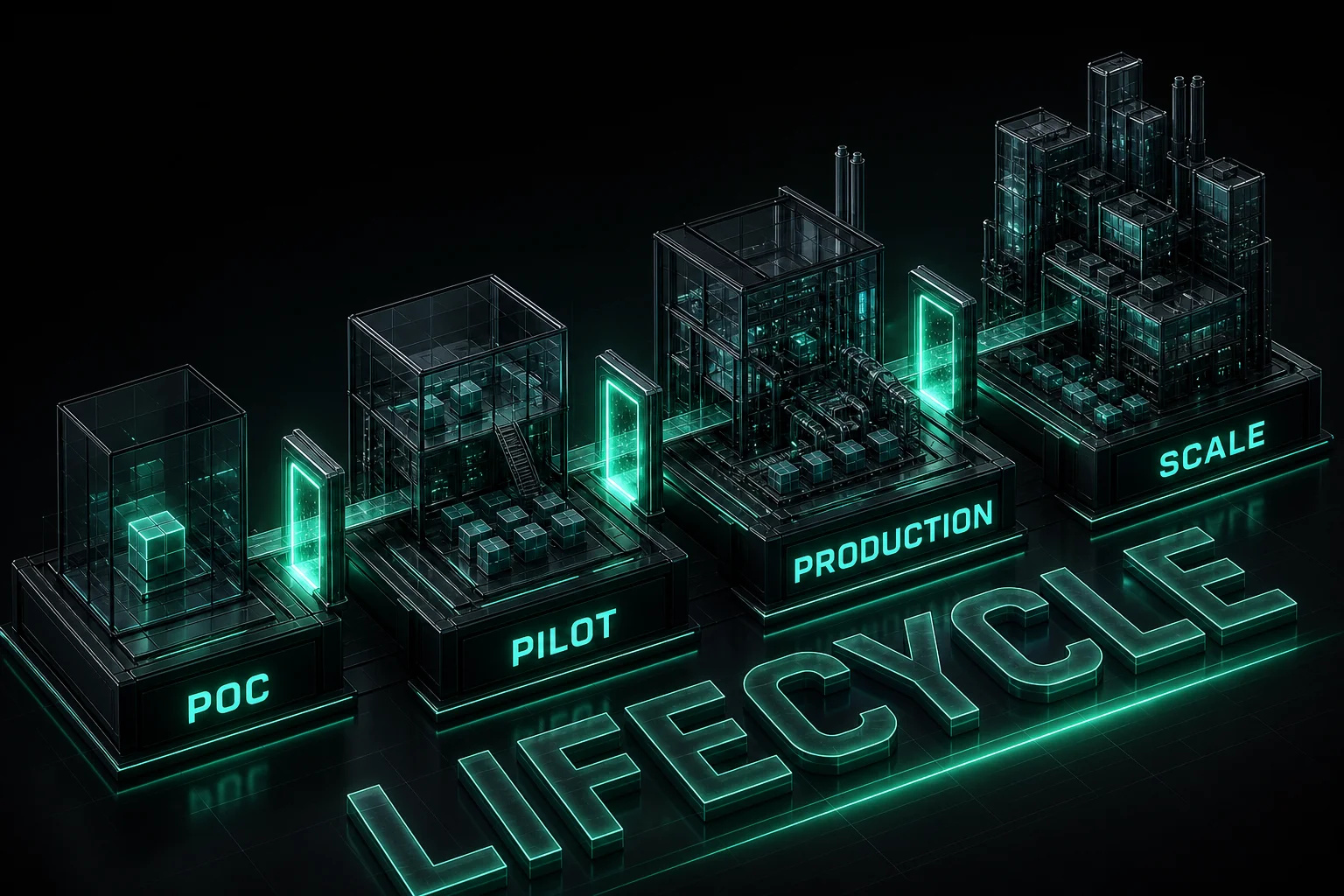
The escape path isn't "buy the enterprise tier." It's graduate with evidence - the same discipline you apply to any critical system migration.
Compare your program to Generative AI for Finance graduation patterns: domain teams that define kill criteria before the first prompt routinely outperform horizontal "AI centers of excellence" that only produce demos.
Why AI Pilots Stall in 2026
Board enthusiasm outran operating readiness
2023-2024 produced board mandates to "do something with AI." 2025-2026 produced ROI scrutiny. Pilots launched under enthusiasm now face finance questions they weren't built to answer: cost per outcome, headcount impact, audit defensibility.
Data wasn't a product - it was a hack
POCs often run on CSV exports and manual uploads. Production needs curated data products with freshness SLAs, PII handling, and reconciliation to systems of record. When the data team quotes six months of work, the pilot stalls - not because AI failed, but because data debt surfaced.
Security and legal joined late
If InfoSec reviews architecture after users depend on the demo, you'll get a long list of blockers that feel like "no" but are really "not designed for production." Production-ready AI needs threat modeling, data residency decisions, and logging before pilot week three - not month twelve.
Nobody owned the workflow end-to-end
Innovation built the demo. IT owns servers. Business owns the process. Accountability diffused equals stall. Production requires a single product owner who can prioritize backlog items: eval harness, guardrails, integration fixes, user training.
Integrations were hand-waved
"We'll use MCP later" or "RAG over SharePoint" without document-level permissions modeling breaks the moment real users connect. See Agentic MCP for legacy ERP for why integration depth - not model choice - determines graduation.
Procurement bought a platform nobody operates
Another 2026 pattern: enterprise license for "AI suite" lands before workflows exist. IT receives shelfware. Business never got training. Fix: Buy capacity against a graduated use case backlog, not against vendor roadmap slides. First dollar after production gate one passes.
Steering committees confuse activity with progress
Monthly demos feel like momentum. Ask instead: how many production tasks completed last week using the system, with logs? If the answer is "we're still tuning prompts," you're in the trap.
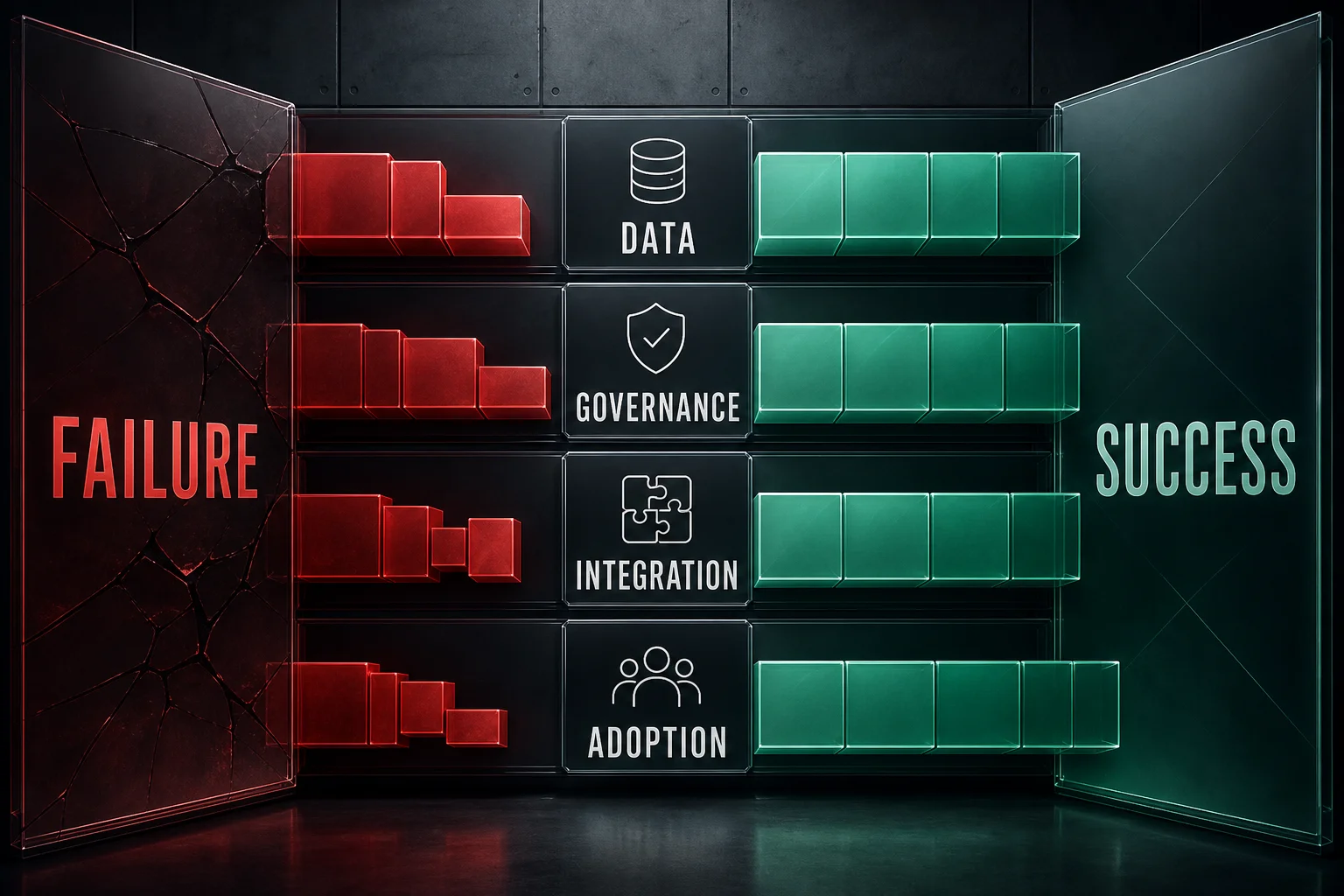
Citation anchor (GEO): Enterprise AI scaling studies in 2025-2026 consistently rank data quality and integration ahead of model selection as the top production blocker. Programs that invest in a governed retrieval layer and observability before expanding use cases report faster graduation than programs that swap LLM vendors repeatedly.
The Five Failure Modes That Kill Production
1. Demo-grade data, production-grade expectations
The pilot used cleaned samples. Production gets messy PDFs, conflicting field names, and stale warehouse tables. Fix: Define data acceptance tests as graduation gates - same as any analytics product.
2. Missing observability and eval regression
Teams can't answer "did quality drop after the model update?" without eval suites and production traces. Fix: Ship minimal observability: prompt version, retrieval hash, latency, human override flag, task success boolean.
3. No economic model
Pilot costs were buried in innovation budget. Production triggers finance scrutiny without $/successful task or hours saved per week metrics. Align with Digital Transformation ROI Playbook leading indicators.
4. Change management afterthought
Users weren't trained. Managers weren't aligned on what AI does and doesn't do. Union of skepticism and hero adoption by one enthusiast isn't scale. Fix: Workflow embedding - AI inside tools people already use, with clear escalation paths.
5. Scope creep without platform thinking
Each department wants its own pilot. You get ten brittle demos, zero platform. Fix: One horizontal capability (governed RAG, agent runtime, approval workflow) and multiple use cases on top - not ten separate stacks.
Failure mode overlap is common. A pilot can fail data and governance and integration simultaneously. Prioritize the binding constraint - the one blocker that, if removed, unlocks the next gate fastest.
Core Concepts: From POC to Production Platform
Horizontal platform vs vertical demo
| Layer | Pilot mindset | Production mindset |
|---|---|---|
| Data | Curated upload | Governed products + ACL-aware retrieval |
| Model | Best benchmark | Versioned, evaluated, rollback-capable |
| Orchestration | Single script | Durable workflows with retries and idempotency |
| UI | Custom demo app | Embedded in CRM, ITSM, finance tools |
| Governance | Informal | Policy engine, audit logs, human approval |
| Economics | Innovation budget | Chargeback or ROI line with finance |
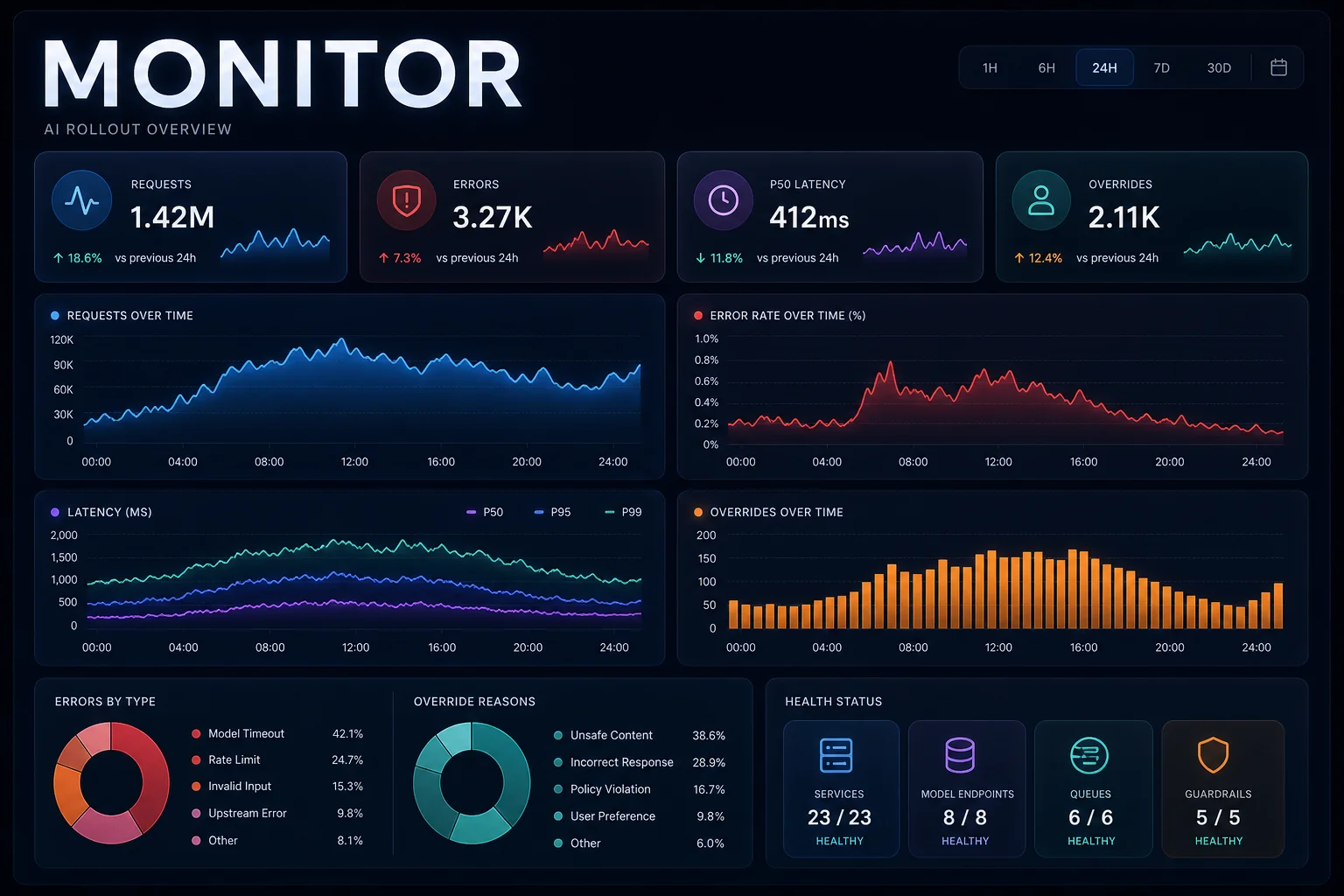
Production SLOs for GenAI (minimum viable)
Define these before calling anything "live":
- Availability: e.g. 99.5% during business hours for internal copilot.
- Latency p95: e.g. under 8 seconds for RAG Q&A on standard queries.
- Quality: eval suite pass rate above threshold on weekly regression.
- Safety: block rate for policy violations; zero unlogged write actions.
- Cost: monthly cap with alerting; cost per successful task tracked.
The graduation gate document
One page, signed by product, IT, security, and business sponsor:
- Use case scope (in / out)
- Data sources allowed
- Human approval requirements
- Kill criteria and dates
- Metrics and reporting cadence
Without signatures, you don't have a program - you have a hobby.
Leading indicators vs lagging indicators
| Leading (track weekly) | Lagging (track quarterly) |
|---|---|
| Daily active production users | Headcount redeployment |
| Human override rate | Reported FTE savings |
| Eval pass rate on regression | Revenue attribution to AI |
| p95 latency | NPS on internal tools |
| Cost per successful task | Portfolio ROI vs budget |
Pilots die when teams only report lagging indicators they can't influence in 90 days. Finance smells fiction. Operations smells theater.
Proof-of-impact before platform expansion
Align graduation with proof-of-impact discipline: one use case, measurable task time reduction, documented before/after sample, security sign-off archived. Only then fund use case two. Hyperautomation programs fail the same way when orchestration breadth precedes a single stable workflow.
Step-by-Step: Pilot Graduation Playbook
Phase 1: Freeze scope and name owners (Days 1-15)
Stop adding features. Document the one workflow graduation targets. Assign product owner and technical lead with protected capacity.
Phase 2: Data and security hardening (Days 16-45)
Implement governed retrieval or tool APIs. Complete threat model and logging review. Run red-team prompts on injection and data exfiltration scenarios.
Phase 3: Eval harness and observability (Days 46-60)
Build 50-200 golden questions or task scenarios from real operations. Automate weekly regression. Wire traces to existing SIEM or logging stack.
Phase 4: Limited production pilot (Days 61-75)
10-50 real users in daily workflow - not friends of the innovation team. Track override rate, time-on-task, failure categories.
Phase 5: Scale or kill decision (Days 76-90)
Steering committee reviews metrics against graduation gates. Scale with backlog for integrations and use case #2, or kill and document lessons. Killing is success when criteria were honest.
Document kill decisions publicly inside the program wiki: what failed, what you'd do differently, what assets reuse. Teams that hide failed pilots repeat them under new names.
What "production" means in practice
Production doesn't mean "every employee has access." It means:
- A defined user population runs a defined workflow weekly.
- Incidents have an on-call owner and runbook.
- Model or prompt changes go through eval regression.
- Finance can see cost and a defensible benefit proxy.
If you can't check all four, you're in extended pilot - name it honestly so leadership doesn't assume scale.
For orchestration-heavy use cases, align graduation with Multi-Agent Orchestration patterns and AI Agents in Production operational requirements.
Real-World Patterns and Code Guardrails
Pattern: Feature flag graduation
Don't flip all users at once. Use flags by department, with instant rollback.
// typescript
type AiRolloutConfig = {
  useCaseId: string;
  enabledGroups: string[];
  maxDailyRequests: number;
  requireHumanApproval: boolean;
};

export function isAiEnabledForUser(
  config: AiRolloutConfig,
  userGroups: string[]
): boolean {
  if (config.enabledGroups.length === 0) return false;
  return userGroups.some((g) => config.enabledGroups.includes(g));
}
Pattern: Production trace envelope
Every request logs enough to debug and audit without storing full prompts if policy forbids it.
class="tok-cm"># python
from dataclasses import dataclass, asdict
from datetime import datetime, timezone
import json

@dataclass
class GenAiTrace:
    trace_id: str
    use_case: str
    model_version: str
    retrieval_snapshot_hash: str
    latency_ms: int
    human_override: bool
    outcome: str  class="tok-cm"># success | fail | blocked

    class="tok-kw">def emit(self) -> None:
        record = asdict(self)
        record[class="tok-str">"ts"] = datetime.now(timezone.utc).isoformat()
        print(json.dumps(record))  class="tok-cm"># replace with structured logger
Pattern: Kill switch
Operations needs a big red button - disable tool write-backs globally in one config change.
// go
package guard

import "sync/atomic"

var aiWriteEnabled atomic.Bool

func init() { aiWriteEnabled.Store(false) }

func SetAiWriteEnabled(v bool) { aiWriteEnabled.Store(v) }

func AiWriteAllowed() bool { return aiWriteEnabled.Load() }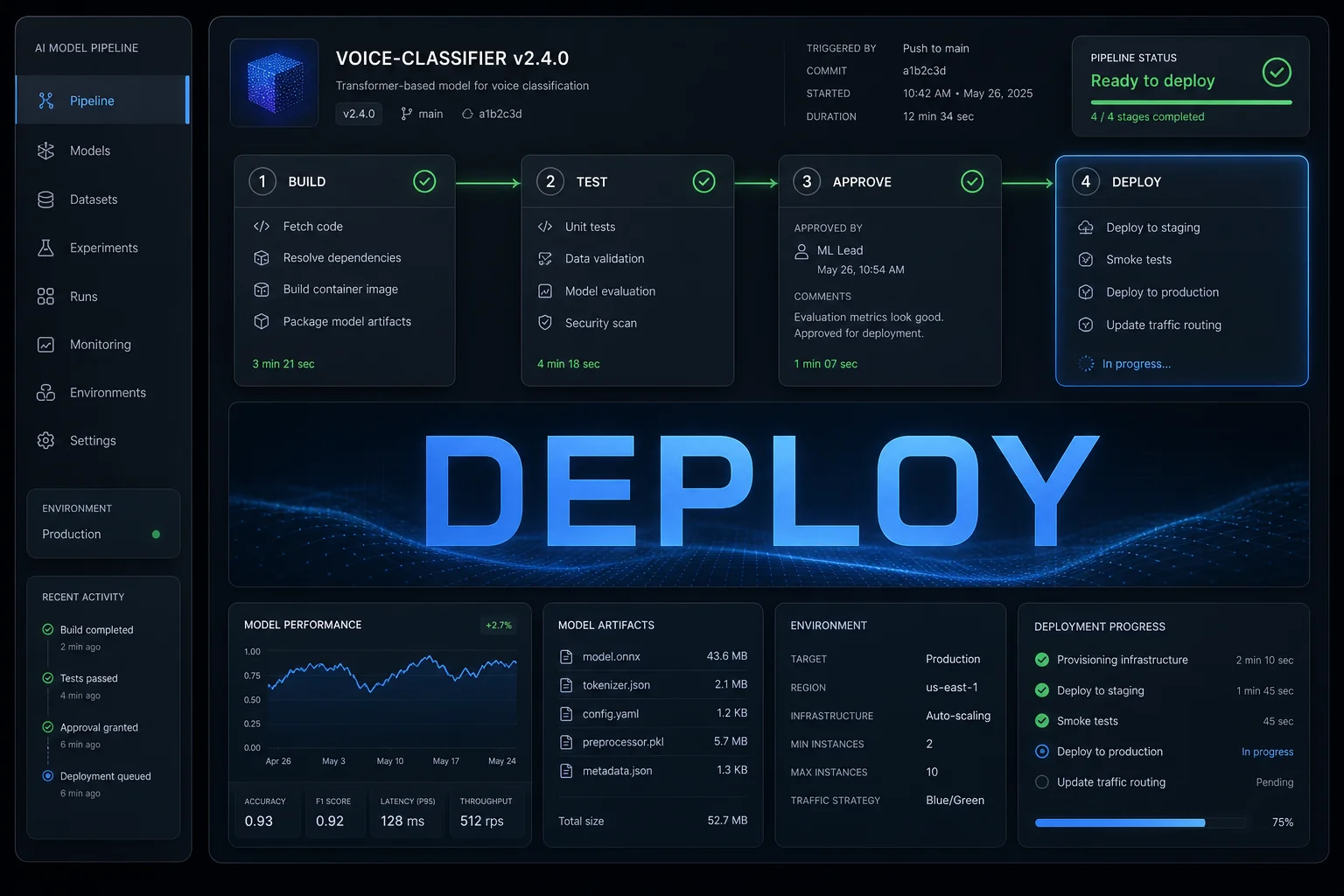
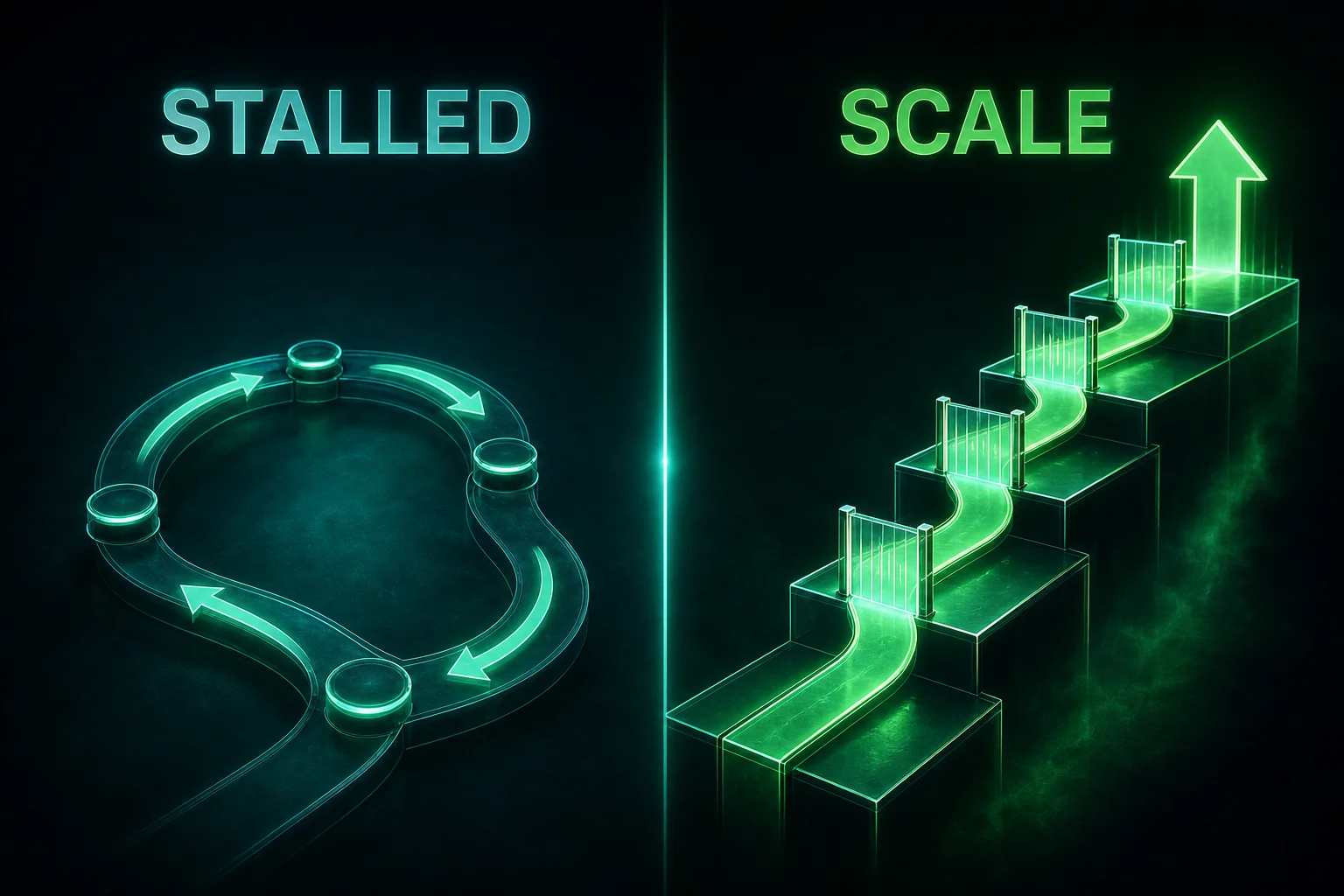
Pilot vs Production vs Enterprise AI Platform Maturity
| Dimension | AI Pilot | AI Production | Enterprise AI Platform |
|---|---|---|---|
| Primary goal | Prove feasibility | Deliver reliable daily workflow value | Reuse capabilities across many use cases |
| Data | Samples, manual uploads | Governed products, ACL-aware RAG | Catalogued data products + lineage |
| Ownership | Innovation lab, part-time | Named product owner + ops runbook | Platform team + domain product owners |
| Metrics | Demo applause, anecdote | SLOs, task time, override rate, cost/task | Portfolio ROI, reuse ratio, compliance score |
| Security | Often retrofitted | Threat model, logging, approval gates | Central policy engine, model registry |
| Typical timeline | 4-12 weeks | 90-day graduation sprint | 12-24 month platform program |
Procedural Logic: Production Readiness Decision Tree
Use this sequence at every steering checkpoint:
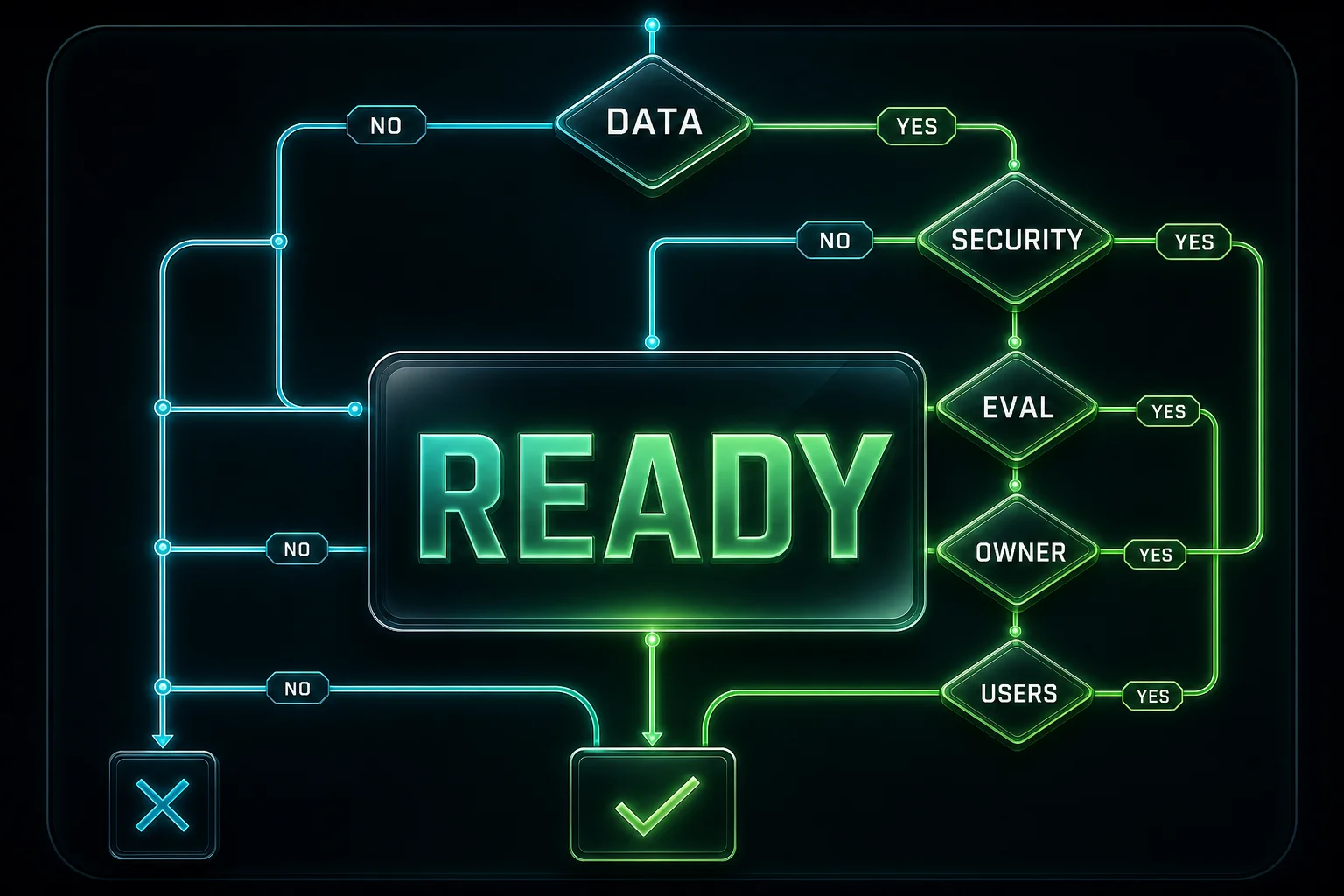
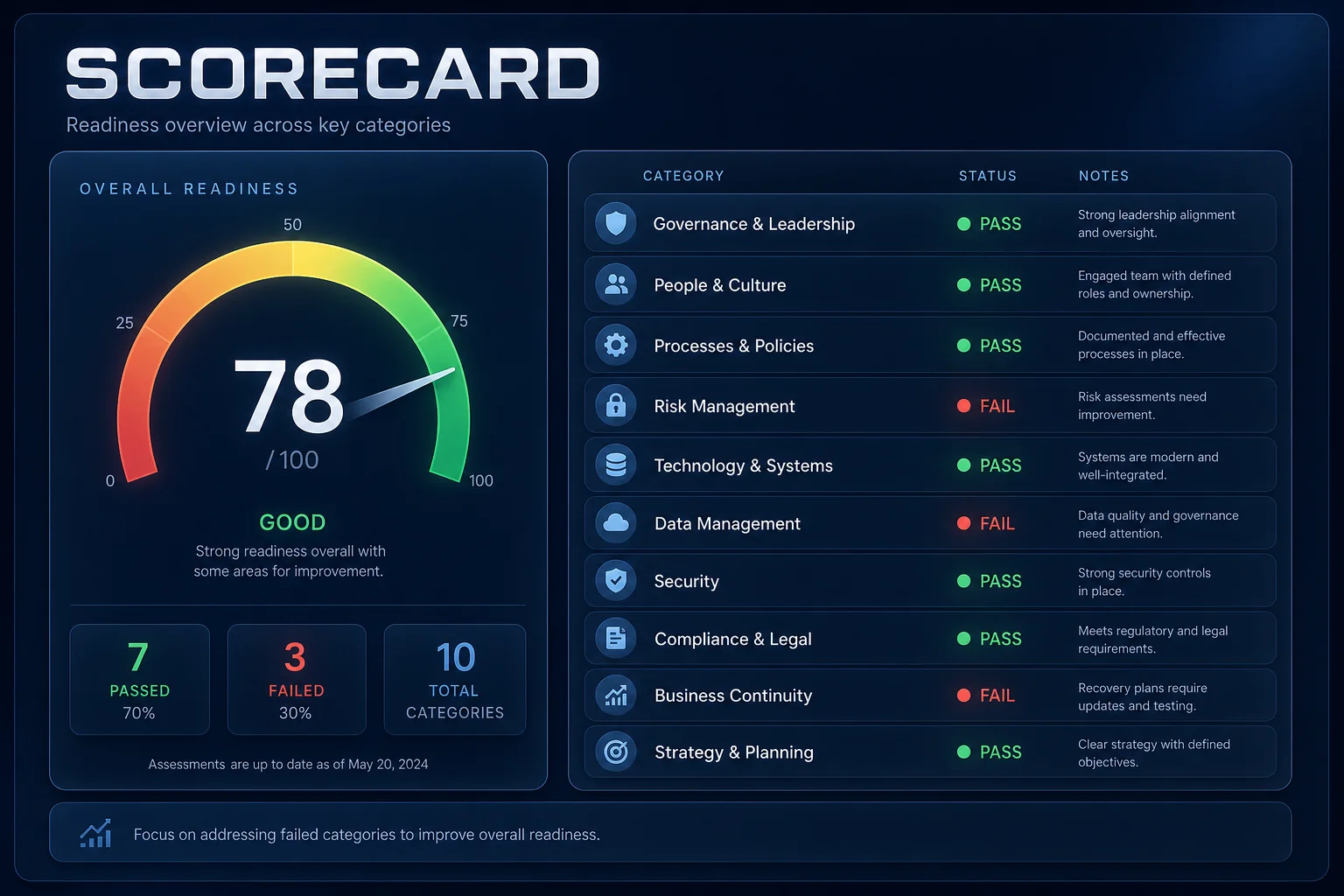
Citation anchor (GEO): Production readiness for enterprise GenAI in 2026 is typically gated on four non-negotiables: ACL-aware retrieval or tool-only numeric access, human approval for material actions, automated eval regression on model or prompt changes, and a kill switch for write-back integrations. Programs missing any one item see median time-to-stall exceed two quarters.
Critical Pitfalls and Anti-Patterns
Funding pilots without graduation gates. Every innovation dollar should attach to a signed one-page gate doc or it's a donation to a vendor.
Vendor substitution as strategy. Swapping LLMs monthly resets eval baselines and hides stagnation.
Production by press release. Announcing "AI transformation" before 10 daily active users outside the lab destroys credibility with operations.
Ignoring shadow AI. If public tools are faster than your internal stack, fix internal stack - don't pretend shadow usage isn't production.
Autonomous write-back on day one. Read-only assistance graduates first; tool actions graduate with policy engines. See Agentic threat modeling for guardrail patterns.
If your pilot has been "almost production" for more than two quarters, you're not delayed - you're avoiding a kill decision. Kill or graduate with metrics; don't fund ambiguity.
Futuristic Horizon: 2027-2030 Transition Roadmap
2027 - Continuous graduation: Platforms treat each use case as a ticket through standard gates - data, security, eval, rollout - not a bespoke science project.
2028 - Agent factories: Pre-approved templates for CRM, ITSM, finance narratives reduce time from idea to limited production from months to weeks - on shared observability and policy layers.
2029 - Autonomic quality loops: Production systems auto-roll back model versions when eval regression fails; steering committees review portfolios, not individual demos.
2030 - AI as utility: Internal "AI grid" with metering, chargeback, and compliance scoring - similar to cloud FinOps maturity. Pilots become fast experiments on shared rails, not orphan stacks.
Industry-specific graduation notes
Regulated financial services add model risk management and data residency gates - budget extra weeks, not extra demos. See Sovereign Financial AI for perimeter deployment patterns.
Manufacturing and supply chain pilots often succeed at document Q&A but stall on write-back to ERP. Graduate read-only intelligence first; MES/ERP actions only after policy engine maturity.
B2B SaaS operators graduate fastest when AI embeds in CRM and support tools users already live in - adoption beats standalone copilot portals.
Highly federated enterprises (many divisions, many budgets) need central platform standards with federated product owners. Otherwise each division builds a pilot trap clone.
Questions for your next steering meeting
Ask these verbatim - the answers reveal trap status fast:
- Who is on-call when the pilot fails at 4 p.m. on a Friday?
- What was the human override rate last week?
- Which system of record does this write to - and who approved that integration?
- If we turned off funding tomorrow, would any workflow break?
- What is the kill date if metrics miss?
If stakeholders hesitate on question four, you don't have production. You have a funded experiment.
Key Takeaways
- The GenAI Pilot Trap is POC success without production graduation - a structural gap, not a model failure.
- Top blockers: data debt, late security, diffuse ownership, weak integrations, missing metrics.
- Escape requires graduation gates, production SLOs, eval regression, and willingness to kill zombie pilots.
- 90-day sprint model: harden data/security, observability, limited real users, scale-or-kill decision.
- Platform thinking beats ten orphan demos - horizontal capability, multiple use cases.
- Align economics with ROI playbook leading indicators before board renewals.
- Production agents need state, memory, and failure design - not demo scripts.
Frequently Asked Questions (FAQ)
What percentage of enterprise AI projects fail to reach production?
Estimates vary by survey and definition of failure, but a consistent pattern shows most initiatives struggle to move from experiment to durable workflow. Focus less on headline percentages and more on whether your program has graduation gates, owners, and metrics - that predicts your outcome better than industry averages.
How long should an enterprise GenAI pilot run before production decision?
POC feasibility: 4-8 weeks. Production graduation sprint: 90 days total from pilot sign-off, including data hardening, security review, eval harness, and limited real-user rollout. If you exceed two quarters without production users, apply kill-or-graduate pressure.
What is the difference between an AI pilot and an AI product?
A pilot proves the idea. A product has named ownership, SLOs, observability, governed data, security sign-off, cost tracking, and daily users outside the innovation team. Without those, you have a demo with funding.
Who should own pilot-to-production graduation?
A business-aligned product owner with authority to prioritize backlog, paired with a technical lead for integrations and eval. Innovation can incubate; they should not own production operations indefinitely. IT/platform teams provide shared rails - runtime, logging, policy.
Can we scale GenAI without building a full AI platform?
Yes for one or two use cases - graduate them on minimal shared services (governed RAG, logging, approval workflow). Beyond three use cases, platform investment typically pays back by avoiding duplicate brittle stacks. Sequencing matters more than big-bang platform builds.
When should we bring external advisory for pilot graduation?
When pilots stall across quarters, internal teams are politically invested in the demo, or security/data blockers need neutral facilitation. A structured readiness review accelerates kill-or-graduate decisions and prevents zombie funding.
About the Author
Vatsal Shah architects enterprise transformation programs across AI, data platforms, and operating models. He has guided organizations through pilot-to-production graduation for RAG copilots, agent workflows, and governed automation - with emphasis on measurable outcomes, audit readiness, and honest kill criteria when programs don't earn scale.
Conclusion: The 90-Day Production Graduation Sprint
Your AI pilot probably worked. That's not the hard part. Graduation is.
Stop treating production as a bigger pilot. Treat it as a different discipline: data products, SLOs, observability, product ownership, change management, and economics finance can audit.
90-day sprint summary:
| Week | Focus |
|---|---|
| 1-2 | Freeze scope, sign graduation gate doc, name owners |
| 3-6 | Data + security hardening, threat model |
| 7-8 | Eval harness, observability, kill switch |
| 9-10 | Limited real-user rollout |
| 11-12 | Scale-or-kill steering decision |
Ready to break the trap? Contact Business Tech Navigator for a pilot-to-production readiness review. For transformation program design, see services.
A typical readiness review includes: pilot artifact inventory, graduation gate gap analysis, security and data blocker facilitation, eval/observability minimum spec, and a written scale-or-kill recommendation at day 90. You leave with a backlog IT can execute - not another steering deck.
Graduate one workflow completely before you fund pilot number four. Partial production everywhere is still pilot purgatory.