OpenAI Launches ChatGPT Work and GPT-5.6 in Public GA — The Agentic Desktop Era Begins
By Vatsal Shah · July 9, 2026 · AI Models · Source: OpenAI Newsroom
AI SUMMARY
- On July 9, 2026, OpenAI released ChatGPT Work and the GPT-5.6 model family in public general availability, backed by government clearance for enterprise deployment.
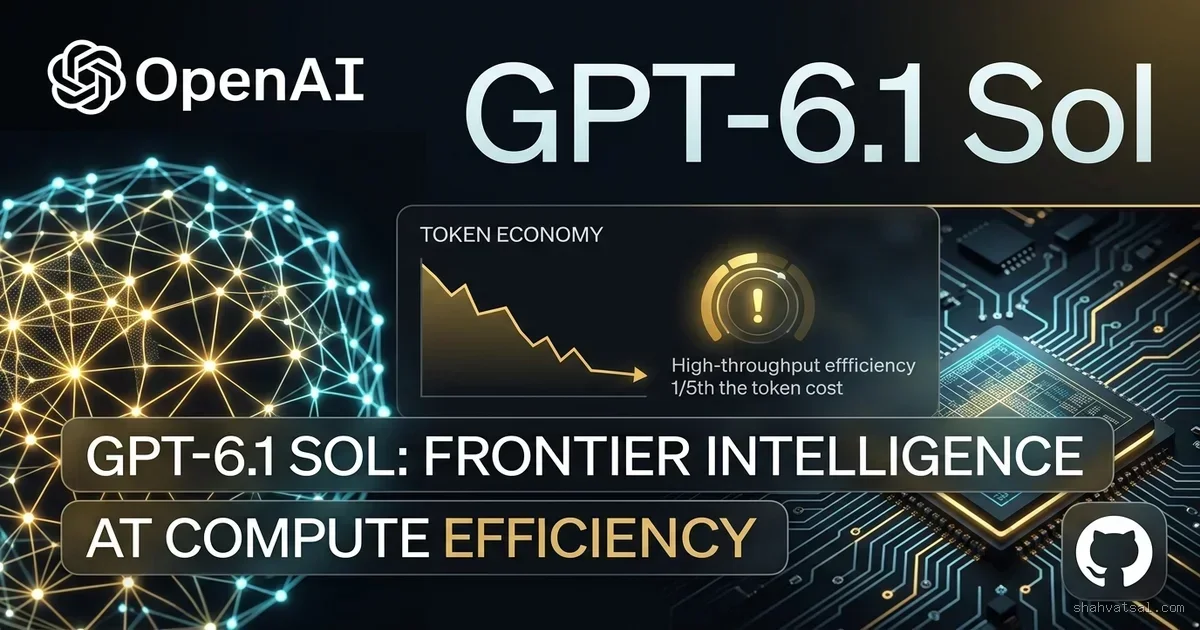
- GPT-5.6 ships as three distinct tiers: Sol (flagship, complex reasoning), Terra (balanced, everyday professional work), and Luna (fast, cost-efficient, high-volume).
- ChatGPT Work executes multi-hour, multi-step autonomous workflows — spanning Slack, email, CRMs, Google Drive, and local desktop files — and produces finished deliverables like documents, presentations, and web apps.
- The revamped ChatGPT desktop app (macOS + Windows) merges Chat, Work, and Codex into a single "superapp" interface with a built-in browser and local file access.
- Scheduled tasks allow recurring autonomous runs — monitoring dashboards, drafting agendas, updating spreadsheets — without human initiation per session.
What Happened
On July 9, 2026, OpenAI officially released ChatGPT Work and the GPT-5.6 model family in public general availability — the most significant product expansion since the original ChatGPT launch. The release follows government greenlight and extends OpenAI's ambition from conversational AI into full-scope autonomous work execution.
ChatGPT Work is not a chatbot update. It's an agentic runtime: a system that takes a high-level brief, decomposes it into tasks, pulls context from your connected tools, executes steps independently, and delivers a finished artifact. Multi-hour autonomous workflows. Real integration with Slack, Gmail, Google Drive, CRMs, calendars. The model doesn't wait for your next prompt — it works.
GPT-5.6 itself is a tiered model release designed to cover the full enterprise cost/performance spectrum. The three tiers — Sol, Terra, and Luna — let organizations route tasks to the right model based on complexity rather than paying flagship pricing for every prompt.
The GPT-5.6 Model Tiers: Sol, Terra, Luna
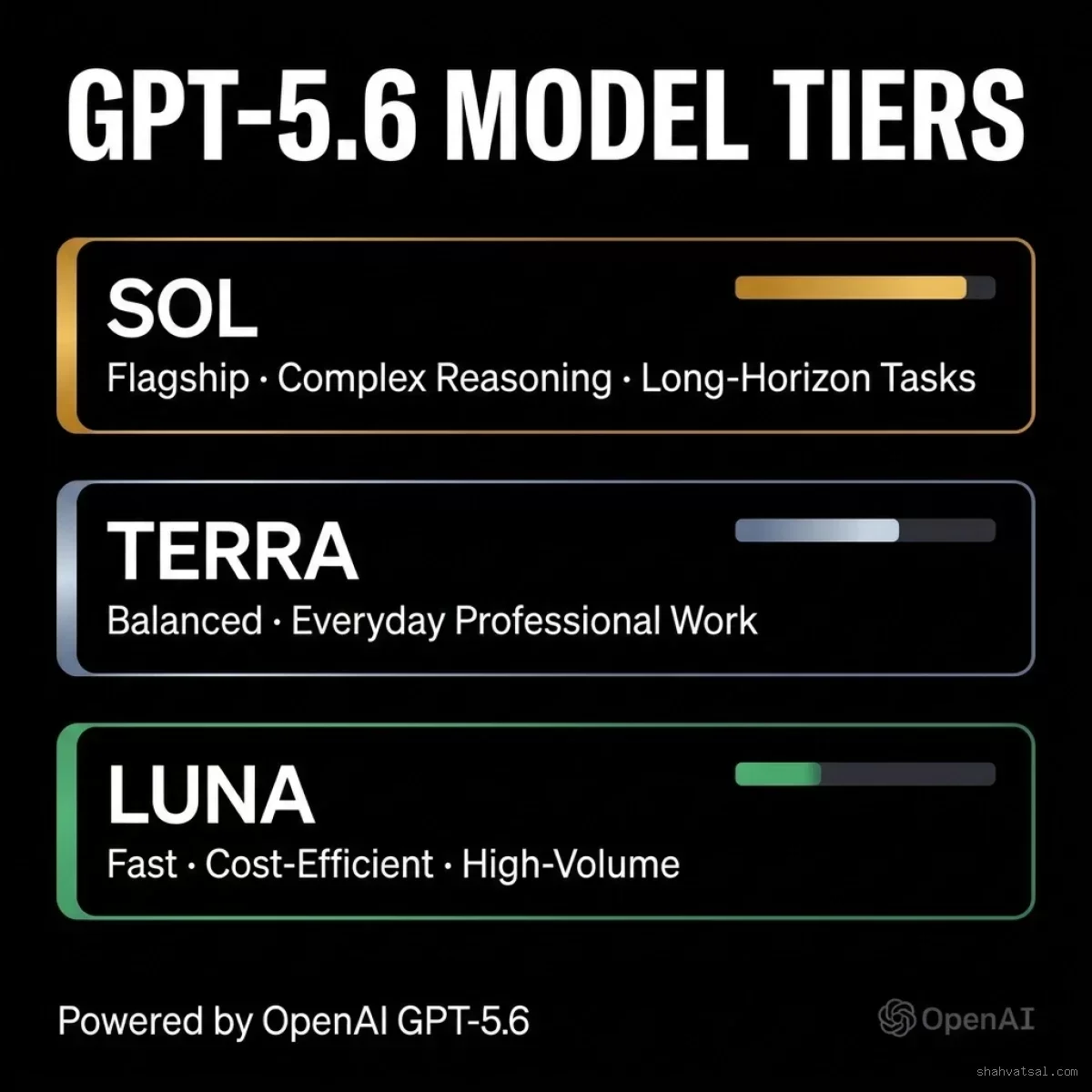
| Tier | Sol | Terra | Luna |
|---|---|---|---|
| Best for | Complex reasoning, coding, long-horizon agent tasks | Everyday professional work, analysis, drafting | High-volume, lower-reasoning, fast throughput |
| Performance | Highest | Balanced | Fastest |
| Cost profile | Premium | Mid-range | Most cost-efficient |
| Use in ChatGPT Work | Multi-hour autonomous workflows | Scheduled tasks, summaries, reports | Batch data processing, triage, alerts |
The tiering isn't just a pricing decision — it's an architectural signal. OpenAI is pushing organizations toward intelligent model routing: let Sol handle the deep reasoning loops, Luna handle the noise, Terra handle everything in between. The same pattern Claude 4 and Gemini 2.5 Pro have been nudging enterprises toward for six months.
The ChatGPT Desktop Superapp
The bigger shift isn't the model tiers. It's the desktop app.
OpenAI's revamped ChatGPT desktop application (macOS and Windows) consolidates three previously separate products into one unified interface:
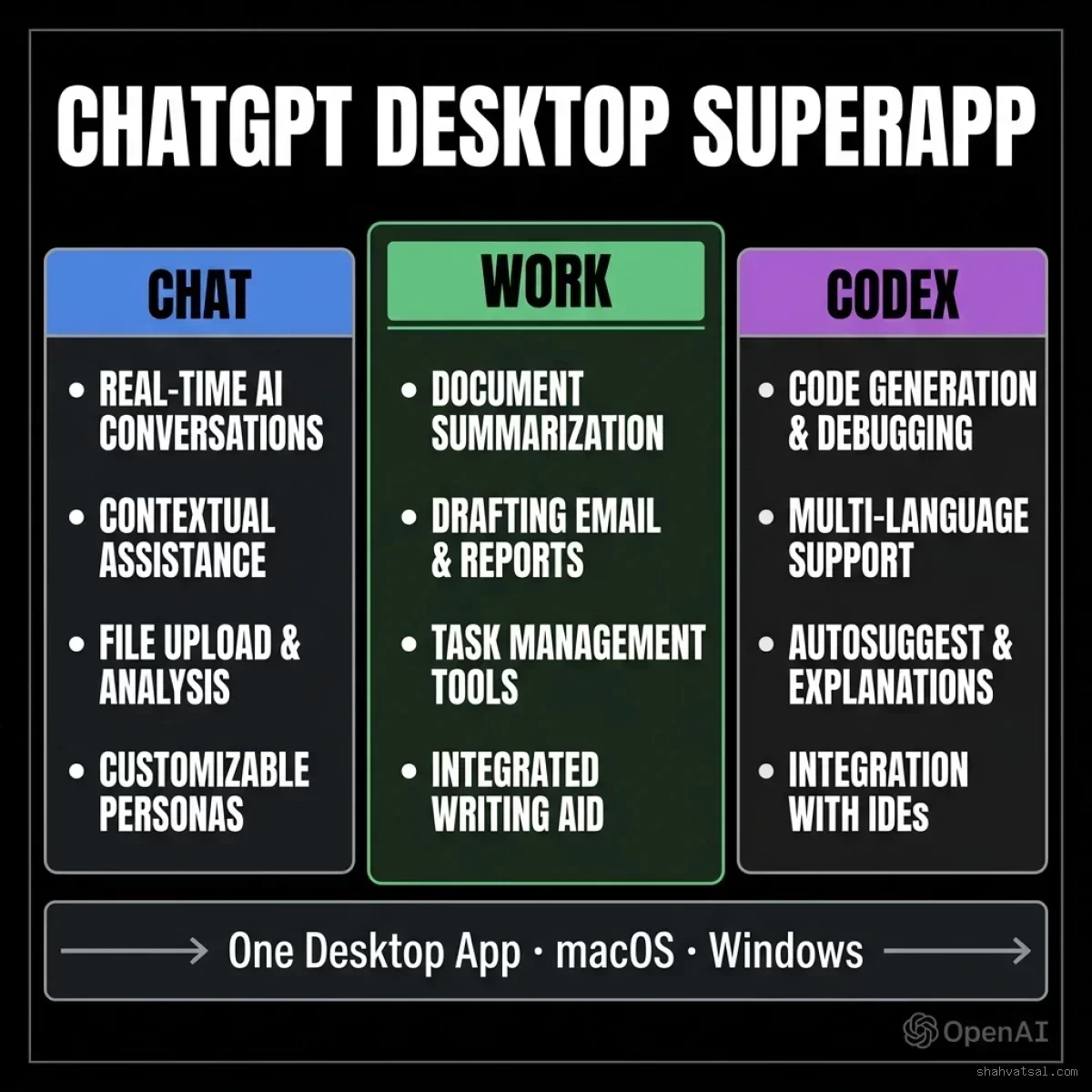
- Chat — the familiar conversational interface, now powered by GPT-5.6
- Work — the new agentic execution layer for long-horizon tasks
- Codex — software development tasks, code generation, debugging
What makes this different from browser-based ChatGPT: the desktop app gets local file access (with user permission) and a built-in browser for real-time web research during autonomous task execution. ChatGPT Work can read your drafts, update your spreadsheets, and file a report — all without leaving the app.
The scheduled tasks feature is particularly significant for enterprise operators. You can configure a task to run once, repeat on a schedule, or monitor for specific changes. Examples from the launch demo: automatically update a weekly KPI dashboard from multiple data sources, draft meeting agendas from calendar context, send digest summaries to Slack.
Plan availability at launch: Desktop app = every plan. Web/mobile = Pro, Enterprise, Edu on day one. Plus and Business roll out in the days following July 9, 2026. API access for Work endpoints announced for Q3 2026.
Why It Matters
The Work Execution Gap Closes
Until now, AI tools for professional work fell into two buckets: chat assistants that require constant prompting, and narrow automations locked to specific apps (Zapier, Make). ChatGPT Work occupies the space between: broad integration coverage (Slack, Gmail, Drive, CRMs) with open-ended task reasoning. You describe what you need done, not how to do it step by step.
I've seen enterprise teams burn months building internal agent tooling to do exactly what ChatGPT Work now ships out of the box. The build-vs-buy equation just tilted hard toward buy for most mid-market organizations.
Competitive Dynamics Shift
This launch directly challenges Microsoft Copilot Cowork (GA'd June 16 in M365), Google Gemini Enterprise, and Anthropic Claude for Work. The difference: ChatGPT Work runs natively on macOS and Windows as a first-class desktop app, not embedded inside an existing suite. It's gunning for the user's primary work surface, not their email client.
For enterprises already running Microsoft 365, the choice isn't obvious — Copilot Cowork has deeper SharePoint/Teams integration. But for organizations outside the Microsoft stack, ChatGPT Work is a meaningful standalone alternative.
Government Greenlight Signal
The release notes specifically mention that the July 9 rollout followed government clearance. That's a quiet but significant sentence. It suggests OpenAI has been working through whatever regulatory or export-control checkpoints applied to a widespread agentic product — especially relevant in the context of the Claude Fable 5 suspension earlier this summer. OpenAI navigated that gate and shipped.
What to Watch Next
- API access for Work endpoints — expected Q3 2026. This is what enterprise builders are waiting for: the ability to invoke ChatGPT Work programmatically from their own orchestration layers, not just through the UI.
- Connector ecosystem depth — the launch focuses on Slack, Gmail, Drive, and generic CRM. Watch for Salesforce-native, Jira, and SAP connectors in subsequent releases.
- Sol model independent API — Sol is likely the most capable model OpenAI has shipped. Expect it to surface on the API as a standalone endpoint for agentic workloads, competing directly with Claude Sonnet 4.6 and Gemini 2.5 Ultra.
Source
OpenAI — ChatGPT for Your Most Ambitious Work (Jul 9, 2026)
Related on shahvatsal.com:
- Multi-Agent Orchestration in 2026 — Architecture Patterns
- Microsoft Copilot Cowork GA — Autonomous M365 Workflows
- Claude Fable 5 Suspended — Export Control Shock
- The Post-Managerial Era — Leading Autonomous Agents