Microsoft Copilot Cowork Hits GA — Autonomous M365 Workflows Land with Governance Overhead
By Vatsal Shah · June 18, 2026 · Cloud · Source: Windows News
AI SUMMARY
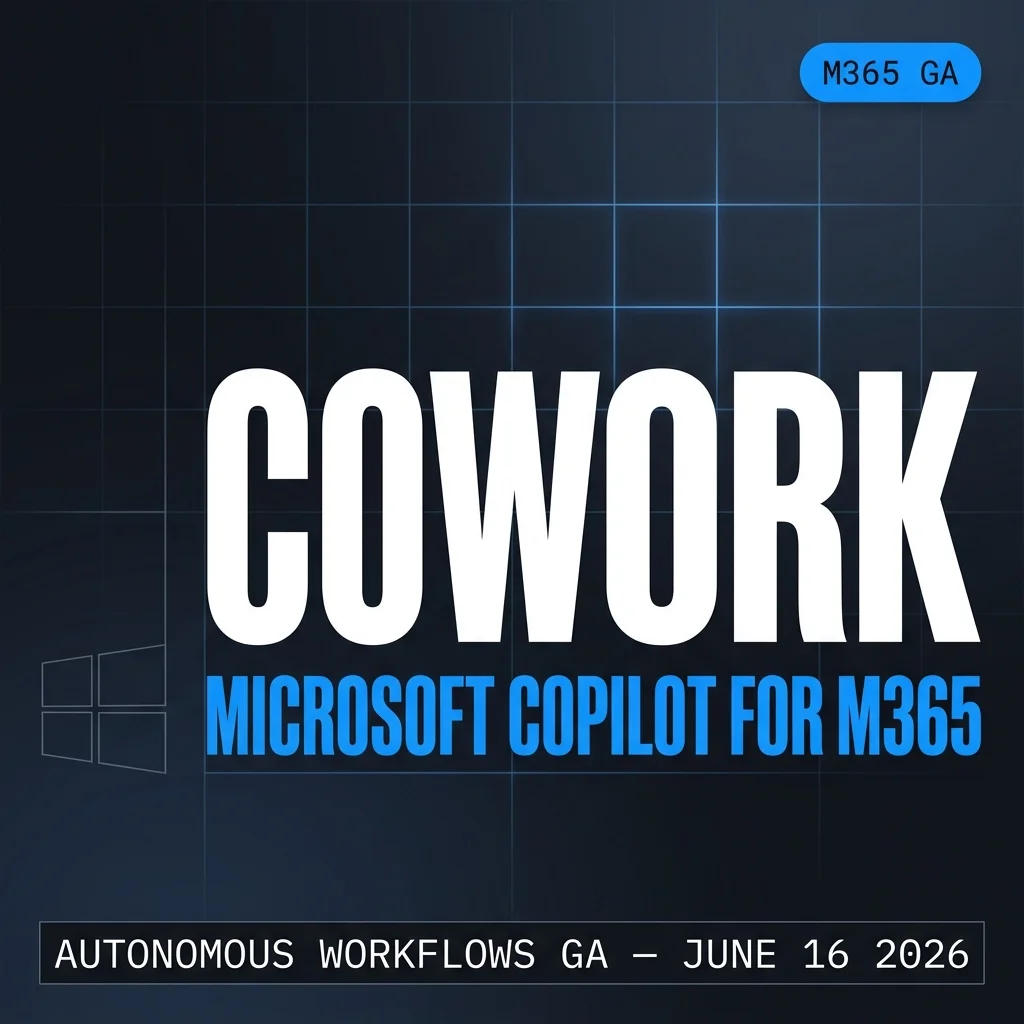
- Microsoft Copilot Cowork reached General Availability on June 16, 2026 for all eligible Copilot for Microsoft 365 tenants — activated via the M365 Admin Center.
- Cowork agents can execute long-running, multi-step autonomous workflows spanning Word, Excel, Teams, Outlook, and SharePoint without requiring a human prompt at each step.
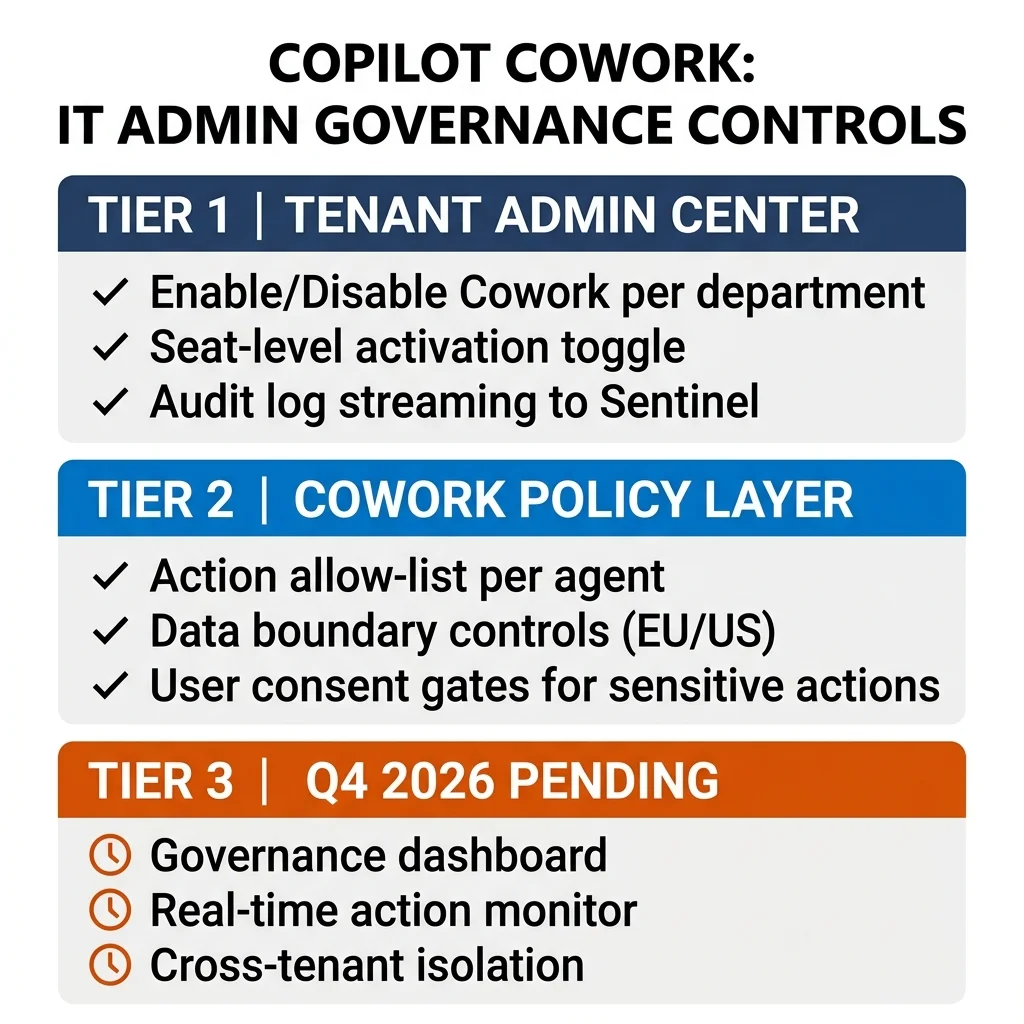
- Activation is seat-level and department-scoped from the admin center. Audit logs stream to Microsoft Sentinel with existing Purview compliance coverage.
- The critical gap: a comprehensive governance dashboard — real-time action monitoring and cross-tenant isolation controls — is not expected until Q4 2026, leaving a window where agents act before the full oversight layer is available.
- Previously codenamed Project Juncture, Cowork is Microsoft's direct answer to the persistent-digital-teammate category that Salesforce Agentforce 3 and Google Gemini Enterprise are competing for.
What Happened
Microsoft made Copilot Cowork generally available on June 16, 2026 — following a March 2026 preview period — for all tenants with active Copilot for Microsoft 365 licenses. Admins can enable it directly from the Microsoft 365 Admin Center without waiting for regional rollouts; availability is global at GA.
Cowork is the productization of Project Juncture, Microsoft's internal initiative to evolve Copilot from a single-turn prompt assistant to a persistent agent capable of executing multi-step tasks across the full M365 application surface.
In concrete terms: a Cowork agent can take a brief natural language instruction — "Prepare the Q2 close report, email the finance team when it's ready, and update the project tracker" — and autonomously execute the full chain: pulling data from SharePoint, drafting in Word, updating Excel, sending via Outlook, and posting a Teams summary. No human prompt is required at each application boundary.
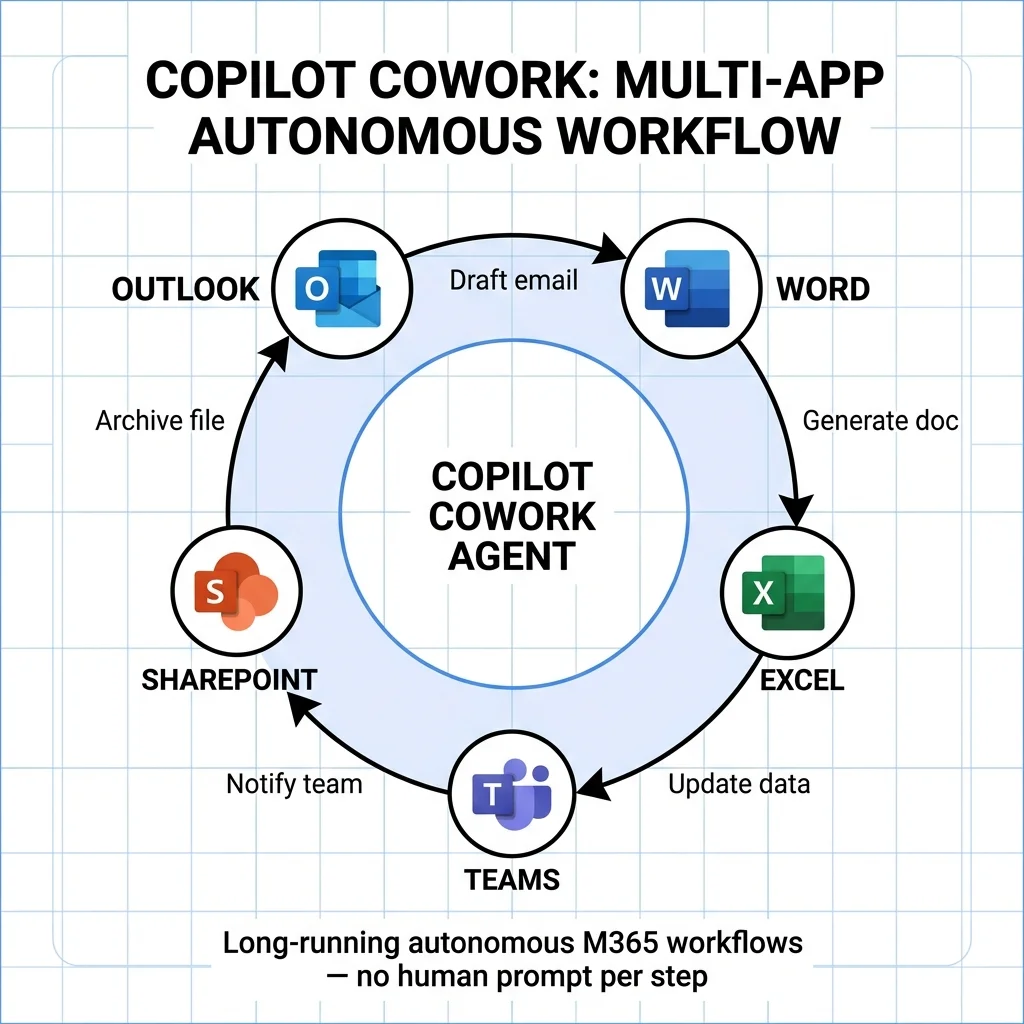
What shipped at GA:
- Multi-app autonomous workflow execution across Outlook, Word, Excel, Teams, SharePoint, and OneDrive
- Seat-level activation from the M365 Admin Center — admins can enable Cowork for specific users, groups, or departments without enabling for the full tenant
- Action audit log streaming to Microsoft Sentinel with Purview data classification labels automatically applied to agent-generated content
- User consent gating for actions classified as sensitive (calendar manipulation, external email, financial data access)
- Long-running session support — workflows can span hours or days, with the agent checking in when blocked or when human review is flagged
- Microsoft Graph MCP integration — Cowork agents expose their tool surfaces as Model Context Protocol endpoints, making them composable with third-party MCP-compatible orchestrators
Why It Matters
The Persistent Digital Teammate Race Is Real
Copilot Cowork GA is Microsoft's most direct product statement yet that the AI assistant category is over. The next category — persistent agents that work on your behalf without being prompted — is where Microsoft, Salesforce (Agentforce 3), Google (Gemini Enterprise coworker mode), and the emerging independent agent platforms are all competing.
For enterprises already on M365 — which covers the majority of Fortune 500 IT infrastructure — Cowork's distribution advantage is significant. No new procurement, no additional integration surface. It activates within existing license entitlements and governance infrastructure.
The Governance Gap Is the Legitimate Risk
The headline capability is compelling. The governance gap is real and IT leaders should take it seriously.
At GA, Microsoft provides seat-level activation controls and audit log streaming to Sentinel. What it does not yet provide:
- A real-time action monitoring dashboard — you can see what Cowork agents did in logs, but there is no live dashboard showing in-flight agent actions across your tenant
- Cross-tenant isolation controls — for enterprises with multiple M365 tenants (common in large enterprises after acquisitions), isolation between Cowork agent contexts is not yet configurable
- Granular action allow-lists beyond the category level — you can block "external email" as a category, but not "external email to domains outside your approved supplier list"
These capabilities are on the Q4 2026 roadmap, per Microsoft's admin center release notes. The gap means enterprises deploying Cowork at GA are doing so with detection-after-the-fact governance — logs tell you what happened, not what's happening. For compliance-sensitive industries (financial services, healthcare, legal), this is a meaningful risk to assess before broad rollout.
The MCP Integration Signal
The inclusion of Microsoft Graph MCP endpoints in Cowork's GA feature set is strategically significant. It signals that Microsoft views Cowork agents as composable primitives — not closed black boxes. A third-party orchestrator (LangGraph, AutoGen, or any MCP-compatible runtime) can call Cowork's M365 tool surfaces as standard MCP tools.
This is a significant hedge against lock-in concerns. Enterprise architects who've been worried about being fully committed to Microsoft's orchestration stack can now use Cowork's M365 actions as a tool layer within their existing agent infrastructure.
Who Should Roll Out Now vs. Who Should Wait
Roll out now (with scoped pilot):
- Tenants in low-risk workflow categories (marketing content, internal reporting, HR onboarding sequences)
- Teams where the primary action surface is SharePoint + Teams + Word with no external email or financial data access
- Organizations with mature Sentinel deployments that can process agent audit logs in near-real-time
Wait for Q4 2026 governance dashboard:
- Financial services firms with MiFID II, DORA, or SOX compliance obligations
- Healthcare organizations under HIPAA with PHI touching any M365 surface
- Legal firms where client-matter data boundary integrity must be continuously verifiable
- Enterprises with multiple M365 tenants and cross-tenant data sensitivity requirements
The distinction is not between "use it" and "don't use it" — it's between scoped pilots in low-risk workflows now, versus broad production deployment after the Q4 governance layer lands.
What to Watch Next
- Q4 2026 Governance Dashboard GA: Microsoft has committed to a real-time Cowork action monitoring dashboard and granular allow-list controls by Q4 2026. This is the trigger for broad enterprise deployment in regulated industries. Watch the M365 admin center roadmap page.
- Cowork + Azure AI Foundry integration: Microsoft Build 2026 showed early signals of Cowork agents being callable from Azure AI Foundry agent pipelines. If this ships as part of the Q4 update, it closes the orchestration composability gap for enterprise Azure architects building multi-agent systems that span cloud infra and M365.
- Competitive response from Salesforce and Google: Salesforce Agentforce 3 (GA June 2026) and Google Gemini Enterprise's persistent agent mode are both targeting the same "digital coworker" category. Watch for feature parity announcements and pricing moves in Q3 2026 — particularly around governance controls, which is where Microsoft is currently behind on the enterprise readiness curve.
- EU AI Act alignment: Cowork's audit log streaming to Sentinel provides GPAI logging coverage as required by EU AI Act Article 12. Microsoft's EU Data Boundary commitments apply to Cowork agent-generated content. For EU-headquartered enterprises, this is the compliance narrative to validate with your legal team before activation.
Source
Windows News — Microsoft Copilot Cowork Hits GA (Jun 16, 2026)
Additional coverage: Microsoft 365 Blog
Related on shahvatsal.com:
- Microsoft Build 2026: Copilot Agents and Azure AI Foundry
- The Post-Managerial Era: Leading Autonomous Agents