By Vatsal Shah | 2026-07-05 | 5 min read | Source: OECD Portal
Lead Paragraph
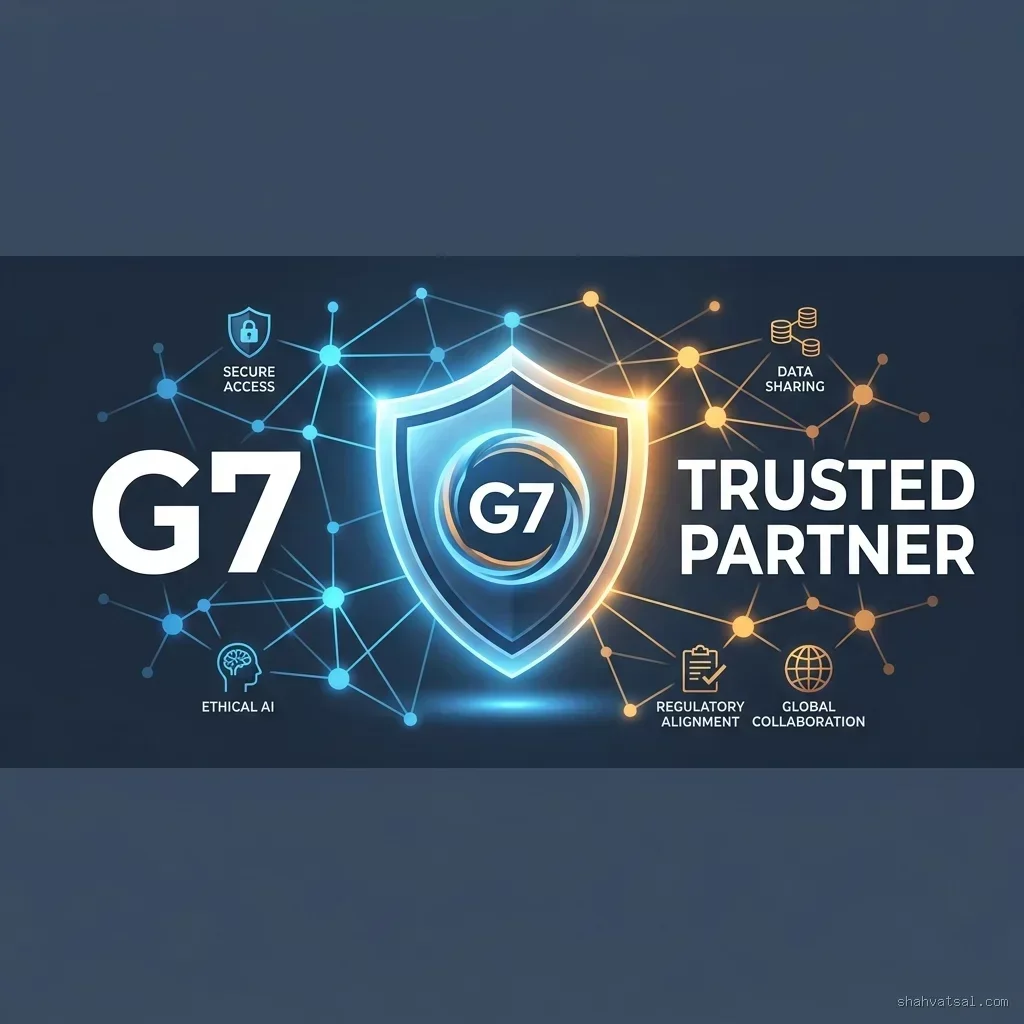
EVIAN-LES-BAINS, France — At the annual G7 Summit held in Evian-les-Bains, allied nations formally proposed a unified G7 AI trusted partner framework 2026 to establish a secure access tier for United States frontier AI models. Catalyzed by the recent Claude Fable 5 and Mythos 5 export-control shock on June 12, international allies are pushing back against unilateral US technology restrictions. While European and Asian coalition partners advocated for binding multilateral guarantees to protect their technical industries, the US delegation blocked any formal treaty, opting instead for bilateral talks led by Commerce Secretary Howard Lutnick. Simultaneously, the Organisation for Economic Co-operation and Development (OECD) released an updated Hiroshima AI Process reporting framework, signaling a widening divide in global AI supply chain geopolitics and allied AI governance.
What Happened
The Evian summit took place under intense diplomatic friction, driven by the abrupt suspension of frontier model exports under the Great American AI Act (GAAIA). The June 12 export-control shock—which restricted international access to Anthropic's new Fable 5 and Mythos 5 models—left European and Japanese enterprise developers suddenly locked out of core cloud-hosted intelligence loops.
In response, diplomats from France, Germany, Japan, and the United Kingdom introduced a draft proposal for a "Trusted Partner Access Tier." The framework aims to create a fast-track export licensing pipeline for verified allied enterprises that comply with strict data protection, security monitoring, and model alignment standards. The proposed protocol would classify allied countries under a high-trust verification tier, shielding them from sudden unilateral trade suspensions.
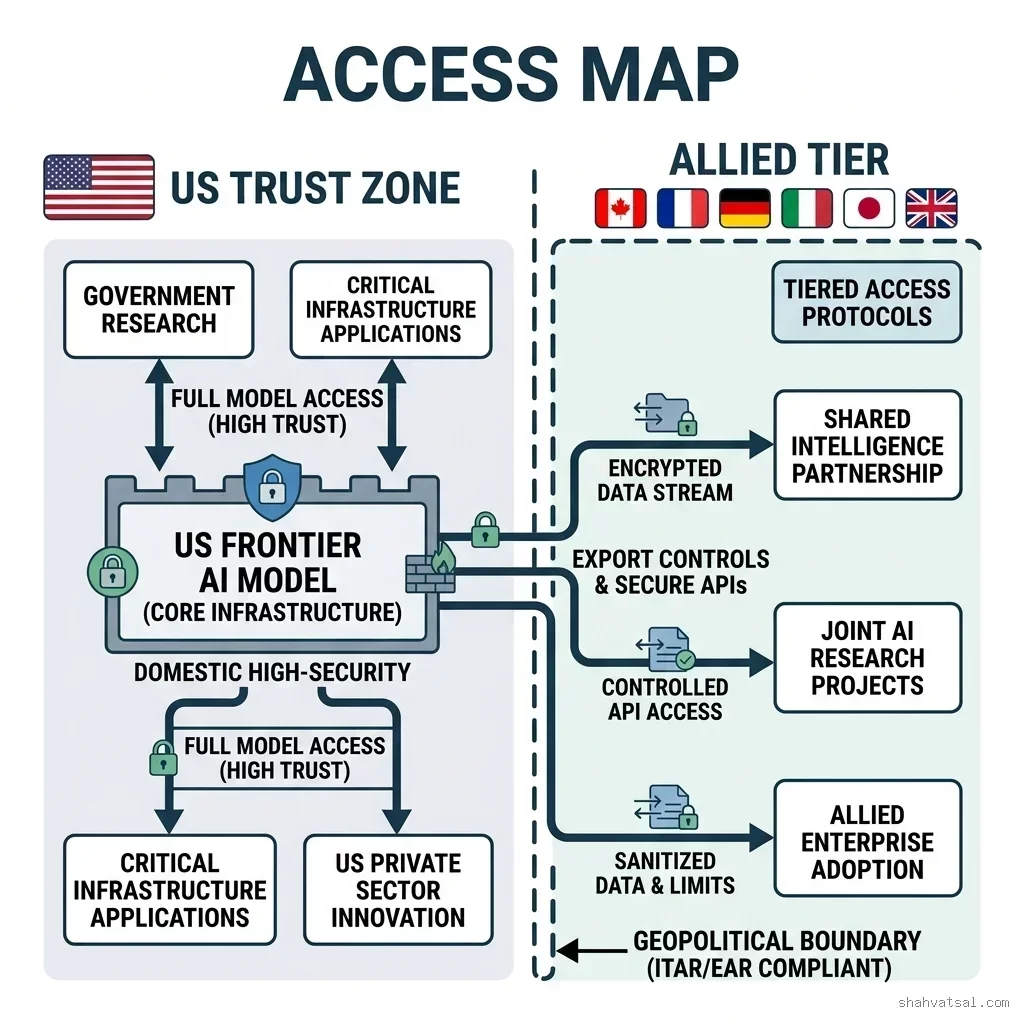
However, the United States delegation, led by Commerce Secretary Howard Lutnick, declined to endorse a binding multilateral agreement. Citing national security concerns and domestic regulatory autonomy, US officials insisted on bilateral, country-by-country licensing agreements. This position has drawn sharp criticism from allied negotiators, who argue that a fragmented system of bilateral treaties undermines collective security and creates economic disparity among G7 members.
Why It Matters
The dispute at Evian highlights the escalating complexity of AI supply chain geopolitics. Frontier AI models are no longer viewed merely as commercial software products; they are now treated as critical dual-use national infrastructure, akin to advanced semiconductors or aerospace technologies. Consequently, frontier model export controls on allies are becoming standard geopolitical leverage.
For international enterprises, the prospect of a frontier model lockout presents a severe operational threat. Modern business processes—ranging from automated financial triage to critical software builds—are increasingly dependent on APIs managed by a handful of US-based providers. When access to these models can be suspended with minimal warning, allied nations face a clear digital sovereignty deficit.
+-----------------------------------------------------------------------+
|                 Sovereign AI Infrastructure Evolution                  |
|                                                                       |
|  [US Frontier Models]                                                 |
|          │                                                            |
|          ▼ (Export Control Shock)                                     |
|  [Allied Tech Lockout] ──► Push for Geopolitical Trust Tiers           |
|          │                                                            |
|          ▼ (Evian Summit Conflict)                                    |
|  [Sovereign Local Hosting] ──► Direct deployment of Llama 4 & MCP      |
+-----------------------------------------------------------------------+
To counter this vulnerability, several European countries are accelerating funding for local sovereign AI architectures, emphasizing on-device models and independent hosting. This shift is designed to reduce reliance on centralized US cloud endpoints and mitigate the threat of sudden access revocation.
Vatsal's Expert Take
The Evian conflict demonstrates that digital sovereignty cannot be outsourced. Relying entirely on US-based API endpoints for frontier intelligence introduces a critical point of failure for allied economies. While the G7 AI trusted partner framework 2026 aims to salvage access through regulatory alignment, the US refusal of a binding multilateral deal shows that national security interests will always take precedence over alliance partnerships.
Enterprises must pivot toward hybrid, sovereign architectures—hosting open models like Llama 4 locally while leveraging the Model Context Protocol (MCP) to retain control over their private data pipelines.
The Hiroshima AI Process Update
Coinciding with the G7 summit, the OECD released its updated Hiroshima AI Process reporting framework. Initially launched in 2023 to promote safe, secure, and trustworthy AI globally, the 2026 revision introduces strict reporting guidelines for organizations developing or deploying frontier models.
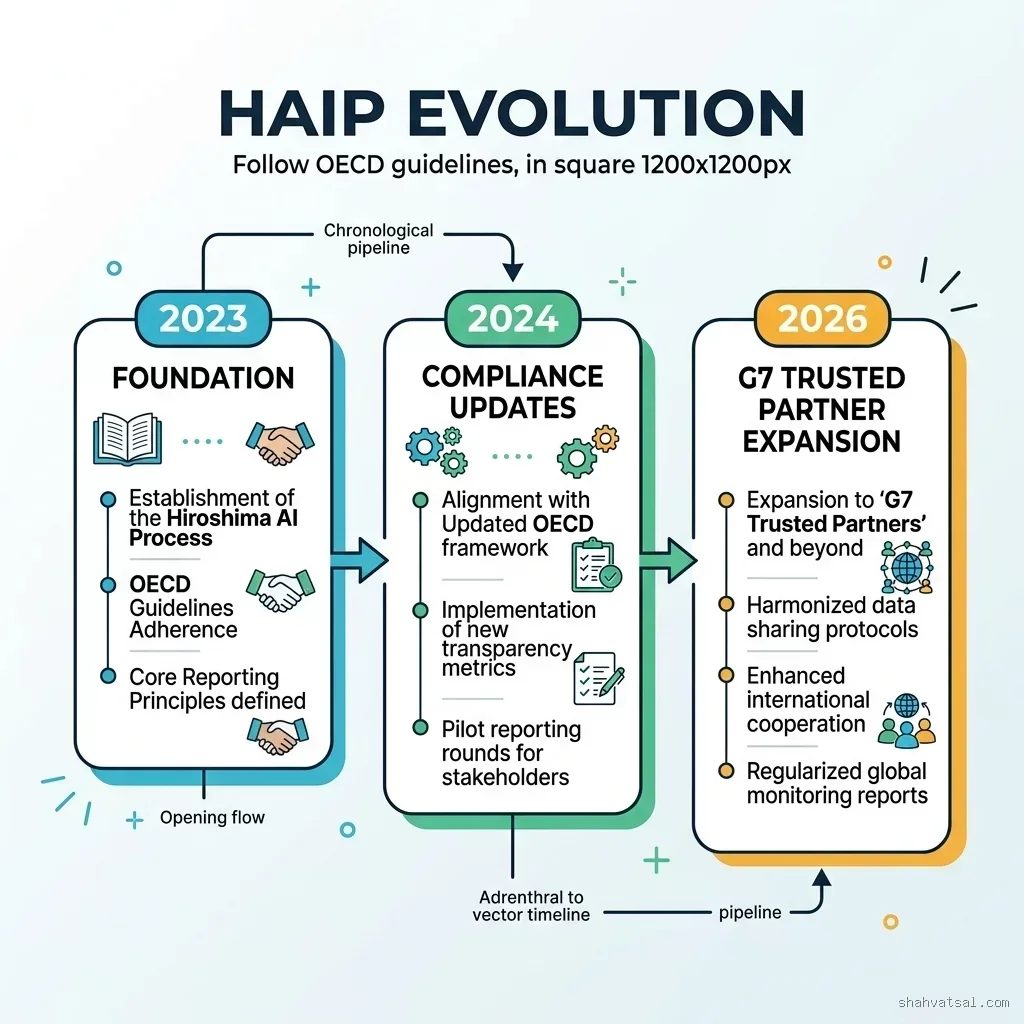
The new reporting rules require developers to provide detailed audits on:
- Computational resource footprint and training metrics.
- Red-teaming methodologies and vulnerability disclosure records.
- Outbound API encryption and token routing pathways.
- Compliance with local data sovereignty laws.
By institutionalizing these reporting requirements, the OECD hopes to create a baseline for compliance that could eventually facilitate the trusted partner access tier proposed by allied nations.
What to Watch Next
As the G7 Summit concludes, the diplomatic focus shifts to bilateral negotiations. Commerce Secretary Howard Lutnick is scheduled to meet with European Union commissioners and Japanese trade representatives in July to outline the parameters of individual licensing agreements. These talks will determine if allied developers can regain access to Fable 5 and Mythos 5 without sacrificing compliance with local data privacy regulations.
Furthermore, the push for sovereign AI infrastructure is expected to gain momentum. Expect increased public and private funding for decentralized computing grids, open-weights model fine-tuning, and local data center developments across Europe and Japan as they build containment strategies against future export shocks.
Key Takeaways
- Diplomatic Friction: G7 allies proposed a trusted partner access tier for US frontier AI models, following recent export control suspensions.
- Bilateral Shift: The US blocked a binding multilateral agreement, choosing instead to pursue country-specific bilateral negotiations.
- OECD Updates: The Hiroshima AI Process reporting framework was updated to enforce detailed audits on frontier model safety and routing parameters.
- Sovereignty Push: The threat of sudden access lockouts is driving international enterprises toward local, sovereign AI infrastructure.