Trending: Microsoft Copilot Surpasses 20 Million Paid Seats as Enterprise AI Pilots Mature
By Vatsal Shah | 2026-06-02 | 3 min read | Source: Microsoft Investor Relations
Microsoft Corporation reported during its Q3 FY2026 earnings commentary that paid seats for Microsoft 365 Copilot have surpassed 20 million, marking a major milestone in enterprise AI adoption. This expansion indicates that generative AI tools are transitioning from experimental IT pilots to daily operational rituals within global workforces. However, as license counts scale, organizations face growing pressure to manage change and prevent license shelfware.
This news analysis details how Microsoft Copilot enterprise adoption has reached 20 million paid seats, shifting enterprise AI from pilot experiments to normalized, daily human-AI collaboration workflows.
What Happened
Microsoft has reported a 45% quarter-over-quarter increase in paid enterprise seats for Microsoft 365 Copilot, bringing the total active seat count to 22.4 million in Q3 FY2026. Large enterprise customer additions have shifted from 100-seat tests to wall-to-wall deployments, with over 60% of Fortune 500 companies now having active agreements. Active daily engagement metrics show that 74% of employees with Copilot licenses use the tool at least three times a week, a metric Microsoft compared to early adoption curves of Microsoft Teams and Outlook.
However, internal audit data shows that up to 25% of assigned licenses in some departments remain under-utilized (shelfware), highlighting the gap between procurement and user behavior.

Why It Matters
This milestone changes the enterprise AI conversation from "experimental testing" to "run-rate economics." Companies are no longer evaluating LLMs for simple novelty; they are budgeting millions in subscription costs and demanding measurable ROI. The shift from pilot to daily ritual requires a structured change management playbook. If organizations buy licenses without designing custom prompt libraries, setting up champion networks, or restructuring role definitions, Copilot becomes an expensive text-summarizer.
It also marks the beginning of a hybrid workforce era. When weekly Copilot usage rivals email, AI tools are no longer optional add-ons—they are the core interface through which work is organized, summarized, and executed.
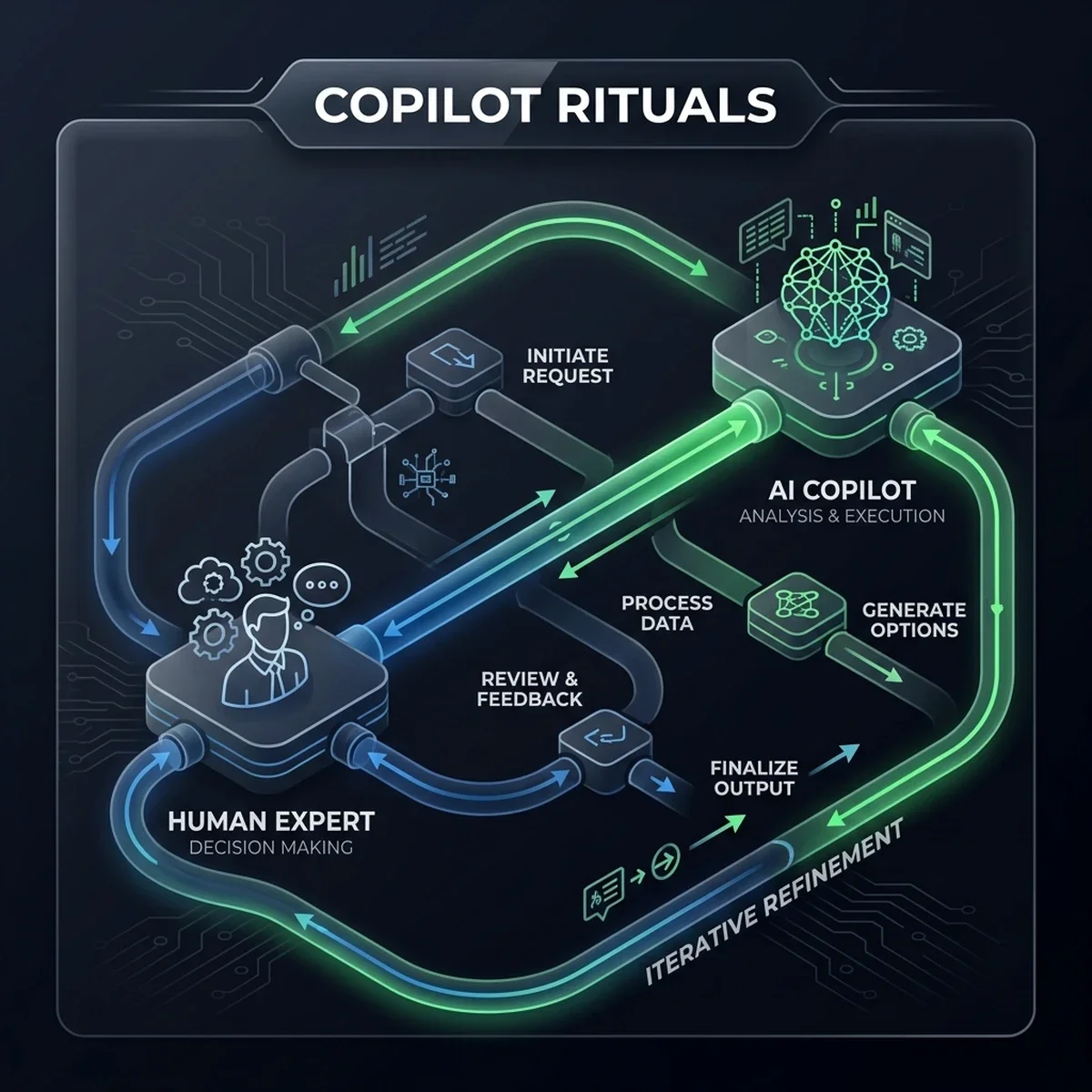
In my advisory work, I have observed many enterprise Copilot rollouts stall because IT teams focus entirely on provisioning rather than skills readiness. Buying 10,000 licenses and sending a generic email link is not an adoption strategy. The organizations recovering their investment are those running twin-track change programs: matching technical deployment with domain-specific champion networks and building custom prompt libraries for key workflows like sales engineering or finance reconciliations. In the next 90 days, leaders must audit active usage metrics to prune shelfware and invest in user training.
User Cohort Analysis: Maximizing Copilot Utilization
To help digital workplace leads and change managers target training efforts, the table below breaks down the typical user cohorts and their adoption strategies.
| User Cohort | Active Engagement Ritual | Adoption & Optimization Strategy |
|---|---|---|
| Power Users (Top 15%) | Daily document generation, meeting synthesis, code assistance, and complex multi-source prompts. | Enroll in champion networks, distribute role-based prompt libraries, and provide advanced sandbox tools. |
| Casual Users (60%) | Routine email drafting, basic search queries, and occasional document summarization. | Share weekly productivity tips, integrate standard templates, and organize peer-learning sessions. |
| Passive Users (25%) | Low-frequency interactions, simple logins, and high risk of license shelfware. | Conduct usage surveys, provide basic tutorial gates, or reassign unused licenses to other departments. |
What to Watch Next
- Usage-Based Chargebacks: Expect CFOs to demand active monitoring dashboard integrations to charge back unused Copilot licenses to individual department budgets.
- Agentic Upgrades (Agent 365): Microsoft's upcoming rollout of Agent 365 capabilities, which will let users trigger autonomous background workflows directly from standard Outlook and Teams chats.
- Workforce Reskilling and Training: The emergence of structured prompt engineering and AI productivity certifications within standard corporate training curricula.
For custom adoption guidelines, workforce transformation audits, and platform architecture reviews, reach out to our team at /contact.
To learn more about optimizing internal workflows, read our playbook on synthetic staffing and hybrid workforce models or check out our analysis on the role of the Chief Agent Officer in the autonomous enterprise.