Trending: The AI Governance Imperative - Boards Demand Inventory, Policy Engines, and Audit Trails
By Vatsal Shah | 2026-05-27 | 4 min read | Source: NIST AI Risk Management Framework
In 2026, corporate boards and compliance officers globally are enforcing strict governance frameworks to manage the deployment of generative AI and autonomous agentic workflows. As companies scale agents from isolated sandbox environments into production networks, they must implement unified controls to prevent data leakage, prompt injections, and regulatory violations. This governance shift represents a transition from voluntary policy declarations to active technical enforcement gates.
This news analysis details how corporate boards are demanding verified AI registries and automated policy engines to audit data flows and comply with emerging global standards.
What Happened
Recent industry research and corporate filings show a major shift in executive board priorities regarding generative AI systems:
- Board-Level Mandate: Over 82% of enterprise boards now require a centralized, verified inventory of all active AI models, API keys, and autonomous workflows.
- Observability Gap: While a majority of leaders declare active AI policies, fewer than 34% of organizations can produce a read-only audit log tracking agent decisions in real time.
- Active Gate Enforcement: Regulated industries are replacing static manuals with active policy engines that validate requests at the API gateway before routing queries.
       [ Centralized AI Inventory ]
                    │
                    v
      [ Active Policy-as-Code Engine ]
  (Validates prompt safety & connector lists)
                    │
                    v
       [ Real-Time Audit logging ]
  (Streams events to security SIEM databases)
Why It Matters
This trend represents a critical shift in how companies approach AI deployments. Previously, security teams managed AI risks through simple document filters or browser blocks. However, as developers build complex agent networks that query databases and run system commands, manual oversight becomes impossible.
Regulators are introducing strict compliance timelines, including the upcoming tranches of the EU AI Act. This oversight is forcing enterprise IT groups to deploy active governance layers.
Without automated directories and policy engines, companies face significant risks, including unmonitored data transfers, vendor lock-in, and audit failures. The mandate is clear: build a secure control plane, or risk defunding your production agents.
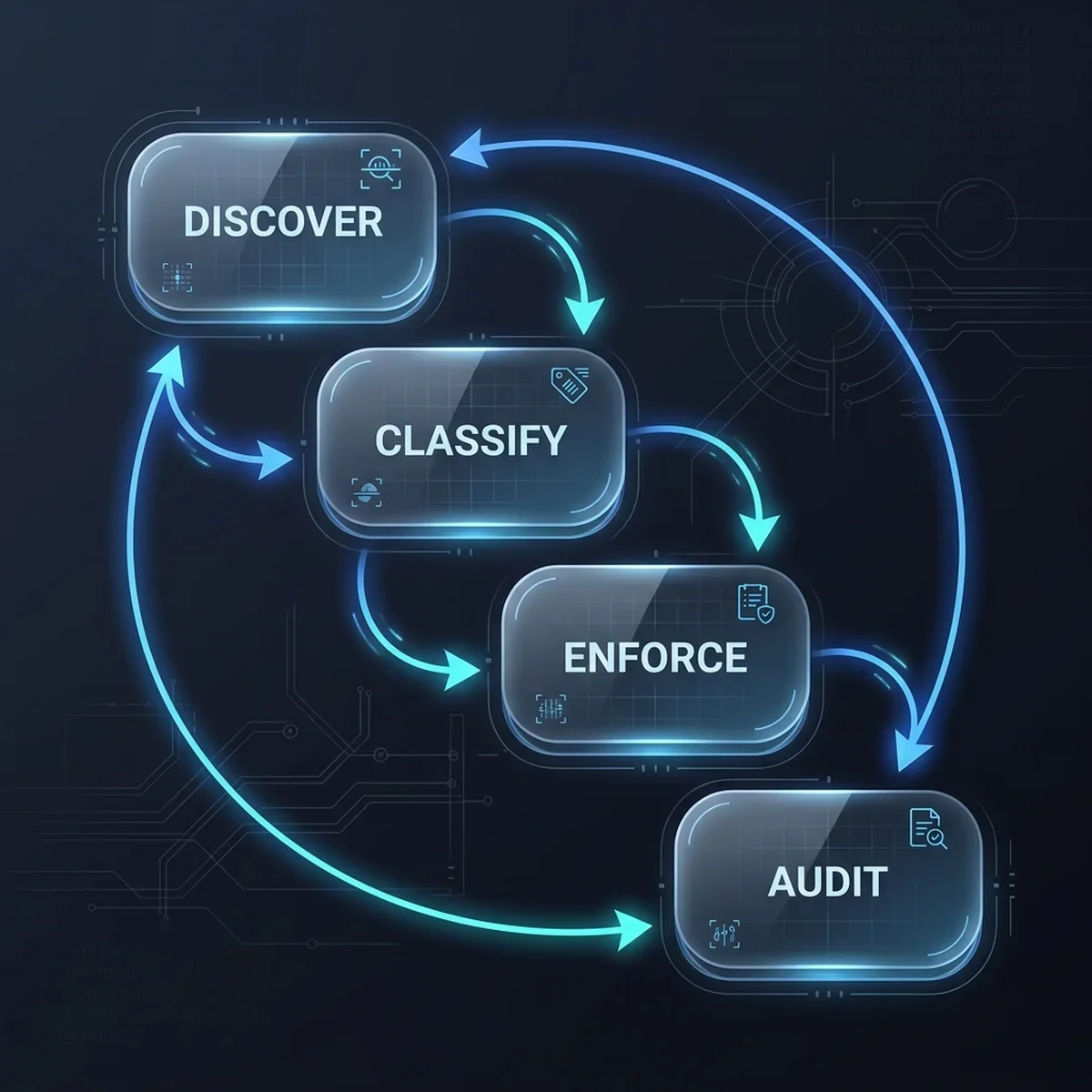
In my consulting work, I've seen that the primary bottleneck in scaling AI is not model latency—it's compliance anxiety. CISOs are pausing pilots because developers can't answer who owns the data or where it goes. Deploying a structured Agent Registry is the single best way to secure your pipeline, give your board confidence, and enable your teams to deploy agents without weeks of review.
What to Watch Next
- Policy-as-Code Standards: Open-source validation libraries are becoming the standard tool to check prompts and block unapproved API endpoints.
- observability Integration: Observability tools are adding tracing modules to map multi-agent handoffs and track system decisions.
- Audit Tool Acceleration: Procurement teams are requiring software vendors to provide standardized audit telemetry and verify compliance before sign-off.
To explore how these governance strategies protect systems, read our analysis on agentic threat modeling and security or learn about compliance frameworks in regulated banking environments. If you'd like to schedule an AI portfolio audit or design a custom governance playbook, contact us directly at /contact.
Read the original framework details → NIST AI Risk Management Framework