Trending: Shadow AI Meets the Agent Registry — How Enterprises Reclaim Control Without Slowing Teams
By Vatsal Shah | 2026-06-02 | 3 min read | Source: CyberSecurity Association Report
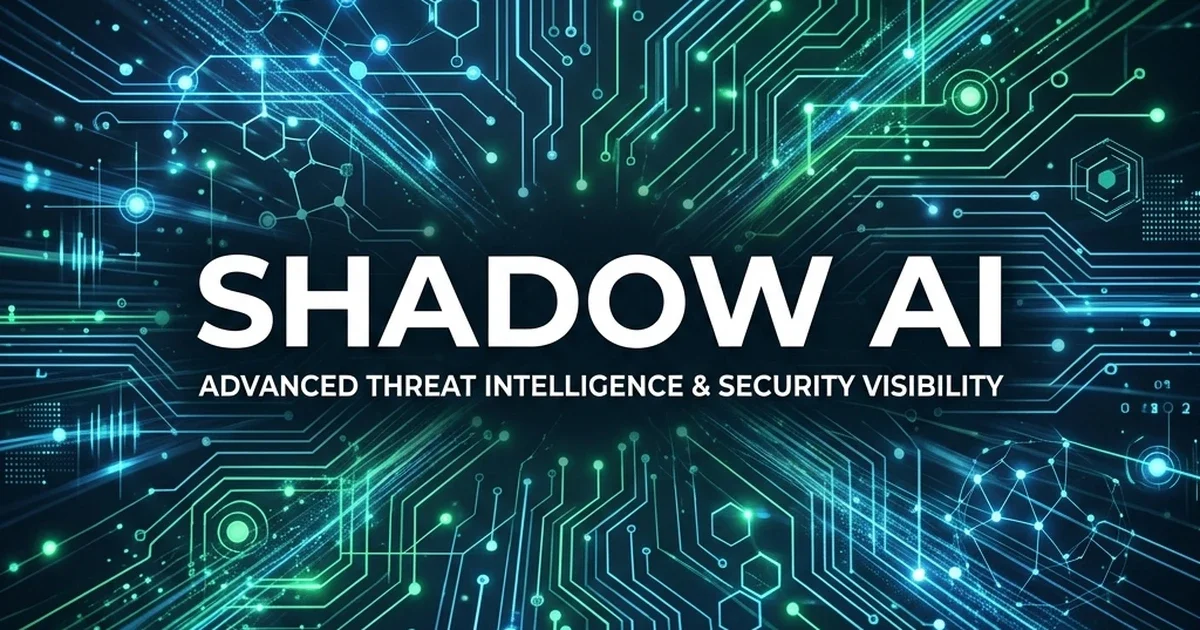
The rapid rise of unsanctioned browser-based AI micro-agents has triggered a quiet security crisis across enterprise IT systems, commonly referred to as shadow AI. To combat this sprawl, CIOs are turning to enterprise agent registries and central policy engines. Rather than resorting to traditional domain blocks that stall employee innovation, modern governance frameworks prioritize active discovery, real-time token inspections, and sanctioned enablement.
This news analysis details how shadow AI micro-agents bypass standard DLP, and how enterprises use central agent registries to balance security controls with developer speed.
What Happened
Enterprise security reports from mid-2026 reveal a significant shift in corporate shadow AI. Employees have transitioned from simple chat prompts to deploying active, browser-based micro-agents that scrape intranet data, auto-draft emails, and sync calendars. This unstructured agent sprawl has bypassed traditional data loss prevention (DLP) networks, exposing sensitive company resources to public AI models.
In response, over 55% of global enterprises have initiated AI asset inventory programs, deploying centralized agent control planes. These registries document who deployed what agent, on what data, and with what access rights, establishing human-in-the-loop policies for high-priority processes.
Why It Matters
Traditional security block policies fail to control shadow AI because the tools are embedded within regular web pages and browser extensions. When IT blocks one domain, users move to another, creating a cat-and-mouse game that frustrates teams. The solution lies in enablement-first governance. An agent registry acts as a trust catalog. Instead of shutting down custom employee-built agents, security teams can audit the data connections, wrap them in secure API limits, and list them in the sanctioned corporate registry.
This architecture secures data flows while preserving speed. For example, a customer support lead who builds a custom triage agent can get it approved and registered within hours, ensuring it uses sanctioned corporate DLP rules instead of sending raw data to external servers.
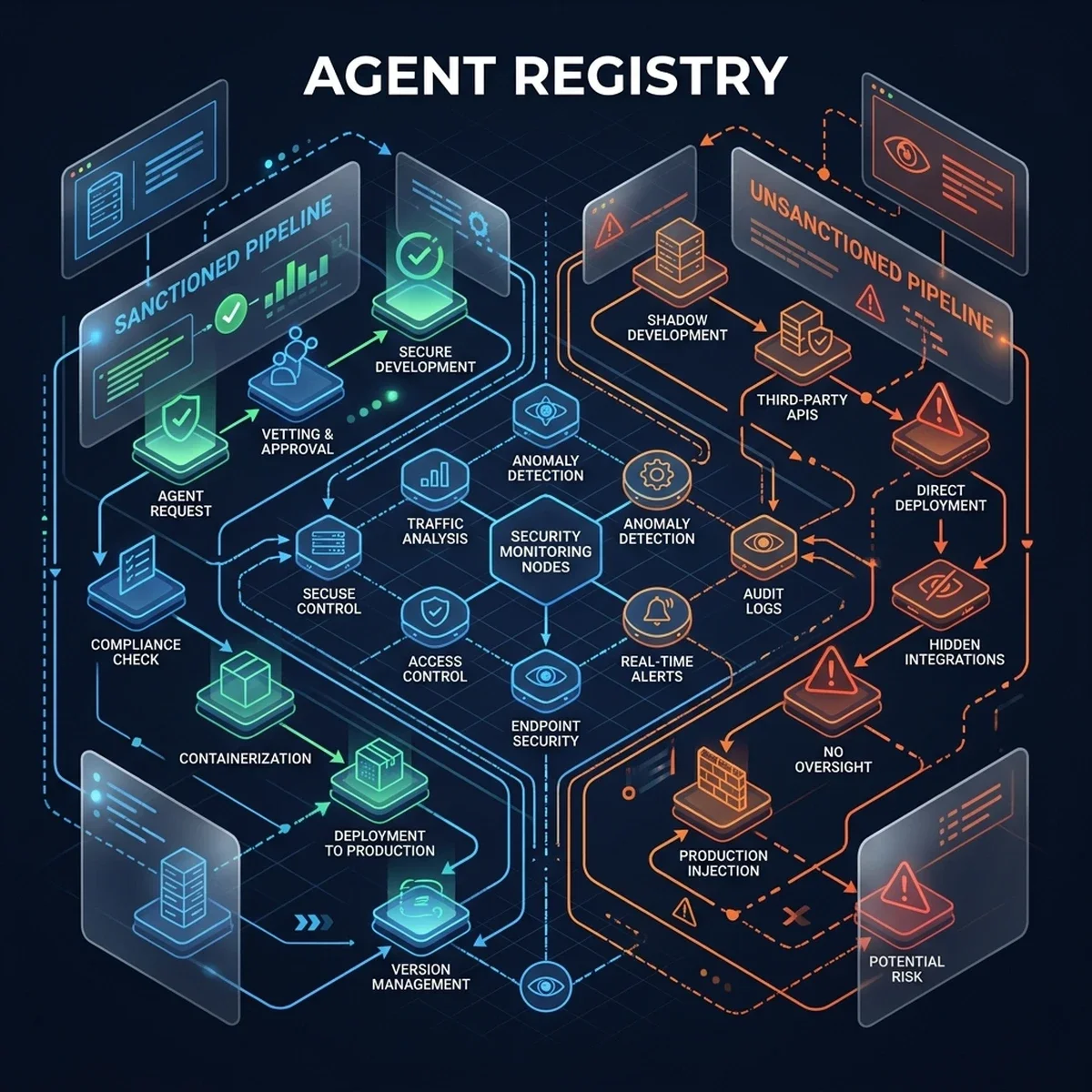
In my security audits, I often see companies fall into the trap of over-blocking. Employees build agents because their standard IT tools are slow and outdated. If you build a barrier, they will find a detour. The most effective CIOs are those who implement discovery sprints: scanning networks to catalog active agent vectors, and then offering a sanctioned, secure developer sandbox. By connecting unsanctioned tools to a central registry, you convert shadow AI into governed asset pipelines, turning security from a bottleneck into a business enabler.
Security Profile: Sanctioned vs. Unsanctioned Agents
To help security operations center (SOC) teams identify risk vectors, the table below compares the security controls of sanctioned registry agents against shadow AI tools.
| Security Metric | Shadow AI (Unsanctioned) | Registry Approved (Sanctioned) |
|---|---|---|
| Data Security & DLP | High risk; raw customer data sent directly to external LLM API endpoints. | DLP firewall filters corporate IP and customer details before model execution. |
| Audit Visibility | None; execution actions logged only on user local browser console. | Centralized audit logging tracking active user ID, runtime commands, and scopes. |
| Credential Management | Hardcoded passwords or direct browser cookie scraping. | Secure OAuth token exchanges managed by enterprise key vaults. |
What to Watch Next
- Browser-Extension Agent Blockers: Security providers releasing extensions designed specifically to identify and audit generative AI API requests.
- Open Registry Protocols: The development of interoperable schema standards (similar to OpenAPI) to register and audit multi-vendor agent fleets.
- DLP Agent Firewalls: Real-time firewalls that inspect agent outputs for corporate IP or customer data before sending payloads to external models.
For custom security guidelines, shadow-AI discovery sprints, and sanctioned toolchain designs, reach out to our team at /contact.
To learn more about securing agent frameworks, read our blog on agentic threat modeling and RAG security or check out our analysis on AI-native business architecture for the enterprise.
Read the original security analysis → CyberSecurity Association Report