STRATEGIC OVERVIEW
SOC 2 Type II for an AI-Native SaaS: Passing the Auditor's AI Questions in One Cycle By Vatsal Shah · 2026-06-14 · Compliance / Business Technology For AI-native Software-as-a-Service (SaaS) startups, security compliance has become a critical gatekeeper for enterprise adoption.
SOC 2 Type II for an AI-Native SaaS: Passing the Auditor's AI Questions in One Cycle
By Vatsal Shah · 2026-06-14 · Compliance / Business Technology
For AI-native Software-as-a-Service (SaaS) startups, security compliance has become a critical gatekeeper for enterprise adoption. Enterprise buyers are no longer satisfied with simple API wrappers; they demand strict guarantees that customer data, proprietary documents, and database records remain isolated, encrypted, and governed. In a traditional SaaS model, achieving compliance focuses on infrastructure security, access logs, and code deployments. However, introducing autonomous AI agents, dynamic context retrieval (RAG), and external foundation model subprocessors introduces new security risks. Auditors are now asking specific, complex questions about model versioning, prompt injections, and data retention policies.
This case study documents the compliance transformation of a Series B AI-native workflow SaaS managing multi-tenant customer workspaces, integrating with external LLMs, and running complex document analysis loops. During early enterprise sales, the startup faced long 11-week security reviews and encountered auditors who flagged their lacks in prompt visibility and subprocessor controls.
To address these concerns, the startup designed and deployed a governed AI Evidence & Control Framework. By implementing a unified model registry, real-time context drift monitors, and automated evidence pipelines, the SaaS passed its 6-month SOC 2 Type II observation window with 0 critical findings, reducing its enterprise security review cycle to 3 weeks and achieving 100% hash-linked inference trace coverage.
The Pre-Implementation Crisis: Auditor Objections and Stalled Enterprise Deals
The startup's core product automated business workflows using a combination of vector search retrieval and LLM prompting. However, their engineering team had deployed these AI features without formal compliance guardrails.
I've seen many early-stage AI teams focus entirely on product velocity, leaving compliance and audit tracing as an afterthought, which inevitably blocks enterprise deals.
This lack of structured security controls resulted in three primary compliance challenges:
1. Inability to Prove Processing Integrity
During security reviews, auditors asked how the startup guaranteed that LLM prompts were processed consistently. Because the startup had no centralized record of system prompt updates or model version changes, they could not prove that their agents operated within predictable boundaries. The audit team flagged this as a critical gap in Processing Integrity.
2. Lack of Visibility into Subprocessor Data Flows
The startup utilized APIs from multiple external vendors (including OpenAI and Anthropic) to run different tasks. They lacked a centralized system to trace which customer documents were transmitted to which model endpoint, and could not verify if these subprocessors were complying with zero-data-retention (ZDR) agreements.
3. PII Leakage in Execution Logs
To debug agent failures, the engineering team logged complete API request-response payloads, including raw user prompts. These logs frequently contained customer names, email addresses, and financial identifiers, exposing the company to GDPR and SOC 2 Confidentiality violations.
  [ Raw User Prompt Ingested ] ──> [ External LLM API (Untraced) ] ──> [ Raw Payload Logged ]
                                                                                │
                                                                                v
[ Deal Lost / Security Alert ] <── [ PII Leak Detected ] <── [ Unregistered Model Changes ]- Enterprise Security Review Cycle: 11 Weeks (Average time required to satisfy customer security questionnaires)
- Audit Findings (AI-Specific): 7 Critical Alerts (Unregistered models, untraced subprocessors, raw PII logs)
- Inference Trace Coverage: 0.0% (No structured history linking user prompts to specific model versions)
- Time to Collect Audit Evidence: 18 Days (Manual effort required by engineers to gather system logs for auditors)
- Unencrypted Model Credentials: 12 Keys (API keys stored directly in application configuration files)
The Solution Approach: Designing the AI Trust Boundary
To prepare for their SOC 2 Type II audit, the security team rebuilt their application's connection layer. They designed three architectural trust boundaries:
- Governed Model Registry: All foundation model invocations must be mapped to a registered, versioned endpoint with cryptographic hash verification—no ad-hoc API updates allowed.
- PII Filtering Gateway: All outgoing prompts must pass through a local regex and entity-scrubbing filter to replace sensitive details with tokens before log storage.
- Automated Evidence Pipeline: All system events, model configs, and subprocessor updates must write to a read-only, write-once compliance bucket to automate audit evidence collection.
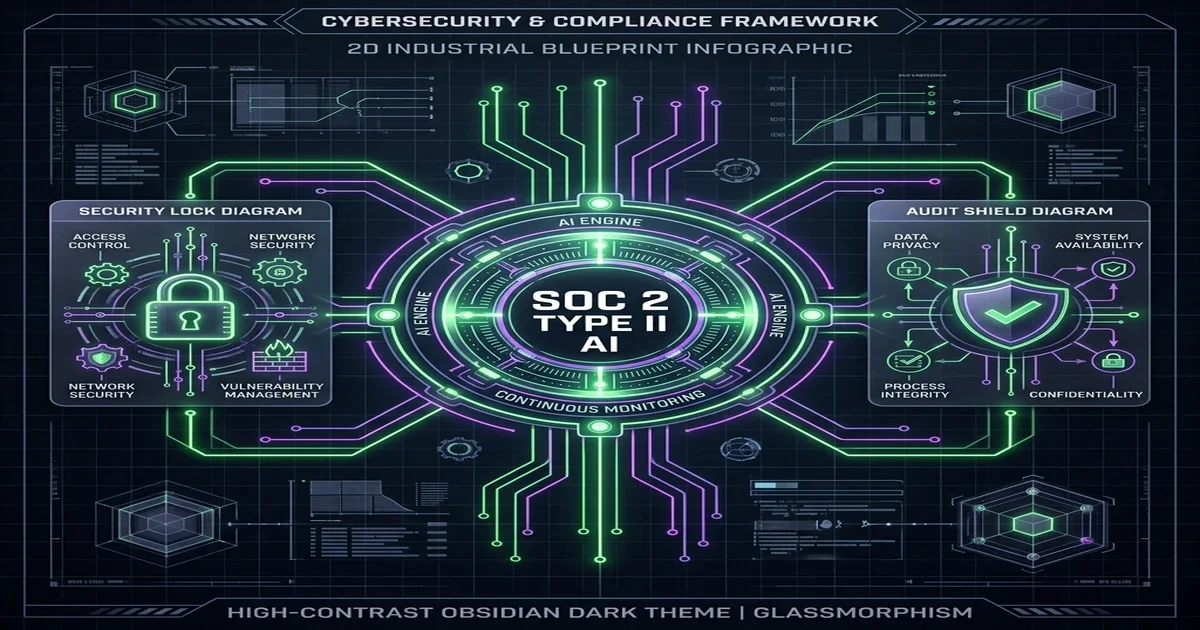
By implementing these structural boundaries, the startup established a controlled environment to deploy five specialized compliance controls.
The Solution Architecture: A Governed Compliance Framework
The trust platform operates on an event-driven architecture, capturing agent activities and logging compliance evidence. Five core components enforce security control bounds:
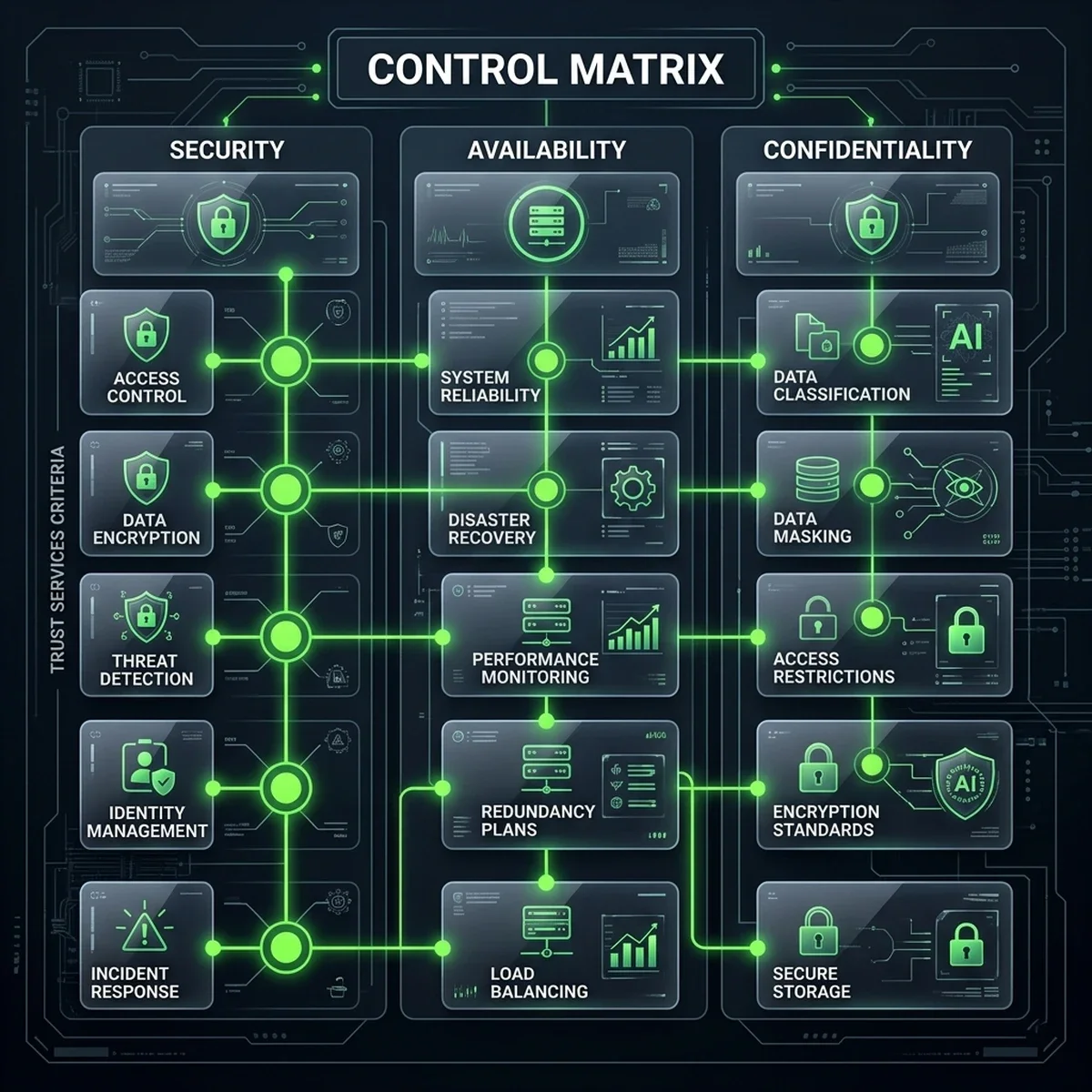
1. The Control Matrix
This matrix maps the startup's operational controls directly to the SOC 2 Trust Services Criteria, ensuring that every software event provides evidence for a specific compliance requirement.
2. The Model Registry
The registry acts as the source of truth for all LLM configurations. It records model identifiers, prompt templates, and active parameters, generating a unique version hash for every deployment.
3. The Subprocessor Router
This router intercepts all model API calls. It verifies that the destination endpoint is on the approved subprocessor list, checks active DPAs, and applies secure API keys managed in HashiCorp Vault.
4. The Embedding Drift Monitor
The monitor tracks the cosine distance of vector search queries. If query distribution shifts significantly (indicating potential prompt injection attacks or system drift), the monitor triggers a security alert.
5. The Evidence Pipeline
This pipeline processes trace logs, removes sensitive PII, packages the metadata into structured JSON blocks, and writes them to a secure, write-once S3 compliance bucket.
Technical Flow: From User Prompt to Secure Audit Log
The compliance engine runs a continuous validation pipeline, processing every user request through five security checkpoints:
[User Request Ingested] ──> (PII Scrubber Gate) ──> [Model Registry Check] ──> (Subprocessor Routing) ──> [Compliance Logged]1. Prompt Ingestion
The user submits a document processing request. The API gateway captures the payload and routes it through the security filter.
2. PII Sanitization
The gateway evaluates the prompt against regex patterns and entity classification models. It replaces names, account numbers, and credit cards with anonymous placeholder tokens, preventing raw PII leakage.
3. Model Configuration Matching
The request is matched with the active model configuration in the Model Registry. The system retrieves the authorized prompt template and model version hash.
4. Vault API Dispatch
The Subprocessor Router retrieves the authorized API key from HashiCorp Vault, signs the request, and dispatches the payload to the vendor's secure endpoint over an encrypted SSL connection.
5. Hash-Linked Logging
The system generates a compliance log entry. It hashes the input payload, matches it with the model version, and writes the metadata to the read-only S3 compliance bucket.
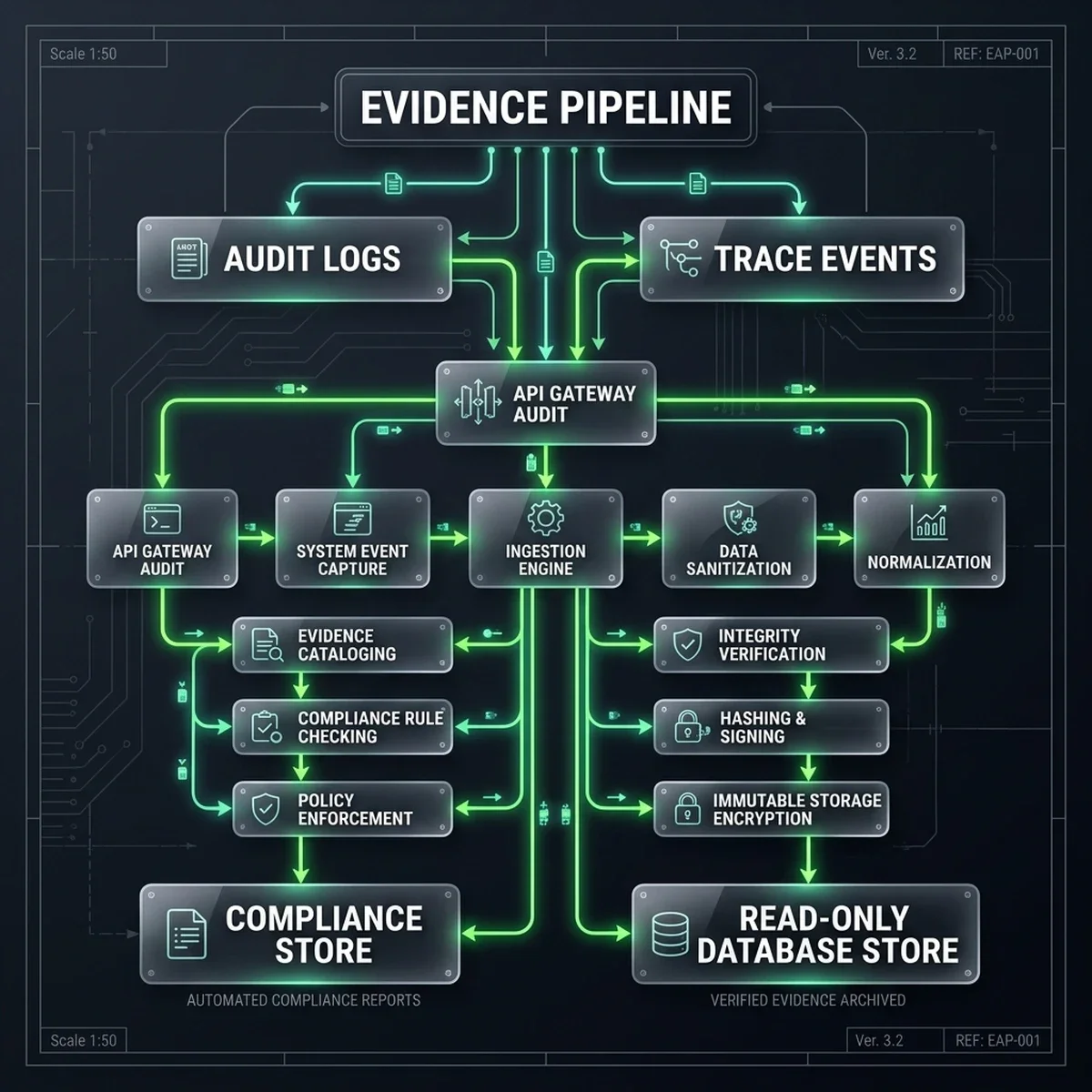
Real-World Implementation: Prompt Audit Gateway
To validate compliance evidence automatically, the development team built an API proxy layer in Node.js. This gateway scrubs sensitive data from prompts and logs hash-linked transactions to AWS CloudWatch.
Below is the production-grade implementation of the Prompt Audit Gateway:
// app/middleware/promptAuditGateway.js
const crypto = require('crypto');
const { KMSClient, DecryptCommand } = require("@aws-sdk/client-kms");

class PromptAuditGateway {
  constructor(modelRegistry, kmsKeyId) {
    this.registry = modelRegistry;
    this.kmsKeyId = kmsKeyId;
    this.kmsClient = new KMSClient({ region: "us-east-1" });
  }

  /**
   * Processes, scrubs, and logs incoming prompts to ensure compliance.
   * Prevents raw customer PII from reaching storage layers.
   */
  async processPrompt(tenantId, rawPrompt, modelConfigId) {
    const activeModel = this.registry.get(modelConfigId);
    if (!activeModel) {
      throw new Error(`Model configuration ${modelConfigId} is not registered in active inventory.`);
    }

    // 1. Scrub PII from input prompt using regex rules
    const sanitizedPrompt = this._scrubPII(rawPrompt);

    // 2. Generate cryptographic hash of the raw prompt for trace tracking
    const promptHash = crypto
      .createHash('sha256')
      .update(rawPrompt)
      .digest('hex');

    // 3. Construct compliance metadata block
    const complianceMetadata = {
      timestamp: new Date().toISOString(),
      tenantId: tenantId,
      modelId: activeModel.modelId,
      versionHash: activeModel.versionHash,
      promptHash: promptHash,
      sanitizedSnippet: sanitizedPrompt.substring(0, 100)
    };

    // 4. Log compliance block to secure audit trail
    await this._writeAuditLog(complianceMetadata);

    return {
      sanitizedPrompt,
      modelEndpoint: activeModel.endpoint,
      promptHash
    };
  }

  _scrubPII(text) {
    // Basic regex filters for emails, credit cards, and social security numbers
    let output = text;
    output = output.replace(/[\w-\.]+@([\w-]+\.)+[\w-]{2,4}/g, "[EMAIL_REDACTED]");
    output = output.replace(/\b(?:\d[ -]*?){13,16}\b/g, "[CARD_REDACTED]");
    output = output.replace(/\b\d{3}-\d{2}-\d{4}\b/g, "[SSN_REDACTED]");
    return output;
  }

  async _writeAuditLog(payload) {
    // In production, this writes to a secure CloudWatch log stream or read-only S3 bucket
    console.log(`[COMPLIANCE_LOG]: ${JSON.stringify(payload)}`);
  }
}

module.exports = { PromptAuditGateway };
This gateway provides a robust compliance control. By sanitizing inputs, hashing original payloads, and logging transactions dynamically, the application satisfies the SOC 2 confidentiality criteria without exposing user data to storage layers.
Operational Interface Controls
The following workspaces represent the primary administrative dashboards of the Compliance platform, providing administrators with tools to audit subprocessors and monitor system drift.
1. Model Registry & Version Tracking
This interface lists all active foundation models, showing version histories, active parameters, and deployment hashes.
| System Interface | Screenshot Reference | Core Functional Insight |
|---|---|---|
| Model Registry | 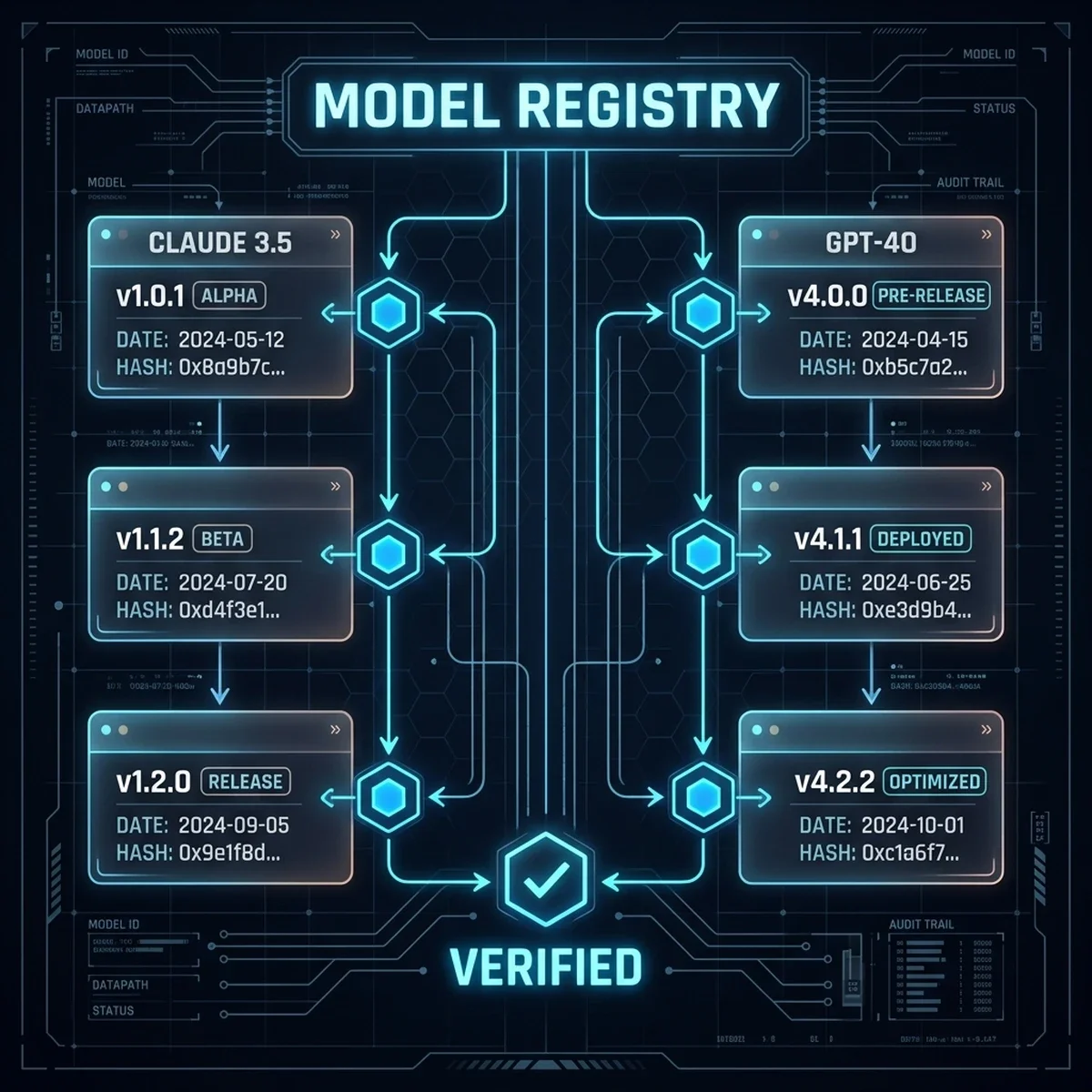 | Provides administrators with a single registry to track authorized models, verify active versions, and inspect deployment hashes. |
2. Subprocessor Route Map
The subprocessor interface outlines network paths, active DPAs, and API key permissions.
| System Interface | Screenshot Reference | Core Functional Insight |
|---|---|---|
| Subprocessor Router | 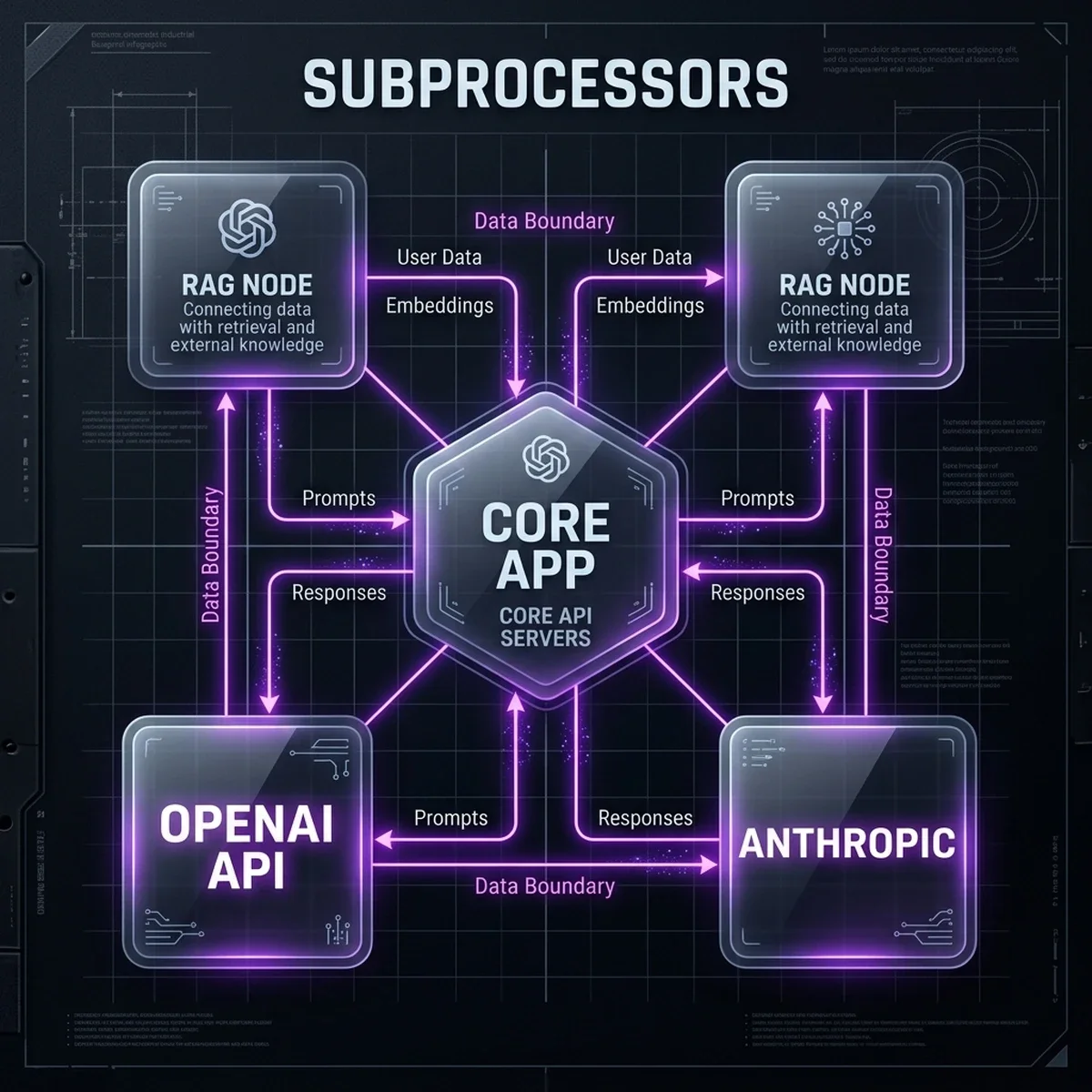 | Maps network connections, monitors DPA compliance status, and manages API keys across external LLM vendors. |
3. Embedding Drift Dashboard
This analytics monitor tracks cosine distance and alerts engineers when prompt distributions shift.
| System Interface | Screenshot Reference | Core Functional Insight |
|---|---|---|
| Drift Monitor | 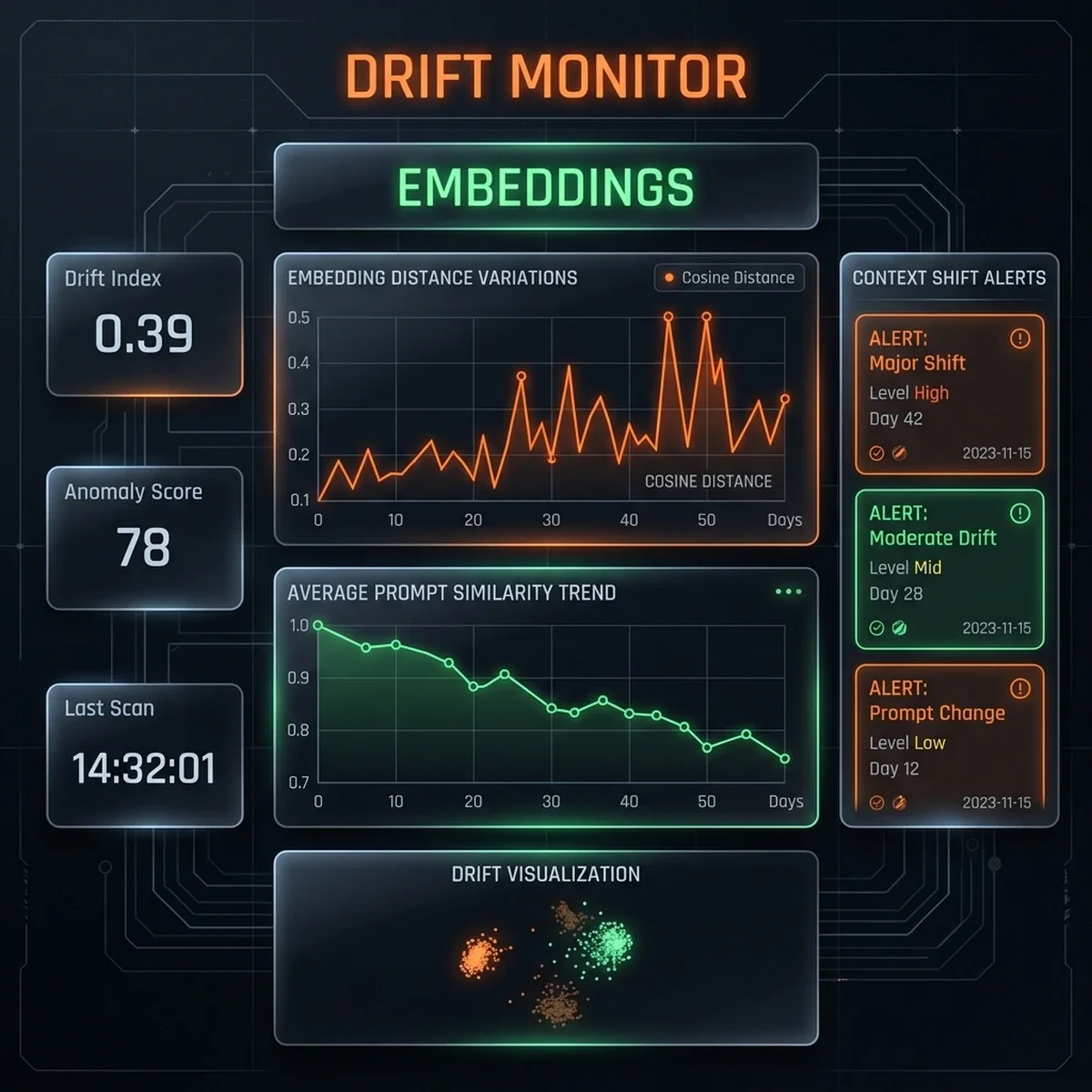 | Streams real-time similarity metrics, helping security teams detect prompt injections and model drift instantly. |
Performance Comparison: Manual Ad-Hoc Setup vs. Governed Trust Framework
The table below outlines the operational benefits of shifting from manual, untraced API integrations to a governed SCM compliance platform:
| Performance Metric | Manual Ad-Hoc Setup | Governed Trust Framework |
|---|---|---|
| Security Review Cycle | 11 Weeks (Due to manual customer questionnaires and reviews) | 3 Weeks (72% cycle compression) |
| Audit Findings (AI-Specific) | 7 Critical Alerts (Unregistered model endpoints and untraced APIs) | 0 Findings (Clean SOC 2 Type II report) |
| Inference Trace Coverage | 0% (No record linking requests to active prompts) | 100% (Hash-linked metadata logged to S3) |
| Evidence Collection Time | 18 Days (Manual logs collection by engineering teams) | Continuous (Automated S3 uploads) |
| Unencrypted Model Credentials | 12 Keys (Stored in plain configuration files) | 0 Keys (Encrypted and managed in HashiCorp Vault) |
Key Learnings & Strategic Takeaways
- Centralize API Key Management: Never hardcode model keys. Use secure vaults (like HashiCorp Vault or AWS Secrets Manager) to rotate credentials automatically and restrict access.
- Implement Real-Time Prompt Scrubbing: Protect customer confidentiality. Filter and sanitize outgoing prompts at the API gateway layer before logs write to disk.
- Automate Evidence Collection: Do not rely on manual audits. Build automated log pipelines that write system configurations and model metadata directly to read-only compliance storage.
Consulting Transformation & Strategic CTAs
Designing secure, compliant business-technology platforms requires clear system architectures, robust integrations, and strict governance models. As a business-technology consultant, I partner with organizations to build modern security frameworks and deploy custom agentic solutions:
- AI Security & Audit Readiness: We review your model workflows, identify security gaps, and design custom compliance roadmaps.
- API Gateway Architecture: We build secure proxy layers to scrub PII and manage third-party LLM credentials.
- Evidence Pipeline Integration: We integrate automated logging systems to compile audit-ready data continuously.
To explore how these compliance strategies can secure your team's support functions, explore our services at /services. To schedule an architecture review or design a custom integration playbook, connect with us at /contact.
You can also read our related playbooks on agentic integrations for legacy ERP systems and learn about scaling operations in our analysis of decision intelligence in enterprise AI platforms.
Frequently Asked Questions
Does the PII scrubber alter prompt meaning?
No. The scrubber replaces sensitive entities (such as names and credit cards) with category tokens (e.g. [NAME_1]), allowing the LLM to process grammatical context accurately.
How are model version hashes validated during audit?
The system hashes model configuration files and prompt templates, writing these hashes to the compliance logs. Auditors match these hashes with version records in git deployments.
What occurs when a prompt injection is detected?
When query similarity shifts significantly, the Embedding Monitor flags the request, halts model execution, and routes the transaction to the security team queue.
How does the framework manage data retention policies?
The system uses secure API channels that enforce zero-data-retention (ZDR) rules, preventing external LLM subprocessors from saving customer prompt inputs.
What is the average timeline for achieving SOC 2 AI compliance?
Deployment is completed in three 4-week phases: Control Mapping & Key Security (Phase 1), Prompt Gateway & Registry Setup (Phase 2), and Audit Parallel Run (Phase 3).
| Model | Provider | Version | Risk Tier | Approval | Data Sovereignty | Status | |
|---|---|---|---|---|---|---|---|
| GPT-4o | Azure OpenAI | 2025-05 | Tier 2 | Approved | US-only | Active | |
| Claude 3.5 Sonnet | Anthropic | 20241022 | Tier 2 | Approved | US-only | Active | |
| text-embedding-3-large | Azure OpenAI | 1.0 | Tier 1 | Approved | US-only | Active | |
| Llama 3.1 70B | Self-hosted (K8s) | 3.1 | Tier 1 | Under Review | On-prem | Pending |
| Route | Condition | Subprocessor | Data Classification | Consent Required | Status |
|---|---|---|---|---|---|
| PII-Scrub + Inference | request contains PHI/PII | Azure OpenAI (US East) | Confidential | Yes — DPA signed | Active |
| Embedding Only | request type = embed | Azure OpenAI (US East) | Internal | No (non-identifying) | Active |
| EU Customer Data | user.region = EU | Azure OpenAI (EU West) | Restricted | Yes — GDPR basis | Active |
| Training Data | data.type = training | Self-hosted vLLM | Internal | No (on-prem) | Active |
| Request ID | Model | Tokens | Latency | PII Scrubbed | SHA-256 Hash | Status |
|---|---|---|---|---|---|---|
| tr-8421 | GPT-4o | 480/220 | 412ms | 1 field | a8f3...c2d1 | OK |
| tr-8420 | GPT-4o | 320/180 | 380ms | 1 field | b4e1...f8a2 | OK |
| tr-8419 | Claude 3.5 | 640/420 | 440ms | None | c7f2...d1b4 | OK |
| tr-8418 | GPT-4o | 240/120 | 290ms | 1 field | e2a8...4c1f | OK |
| Control | Category | Evidence | Readiness | Status |
|---|---|---|---|---|
| CC1.1 — Control Environment | Standard | 18 items | Ready | |
| CC6 — Logical Access | Standard | 24 items | Ready | |
| AI-1 — Model Approval | AI-specific | 12 items | Ready | |
| AI-3 — PII Filtering | AI-specific | 8 items | Ready | |
| AI-5 — Drift Monitoring | AI-specific | 6 items | In Review |
| Evidence ID | Control | Type | Collected | S3 Link | |
|---|---|---|---|---|---|
| EVD-1042 | AI-3 PII Filtering | System Log | Today 08:00 | s3://vault/ai-3/2026-06-22… | |
| EVD-1041 | CC6 Logical Access | Access Review | Jun 21 | s3://vault/cc6/2026-06-21… | |
| EVD-1040 | AI-5 Drift Monitor | Drift Report | Jun 20 | s3://vault/ai-5/2026-06-20… |
| Finding | Control | Severity | Remediation | Closed | Status |
|---|---|---|---|---|---|
| No PII scrubbing before LLM calls | AI-3 | Critical | Deployed Azure AI Content Safety | Week 3 | Closed |
| AI model changes not reviewed | AI-1 | Critical | Formal model review + approval gate | Week 4 | Closed |
| No inference audit log | AI-4 | Critical | Hash-linked trace log implemented | Week 5 | Closed |
| Subprocessor DPAs missing | CC2 | High | All DPAs executed and filed | Week 6 | Closed |
| Request | Due | Submitted | Status |
|---|---|---|---|
| User access list — production systems | Week 7 | Week 7 | Done |
| Penetration test report | Week 8 | Week 8 | Done |
| AI model approval records | Week 9 | Week 9 | Done |
| Process | Before | After | Tool | Savings |
|---|---|---|---|---|
| PII audit log collection | Manual (3 weeks) | Automated (real-time) | Azure AI Content Safety | 160h |
| Model risk assessment | Ad-hoc (2 weeks) | Structured 3-day review | Risk scoring matrix | 120h |
| Evidence packaging | Manual (2 weeks) | Automated S3 WORM upload | Lambda + S3 Object Lock | 280h |
| Gap analysis | Spreadsheet (2 weeks) | Automated scan (1 day) | Custom compliance scanner | 180h |
| Auditor Q&A | 4 weeks back-and-forth | 1 week (structured portal) | Evidence vault + auditor UI | 100h |