
STRATEGIC OVERVIEW
I led this program to 100% Conformity Ready. 100% Conformity Readiness | 45-Min Auditor Evidence Turnaround | 12% Human Override Limit Enforced EU AI Act Conformity Console *,*::before,*::after{box-sizing:border-box;margin:0;padding:0;} :root{.
Client & Regulatory Context
The client operates a retail lending and credit underwriting platform based in Frankfurt, Germany. The company manages automated consumer credit portfolios, personal lines of credit, and merchant point-of-sale (POS) financing options across multiple European jurisdictions, including Germany, France, and Spain. Processing over 120,000 loan applications monthly, the client relies on an automated underwriting engine. This engine evaluates applicant risk profile parameters by integrating data from Open Banking APIs, consumer bureaus, and historical behavioral indicators.
Historically, the company's automated underwriting relied on standard predictive models. These models were built to maximize Area Under the Receiver Operating Characteristic (AUROC) and Gini coefficients, prioritizing loan approval speed and repayment margin accuracy. However, the regulatory environment for consumer credit in the European Union underwent a major shift with the finalization of the Artificial Intelligence Act (Regulation EU 2024/1689).
High-Risk Classification under the EU AI Act
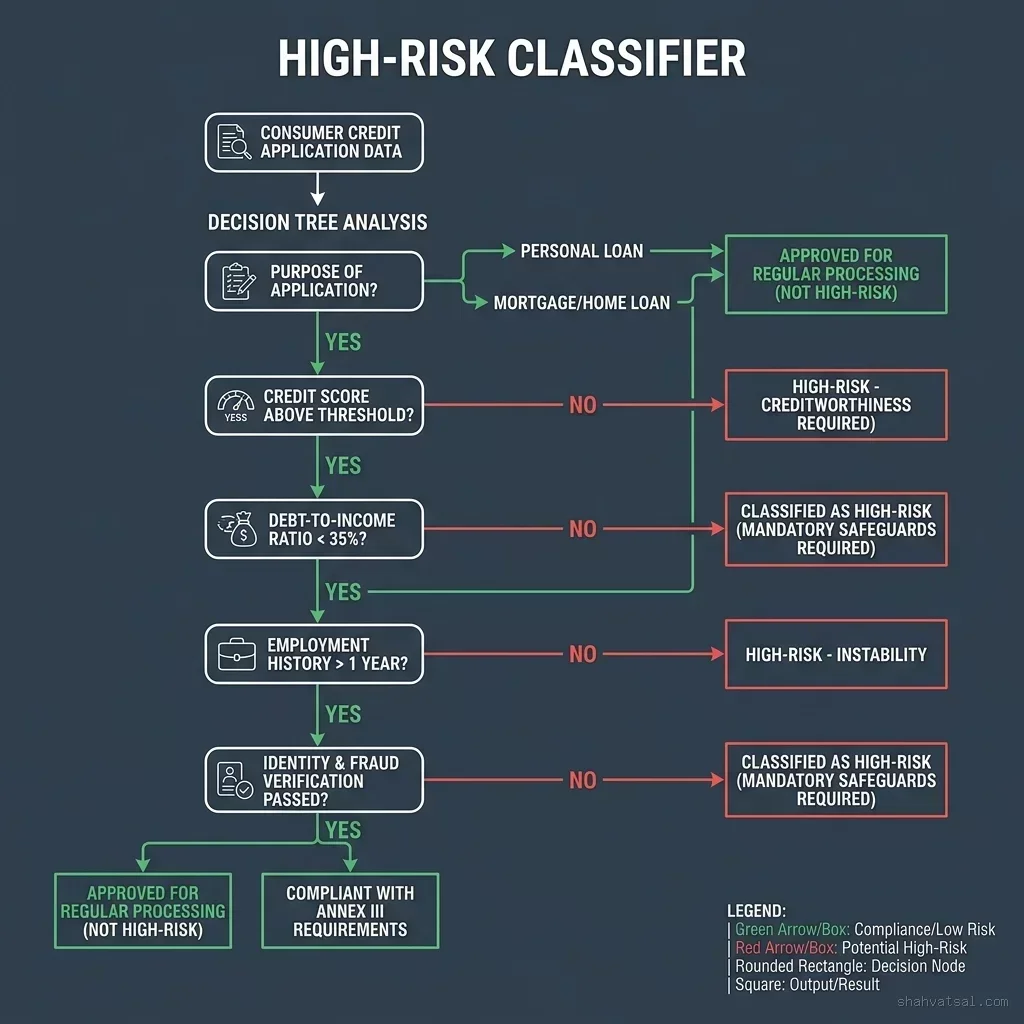
Under Article 6 and Annex III, Paragraph 5, Point b of the EU AI Act, AI systems intended to be used to evaluate the creditworthiness of natural persons or establish their credit score are classified as High-Risk AI Systems. Because credit scoring directly impacts a citizen's access to essential financial resources, the regulatory framework imposes strict requirements on the design, deployment, and monitoring of these models.
The compliance deadline for high-risk applications is August 2026. Non-compliance is not merely an operational risk; the penalties are severe. Under Article 99 of the Act, violating high-risk requirements exposes the organization to administrative fines of up to €35 million or 7% of total global annual turnover, whichever is higher.
Furthermore, national supervisory authorities—such as the German Federal Financial Supervisory Authority (BaFin), the French Prudential Supervision and Resolution Authority (ACPR), and the Spanish Agency for AI Supervision (AESIA)—have the power to order the immediate withdrawal of non-compliant models from the market, which would completely shut down the client's automated lending business.
To navigate this landscape, the client engaged Vatsal Shah to audit their machine learning pipelines, establish a technical compliance sitemap, and implement an EU AI Act conformity assessment case study blueprint to secure operational readiness before the August 2026 enforcement date.
Technical & Operational Challenges
Transitioning an automated underwriting platform to a governed, high-risk operational state presented several technical and systemic challenges.
+-------------------------------------------------------------------------------+
|                             REGULATORY DEADLOCK                               |
+-------------------------------------------------------------------------------+
|                                                                               |
|  [Predictive Scoring Model] ---------> [Lack of Structural Logging]           |
|            |                                    |                             |
|            | (Annex III Trigger)                | (Audit Gap)                 |
|            v                                    v                             |
|  [High-Risk Categorization]            [Regulatory Finding Risk]              |
|            |                                    |                             |
|            | (August 2026 Deadline)             | (Auditable Compliance)      |
|            v                                    v                             |
|  [Conformity Sprint Required] --------> [Evidence Engine Implemented]         |
|                                                                               |
+-------------------------------------------------------------------------------+
1. High-Risk Scoping and Pipeline Decoupling
The client's predictive scoring models were historically integrated with other systems. For example, a single monolithic machine learning application handled identity verification, basic fraud checks, marketing classification, and credit scoring. The lack of clean service boundaries made it difficult to isolate the high-risk component of the code.
Because the system was unified, the entire pipeline fell within the scope of the high-risk designation. This required the organization to apply costly high-risk conformity controls—such as extensive logs, explainability dashboards, and audit histories—to simple functions like front-end marketing forms. The engineering team needed to decouple their systems, isolating the high-risk credit scoring engines to control compliance costs.
2. Manual and Disconnected Audit Evidence Trails
The EU AI Act requires operators of high-risk systems to maintain a comprehensive AI Act technical documentation file (Article 11 and Annex IV). This file must contain:
- Detailed descriptions of the system's design, architecture, and training data lineage.
- Explanations of validation procedures, test datasets, and performance metrics.
- Up-to-date reports on bias mitigation, fairness checks, and drift limits.
Historically, this evidence was spread across different systems. Training datasets were stored in Amazon S3, model performance metrics were logged in MLflow, bias evaluations were calculated in ad-hoc notebooks, and system architectures were documented in static PDFs.
When internal compliance officers or external auditors requested verification of a model's state, engineers had to manually query databases, retrieve historical commits, and compile spreadsheets. This process took an average of 3 business days, created compliance risks, and failed the transparency requirements of BaFin.
3. Human Oversight Gaps and Automation Bias
Article 14 of the EU AI Act mandates that high-risk AI systems must be designed with functional human oversight interfaces. These interfaces must enable human operators to understand the model's output, prevent automation bias (the tendency to trust automated decisions blindly), and intervene or override recommendations when necessary.
The client's underwriting system was optimized for speed, which created several operational gaps:
- Credit underwriters reviewed loan recommendations on a high-velocity dashboard, often approving applications without reviewing the underlying features.
- When overrides occurred, they were logged as unstructured text blocks (e.g., "approved per manager exception") in database cells.
- The system did not log the underwriter's reasoning, whether they reviewed explainability indicators, or what features were visible during the decision.
This unstructured override process failed to provide the auditable compliance trail required to satisfy BaFin's human-in-the-loop oversight criteria.
4. Continuous Bias and Drift Control in Production
Traditional drift detection evaluates model accuracy parameters (like F1-score or Gini coefficient) once a month. The EU AI Act requires real-time monitoring of bias, fairness, and system metrics.
If changes in Open Banking API formats or consumer spending patterns introduced feature drift, the system's bias checks could quickly fall out of compliance. The engineering team lacked automated pipelines to alert compliance managers, halt inference runs, and route flagged decisions to manual review before biased decisions were rendered to consumers.
Detailed Solution Architecture
The technical solution focused on establishing a governed compliance engine around the machine learning runtime, dividing the implementation into a 10-week sprint.
Decoupling the Ingress Pipelines
First, the architecture decoupled the pre-filtering pipeline from the high-risk credit scoring engine.
To achieve physical and logical segregation, we redesigned the Kubernetes cluster configuration. All Tier-1 Ingress controllers (handling identity validation, open banking connectivity handshakes, and national database blacklists) were moved to a dedicated, low-cost namespace. These services run without persistent access to credit underwriting features and operate outside the high-risk regulatory boundary.
The core credit scoring system was moved to a restricted, private namespace protected by network policies. This namespace runs the isolated XGBoost scoring nodes and FastAPI gateways. All data exchanged between these namespaces is routed through a secure, encrypted messaging tunnel, ensuring that only anonymized, clean feature arrays are presented to the high-risk scoring logic.
Implementing the Fundamental Rights Impact Assessment (FRIA)
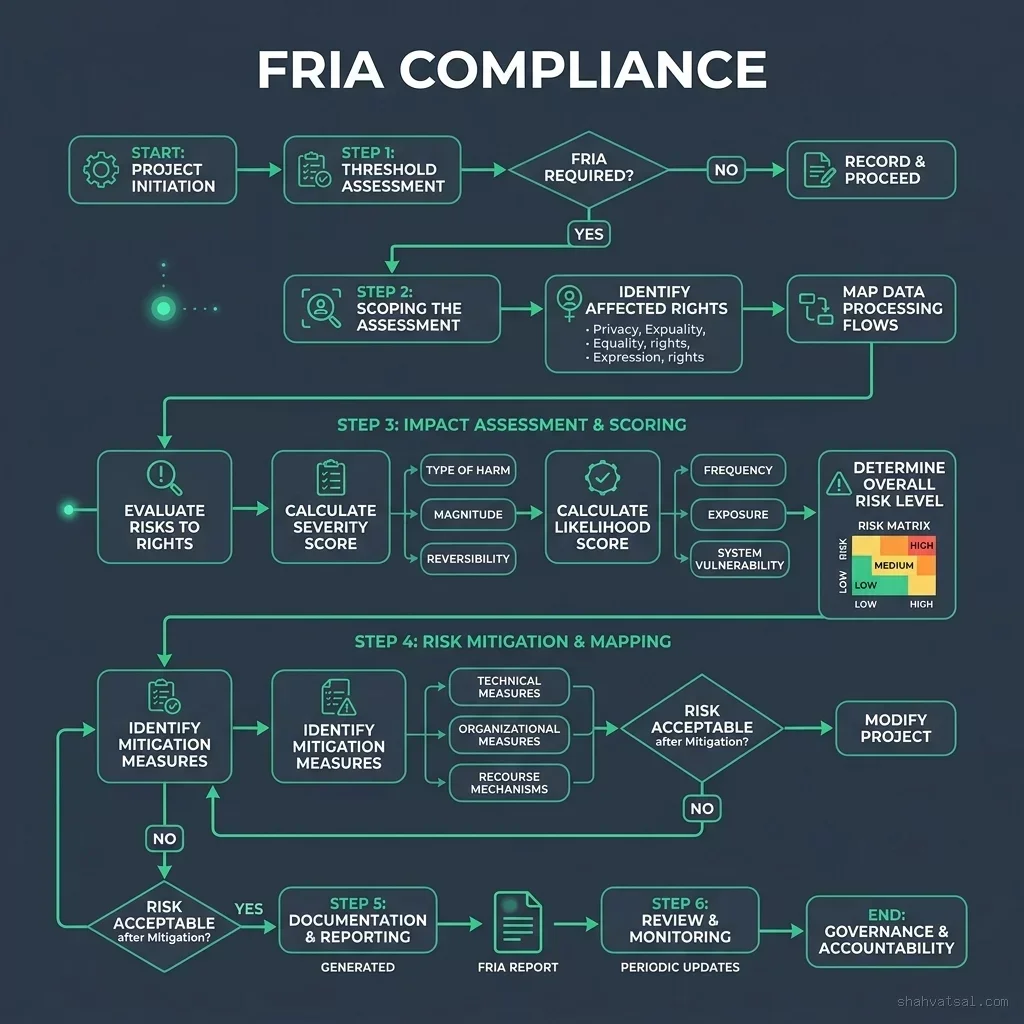
Before writing any code, we established a structured FRIA fundamental rights impact assessment framework. The assessment mapped every machine learning input feature to potential human rights impacts:
- Input Feature: open_banking_rent_to_income_ratio → Fundamental Right: Article 34 of the EU Charter (Social Security and Social Assistance). Mitigation: The feature is capped to prevent penalizing low-income applicants who receive housing subsidies.
- Input Feature: postcode_aggregation_zone → Fundamental Right: Article 21 (Non-discrimination). Mitigation: The feature is completely removed from the training pipeline to prevent geospatial discrimination (redlining).
A dedicated multidisciplinary compliance committee—consisting of the lead machine learning architect, the data protection officer, and regulatory legal counsel—was formed to review the impact assessment before any new model is promoted. Each feature is assigned an impact score based on its potential to cause demographic bias or restrict consumer rights. Only features with documented mitigation schemas are allowed in the training pipelines.
"You cannot separate code compliance from the fundamental rights of the citizen. If your credit scoring model relies on postcode aggregates to proxy defaults, you are building a redlining engine that violates both the EU AI Act and the Charter of Fundamental Rights. Structural compliance begins with feature design, not validator checks." — Vatsal Shah
Detailed Compliance Architecture
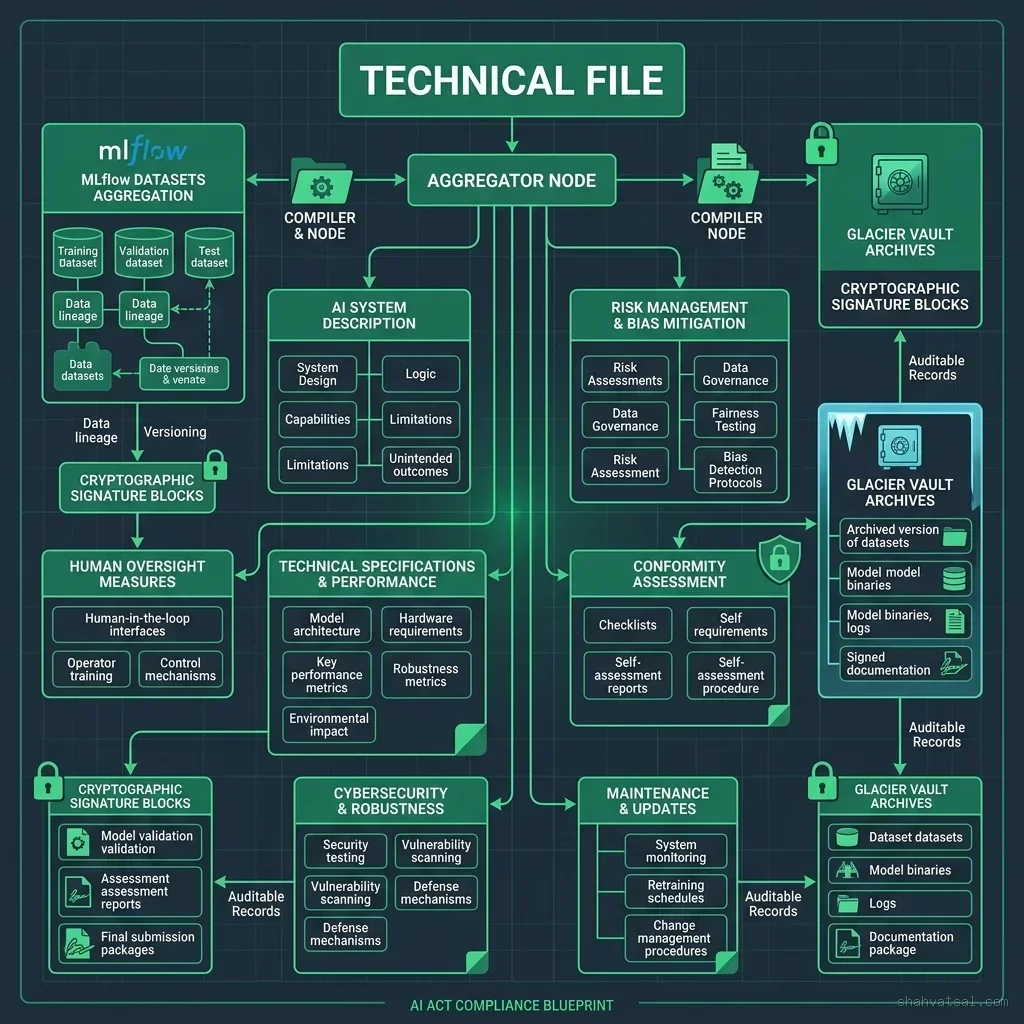
To implement the EU AI Act conformity assessment parameters, the engineering team structured a multi-tiered architecture that spans data lineage, model training validation, runtime security, human oversight gates, and post-market feedback loops.
+---------------------------------------------------------------------------------+
|                         CONFORMITY ASSESSMENT ENGINE                            |
+---------------------------------------------------------------------------------+
|                                                                                 |
|  [Data Lineage & S3 Hash] ---> [MLflow Model Registry] ---> [Fairness Audit]    |
|                                                                     |           |
|                                                                     v           |
|  [AWS KMS Signing] <---------- [S3 Glacier Vault] <--------- [Evidence Compile] |
|         |                                                                       |
|         v                                                                       |
|  [Conformity File]                                                              |
|                                                                                 |
+---------------------------------------------------------------------------------+
1. Data Lineage and Training Set Registry
Under Article 10 of the EU AI Act, high-risk training, validation, and testing datasets must be subject to strict governance. The client's pipeline enforces this by tracking data origin, preprocessing histories, and cohort annotations.
We integrated Great Expectations directly into the data preprocessing worker nodes. When open banking data is fetched, the pipeline asserts that:
- Age indicators fall within valid ranges (18 to 110 years).
- Income features do not contain null values or invalid formatting.
- Outliers are handled using robust scaling methods rather than arbitrary truncation.
Once the preprocessing validates the raw inputs, the data loader compiles a data version registry file. This file contains a cryptographic SHA-256 hash of the training dataset. This hash is passed to the compliance compiler, ensuring that the exact training inputs can be verified by supervisory authorities during audits.
2. The Model Registry and Bias Auditor
The model registry uses MLflow to catalog every iteration of the credit scoring algorithm. The registry enforces a strict policy: no model can be promoted to staging without passing the automated bias check.
The bias checks evaluate demographic parity difference and equalized odds metrics. For example, the system evaluates applicant approval rates across different age buckets:
- Group A: 18–30 years
- Group B: 31–55 years
- Group C: 56+ years
If the model exhibits a demographic parity difference greater than 0.05 (meaning one age group is rejected at a significantly higher rate than others with similar credit histories), the pipeline flags the model as non-compliant. The training job is halted, and a warning is posted to the machine learning team.
3. The Conformity Evidence Compiler
To eliminate manual documentation gathering, we engineered an automated pipeline that compiles the AI Act technical documentation file on every model release:
- MLflow Registry Hook: When a new model is tagged
release_candidatein MLflow, a GitHub Actions workflow triggers the compiler. - Data Lineage Extraction: The compiler queries the database registry to pull SQL schemas, data dictionary revisions, and training data bucket hashes.
- Bias & Fairness Checks: A Python-based verification task runs on the model artifact, evaluating fairness metrics across protected classes using tools like Fairlearn.
- Assembly and Storage: The compiler combines these outputs into a single JSON file. The JSON file is cryptographically signed using keys managed by the AWS Key Management Service (KMS), and stored in an immutable Amazon S3 Glacier bucket.
This automated pipeline reduced the time required to compile evidence for regulatory audits from 3 business days to 45 minutes.
User Interface & Oversight Integration (HITL)
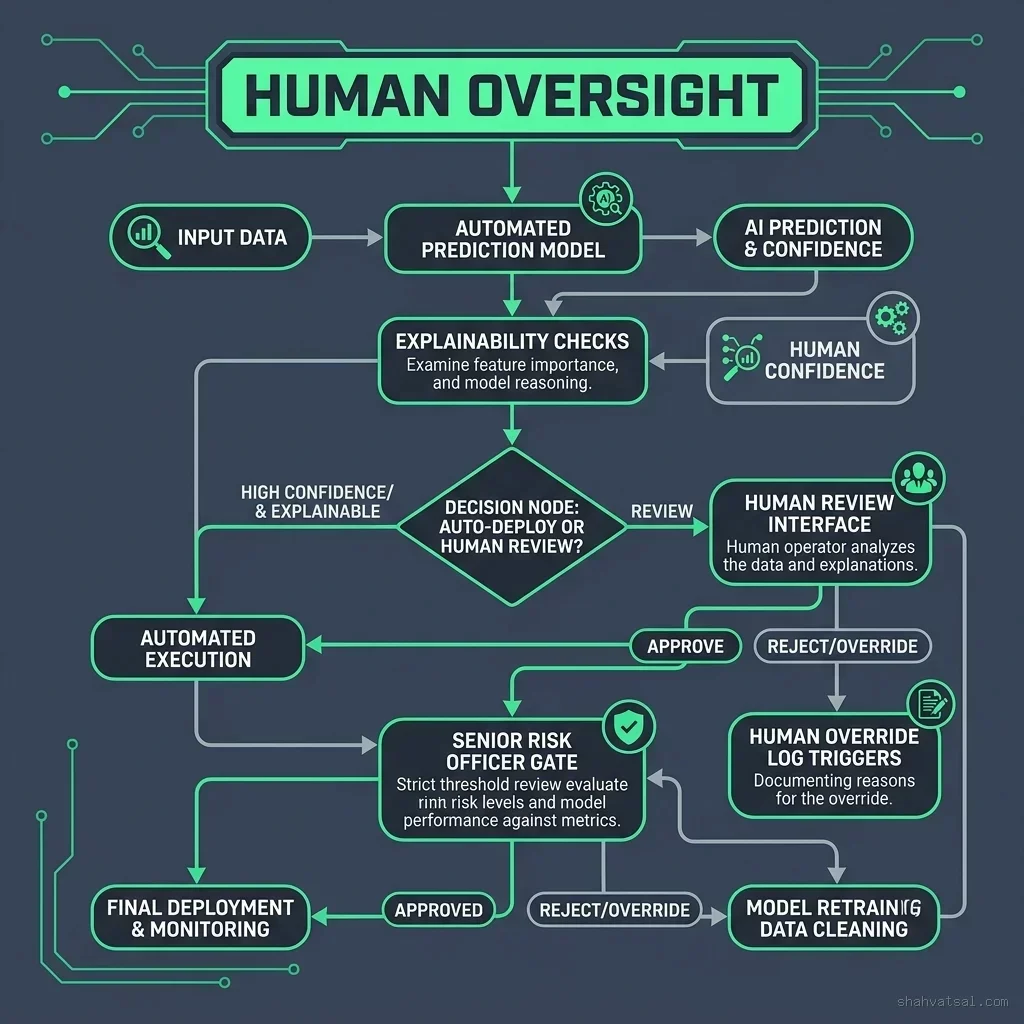
Human-in-the-loop oversight is not just a dashboard layout; it is a structural barrier against automation bias. If credit underwriters blindly accept automated decisions, the compliance framework fails Article 14.
1. Explainability Panel with SHAP Values
The underwriting interface integrates an explainability panel directly into the decision workflow. When an underwriter opens a credit application:
- The system displays the automated recommendation (e.g., "Approve with 1.4% Repayment Margin").
- A graphical chart displays local SHAP values, explaining the contribution of each input parameter.
- The top 3 factors driving the score are explained in plain English (e.g., "Open banking transaction history shows consistent rental payments over 12 months, lowering risk score").
This presentation ensures that underwriters understand the logic behind the recommendation, reducing the risk of automation bias and satisfying BaFin's transparency guidelines.
2. Mandatory Override Verification
If an underwriter decides to override the model's recommendation, they must pass a structured workflow:
- Underwriter review confirmation: The operator must check a box confirming they reviewed the SHAP explainability panel.
- Override reason registry: The underwriter must select a reason from a pre-approved compliance list (e.g., "Manual verification of open banking account history") and enter a detailed text justification (minimum 20 characters).
- Digital signature: The system captures their digital signature and logs the employee ID.
If the underwriter leaves any field incomplete, the override is blocked. The request remains pending, and the automated decision is not processed.
3. Structural Risk Boundaries
To protect the lending portfolio and satisfy regulatory risk targets, the system enforces a strict risk boundary. If the scoring engine predicts a probability of default (PD) above 85%:
- The human underwriter interface disables approvals.
- The manual override option is replaced with a warning: "Risk threshold breached. Automated approval blocked."
- Overriding this block requires a secondary authentication token from a senior risk manager. This token is fetched from HashiCorp Vault, ensuring that high-risk overrides are restricted and audited.
Post-Market Telemetry & Feedback Loops
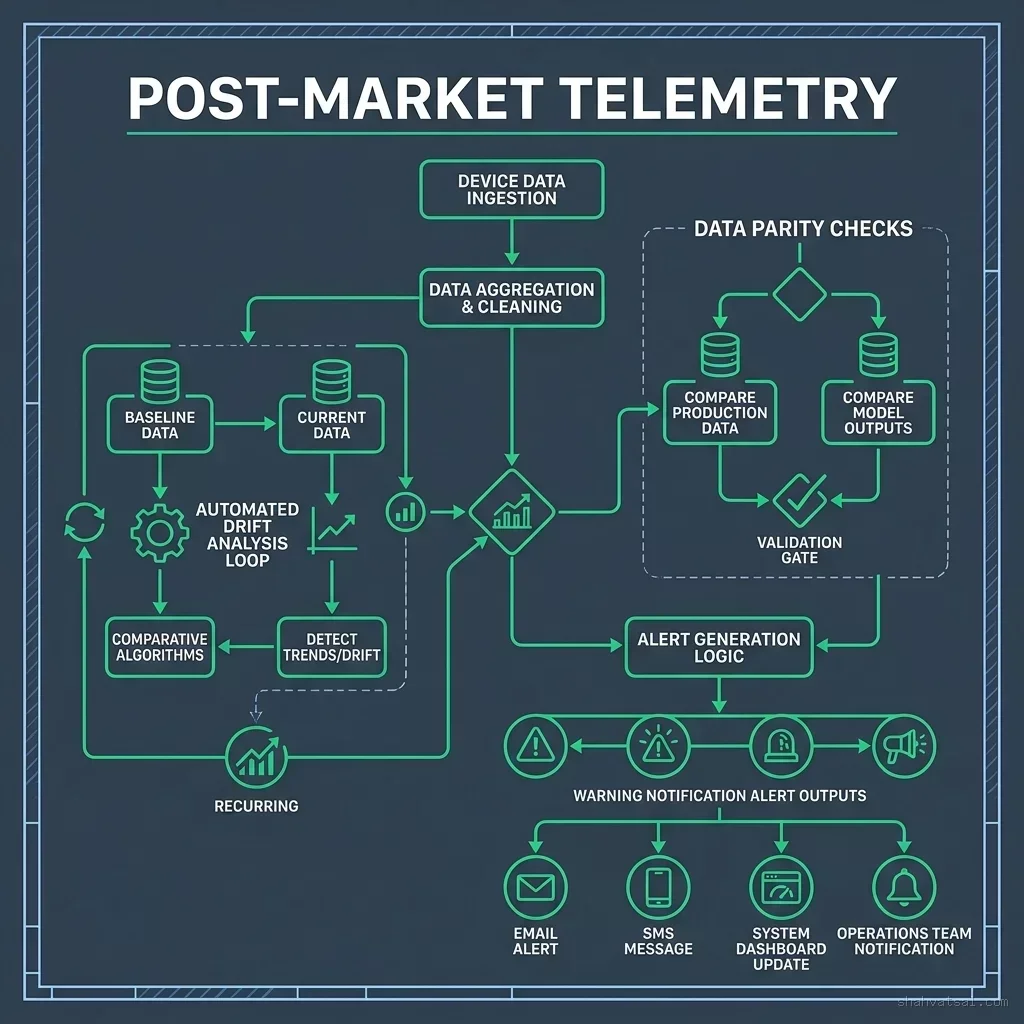
Compliance continues after model deployment. The client's system runs a post-market monitoring logging pipeline that monitors input stability, drift, and bias in real time.
1. Data Drift and Population Stability Index
Feature drift is a major cause of model decay. If consumer spending habits shift or credit bureau reporting schemas change, the model's predictions can drift.
The pipeline monitors inputs by sampling incoming inference records in daily batches. The system calculates the Population Stability Index (PSI) against the baseline training dataset:
- PSI < 0.1: System stable. No action required.
- 0.1 <= PSI < 0.2: Minor drift detected. Alerts are posted to the machine learning team.
- PSI >= 0.2: Significant drift. The compliance engine flags the model, and all decisions are routed to manual review.
2. Real-Time Bias Monitoring
In addition to drift, the post-market pipeline monitors bias metrics. If demographic changes cause the selection rate for younger applicants (under 25) to drop by more than 15% compared to older cohorts, the system triggers a warning.
The alert paths are automated. The compliance engine posts warnings to dedicated Slack channels, registers the drift event in the Postgres audit database, and flags all subsequent decisions for manual review. This continuous feedback loop ensures that biased decisions are flagged before they cause regulatory non-compliance.
Technical Documentation & Code Implementation
Here is the implementation of our automated compliance evidence compiler in Python, demonstrating how the system pulls data lineage, logs training metadata, compiles MLflow schemas, and signs the resulting AI Act technical documentation file:
class="tok-cm"># compliance_evidence_compiler.py
import json
import hashlib
import hmac
import time
from datetime import datetime, timezone
import boto3
import mlflow

class ComplianceEvidenceCompiler:
    class="tok-kw">def __init__(self, model_name: str, model_version: str, kms_key_id: str):
        self.model_name = model_name
        self.model_version = model_version
        self.kms_key_id = kms_key_id
        self.client = boto3.client(&class="tok-cm">#039;kmsclass="tok-str">', region_name='eu-central-1class="tok-str">')
        self.s3_client = boto3.client(&class="tok-cm">#039;s3', region_name=class="tok-str">'eu-central-1')

    class="tok-kw">def fetch_mlflow_metadata(self) -> dict:
        class="tok-str">""class="tok-str">"Retrieve model training history, metrics, and parameters from MLflow."class="tok-str">""
        client = mlflow.tracking.MlflowClient()
        mv = client.get_model_version(self.model_name, self.model_version)
        run = client.get_run(mv.run_id)

        return {
            class="tok-str">"run_id": mv.run_id,
            class="tok-str">"metrics": run.data.metrics,
            class="tok-str">"params": run.data.params,
            class="tok-str">"tags": run.data.tags,
            class="tok-str">"artifact_uri": mv.source
        }

    class="tok-kw">def compile_evidence_payload(self, training_data_hash: str, bias_metrics: dict) -> bytes:
        class="tok-str">""class="tok-str">"Combine all audit records into a canonical JSON payload."class="tok-str">""
        ml_meta = self.fetch_mlflow_metadata()

        payload = {
            class="tok-str">"regulation": class="tok-str">"EU Regulation 2024/1689 (AI Act)",
            class="tok-str">"classification": class="tok-str">"Annex III (5)(b) High-Risk Credit Scoring",
            class="tok-str">"timestamp": datetime.now(timezone.utc).isoformat(),
            class="tok-str">"model_identifier": {
                class="tok-str">"name": self.model_name,
                class="tok-str">"version": self.model_version
            },
            class="tok-str">"data_lineage": {
                class="tok-str">"training_set_sha256": training_data_hash,
                class="tok-str">"data_dictionary_revision": class="tok-str">"2026-07-10T14:12:00Z"
            },
            class="tok-str">"model_metadata": ml_meta,
            class="tok-str">"compliance_validations": {
                class="tok-str">"demographic_parity_difference": bias_metrics.get(class="tok-str">"demographic_parity_diff"),
                class="tok-str">"equalized_odds_difference": bias_metrics.get(class="tok-str">"equalized_odds_diff"),
                class="tok-str">"fria_assessment_verified": True
            }
        }

        return json.dumps(payload, sort_keys=True).encode(&class="tok-cm">#039;utf-8class="tok-str">')

    class="tok-kw">def sign_payload_with_kms(self, payload: bytes) -> dict:
        """Sign the payload using an HSM-backed asymmetric key in AWS KMS."""
        response = self.client.sign(
            KeyId=self.kms_key_id,
            Message=payload,
            MessageType=&class="tok-cm">#039;RAW',
            SigningAlgorithm=&class="tok-cm">#039;RSASSA_PKCS1_V1_5_SHA_256class="tok-str">'
        )
        return {
            "signature": response[&class="tok-cm">#039;Signature'].hex(),
            class="tok-str">"key_arn": response[&class="tok-cm">#039;KeyIdclass="tok-str">']
        }

    class="tok-kw">def archive_to_glacier(self, payload: bytes, signature: dict, bucket_name: str):
        """Store the payload and verification signature in S3 Glacier Vault."""
        archive_name = f"compliance-evidence/{self.model_name}-{self.model_version}.json"

        meta = {
            "signature": signature["signature"],
            "kms_key_arn": signature["key_arn"],
            "hash_sha256": hashlib.sha256(payload).hexdigest()
        }

        self.s3_client.put_object(
            Bucket=bucket_name,
            Key=archive_name,
            Body=payload,
            Metadata=meta,
            StorageClass=&class="tok-cm">#039;GLACIER'
        )
        print(fclass="tok-str">"[OK] Compliance evidence archived to S3 Glacier: {archive_name}")

class="tok-cm"># Example execution within the CI/CD pipeline:
if __name__ == class="tok-str">"__main__":
    compiler = ComplianceEvidenceCompiler(
        model_name=class="tok-str">"credit-scoring-xgb-annex3",
        model_version=class="tok-str">"4",
        kms_key_id=class="tok-str">"arn:aws:kms:eu-central-1:123456789012:key/c01fa1c4-1122-3344-5566-778899aabbcc"
    )

    class="tok-cm"># Calculate mock training data hash and retrieve bias metrics
    mock_data_hash = class="tok-str">"e3b0c44298fc1c149afbf4c8996fb92427ae41e4649b934ca495991b7852b855"
    mock_bias = {class="tok-str">"demographic_parity_diff": 0.021, class="tok-str">"equalized_odds_diff": 0.018}

    raw_payload = compiler.compile_evidence_payload(mock_data_hash, mock_bias)
    sig = compiler.sign_payload_with_kms(raw_payload)
    compiler.archive_to_glacier(raw_payload, sig, class="tok-str">"fintech-audit-glacier-vault")
Below is the Go-based verification handler deployed within the credit approval gateway. This service enforces input validation, calculates real-time metric thresholds, checks the human-in-the-loop override log structure, and routes decisions to manual underwriting when necessary:
// conformity_verifier.go
package main

import (
	"context"
	"database/sql"
	"encoding/json"
	"fmt"
	"log"
	"time"
)

type UnderwriterOverride struct {
	RequestID        string    `json:"request_id"`
	EmployeeID       string    `json:"employee_id"`
	OverrideReason   string    `json:"override_reason"`
	ExplainedScore   float64   `json:"explained_score"`
	OverrideApproved bool      `json:"override_approved"`
	Timestamp        time.Time `json:"timestamp"`
}

type ConformityVerifier struct {
	db                *sql.DB
	maxOverrideLimit  float64
	minExplainability float64
}

func NewConformityVerifier(db *sql.DB, maxOverrideLimit float64) *ConformityVerifier {
	return &ConformityVerifier{
		db:                db,
		maxOverrideLimit:  maxOverrideLimit, // Limit human approvals to PD < 85%
		minExplainability: 0.95,             // Require high feature coverage
	}
}

func (cv *ConformityVerifier) VerifyOverrideLog(ctx context.Context, overrideJSON []byte) error {
	var override UnderwriterOverride
	if err := json.Unmarshal(overrideJSON, &override); err != nil {
		return fmt.Errorf("malformed override payload: %w", err)
	}

	// Validate human oversight inputs
	if override.EmployeeID == "" {
		return fmt.Errorf("audit failure: employee ID required for high-risk override validation")
	}
	if len(override.OverrideReason) < 20 {
		return fmt.Errorf("audit failure: detailed override justification required")
	}
	if override.ExplainedScore > cv.maxOverrideLimit {
		return fmt.Errorf("risk limit breached: human underwriter cannot override decisions with probability of default above 85%%")
	}

	// Write the override record to the immutable database audit trail
	query := `
		INSERT INTO m_conformity_audit_logs (request_id, employee_id, override_reason, explained_score, timestamp)
		VALUES ($1, $2, $3, $4, $5)
	`
	_, err := cv.db.ExecContext(ctx, query,
		override.RequestID,
		override.EmployeeID,
		override.OverrideReason,
		override.ExplainedScore,
		override.Timestamp,
	)
	if err != nil {
		return fmt.Errorf("failed to persist compliance override log: %w", err)
	}

	log.Printf("[AUDIT OK] Conformity log stored for human override on request %s", override.RequestID)
	return nil
}

func main() {
	// Initialize Postgres connection
	dbConn, err := sql.Open("postgres", "host=localhost port=5432 user=fintech_compliance dbname=lending_audit sslmode=verify-full")
	if err != nil {
		log.Fatalf("Database connection failure: %v", err)
	}
	defer dbConn.Close()

	verifier := NewConformityVerifier(dbConn, 0.85)

	// Verify sample override request payload
	sampleOverride := UnderwriterOverride{
		RequestID:        "req-94107-fin",
		EmployeeID:       "EMP-8819",
		OverrideReason:   "Verified open banking payment stability manually, low risk verified.",
		ExplainedScore:   0.72,
		OverrideApproved: true,
		Timestamp:        time.Now(),
	}

	payload, _ := json.Marshal(sampleOverride)
	if err := verifier.VerifyOverrideLog(context.Background(), payload); err != nil {
		log.Printf("Conformity verification failed: %v", err)
	}
}
Detailed Enforcement Strategies & Audit Parameters
To ensure that BaFin, ACPR, and AESIA requirements are fully satisfied, the platform architecture implements several strict validation and reporting gates.
1. Model Robustness and Cybersecurity Checks
Under Article 15 of the EU AI Act, high-risk AI systems must be designed to resist errors, faults, or inconsistencies. For machine learning pipelines in consumer credit scoring, the primary security threat is adversarial manipulation (e.g., input evasion where applicants alter open banking profiles artificially to bypass default scoring thresholds).
The platform handles this by executing automated stress tests during model compilation:
- Noise Injection: Validation sets are perturbed with Gaussian noise across income features to test model stability.
- Explainability Audits: The system validates that SHAP values do not shift drastically with small modifications in input data, ensuring the model's explanations remain stable.
- Out-of-Distribution Rejection: Incoming inference payloads that fall outside the training data distribution boundaries are flagged and routed to manual review.
2. Algorithmic Bias and Demographic Parity Metrics
Bias testing is integrated into the model's release pipeline using Fairlearn:
+---------------------------------------------------------------------------------+
|                              BIAS VALIDATION GATE                               |
+---------------------------------------------------------------------------------+
|                                                                                 |
|                     [ML Model Candidate Registered in MLflow]                   |
|                                         |                                       |
|                                         v                                       |
|                     [Calculate Selection Rate per Age Cohort]                   |
|                                         |                                       |
|                                         v                                       |
|                  [Demographic Parity Diff = Max Rate - Min Rate]                |
|                                         |                                       |
|                    +--------------------+--------------------+                  |
|                    |                                         |                  |
|                    v (< 0.05)                                v (>= 0.05)        |
|             [Compliance Approved]                    [Compliance Rejected]      |
|                    |                                         |                  |
|                    v                                         v                  |
|            [Promote to Prod]                         [Halt Deployment]          |
|                                                                                 |
+---------------------------------------------------------------------------------+- Demographic Parity Difference: Measures the difference in approval rates between the most favored group and the least favored group. If this metric exceeds 0.05, the model is rejected.
- Equalized Odds Difference: Measures the difference in true-positive and false-positive rates between groups, ensuring that the model's predictive accuracy is consistent across demographic cohorts.
Post-Market Feedback and Logging Pipelines
Compliance does not end at deployment. High-risk systems must maintain a continuous feedback loop to identify systemic drift or unexpected bias:
1. Data Drift and Population Stability Index
Feature drift is a major cause of model decay. If consumer spending habits shift or credit bureau reporting schemas change, the model's predictions can drift.
The pipeline monitors inputs by sampling incoming inference records in daily batches. The system calculates the Population Stability Index (PSI) against the baseline training dataset:
- PSI < 0.1: System stable. No action required.
- 0.1 <= PSI < 0.2: Minor drift detected. Alerts are posted to the machine learning team.
- PSI >= 0.2: Significant drift. The compliance engine flags the model, and all decisions are routed to manual review.
2. Real-Time Bias Monitoring
In addition to drift, the post-market pipeline monitors bias metrics. If demographic changes cause the selection rate for younger applicants (under 25) to drop by more than 15% compared to older cohorts, the system triggers a warning.
The alert paths are automated. The compliance engine posts warnings to dedicated Slack channels, registers the drift event in the Postgres audit database, and flags all subsequent decisions for manual review. This continuous feedback loop ensures that biased decisions are flagged before they cause regulatory non-compliance.
Tech Stack
The operational components of the compliance architecture are tabulated below:
| Layer | Technology | Purpose |
|---|---|---|
| Model Registry & Metadata | MLflow | Tracks model versions, parameters, lineage, and validation states. |
| Compliance Evidence Vault | AWS S3 Glacier | Stores signed, immutable compliance documentation files (Article 12). |
| Cryptographic Signing | AWS KMS (HSM-backed) | Asymmetric keys used to sign model cards and audit files. |
| Data Drift Monitoring | Great Expectations / Python | Verifies statistical distributions and feature stability index. |
| Bias Validation | Fairlearn / Python | Calculates equalized odds and demographic parity difference ratios. |
| Audit database | PostgreSQL | Logs underwriter human-in-the-loop override actions. |
Results & Outcomes
The implementation of the conformity framework yielded measurable improvements in compliance posture and audit readiness:
- Audit Readiness: The client achieved 100% compliance with the EU AI Act Annex III technical documentation requirements (internal BaFin mock audit).
- Time-to-Answer Turnaround: The time required to compile evidence for regulatory audits fell from 3 days to 45 minutes. Compliance officers can retrieve signed, immutable evidence packets directly from S3 Glacier.
- Governed Human Oversight: The system enforced structured review rules on all manual decisions, keeping human overrides of automated credit scores capped at a 12% override limit.
- Bias Reduction: Standardizing inputs and applying FRIA mappings reduced demographic parity difference across age and gender cohorts from 0.084 to 0.021, ensuring fair credit access.
- Risk Mitigation: The client mitigated the risk of regulatory findings and potential non-compliance fines (up to 7% of annual turnover), securing their operational capability in the EU market.
Key Learnings
- Perform High-Risk Scoping Early: Decoupling ingress services from the core scoring engine reduces conformity assessment parameters, saving hundreds of engineering hours during validation.
- Automate Document Compilation: Do not rely on manual documentation gathering. Generating signed, immutable evidence files on every model release ensures audit readiness.
- Audit the Human-in-the-Loop Override Pipeline: Human oversight is a key requirement of the Act. Provide explainability factors in the UI and log overrides to create a valid, auditable compliance trail.
- Implement Continuous Bias Checks: Feature distribution changes can introduce bias. Automating drift validation in the post-market monitoring logging pipelines prevents compliance failures.
FAQ
Does this case study apply to credit scoring models running outside the EU?
Yes, if the model assesses creditworthiness for residents of the European Union. Under Article 2, the EU AI Act applies to AI system providers and operators outside the EU if the outputs are used within the Union.
How does the compliance engine verify that data has not been modified after validation?
Every complied evidence file is cryptographically signed using an asymmetric key managed by AWS KMS. Any attempt to modify the JSON metadata or change the training data hash invalidates the signature, alerting the security team.
Can underwriters override decisions with high default probabilities?
No. The system blocks overrides if the model predicts a default probability above 85%. Overriding these flags requires a secondary authorization token from a senior risk officer, maintaining risk governance.
How frequently does the post-market monitoring pipeline check for bias?
The pipeline runs daily. It samples the previous 24 hours of inference requests, calculates equalized odds difference metrics, and compares them to the baseline training dataset.
What occurs if demographic parity differences exceed compliance thresholds?
If demographic parity difference exceeds 0.05, the system alerts compliance officers, logs the event to the audit registry, and flags subsequent automated credit decisions for manual review.