Databricks Launches Genie Agents and Genie Ontology — The Data+AI Summit 2026 Agentic Analytics Stack
By Vatsal Shah · June 18, 2026 · Cloud · Source: Databricks
AI SUMMARY
- Databricks launched Genie Agents and Genie Ontology at the Data+AI Summit in San Francisco, establishing a semantic context layer for enterprise data agents.
- The Genie Ontology acts as a metadata translation layer, mapping database schemas, relationships, and business definitions to prevent incorrect SQL generation.
- Databricks claims the ontology-powered Genie stack achieves an 84.5% success rate on complex data analytics tasks, compared to 52.4% for traditional text-to-SQL approaches.
- Native integration with the Model Context Protocol (MCP) allows Genie Agents to connect directly to collaboration platforms like Slack and Microsoft Teams.
- The launch is supported by a partnership with Thoughtworks, integrating Genie with the Thoughtworks Agent/works control plane for enterprise deployment.
What Happened
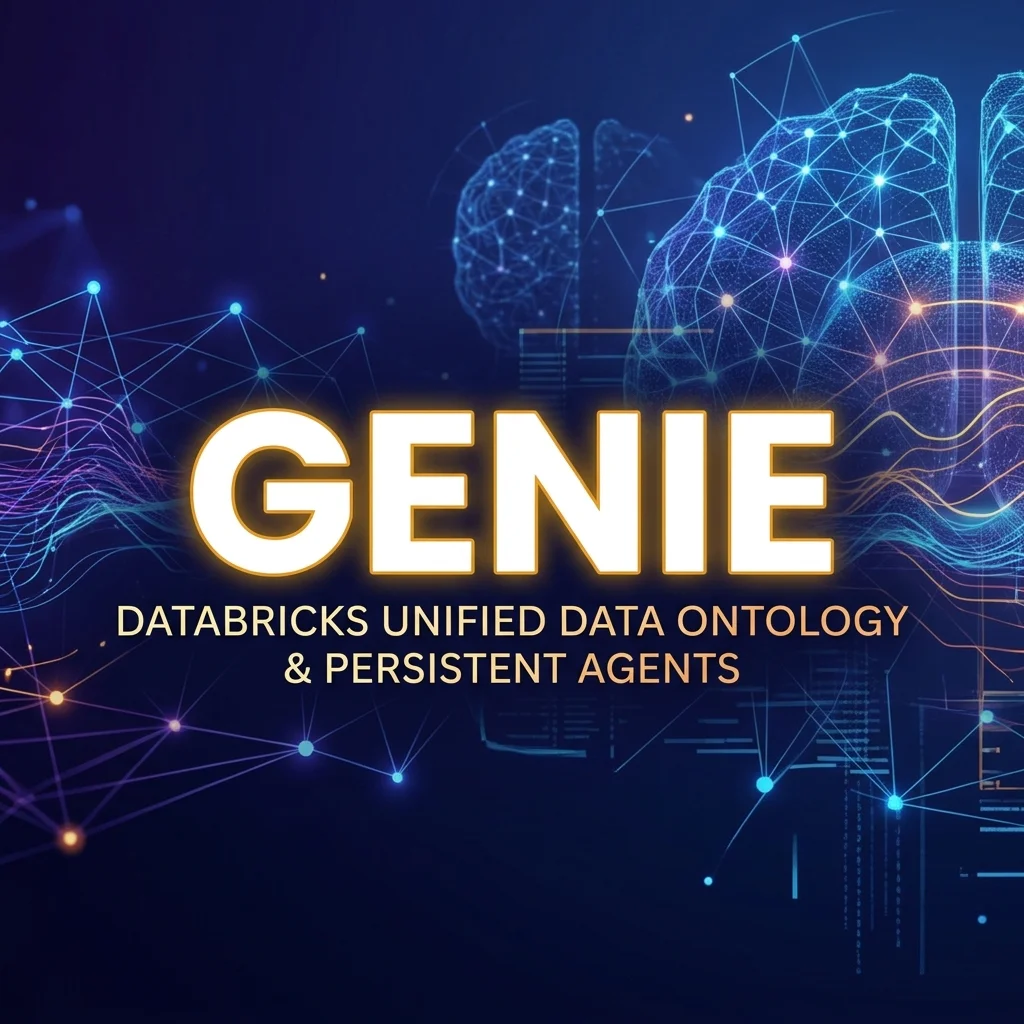
At the Data+AI Summit 2026, Databricks announced the general availability of its new agentic analytics framework: Genie Agents and the underlying Genie Ontology. This release marks a shift from passive text-to-SQL tools to autonomous data companions capable of reasoning over complex corporate data structures.
The core problem with early AI data assistants was the "schema translation gap." Large language models (LLMs) often failed when generating SQL because they lacked context about table joins, column aliases, business rules, and database-specific query logic. A query asking for "revenue by region" could fail if the model joined the wrong transactional tables or misunderstood which filter represented active customers.
Databricks addresses this with the Genie Ontology. Instead of pointing an agent directly at raw tables, data engineers build an ontology layer. This layer contains metadata, schema descriptions, explicit table relationships, and natural language definitions of business terms. The Genie Agent queries this ontology rather than the raw database.
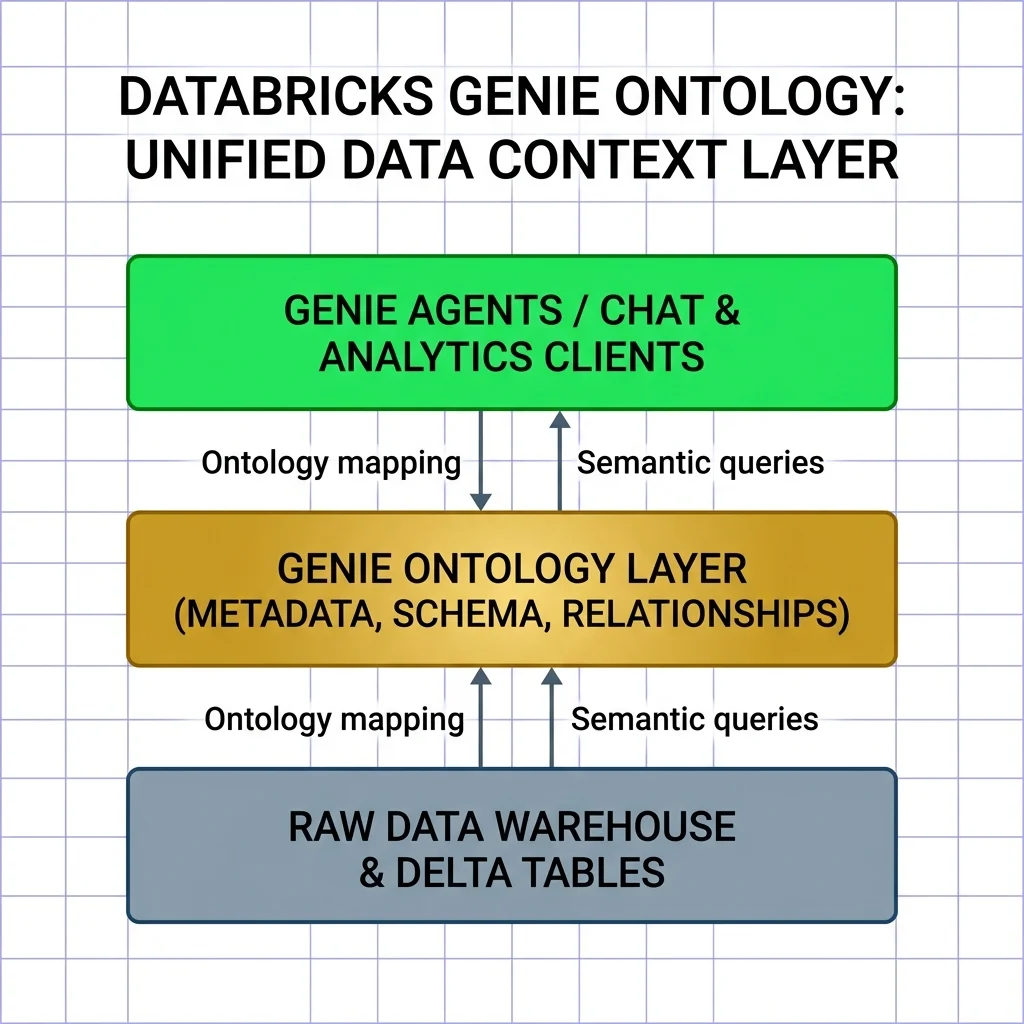
The Genie One developer workflow enables teams to build, test, and deploy these agents. During testing, data engineers can review the SQL code generated by the agent, correct errors, and add these corrections back to the ontology as "semantic rules." Over time, the agent becomes more accurate as it learns from human feedback.
Databricks benchmark tests show a significant improvement in accuracy. On the industry-standard BIRD (Big Bench for Large-Scale Database Grounding) benchmark, traditional text-to-SQL setups achieved a 52.4% execution accuracy rate. Databricks reports that Genie Agents utilizing the Genie Ontology scored an 84.5% success rate on identical tasks, representing a major step toward autonomous data analysis.
For enterprise integration, Genie Agents support the open Model Context Protocol (MCP) standard. This allows the agents to run as secure tools within external systems. Organizations can interact with Genie Agents directly inside Slack, Microsoft Teams, and custom enterprise portals, bringing data insights directly to operational communication channels.
Why It Matters
Databricks is positioning Genie as the central analytics layer for modern enterprises. This launch changes how companies manage data security, model context, and business intelligence integrations.
Bridging BI and Agentic Workflows
Historically, business intelligence (BI) relied on structured dashboards built by centralized data teams. While reliable, this approach created backlogs as business users waited for custom reports. Early self-service natural language interfaces were too unreliable for critical decision-making.
By introducing the Genie Ontology, Databricks provides a compromise. Data engineers define the rules once in the ontology, and the Genie Agent executes the queries safely. This approach maintains the governance of traditional BI while offering the flexibility of natural language interfaces.
Security and Governance via Unity Catalog
Security is a primary concern when deploying AI agents on corporate databases. Databricks addresses this by routing all Genie Agent operations through its Unity Catalog.
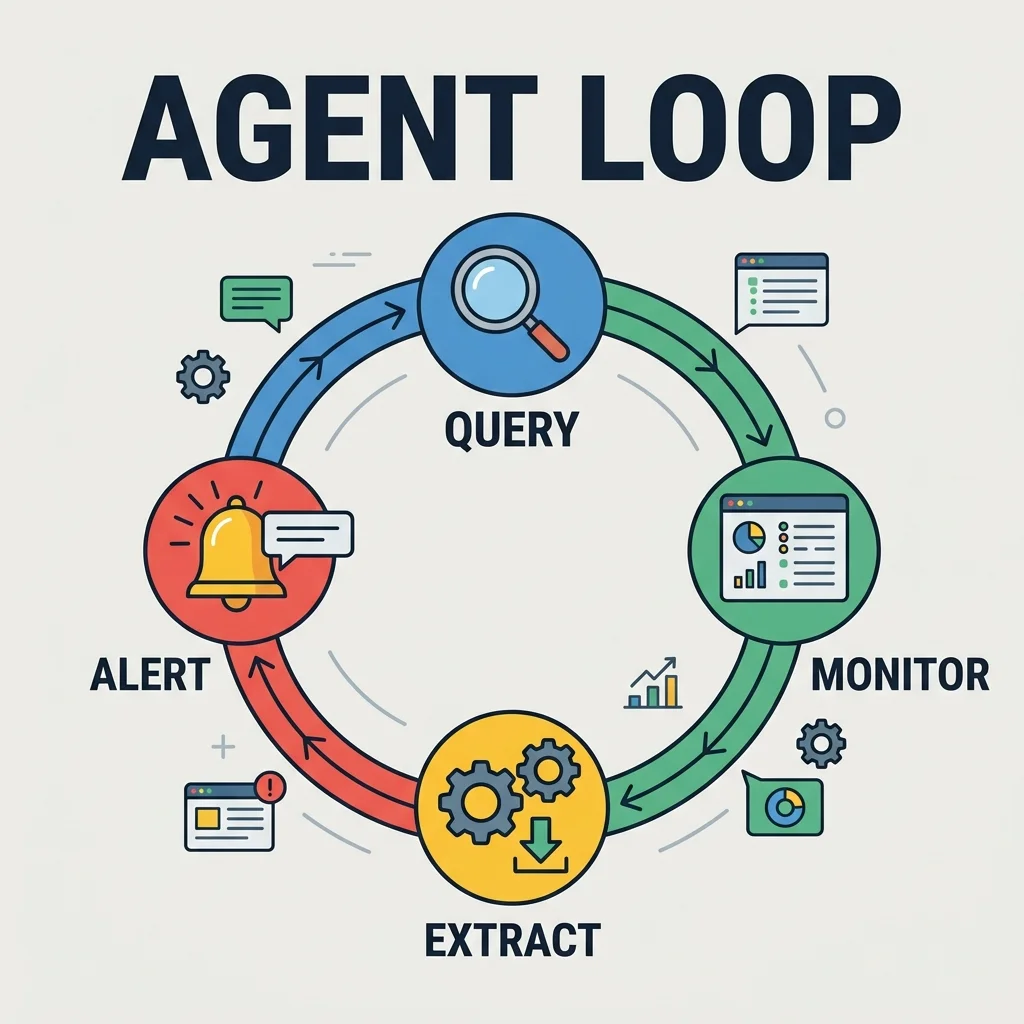
Unity Catalog enforces row-level security, column masking, and data lineage tracking. If a user asks a Genie Agent a question that requires access to restricted financial tables, the agent is blocked from retrieving that data. This integration ensures that existing data governance policies automatically apply to all AI-driven queries.
The Battle for the Enterprise Agent Surface
The release of Genie Agents intensifies the competition between major cloud platforms. Salesforce has introduced Agentforce, Microsoft is expanding its M365 Copilot Cowork capabilities, and Google is promoting Gemini Enterprise tools.
Databricks' differentiator is its close proximity to the underlying data. Because many large enterprises store their data in Delta Lake format on Databricks, the platform can bypass third-party API latency and integration issues. Running the agent directly where the data lives provides speed and security advantages over applications that must fetch data from external warehouses.
Additionally, Databricks announced a partnership with Thoughtworks to integrate Genie with the Thoughtworks Agent/works control plane. This collaboration helps enterprises manage agent deployment, monitor performance, and verify compliance across different departments.
What to Watch Next
- Industry Adoption of the Genie Ontology: The success of this release depends on how easily data engineers can build and maintain these ontologies. Watch for Databricks to release auto-generation tools that convert existing dbt semantic layers or Looker LookML models directly into Genie Ontologies.
- Thoughtworks Integration Scale: The Thoughtworks partnership will serve as a test case for how consulting partners deploy agentic architectures at scale. Look for case studies in Q3 and Q4 2026 detailing the business impact of Agent/works integrations in financial services and retail logistics.
- Expanded MCP Ecosystem: As more enterprise tools adopt the Model Context Protocol, the utility of Genie Agents will increase. Watch for pre-built MCP connectors that allow Genie to write results directly to business tools like Salesforce, ServiceNow, or SAP, moving beyond simple chat interfaces to transactional execution.
Source
Databricks — Introducing Genie One, Genie Ontology, and Genie Agents
Thoughtworks partnership: Thoughtworks Launches Agent/works Control Plane
Related on shahvatsal.com:
- Salesforce Agentforce 3: Building Autonomous Enterprise Agents
- Multi-Agent Orchestration 2026: Architectures, Frameworks, and Trade-offs