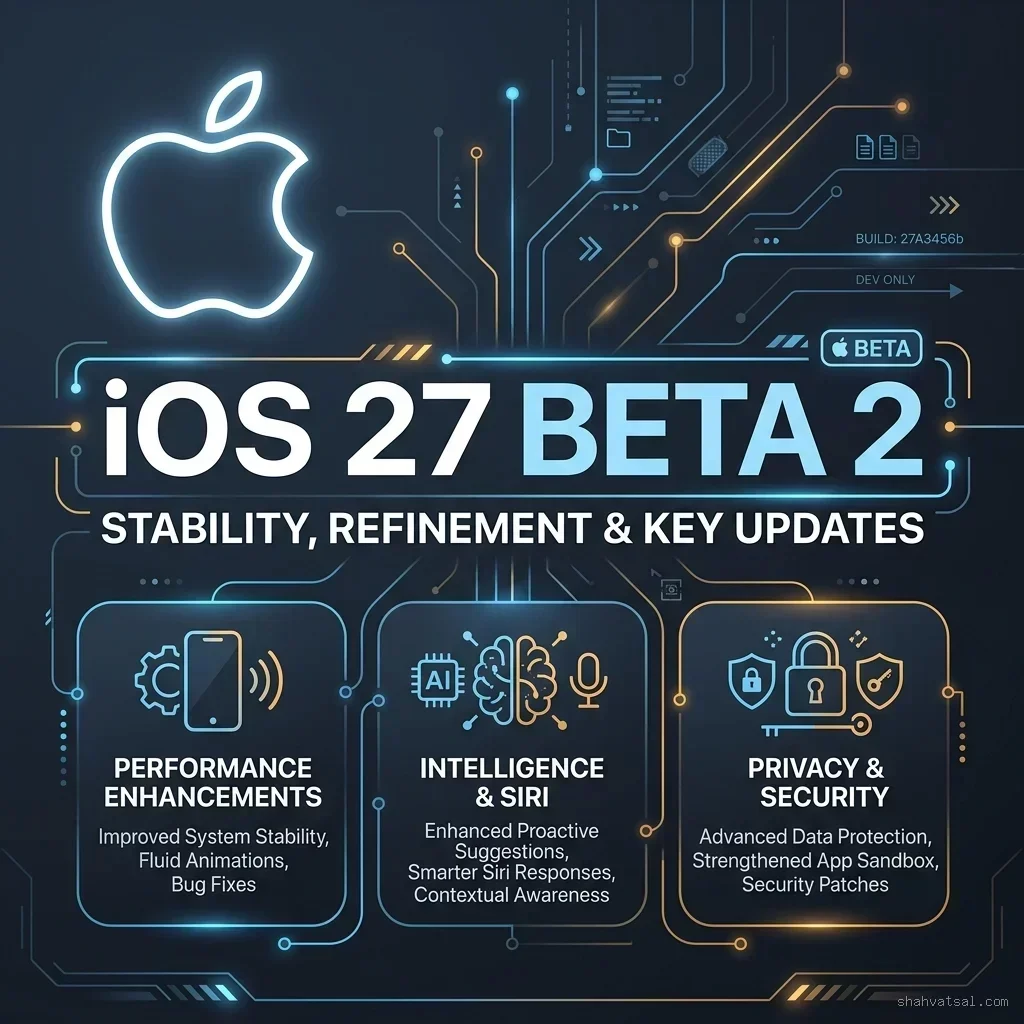
Apple Releases iOS 27 Beta 2 and Unveils Brazil Alternative Marketplace Terms
By Vatsal Shah | June 22, 2026 | 7 min read | Source: Apple Developer Portal
- iOS 27 Beta 2 Launch: Focuses heavily on on-device machine learning execution with new native Swift AI model routing namespaces and a massive migration of security contexts to
private.icloud.com. - Brazil Regulatory Terms: Follows the EU template, introducing alternative marketplace guidelines, third-party payment gateways, and a modified fee structure for local transactions.
- Developer Recommendations: Update sandbox testing pipelines for both on-device model routing latency and Brazilian checkout integrations to prevent transaction drop-offs under the new terms.
Lead Paragraph
CUPERTINO, California — Apple has officially released the second beta of iOS 27 to registered developers, continuing its aggressive expansion of native on-device machine learning capabilities and transitioning core cloud domains. This software update introduces programmatic Swift AI namespaces designed to coordinate execution between local neural processing engines and cloud-based models. In a concurrent regulatory move, Apple has published updated terms for the App Store in Brazil, extending alternative marketplace support and third-party checkout flows to South American developers starting with iOS 26.5. These updates signal a synchronized operational shift, balancing next-generation platform engineering with global compliance demands.
What Happened
The release of iOS 27 Beta 2 brings critical upgrades to Apple’s development environment. Foremost among these is the launch of the native Swift AI API namespace, allowing programmers to declare model execution routing parameters directly within Swift apps. To support these operations, Apple has initiated a large-scale migration of iCloud-based services to the unified private.icloud.com domain. This change secures sandbox data exchanges and isolates neural compute payloads from traditional network telemetry.
Simultaneously, under pressure from Brazilian administrative authorities, Apple published guidelines introducing alternative marketplaces, third-party checkout mechanisms, and local billing rules. Key terms of the update include:
- A 3% discount on App Store commissions for developers utilizing third-party payment processors.
- Permission to deploy alternative app marketplaces directly to users in Brazil.
- The implementation of a modified fee structure, reducing standard commissions to 12% to 27% depending on developer program status and billing methods.
                           iOS 27 RUNTIME ARCHITECTURE
+--------------------------------------------------------------------------+
|  Swift Client App                                                        |
|         │                                                                |
|         ▼ (Swift AI Native Routing Namespace)                            |
|  [ Local NPU Execution ] ──► [ private.icloud.com ] ──► [ Cloud Models ]  |
|  (Biometric Sandbox)         (Encrypted Gateway)        (Failover Compute)|
+--------------------------------------------------------------------------+
Why It Matters
For enterprise mobile leaders and platform architects, these updates introduce both opportunity and operational friction. The Swift AI native APIs offer a standardized pipeline for running on-device machine learning models with minimal execution latency. By bypassing web requests and local subprocess layers, developers can execute text tokenization, image processing, and biometric classification loops instantly on the Neural Engine. This reduces infrastructure costs by shifting compute workloads directly to the client hardware.
However, the regulatory shifts in Brazil introduce significant backend complexity. Unlike the uniform EU Digital Markets Act compliance path, the Brazilian terms introduce country-specific billing integrations, local registration processes, and specialized fee metrics. Developers attempting to establish alternative marketplaces or integrate third-party checkout flows in Brazil must rewrite their subscription-handling microservices to track custom commission rates, transaction reporting APIs, and local tax requirements.
H2: On-Device AI Architecture
The primary focus of iOS 27 Beta 2 features is the optimization of client-side machine learning. By introducing native Swift AI APIs, Apple has decoupled model inference from raw CoreML execution loops. The runtime automatically monitors current device thermal profiles, battery levels, and NPU availability to select the most efficient path for compute tasks.
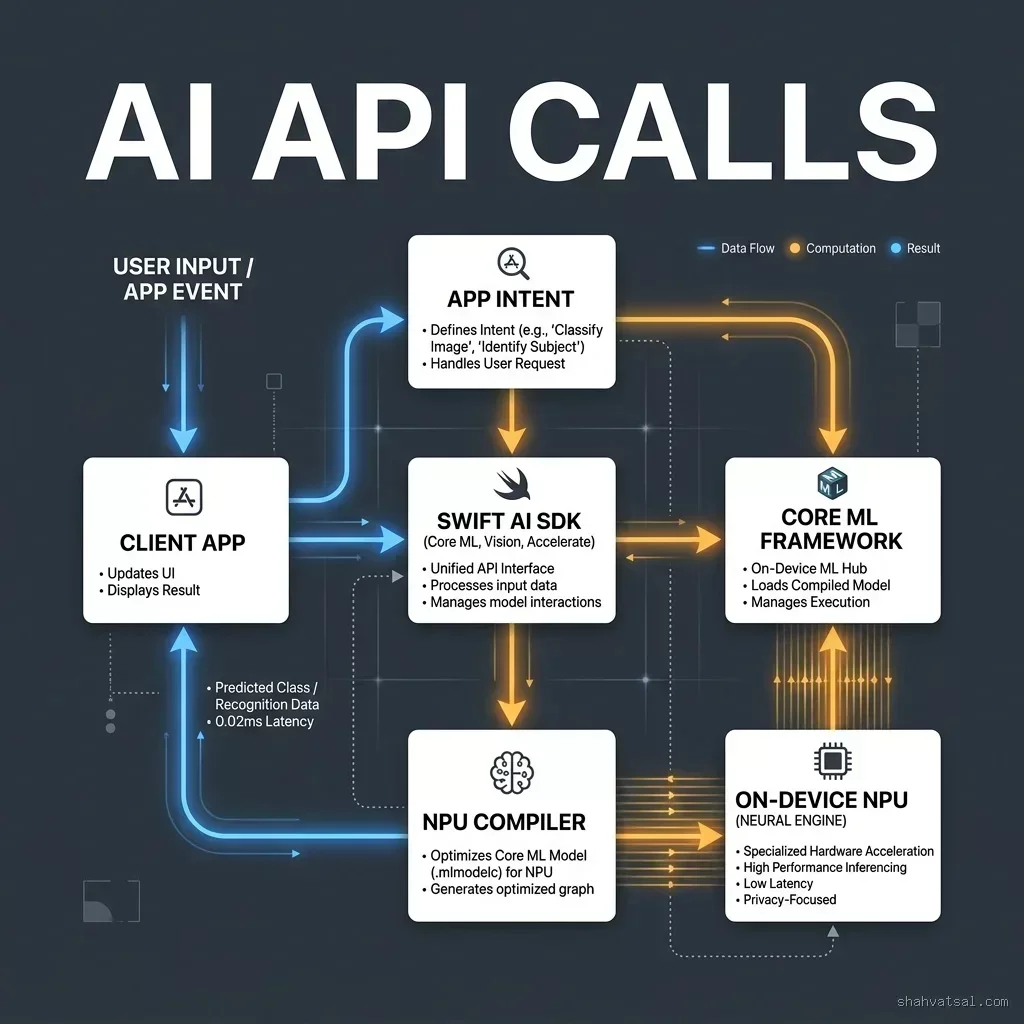
Additionally, the migration to private.icloud.com represents a major security enhancement. All remote model queries, weights synchronization, and federated learning checks are routed through this specialized domain. By isolating this traffic, Apple blocks man-in-the-middle vector analysis, securing user interaction context even if a local app intent calls a cloud-hosted model failover.
To call these on-device routing parameters in Swift, developers can initialize a runtime context using the new namespace:
import SwiftAI
import Foundation

@available(iOS 27.0, *)
public struct ModelExecutionController {
    private let modelId = class="tok-str">"llama-3-mini-local"

    public init() {}

    public func executeQuery(_ prompt: String) async throws -> String {
        let configuration = ModelConfiguration(
            preference: .onDevicePreferred,
            allowNetworkFailover: true
        )

        let routingSession = try await AIRouter.shared.establishSession(
            modelIdentifier: modelId,
            configuration: configuration
        )

        guard routingSession.executionLocation == .onDevice class="tok-kw">else {
            class="tok-kw">return try await executeCloudQuery(prompt, session: routingSession)
        }

        let localEngine = try LocalNeuralEngine(session: routingSession)
        let output = try await localEngine.generate(prompt)
        class="tok-kw">return output
    }

    private func executeCloudQuery(_ prompt: String, session: AISession) async throws -> String {
        class="tok-cm">// Safe failover routed through secure private.icloud.com gateway
        let gatewayUrl = URL(string: class="tok-str">"https:class="tok-cm">//api.private.icloud.com/v1/inference")!
        var request = URLRequest(url: gatewayUrl)
        request.httpMethod = class="tok-str">"POST"
        request.setValue(class="tok-str">"Bearer \(session.token)", forHTTPHeaderField: class="tok-str">"Authorization")

        let payload = [class="tok-str">"prompt": prompt, class="tok-str">"session_id": session.identifier]
        request.httpBody = try JSONSerialization.data(withJSONObject: payload)

        let (data, response) = try await URLSession.shared.data(for: request)
        guard (response as? HTTPURLResponse)?.statusCode == 200 class="tok-kw">else {
            throw AIError.networkExecutionFailed
        }

        let json = try JSONSerialization.jsonObject(with: data) as? [String: Any]
        class="tok-kw">return json?[class="tok-str">"response"] as? String ?? class="tok-str">""
    }
}
H2: Brazil Alternative Marketplace & Payments
The Brazilian App Store terms introduce a structural shift in how payment systems are coordinated on iOS. Developers choosing to deploy alternative marketplaces or use third-party payment gateways within their standard iOS apps in Brazil must register their payment processors and undergo specialized platform verification.
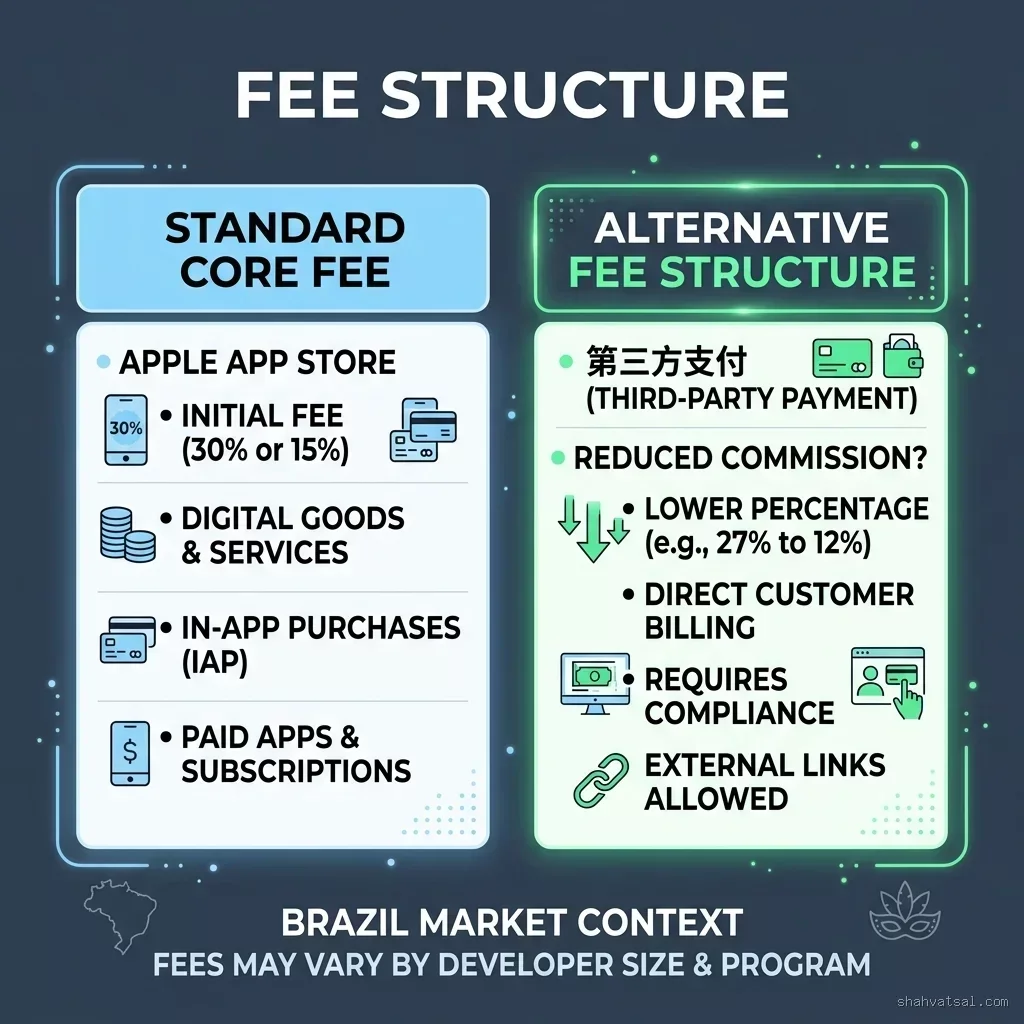
While the 3% commission discount is financially attractive for high-volume services, developers must calculate the operational costs of maintaining independent billing APIs. These APIs must securely report transaction data back to Apple’s compliance database to verify transaction volumes and confirm commission calculations.
To help financial architecture teams evaluate this transition, the table below maps the transaction fee configurations:
| Developer Program Tier | App Store Standard Fee | Alternative Payment Fee | Local Processing Cost | Reporting Target SLA |
|---|---|---|---|---|
| Small Business Program | 15% | 12% | ~1.5% to 2.5% | Within 24 hours of checkout |
| Enterprise standard | 30% | 27% | ~1.5% to 2.5% | Within 12 hours of checkout |
| Alternative Marketplaces | N/A | 17% | Varies by provider | Real-time transaction API |
What to Watch Next
- iOS 27 Beta 3 Cycles: Look for updates to Swift AI performance metrics and the expansion of the neural routing scheduler to support custom user-trained weights.
- Brazilian Enforcement Timelines: Monitor local regulatory audits to see if the administrative council pushes Apple for further cuts to the Core Technology Fee model, similar to ongoing EU litigation.
- Third-Party Marketplace Ingest: Track developer adoption of Brazilian alternative marketplaces to evaluate whether local user acquisition costs justify maintaining separate staging builds.
Read the official story on Apple Developer Portal → Apple Developer News
Key Takeaways
- Swift AI Optimization: iOS 27 Beta 2 introduces namespaces that prioritize local neural compiler operations, reducing remote compute dependencies.
- Cloud Domain Migration: Core iCloud telemetry is moving to
private.icloud.comto isolate user model context. - Brazil Payments Opened: Apple updated Brazilian terms to allow alternative checkout mechanisms and independent app marketplaces.
- Commission Adjustments: Developers using third-party checkout engines receive a 3% reduction in App Store platform fees.
- API Verification: Apps utilizing alternative billing models must deploy transaction logging integrations to verify commission splits.