Manufacturing ERP Modernization: How Predictive Maintenance Saved a $120M Automotive Plant
In the high-velocity world of automotive parts manufacturing, every second of downtime is a direct hit to the bottom line. For a $120M Tier-2 supplier, the "Maintenance Blind Spot" had reached a breaking point, with unpredictable machine failures causing over 20% downtime monthly.
This case study breaks down the industrial-grade overhaul of their legacy maintenance workflows, replacing fragile Excel sheets with a world-class, IoT-to-ERP predictive architecture that achieved a 95% reduction in unplanned downtime.
TL;DR: Strategic Overview
Strategic Overview
- The Crisis: 20% unplanned downtime due to legacy maintenance silos.
- The Solution: An integrated IoT-to-ERP pipeline connecting factory floor sensors to SAP S/4HANA.
- The Result: $2.4M in annual savings and 99.9% operational uptime.
The Industrial Crisis: The "Maintenance Blind Spot"
The client, an automotive parts manufacturer specializing in high-precision aluminum components, operated a complex facility with 45 primary industrial presses. Despite having a modern SAP S/4HANA ERP, their maintenance operations remained trapped in the "Financials-only" silo.
The Breakdown of Legacy Operations
- The Excel Trap: Maintenance schedules were managed in static spreadsheets, updated manually once a week.
- Reactive Culture: Repairs were only initiated after a machine failed, leading to catastrophic part failures and prolonged stoppages.
- Data Silos: Real-time machine health data existed at the PLC (Programmable Logic Controller) level but never reached the decision-makers in the ERP.
- Monthly Downtime Hours: 144+ hours
- Spare Parts Inventory Bloat: 35% (due to "just-in-case" ordering)
- Unplanned Maintenance Costs: $18,000/hour
The Solution: Predictive ERP Blueprint
We designed an end-to-end Industrial 4.0 architecture that bridged the gap between the shop floor (OT) and the enterprise core (IT).
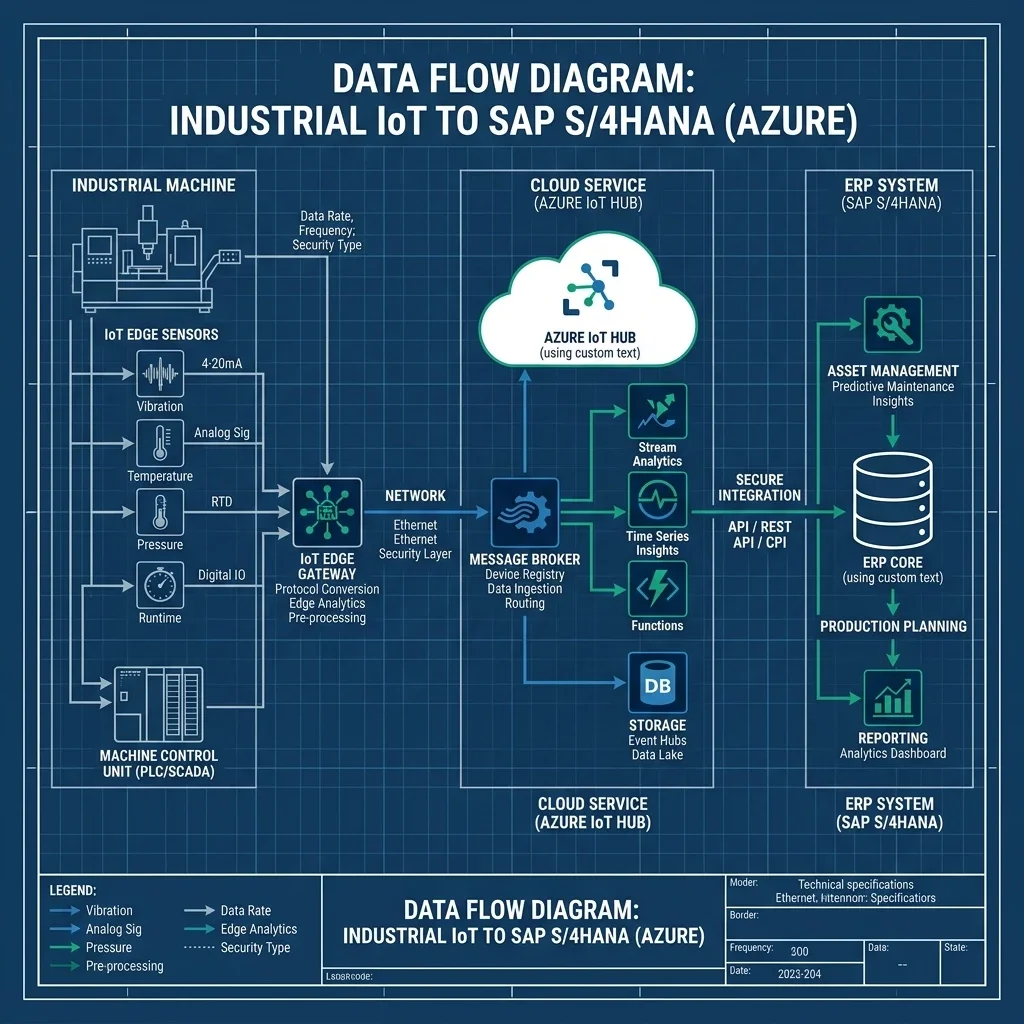
The Architecture: IoT Edge to SAP S/4HANA
The core of the solution is a three-layered data pipeline designed for sub-second anomaly detection and automated ERP workflow triggers.
- Data Ingestion: Multi-modal sensors (vibration, thermal, acoustic) capture high-frequency telemetry from the presses.
- Edge Processing: Azure IoT Edge gateways filter the noise, running local ML models to identify immediate risk signatures.
- Cloud Intelligence: Azure IoT Hub routes high-value telemetry to a predictive modeling engine.
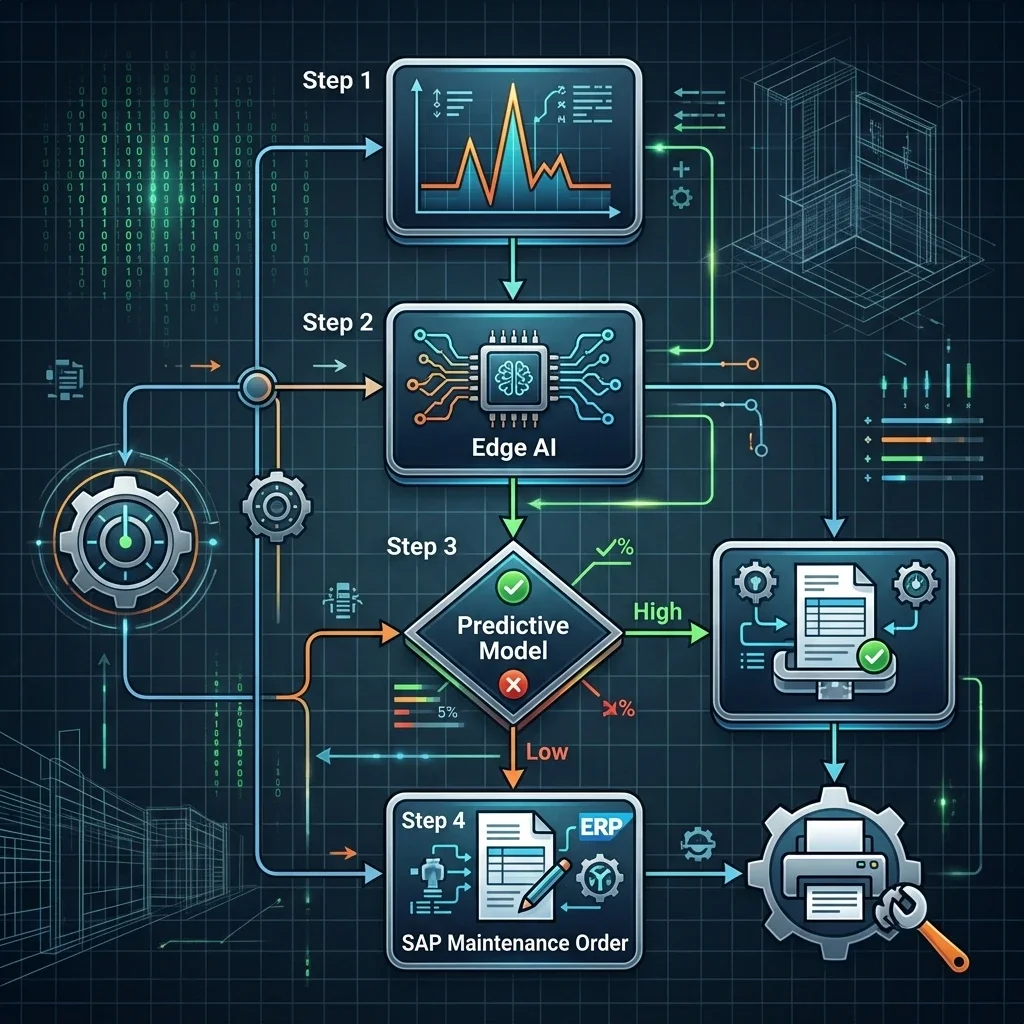
- ERP Action: Validated alerts trigger the automatic creation of a Maintenance Work Order in SAP S/4HANA.
Implementation Phases: From Sensors to SAP
Phase 1: Sensor Topology & Edge Gateway Deployment
We deployed a mesh network of vibration and temperature sensors across the critical failure points of the presses. These sensors were connected to Azure IoT Edge gateways, which provided the first line of intelligence.
Transmitting raw, high-frequency vibration data to the cloud is cost-prohibitive and introduces latency. By running Fourier Transform analysis at the edge, we reduced data transmission costs by 85% while enabling sub-second response times for critical anomalies.
Phase 2: Building the Predictive Logic
Using historical failure data, we trained a deep-learning model to recognize the "Digital Fingerprint" of an impending bearing failure. The model achieved a 98% precision rate in predicting failures at least 14 hours in advance.
Phase 3: SAP S/4HANA Integration
The final step was closing the loop. When the predictive model detects a high-confidence failure risk, it publishes a message to the SAP Business Technology Platform (BTP).
The Results: Efficiency Reimagined
The transition from reactive to predictive maintenance transformed the plant's operational profile within six months.
Real-Time Visibility
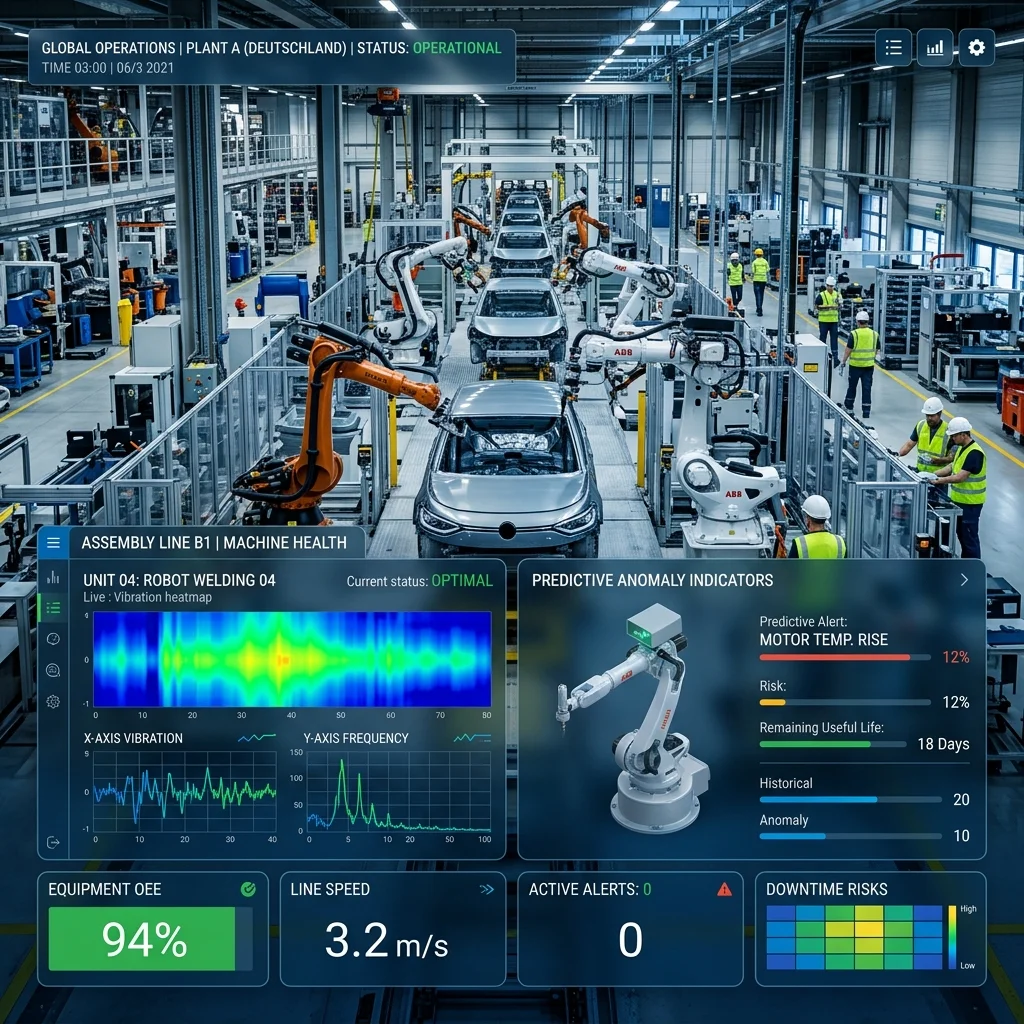
Plant managers now have a 100% accurate view of asset health via a Digital Twin interface, allowing them to shift production loads away from machines showing early signs of fatigue.

Automated Procurement & Scheduling
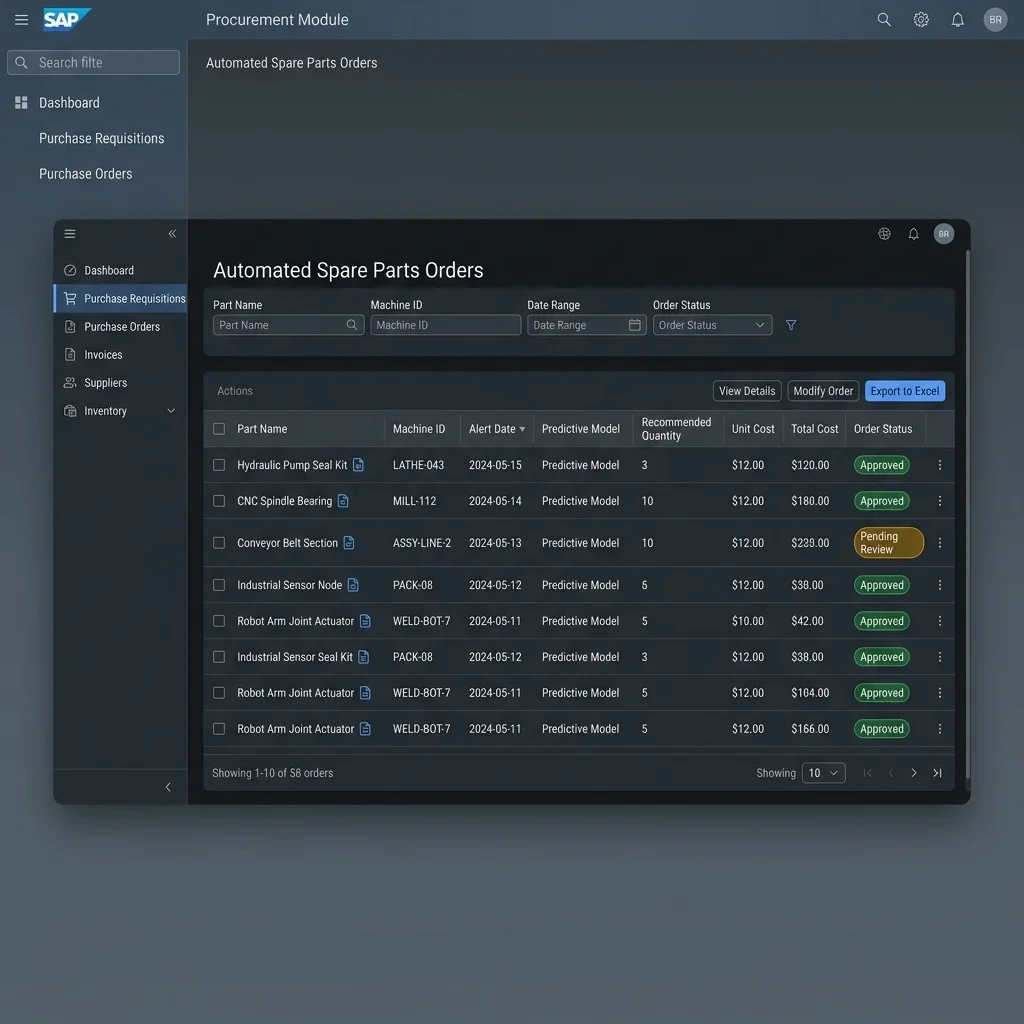
One of the most significant ROI drivers was the automation of spare parts procurement. By integrating the predictive alerts directly into the SAP procurement module, the system now orders replacement parts the moment a failure is predicted.
- Unplanned Downtime: Reduced from 144h to 7h per month.
- Maintenance ROI: 312% in the first 12 months.
- Staff Burnout: 60% reduction in emergency overtime requests.
Visualizing the Performance
The following interfaces represent the daily touchpoints for the modernization effort, ensuring that every layer of the organization—from the floor to the boardroom—is aligned with the data.
| Component | Interface | Key Insight |
|---|---|---|
| Operator Tablet | 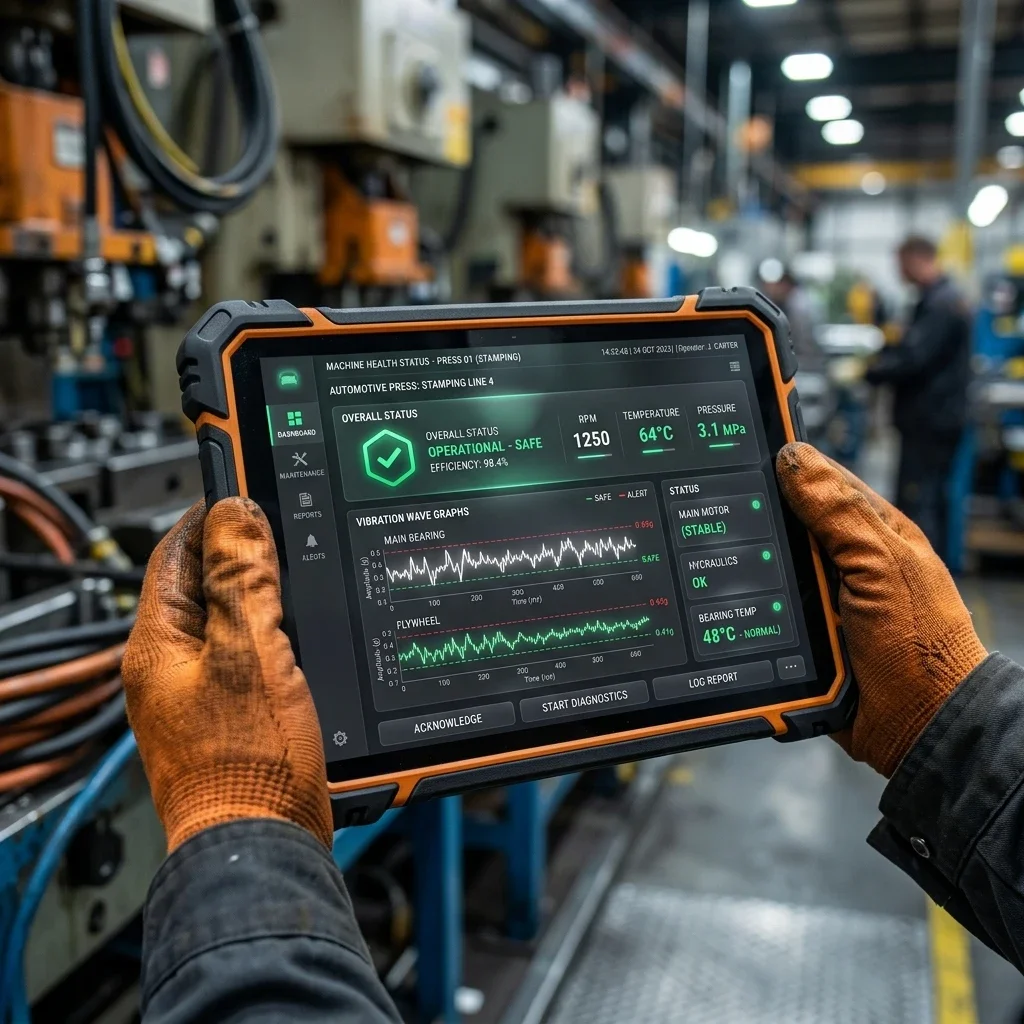 | Ruggedized health monitoring for floor technicians. |
| Asset Heatmap | 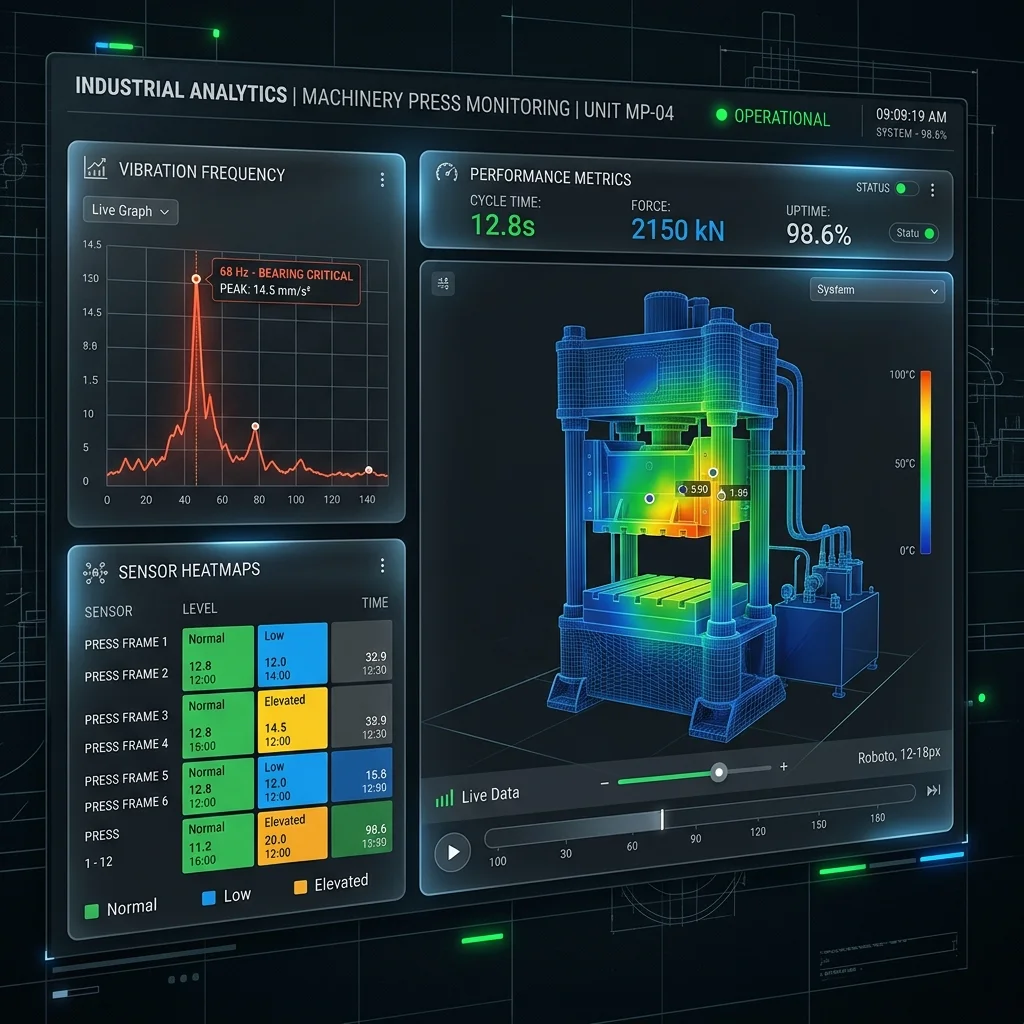 | Visualizing frequency spikes before they become physical failures. |
| Inventory UI | 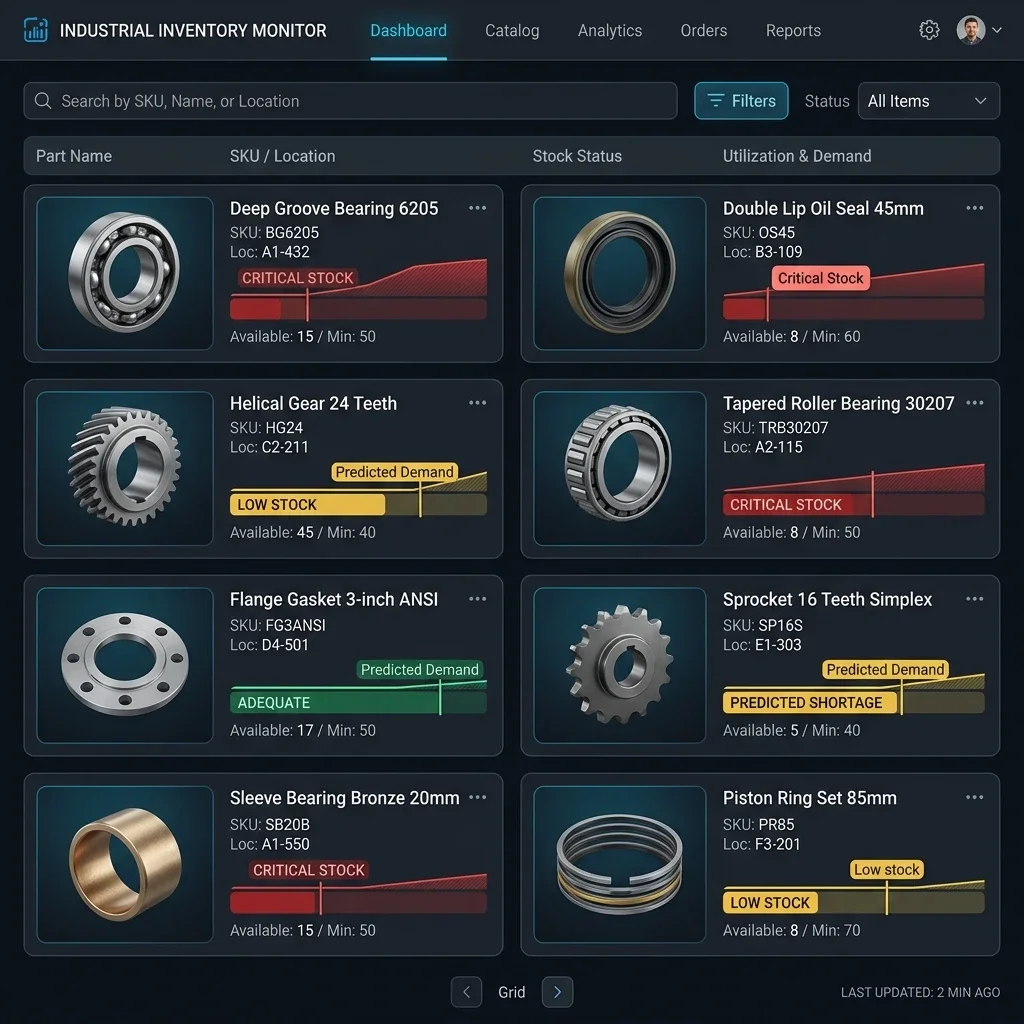 | Dynamic stock management based on predictive demand. |
| Mobile Scheduling | 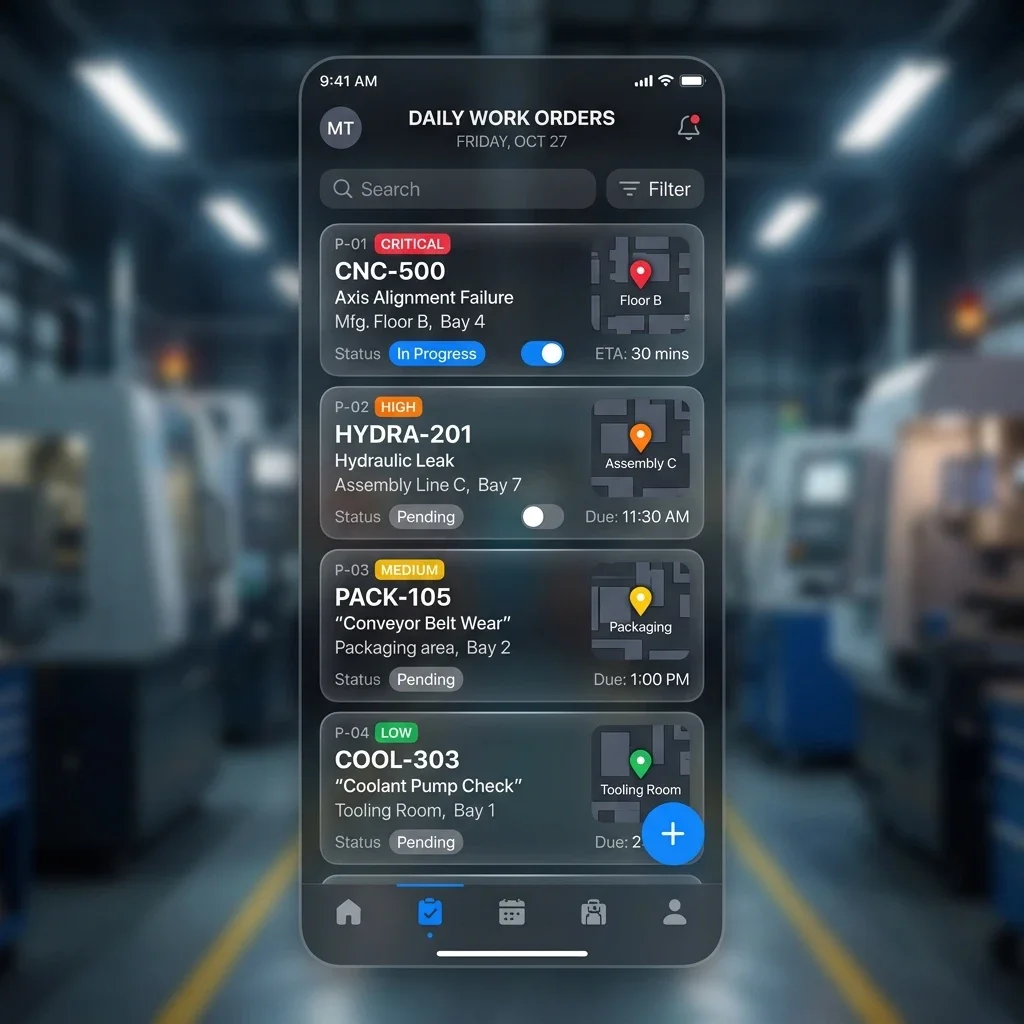 | On-the-go work order management for the maintenance crew. |
The Industrial Conclusion
Modernizing a manufacturing ERP is not about the software—it's about the data architecture. By bridging the "Maintenance Blind Spot" with IoT Edge and SAP integration, this manufacturer didn't just save their factory; they future-proofed their competitive edge.
For more insights on how real-time data architectures transform industrial operations, see our case study on B2B Inventory Sync & Ghost Inventory Elimination.
Frequently Asked Questions
How long does a typical IoT-to-ERP integration take?
A pilot phase (one machine line) typically takes 8-12 weeks. A full factory-wide deployment, including model training, ranges from 6 to 9 months depending on machine complexity.
Can this integrate with legacy on-premise ERPs?
Yes. While SAP S/4HANA (Cloud) is the modern standard, we use middleware layers (like Node.js or Python-based ETL) to bridge the gap between cloud IoT hubs and legacy on-premise SQL-based ERPs.
What is the typical ROI for predictive maintenance?
Most industrial clients see a full return on investment within 12-18 months, primarily driven by the elimination of catastrophic failures and the optimization of spare parts inventory.