Finance Transformation: How a Multi-Entity Operator Shaved 6 Days Off the Month-End Close with GenAI FP&A
By Vatsal Shah · 2026-06-03 · Finance Transformation
Corporate controllers and CFOs know that the month-end close is one of the most resource-intensive cycles in enterprise finance. In multi-entity businesses, this process is frequently delayed by fragmented data systems, manual reconciliation loops, and the need for human analysts to write hundreds of variance descriptions. When transaction logs span different divisions, currencies, and charts of accounts, controllers spend more time matching line items than analyzing strategic financial performance.
This case study reviews the finance operations modernization of a multi-entity service provider operating across 14 divisions in North America and Europe. Facing a 12-day close timeline, high auditor transaction rework, and quarterly forecasting delays, the firm's leadership paused their standard ledger routines to redesign their process.
By implementing a governed, agent-assisted GenAI FP&A Close Engine, the organization automated manual journal reconciliation, transaction matching, and variance narration. This system cut the month-end close timeline by 6 days, reduced manual journal adjustments by 75%, and allowed the company to move from a quarterly to a weekly forecasting cadence.
This case study details how a multi-entity operator automated its month-end close, deployed a GenAI FP&A reconciliation engine, and integrated ledger systems to shave 6 days off the close calendar.
Strategic Overview
Strategic Overview
- The Challenge: A multi-entity operator struggled with a 12-day close cycle, manual journal entries, and slow variance explanations across 14 separate charts of accounts.
- The Solution: Deploying a governed ledger-integration layer powered by autonomous financial agents that match intercompany transactions, propose corrections, and write SOX-compliant variance explanations.
- The Outcome: Shaved 6 days off the month-end close calendar, reduced manual journal entry adjustments from 840 to 210 per month, and shifted forecasting from quarterly to weekly.
The Pre-Implementation Crisis: Fragmentation and The Manual Journal Loop
The operator managed its financial operations across multiple legacy ERPs and ledger databases. When the month-end cutoff occurred, corporate accounting teams had to extract transaction logs, journal entries, and balance sheets from each entity's system to perform consolidation.
I've seen many corporate finance teams drown in this phase, where consolidation becomes a race against the calendar.
This manual process resulted in three primary operational challenges:
1. Intercompany Transaction Matching Friction
With different entities using distinct charts of accounts, matching intercompany transactions (such as cross-entity service agreements and internal chargebacks) was a manual task. Accounting analysts spent days searching spreadsheets to align corresponding debit and credit records, creating a backlog that delayed the trial balance.
2. Manual Journal Entry Rework
Because transaction mappings were inconsistent, the group generated over 840 manual adjusting journal entries every month to correct misalignments. Each adjustment required manual manager sign-off, creating bottleneck queues that kept controllers working late into the close cycle.
3. Delays in Variance Narration and Reporting
Once the ledger consolidated, FP&A analysts had to review budget-to-actual variances exceeding a 5% threshold. Writing the natural-language explanations for these variances required analysts to interview department heads and search through invoices, delaying the final board report until Day 12.
  [ Ledger Cutoff Day 0 ] ──> [ Manual Data Extraction (3d) ] ──> [ Intercompany Matching (4d) ]
                                                                             │
                                                                             v
[ Day 12 Board Report ] <── [ Manual Variance Notes (2d) ] <── [ Journal Adjustments (3d) ]- Month-End Close Calendar: 12 Days (Average time from ledger cutoff to finalized board package)
- Manual Adjusting Journal Entries: 840/month (Adjustments needed to correct mismatch errors)
- Variance Investigation SLA: 48 Hours (Time spent by analysts writing a single variance explanation)
- Reconciliation Audit Rework: 18.0% (Percentage of reconciliations flagged by auditors for revision)
- Forecast Refresh Cadence: Quarterly (Frequency at which financial forecasts were updated)
The Solution Approach: Setting Ledger Guardrails
To address the close delays, the finance team redesigned its data consolidation pipeline. They established three strict guardrails that every transaction match and adjusting proposal had to pass:
- Read-Only Ledger Gateways: The automation agents operate via read-only APIs to analyze transaction logs. No agent has write-access to the ERP ledgers; all adjusting entries are staged as proposals requiring accountant approval.
- Deterministic Validation: Every automated transaction match is validated against deterministic rules (matching currency, entity ID, and tax codes) before being logged as reconciled.
- Structured Explanation Auditing: All generated variance narrations are referenced to specific invoice IDs, purchase order numbers, and ledger lines to ensure complete auditability for SOX compliance.
By replacing manual extraction with an event-driven integration layer, the operator established a secure environment to deploy three specialized finance agents.
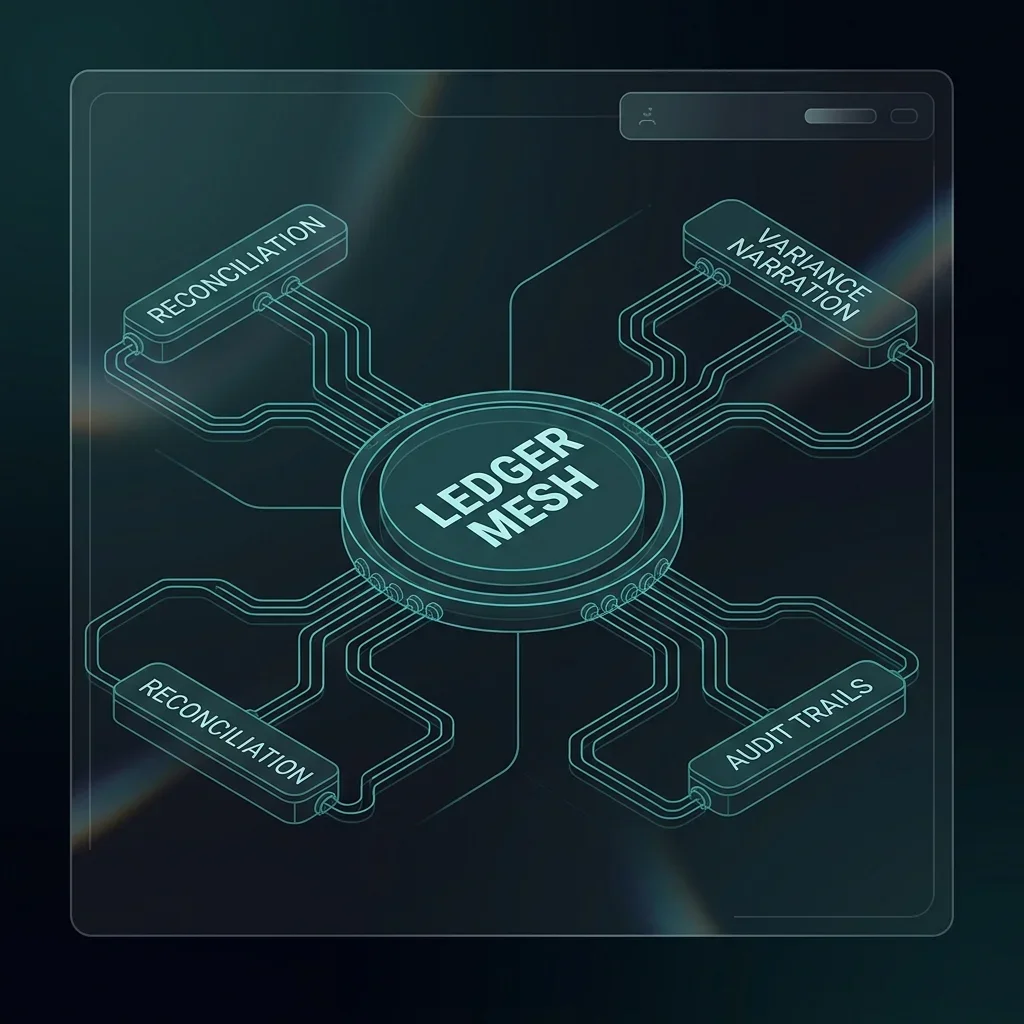
The Solution Architecture: Multi-Entity Ledger Mesh
The platform is designed as a hybrid-cloud service integration, using secure API connectors to pull daily transaction streams from the division databases. The agentic system runs on three dedicated agents:
1. The Reconciliation Agent
This agent ingests transaction tables from all 14 entity ledgers. It uses a combination of deterministic matching rules and semantic similarity models to pair cross-entity debits and credits, automatically resolving 85% of standard intercompany transactions.
2. The Variance Analyst Agent
The Variance Agent monitors consolidated ledger nodes. When a budget-to-actual variance exceeds the 5% threshold, the agent retrieves the relevant purchase orders, invoices, and historical ledger narratives to generate draft explanations for review.
3. The SOX Compliance Auditor Agent
This agent runs continuous sanity checks. It validates every transaction match and proposed journal adjustment against the company’s internal controls and compliance rules, generating a verification stamp and an immutable audit trail.
Technical Flow: From Extraction to Compliant Close
The automated close process runs in a structured loop, processing data from transaction extraction to final narration:
[ERP Ledger Extraction] ──> (Reconciliation Matching) ──> [Variance Identification] ──> (Narration Generation) ──> [Auditor Validation]- Extraction: The data ingestion layer polls the ERP APIs daily, normalizing transaction data into a unified schema.
- Matching: The Reconciliation Agent identifies intercompany transactions, pairs debits with credits, and flags unmatched anomalies.
- Variance Identification: The system flags nodes where actual spending deviates from the operating budget.
- Narration: The Variance Agent pulls contextual data from invoice files and writes draft variance descriptions.
- Auditing: The SOX Compliance Agent reviews the matches and explanations, writing verification logs to the database.
Below is the python script used by the Variance Analyst Agent to extract invoice metadata and generate draft explanations:
import openai
import pgvector
import psycopg2
class="tok-kw">def generate_variance_explanation(ledger_id, actual_amt, budget_amt, variance_reason_kw):
class="tok-str">""class="tok-str">"
Retrieves historical context from invoice databases and generates a draft variance narration.
"class="tok-str">""
variance_pct = ((actual_amt - budget_amt) / budget_amt) * 100
class="tok-cm"># Query vector database for similar invoice contexts
conn = psycopg2.connect(class="tok-str">"dbname=finance_db user=analyst password=secure_key")
cursor = conn.cursor()
class="tok-cm"># Semantic search on invoice description vectors
query_vector = get_embedding(variance_reason_kw)
cursor.execute(
class="tok-str">"SELECT invoice_id, description, amount FROM invoices ORDER BY embedding <=> %s::vector LIMIT 2",
(query_vector,)
)
matches = cursor.fetchall()
context = class="tok-str">""
for idx, match in enumerate(matches):
context += fclass="tok-str">"Invoice {match[0]}: {match[1]} (Valued at ${match[2]}). "
prompt = fclass="tok-str">"Write a professional, concise variance explanation for Ledger ID {ledger_id}. Actual: ${actual_amt}, Budget: ${budget_amt}, Variance: {variance_pct:.1f}%. Context: {context}"
response = openai.ChatCompletion.create(
model=class="tok-str">"gpt-4o",
messages=[
{class="tok-str">"role": class="tok-str">"system", class="tok-str">"content": class="tok-str">"You are a professional corporate controller. Write clear, factual variance notes."},
{class="tok-str">"role": class="tok-str">"user", class="tok-str">"content": prompt}
]
)
return response.choices[0].message[&class="tok-cm">#039;content']
class="tok-kw">def get_embedding(text):
class="tok-cm"># Simulated embedding generator
return [0.15] * 1536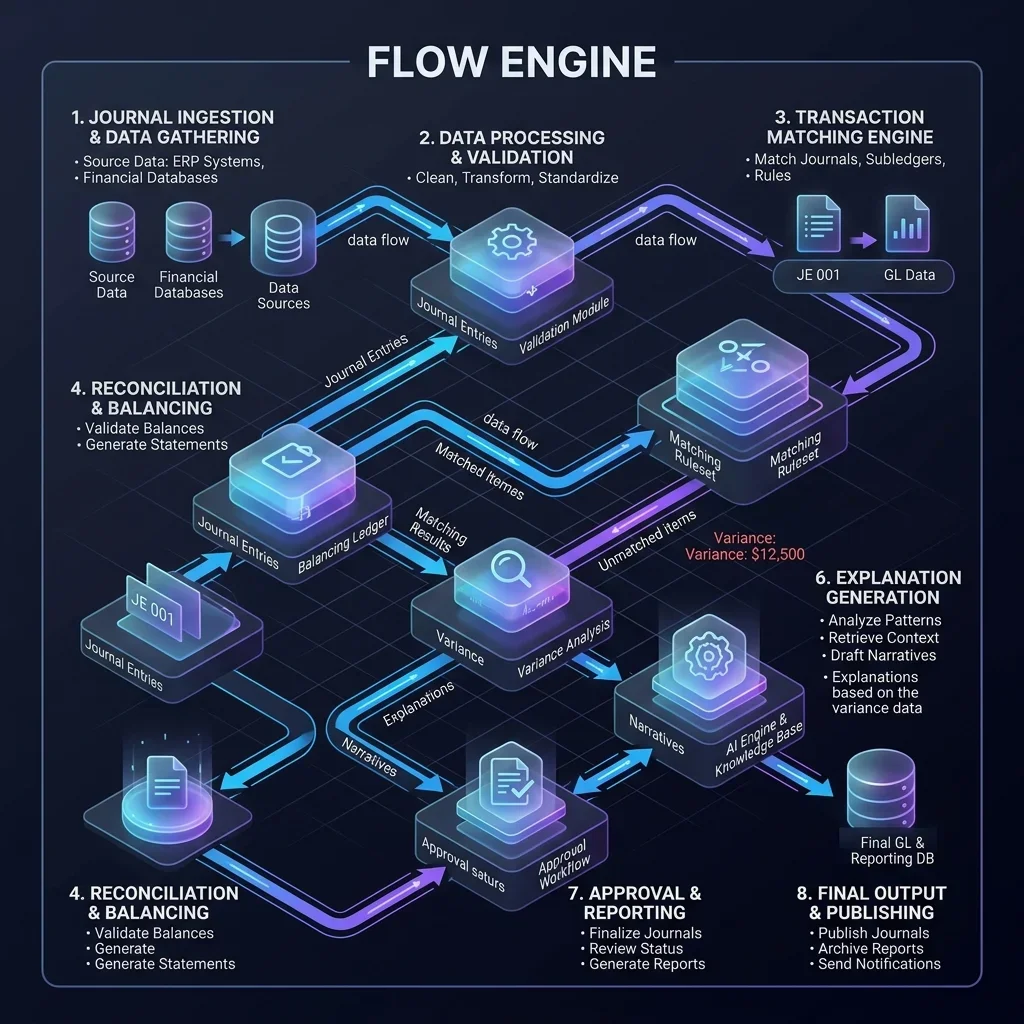
Operations Dashboards & Real-Time Auditing
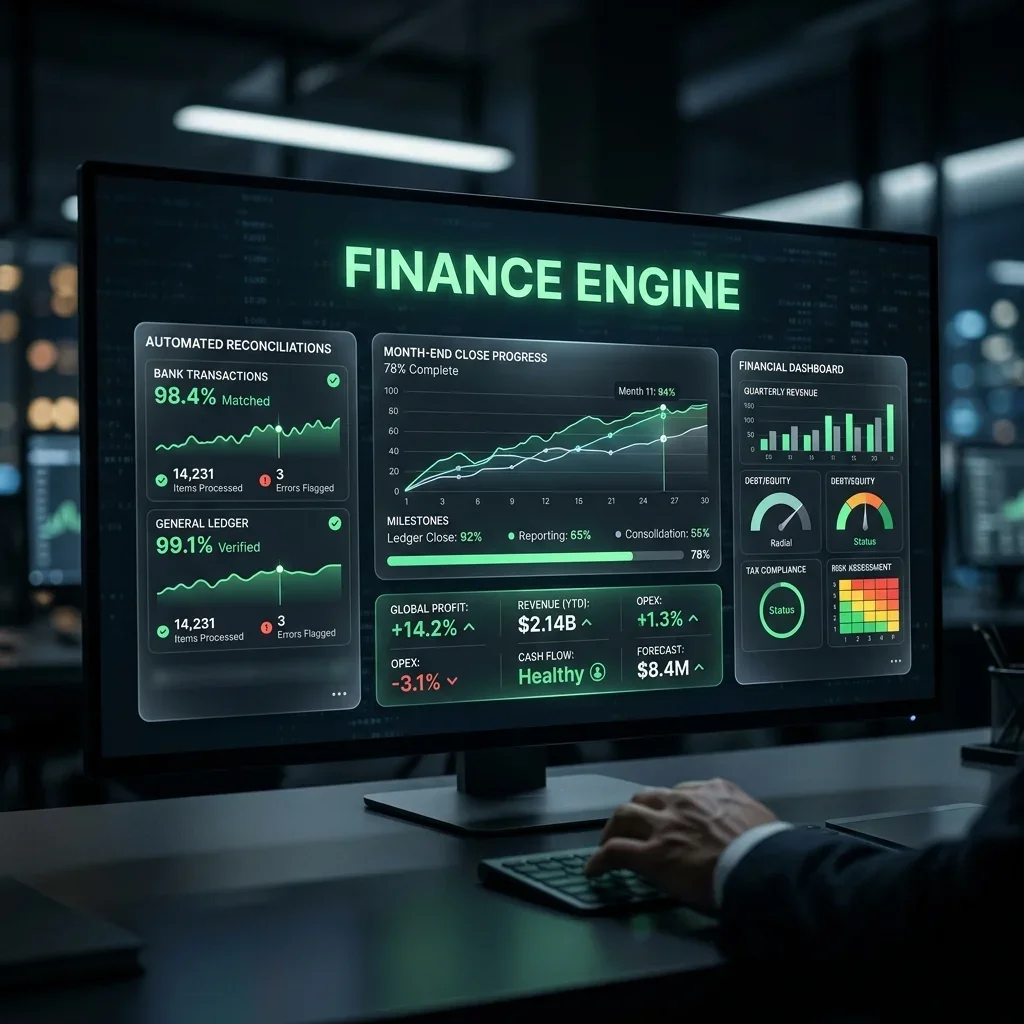
The following interfaces represent the administrative consoles of the GenAI FP&A Engine, providing corporate controllers and auditors with clean workspaces to verify matches and sign off on adjustments.
1. Ledger Reconciliation Dashboard
The ledger reconciliation workspace displays real-time balancing statuses, variance metrics, and transaction matches across all active entities.
| Interface Component | System Screenshot | Core Functional Insight |
|---|---|---|
| Ledger Reconciliation | 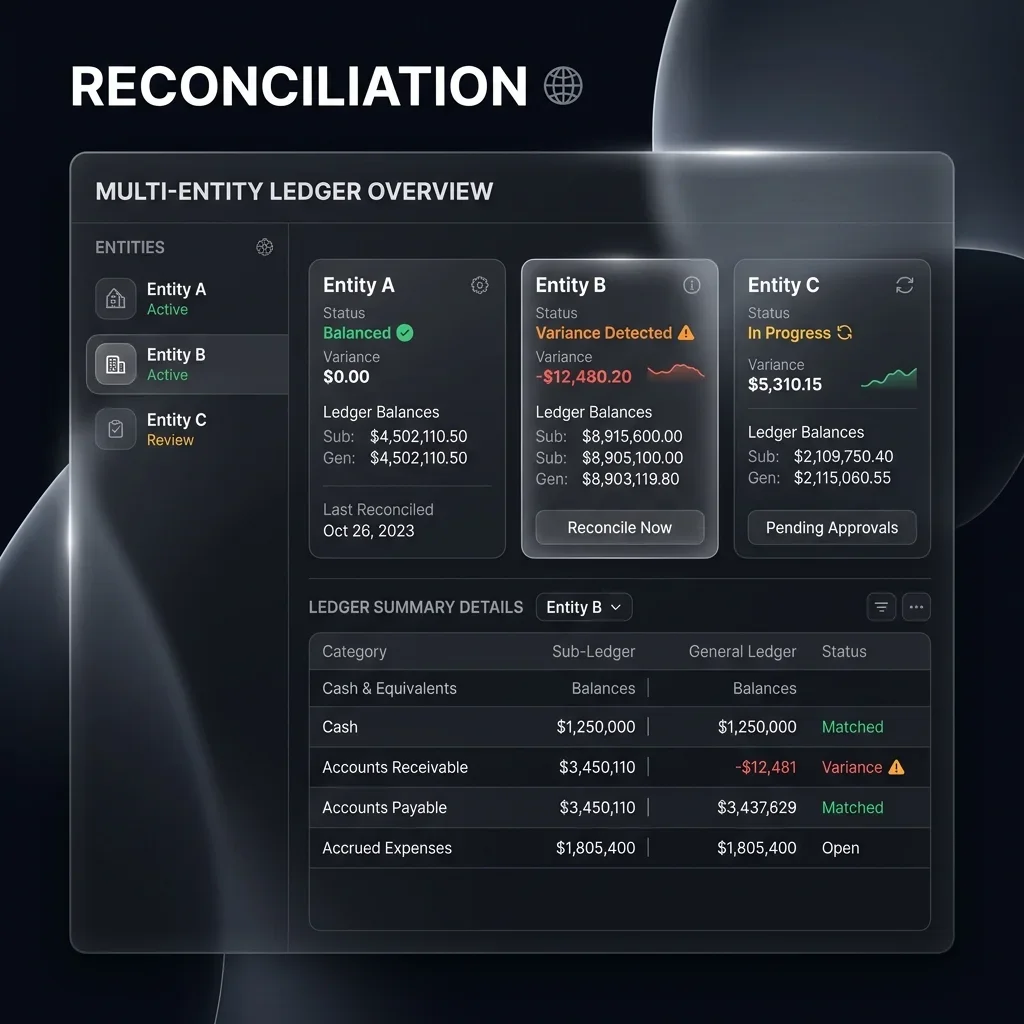 | Allows controllers to monitor entity balances, review automated matches, and manage high-priority variance alerts. |
2. Journal Adjustments & Compliance Auditing
The Adjustments panel displays proposed journal entry updates, while the Audit Trail workspace streams verification logs.
| Interface Component | System Screenshot | Core Functional Insight |
|---|---|---|
| Journal Adjustments | 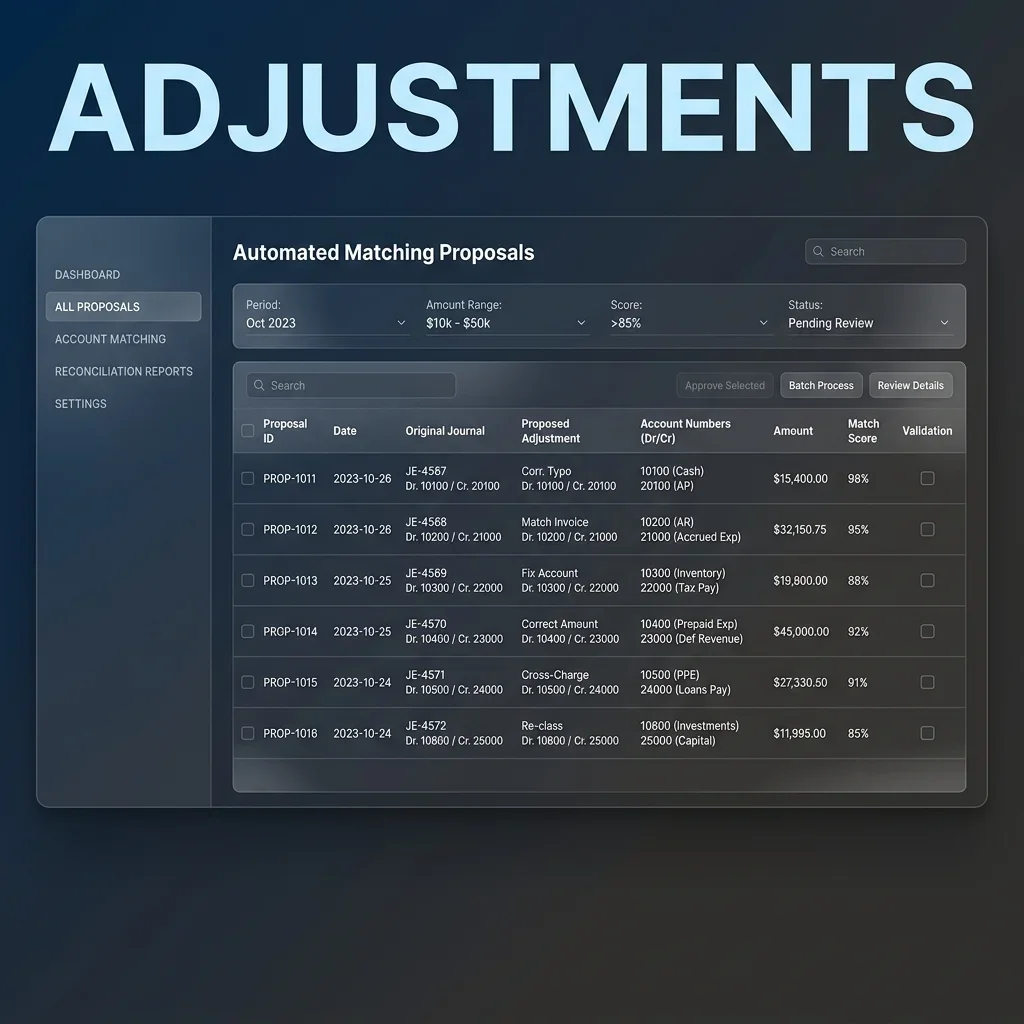 | Stages automated adjusting entries for review, allowing accountants to approve, edit, or reject proposed ledger updates. |
| Compliance Audit Trail | 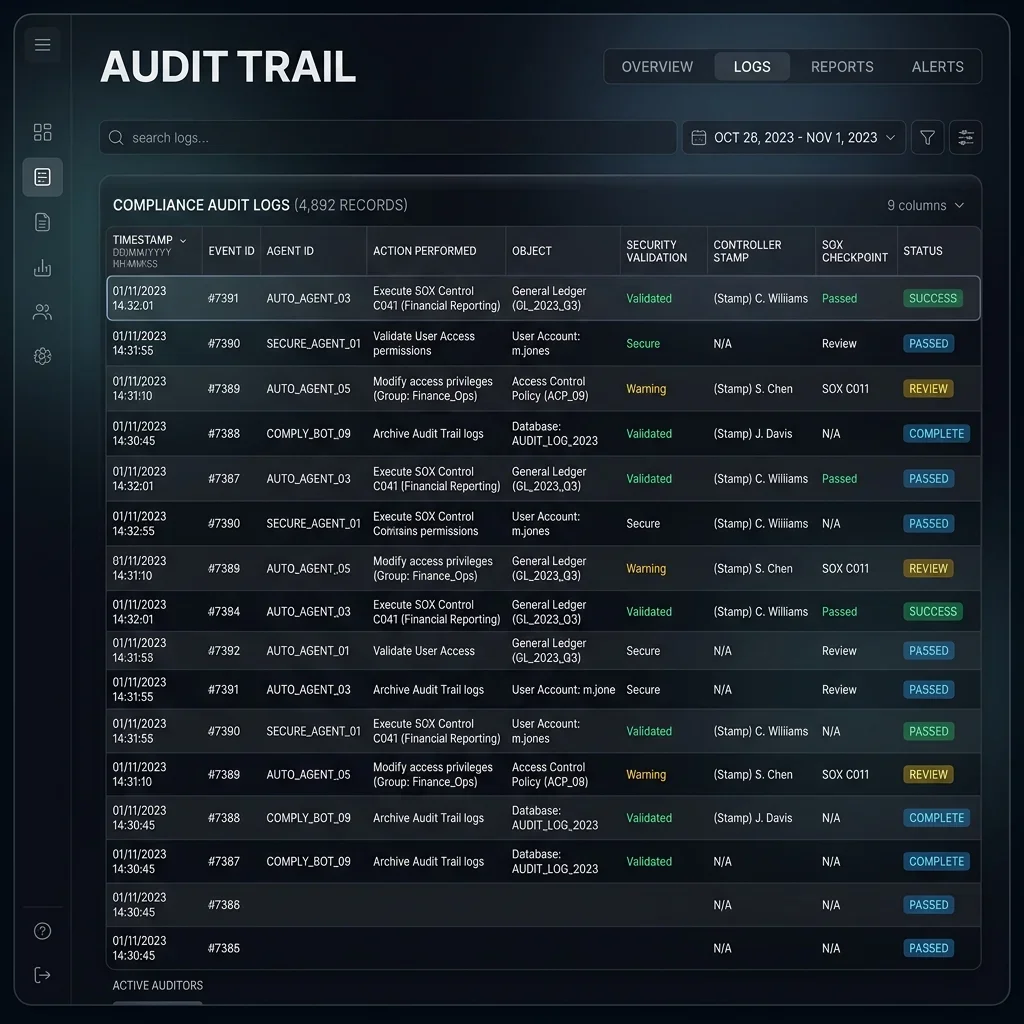 | Streams transaction logs, documenting every automated reconciliation, query, and agent action for audit compliance. |
Detailed Tech Stack Blueprint
To ensure system reliability, scale, and integration security, the GenAI FP&A Engine is built on a modern enterprise stack:
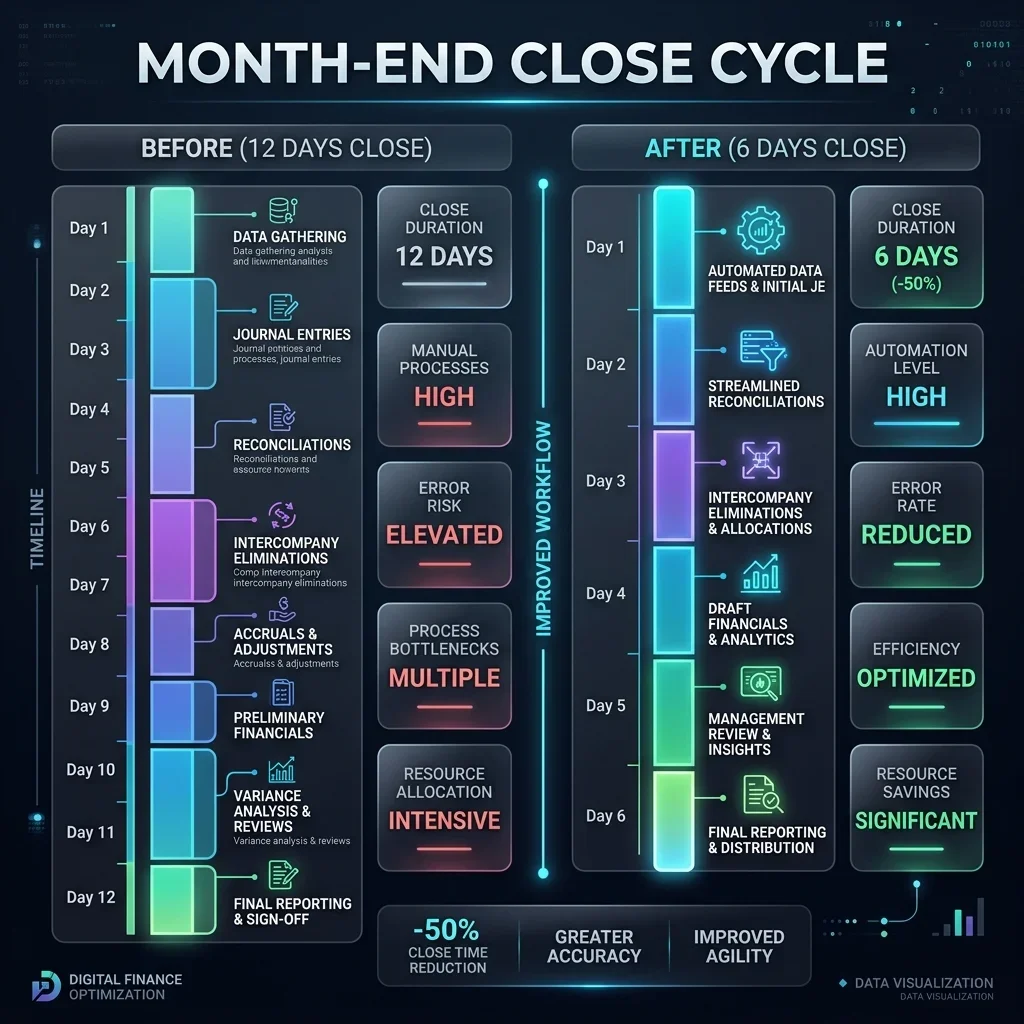
Before vs After Transformation Analysis
The operational benefit of consolidating ledger reconciliation and variance narration into a governed close engine is outlined in this comparative analysis:
Key Learnings & Takeaways
- Keep Ledgers Read-Only: Do not give agents direct write-access to ERP systems of record. Stage adjustments as proposals that require human verification before execution.
- Normalize Mappings First: AI cannot fix messy data. Establish unified charts of accounts and deterministic transaction schemas before deploying matching engines.
- Structure Document Storage: Enable efficient semantic search by scanning and storing all invoice, purchase order, and historical files in a centralized vector database.
Consulting Transformation & Strategic CTAs
Optimizing month-end cycles safely requires secure system integrations, clean data mappings, and compliance frameworks. As a business-technology consultant, I partner with organizations to redesign their close workflows and deploy secure automation systems:
- Finance Close Audits: We map your current month-end cycle, identify data bottlenecks, and design custom optimization roadmaps.
- Ledger Integration Services: We build API connectors to link your division ERPs with automated reconciliation tools.
- Compliance Framework Design: We build SOX-compliant audit trails and validation controls to secure agentic operations.
To explore how these financial modernization strategies can optimize your team's close cycles, review our services at /services. To schedule a detailed architecture review or outline a custom integration program, connect with us at /contact.
You can also read our related blog on sovereign financial AI in regulated banking and check out our guides on enterprise agent registries and governance.
Frequently Asked Questions
How does the Reconciliation Agent identify intercompany matches?
The agent matches transactions by evaluating key identifiers (entity ID, invoice number, amount, date) against deterministic rules, using semantic checks for unstructured descriptions.
How does the engine ensure SOX compliance for adjusting entries?
All adjustments are staged as proposals. The SOX Auditor Agent logs the reasoning context, and every approved transaction writes a permanent log to the compliance database.
Can the engine process foreign currencies during matching?
Yes. The ingestion layer reads daily exchange rate feeds and normalizes all currency fields to the group’s reporting currency before matching.
What happens if a variance cannot be matched to an invoice?
If the agent cannot find matching documents, it tags the variance as "Unexplained" and escalates the ticket to the relevant division accountant.
What is the average timeline for implementing a GenAI close engine?
Engations are deployed in 12 weeks: 4 weeks for ERP mapping (Phase 1), 4 weeks for matching-rules integration (Phase 2), and 4 weeks for compliance checks (Phase 3).