
STRATEGIC OVERVIEW
Vibe Coding is Dead Heres 2026: The era of blind AI prompting is over. Learn the Sovereign Stack framework and why senior engineers prioritize architect...
AI SUMMARY
The widespread adoption of AI coding assistants in 2024-2025 gave birth to "Vibe Coding"—the practice of building software through iterative prompting without a deep mental model of the underlying system. By 2026, this approach has led to massive technical debt and production fragility. Senior engineers have responded with the Sovereign Stack, an architecture-first framework where AI is a high-speed mediator for human-designed blueprints. This shift marks the professionalization of AI-assisted engineering.
Table of Contents
- What "Vibe Coding" Actually Is
- The Economic Failure of Blind Prompting
- Where Vibe Coding Fails at Production Scale
- What Senior Engineers Do Differently
- The "Sovereign Stack" Framework
- The Psychological Shift: From Writer to Auditor
- Structured Prompting: The Engineer's Command Language
- Concrete Example: Vibe Code vs. Sovereign Code
- AI-Mediated Refactoring: The 2026 Health Check
- The Rise of the "Architectural Guardrail"
- 2027–2030 Roadmap: The Bar Moves Up
- Expert Insight: The Future of Cognitive Labor
1. What "Vibe Coding" Actually Is
In the early days of the AI coding boom, "Vibe Coding" was a badge of honor. It represented the speed of light: a developer describes a feature, the AI generates 400 lines of code, the developer "vibes" with it until it runs, and it gets pushed to production.
It was a cultural moment where the barrier to entry for building complex apps dropped to near zero. We saw the rise of the "Weekend Unicorn"—individuals building complete SaaS platforms in 48 hours using nothing but Claude or GPT-4. But speed without direction is just high-velocity chaos. The term "vibes" was literal; if the code looked correct and the UI felt smooth, it was deemed "good enough."
By 2026, we have a name for the output of this era: Hallucinated Infrastructure.
2. The Economic Failure of Blind Prompting
The honeymoon phase of Vibe Coding ended when the maintenance bills started coming in. In 2025, a study by the "Global Software Integrity Alliance" found that AI-generated codebases were 4.5x more expensive to maintain over a 12-month period than human-architected ones.
The Hidden Costs of Vibes:
- Refactoring Deadlocks: Because the code was generated without a central mental model, changing a single variable in a vibe-coded system often caused catastrophic failures in unrelated modules.
- Security Insurance Premiums: In 2026, many cyber-insurance providers began requiring "Human-in-the-Loop" (HITL) certification for production code. Vibe-coded apps became uninsurable due to their unpredictable logic paths.
- Developer Burnout: Senior engineers spent 80% of their time "AI-janitorial" work—cleaning up the tangled messes left by junior developers who "vibed" their way through a feature request.
3. Where Vibe Coding Fails at Production Scale
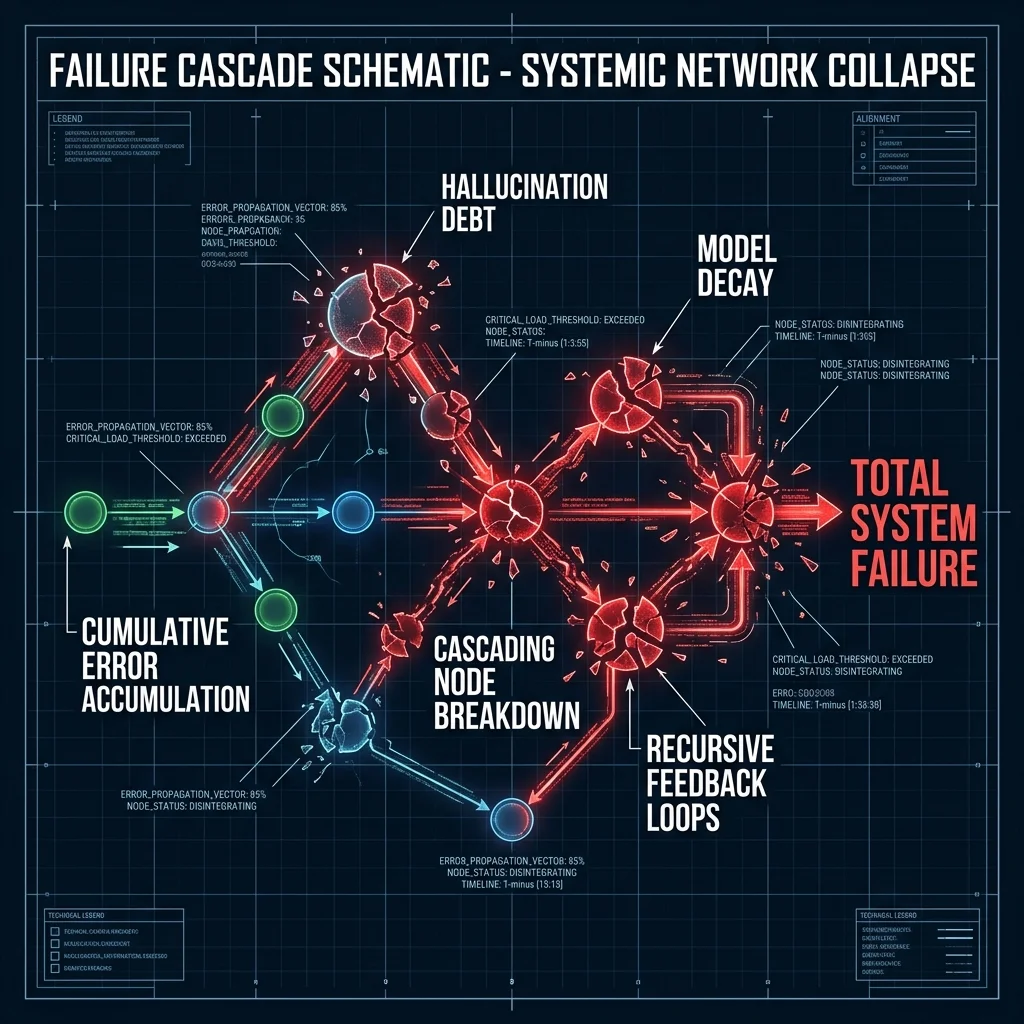
By 2026, the consequences of vibe coding have become apparent in enterprise environments. It works for an MVP, but it crumbles under the weight of real-world scale and long-term evolution.
- Hallucination Debt: Small, subtle AI errors in logic that pass unit tests but fail under specific edge cases in production. These aren't syntax errors; they are deep, semantic flaws in state management or data integrity.
- Mental Model Decay: Developers who can't explain why their code works are unable to debug it when the AI assistant makes a mistake. The "Cognitive Handover" fails because the human never had the context to begin with.
- Structural Fragility: Vibe-coded systems often lack a coherent architecture. They are a collection of "local optima"—functions that work individually but form a chaotic, unoptimized whole.
4. What Senior Engineers Do Differently
Senior engineers in 2026 have moved beyond simple prompting. They treat AI as a high-fidelity compiler for their architectural intent. They don't ask the AI what to build; they tell it how to implement their specific designs.
- Blueprints First: Before touching a prompt, the senior engineer designs the data flow, the state machine, and the interface boundaries. They use tools like Mermaid.js or systemic diagrams to define the "Contract" first.
- Context Management: They provide the AI with specific, curated context (via MCP or RAG) instead of letting it guess the codebase structure. They understand that the quality of AI output is a direct function of the Contextual Density provided.
- Verification-First: They write tests before asking the AI to implement the logic. This is the 2026 version of TDD (Test-Driven Development): the test is the guardrail that ensures the AI doesn't drift from the architectural intent.
5. The "Sovereign Stack" Framework
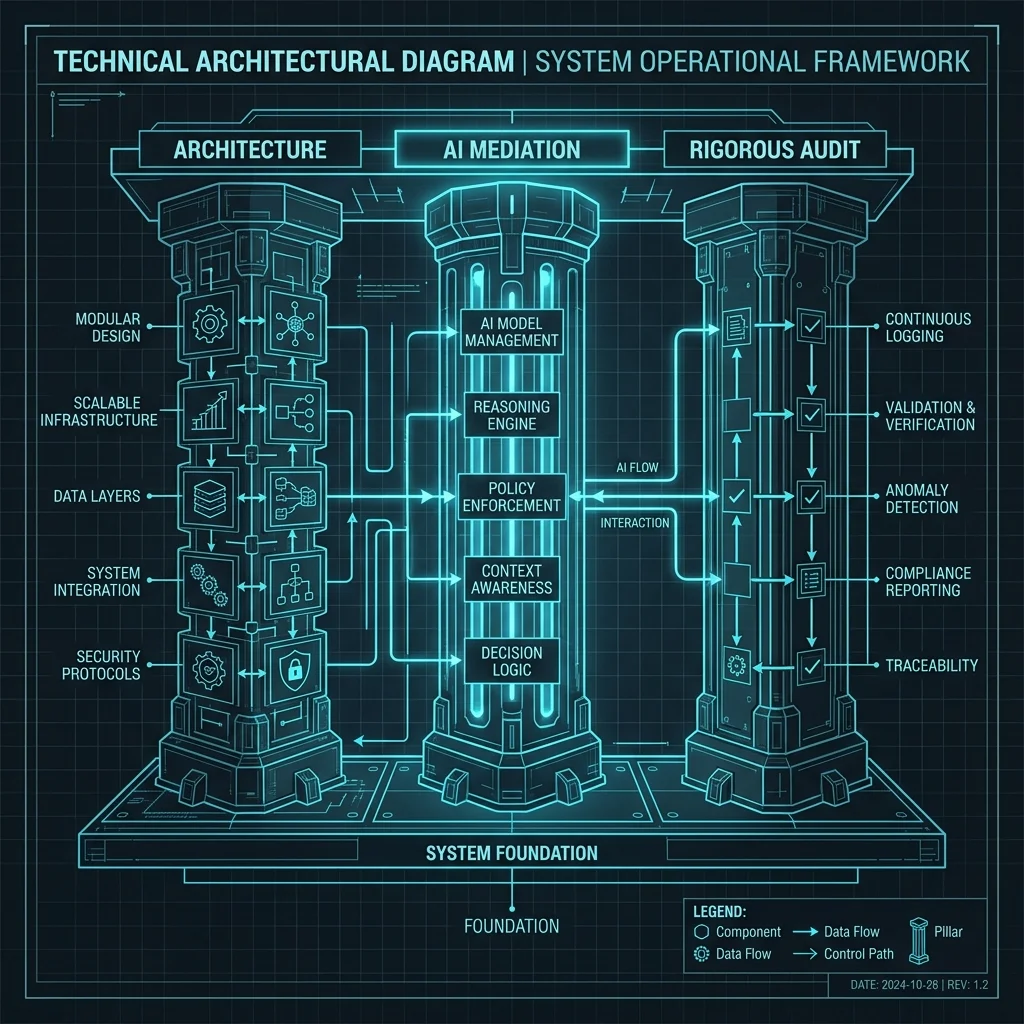
The Sovereign Stack is the 2026 standard for high-performance engineering. It is built on three pillars that separate the "Professional Engineer" from the "Prompt Hobbyist."
- Architectural Sovereignty: Humans design the core logic, domain boundaries, and data schemas. This is the "Hard Intelligence" that AI cannot yet replicate—the ability to see the system as a whole.
- AI Mediation: AI is the execution engine. It implements the boilerplate, generates the unit tests, writes the initial drafts of complex algorithms, and handles documentation.
- Rigorous Audit: Every line of AI-generated code is audited against the original architectural blueprint. The engineer uses "Diff-Checkers" and "Logic Provers" to ensure the AI's implementation matches the human's intent.
6. The Psychological Shift: From Writer to Auditor
The biggest challenge for engineers in 2026 wasn't learning the tools; it was a psychological shift. For 40 years, "coding" meant typing syntax. Today, coding means Managing Intent.
A Senior Engineer's day is no longer spent wrestling with semicolons. It is spent:
- Reviewing Diffs: Analyzing 2,000 lines of AI-generated refactoring code in 10 minutes, looking for structural regressions.
- Architectural Debugging: Fixing the "shape" of the system rather than the content of a function.
- Orchestration: Managing multiple AI agents that are working in parallel on different parts of a project.
7. Structured Prompting: The Engineer's Command Language
Senior engineers don't "chat" with AI. They use Structured Command Templates. A typical senior-level prompt in 2026 looks like a mini-specification:
ROLE: Senior Backend Architect
CONTEXT: Module
PaymentGateway, InterfaceIPaymentProviderBLUEPRINT: [Paste Mermaid Diagram]
CONSTRAINTS: No external dependencies, use immutable state, 100% test coverage.
TASK: Implement the
execute_transactionmethod according to the provided state machine.
This level of precision eliminates the "vibes" and forces the AI into a deterministic output mode.
8. Concrete Example: Vibe Code vs. Sovereign Code
The Vibe Approach (Chaotic)
The developer prompts: "Give me a user registration function with password hashing and email notification."
The AI generates a 100-line monolith that mixes database logic, hashing, and email services into a single function. It "works," but it's untestable and brittle. When the email provider changes in 6 months, the entire auth system breaks.
The Sovereign Approach (Structured)
The engineer designs the Blueprint:
AuthServicehandles the business orchestration.UserRepositoryhandles persistence via a clean interface.NotificationServicehandles external calls.
The engineer then prompts the AI to implement each component based on these defined interfaces.
// Sovereign Code Structure: Decoupled and Testable
export class AuthService {
  constructor(
    private userRepo: IUserRepository,
    private hasher: IPasswordHasher,
    private notifier: INotifier
  ) {}

  async register(data: RegisterDTO) {
    // Audit Point: The engineer ensures the hash happens BEFORE the save
    const hashed = await this.hasher.hash(data.password);
    const user = await this.userRepo.create({ ...data, password: hashed });

    // Audit Point: Notifications are async and non-blocking
    await this.notifier.sendWelcomeEmail(user.email);
    return user;
  }
}
9. AI-Mediated Refactoring: The 2026 Health Check
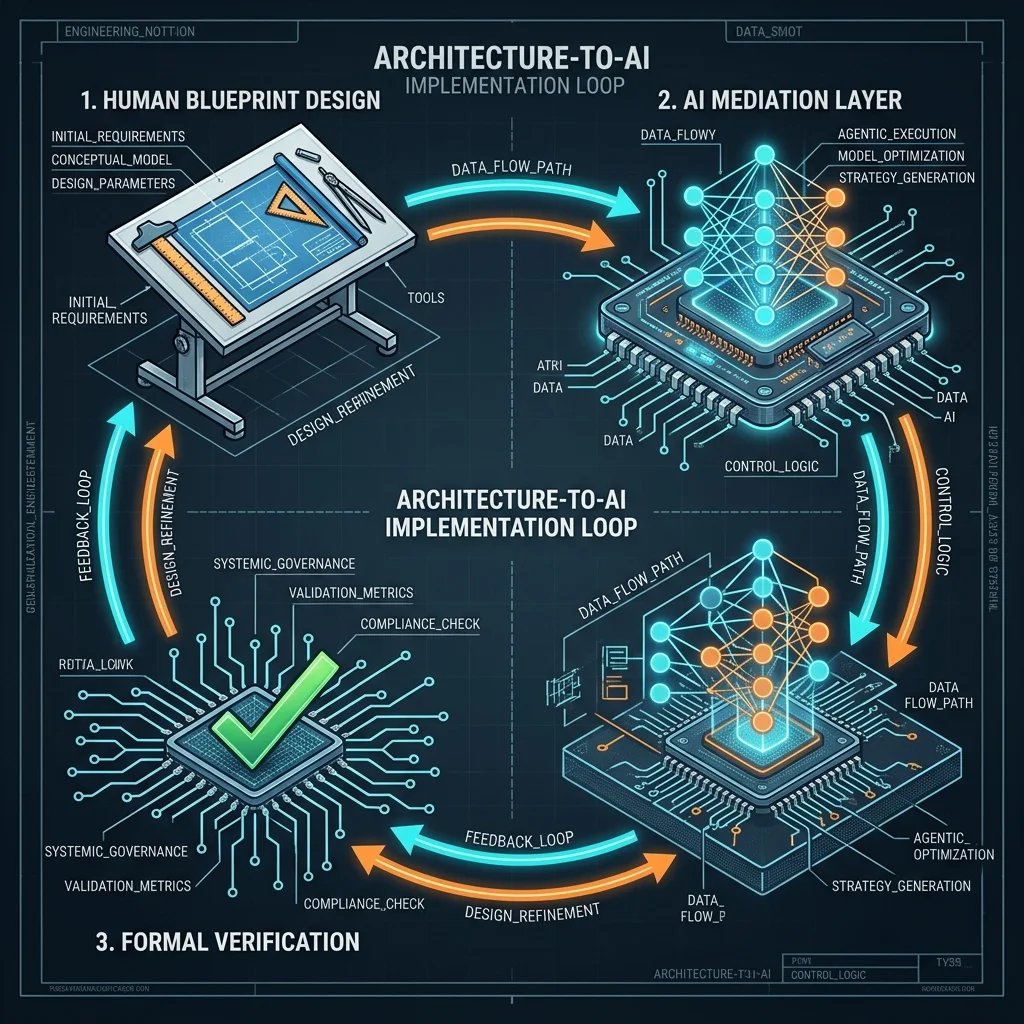
In 2026, we don't let code rot. Senior engineers use AI to perform Continuous Structural Audits. Every night, an AI agent reviews the day's commits and identifies where the "vibe" might have drifted from the "blueprint."
The Refactoring Loop:
- Detection: AI identifies a module that is becoming "chunky" or violating the Sovereign Stack boundaries.
- Proposal: AI generates 3 alternative refactoring paths based on established design patterns (e.g., Strategy, Factory, Observer).
- Audit: The human engineer reviews the proposals and selects the one that aligns with the long-term product vision.
- Execution: AI executes the refactor across the entire codebase, including updating all related tests.
10. Case Study: The $10M Vibe Collapse (2025)
To understand why the "Sovereign Stack" became mandatory, we must look at the "FinTech Crash of late 2025." A mid-sized digital bank used a "Vibe-First" approach to build their new automated loan approval system.
The developers used high-speed prompting to generate the risk-assessment engine. The code passed 99% of its unit tests. However, because no human had designed the underlying state machine, a subtle "Logical Hallucination" was baked into the code: the system incorrectly calculated interest rates for users with hyphenated last names due to a regex error that the AI generated and the humans never caught.
The Result: Over $10M in lost revenue and a massive regulatory fine. This event was the "Enron moment" for Vibe Coding, leading to the strict architectural standards we see today.
11. The Sovereign Stack Audit Checklist
When reviewing AI-generated code in 2026, Senior Engineers use a specialized checklist. If a commit doesn't pass these five points, it is rejected, regardless of whether it "works."
- Interface Stability: Does the generated code strictly adhere to the pre-defined interfaces? Or did the AI "hallucinate" a new convenience method that bypasses the architectural boundary?
- State Purity: Is the state management predictable? Vibe-coded functions often introduce "Hidden State" (side effects) that make debugging impossible.
- Complexity Audit: Is the logic unnecessarily complex? AI often generates "clever" but unreadable code. The Sovereign rule is: "If a human can't explain the logic in 30 seconds, the AI must rewrite it."
- Dependency Lock: Did the AI introduce any new external packages or "magic" libraries without explicit approval?
- Security Provenance: Can we trace the data flow from input to output without any "black box" logic segments?
12. Beyond Cursor: Custom Agent Orchestrators
While tools like Cursor were the gateway, the 2026 engineer uses Autonomous Agent Swarms. These are custom orchestrators that manage multiple LLMs simultaneously.
- The Architect Agent: Analyzes the task and produces the system design.
- The Implementation Agent: Writes the code based on the design.
- The Red-Team Agent: Specifically tries to find security flaws or logic gaps in the Implementation Agent's output.
- The Sovereign Governor: The human engineer who sits at the top of this hierarchy, providing the final approval for every major structural change.
13. The Rise of the Logic Prover
In 2026, we have moved beyond unit tests. Senior engineers now use Formal Verification—a mathematical approach to proving that a piece of code behaves exactly as specified.
Previously reserved for high-stakes aerospace and medical software, Logic Provers have become mainstream thanks to AI. An engineer defines the "Invariants" (rules that must always be true) of a module, and the AI uses a logic prover (like TLA+ or specialized LLM-mediated provers) to verify that no execution path can violate those rules.
This is the ultimate "Audit Point" in the Sovereign Stack. It moves us from "It seems to work" to "It is mathematically proven to work."
14. The Rise of the "Architectural Guardrail"
The most advanced teams in 2026 use .agents/rules.md and custom linting rules to enforce architectural integrity automatically. If an AI (or a human) tries to push code that bypasses a defined repository boundary, the CI/CD pipeline blocks it.
This is the ultimate evolution of the "Sovereign Stack." We have built a system where the AI is physically unable to "vibe" its way into technical debt because the Structural Guardrails are encoded into the repository's DNA.
14. The Return of the Specialist
One of the most surprising trends of 2026 is the "Return of the Specialist." In the Vibe Coding era, everyone became a generalist because the AI could "do everything." However, as systems became more complex and fragile, the market realized it needed deep expertise to audit the AI's output in niche domains.
We are seeing a surge in demand for:
- Performance Specialists: Engineers who can look at 5,000 lines of AI-generated SQL and identify the one missing index that will save $50k/month in cloud costs.
- Security Architects: Experts who can find the "Logic Flaws" that standard AI scanners miss.
- Context Engineers: A new role focused entirely on optimizing the data fed into AI models to ensure the highest fidelity of code generation.
15. Global Certification: The 'Sovereign-Ready' Standard
By mid-2026, several industry consortiums have launched the "Sovereign-Ready" certification. Unlike traditional coding bootcamps, these certifications focus on:
- System Design & Modeling.
- AI Audit Protocols.
- Risk Management in Automated Pipelines.
- Ethical AI Implementation.
Holding this certification is now a prerequisite for senior roles at major tech firms, signaling that the engineer is capable of leading an AI-mediated team without falling into the "Vibe Trap."
16. 2027–2035 Roadmap: The Long-Term Evolution
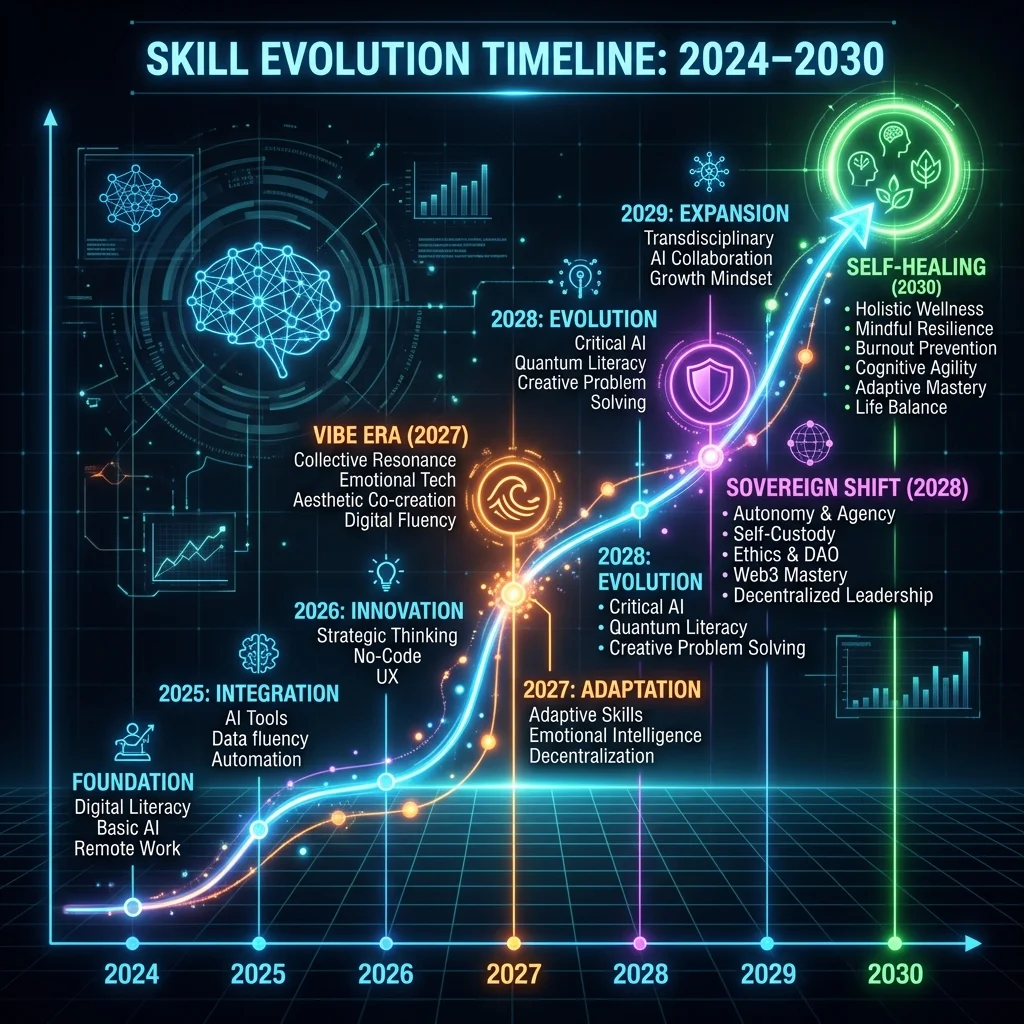
The definition of a "Senior Engineer" will continue to evolve as we approach the 2030s.
- 2027: Seniority is defined by Context Orchestration—the ability to manage massive AI contexts across distributed teams without losing system coherence.
- 2028: The rise of Autonomous Refactoring. AI systems maintain the health of the codebase, but humans must set the "architectural guardrails." The job is now 90% audit and 10% design.
- 2030: Systems are Self-Healing. The engineer's primary job is to define the business intent and safety protocols in high-level DSLs.
- 2035: Cognitive Partnership. The boundary between the engineer and the machine is nearly invisible. We design software by "thinking at the system level," and the machine materializes that thought with perfect structural integrity.
17. Expert Insight: The Future of Cognitive Labor
By Vatsal Shah
"Vibe coding was a necessary phase of rapid AI experimentation. It taught us what AI can do, but it also taught us what it shouldn't do alone. In the Sovereign era, your value as an engineer is no longer your ability to write code—AI is better and faster at that. Your value is your ability to Verify Intelligence. If you can't audit the AI, you are its servant. If you can architect the system and hold the AI to that standard, you are its master. Stop vibing; start architecting."
Frequently Asked Questions (FAQ)
Q: Is vibe coding okay for personal projects or MVPs?
A: Yes, for rapid prototyping where long-term maintainability is not a priority, vibe coding is an excellent tool. However, it should never be the foundation for a scaling product.
Q: How do I transition from vibe coding to the Sovereign Stack?
A: Start by learning to design systems before you prompt. Use tools like Mermaid.js or Excalidraw to map your architecture first. Study classical design patterns (SOLID, Clean Architecture) as they are more relevant than ever for auditing AI.
Q: Does the Sovereign Stack slow down development?
A: Initially, yes. But it prevents the "Technical Debt Wall" that vibe-coded projects hit after 3-6 months, saving hundreds of hours in the long run.
Q: Can AI assistants learn to architect by themselves?
A: AI can suggest patterns, but the high-level decision-making—considering business constraints, team skills, and long-term vision—remains a human-centric skill in 2026.
Q: What tools are best for Sovereign Stack development?
A: Tools that allow for precise context control, such as Cursor with custom .cursorrules or agents using the Model Context Protocol (MCP).
Q: What is the most common mistake in AI coding today?
A: Over-reliance. Many developers assume that if the code 'works' (passes immediate tests), it is correct. This ignores the structural health of the codebase.
Q: Will Junior developers disappear in 2026?
A: No, but the "Junior" role is changing. They are no longer "syntax writers"; they are "Agent Operators." The bar for entry has risen—even a Junior must understand the basics of architecture to be useful.
Q: Is there any risk of AI-generated code creating a 'Black Box'?
A: Yes, this is exactly what the Sovereign Stack aims to prevent. By enforcing modularity and clean interfaces, we ensure that every part of the system remains transparent and auditable by humans. Transparency is the antidote to the "Black Box" problem.
Q: How does the Sovereign Stack handle legacy code?
A: We treat legacy code as a "Black Box" that needs to be gradually wrapped in Sovereign Adapters. You don't rewrite it all at once; you build a Sovereign interface around it and slowly migrate the logic using AI-mediated refactoring agents.
Q: What is the most important skill for a developer in 2026?
A: The ability to decompose complex problems into small, auditable, and mathematically sound components. If you can't break down the problem, the AI can't help you build a Sovereign solution. Critical thinking is the ultimate developer tool.
Q: How do you measure 'Structural Health' in an AI codebase?
A: We look at the "Coupling Density" and "Hallucination Risk Score." High coupling between unrelated modules is a sign of vibe-coded debt. A high risk score occurs when the AI generates logic that doesn't map to a pre-defined architectural blueprint.


