STRATEGIC OVERVIEW
Practitioner breakdown of Sovereign Value Chain: Rebuilding Global Supply Chains on Private Distributed Ledgers — written for CTOs, VP Engineering, and India GCC leads shipping production AI with measurable ROI.
1. The Modern Value Chain Crisis and the Fallacy of Public Architectures
Global supply chains in 2026 operate under a state of permanent volatility. The traditional model of globalized, just-in-time manufacturing has been replaced by regionalization, near-shoring, and high-frequency supply realignment. However, the software platforms managing these assets remain dangerously centralized or inappropriately exposed.
Enterprises relying on public cloud ERP instances or shared public blockchain networks face three systemic vulnerabilities:
- The Metadata Leaks: In a public blockchain architecture, even if transaction payloads are encrypted, metadata such as transaction frequency, block timing, contract addresses, and network routing reveals critical commercial intelligence. Competitors can map vendor relationships, inventory cycles, and regional bottlenecks simply by analyzing on-chain message patterns.
- Variable Economic Overhead: The fluctuating cost of gas and network fees on public networks makes transaction pricing unpredictable. A sudden spike in public network traffic can delay critical customs filings or shipping releases, creating compounding bottlenecks at physical ports.
- Data Residency and Jurisdiction Conflicts: Regional frameworks (such as the EU Data Sovereignty Acts and the US regional supply preservation laws) mandate that critical shipping, identity, and inventory records remain within geographical boundaries. A shared public network that replicates data across nodes worldwide violates these laws by default.
Reclaiming the Sovereign Value Chain
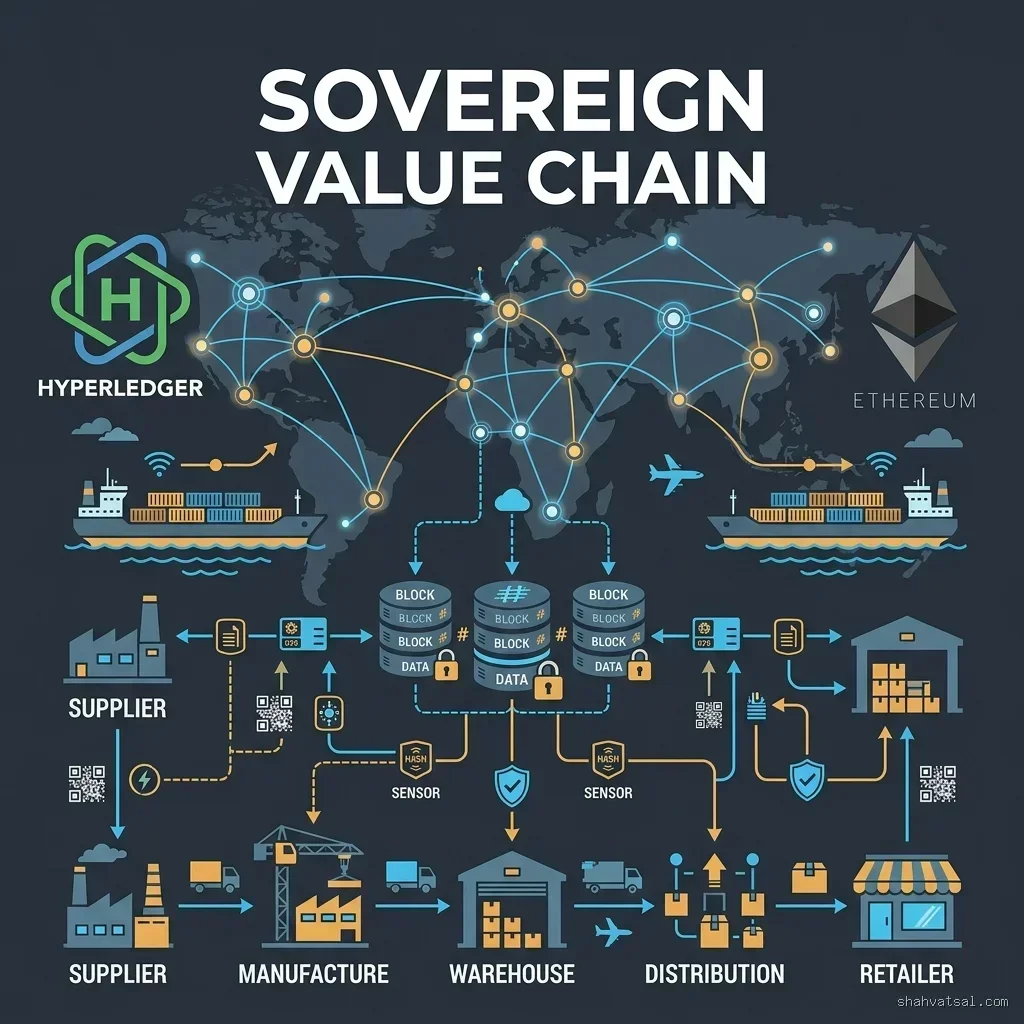
To survive, enterprise supply chains are shifting toward the Sovereign Value Chain model. By utilizing private distributed ledgers, organizations maintain absolute control over who participates in the network, where data is physically replicated, and how consensus is validated.
This model treats DLT not as a public open ledger, but as a secure, distributed, and multi-party state machine designed to coordinate transactional agreements across trust boundaries.
2. Private Distributed Ledgers (DLTs) vs. Traditional Databases
Enterprise systems have long relied on centralized databases (ERPs) to track goods. However, in a multi-party value chain, a centralized database owned by one organization is a point of friction. Partners must continuously reconcile their local records against the operator's database, leading to disputes, delayed shipments, and operational silos.
Private DLTs solve this by providing a shared, immutable database where every party operates a local node. Every transaction must be cryptographically signed by the originating party and validated by the network's consensus rules before it is written to the ledger.
| Feature | Centralized ERP (SAP / Oracle) | Public Blockchain (Ethereum / Polygon) | Private Distributed Ledger (Hyperledger / Private EVM) |
|---|---|---|---|
| Trust Model | Centralized authority; single point of failure | Trustless, open validation | Permissioned network; cryptographically verified partners |
| Data Privacy | High (siloed), but zero external transparency | Low (publicly readable metadata and address logs) | High (fine-grained access control, private channels) |
| Transaction Fees | Low (internal database writes) | High and variable (gas spikes during network congestion) | Zero or fixed (resource-based internal allocation) |
| Consensus Speed | Sub-millisecond (single server) | Variable (seconds to minutes, subject to congestion) | Deterministic (milliseconds, calibrated to node count) |
| Data Sovereignty | Siloed to the cloud host | Non-existent (global replication by design) | Strict (nodes geographically anchored and regulated) |
The Integration Layer
Private DLTs do not replace ERPs. Instead, they act as an immutability layer between disparate ERP instances. For example, when a supplier marks a shipment as "shipped" in their SAP instance, an event listener pushes a signed transaction to the private ledger.
The buyer's Oracle ERP detects this transaction, verifies the cryptographic proof of origin, and automatically initiates receiving preparations.
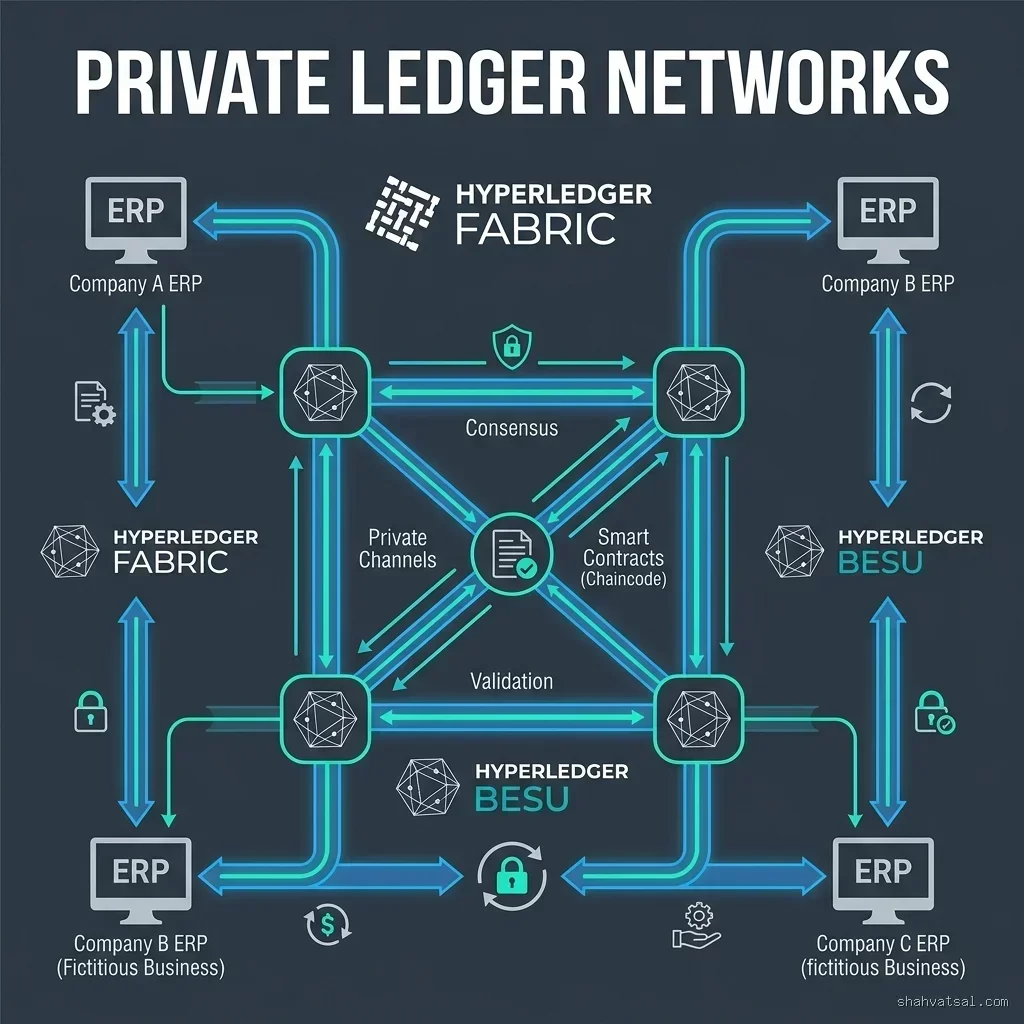
3. Enterprise DLT Mesh Topologies: Nodes and Gateway Segments
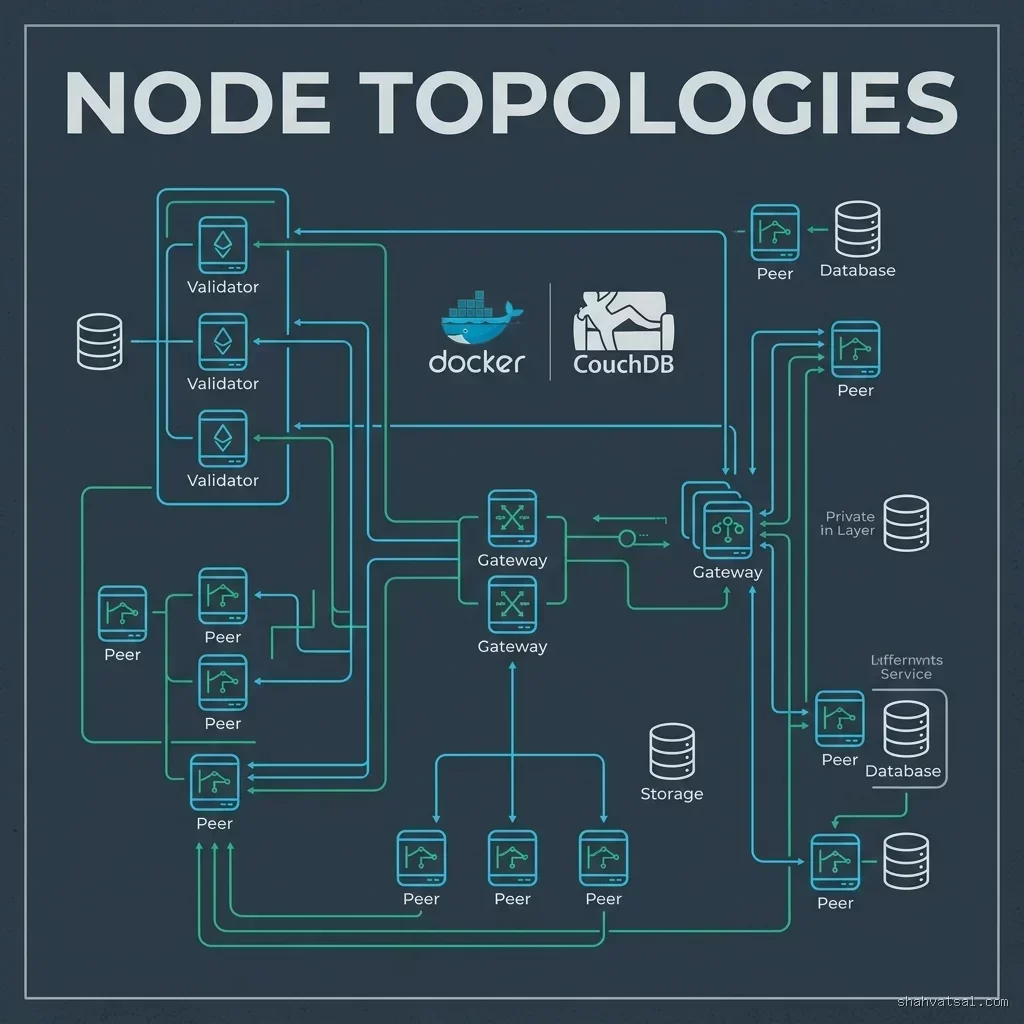
A resilient Sovereign Value Chain requires a distributed node topology that matches the physical footprint of the supply chain. Rather than running all ledger infrastructure in a single cloud region, nodes are deployed across diverse environments, including private colocation facilities, regional cloud regions, and edge gateways at logistics hubs.
Node Roles in Private Networks
Within a private DLT mesh, nodes are categorized based on their roles:
- Validator/Consensus Nodes: Responsible for grouping transactions into blocks and validating them against system rules. These are operated by the anchor participants of the network (e.g., manufacturers, major distributors, and customs authorities).
- Peer Nodes: Maintain a local copy of the ledger database and execute smart contracts. These are run by suppliers, carriers, and warehouse operators to read/write transactions locally.
- Observer/Auditor Nodes: Have read-only access to specific ledger channels. These are utilized by regulatory bodies, tax authorities, or financial auditors to verify compliance in real-time without modifying the state.
Regional Gateway Segments
To maintain local compliance and low latency, networks utilize Regional Gateway Segments. A regional gateway serves as the security boundary for a specific jurisdiction.
For instance, all nodes operating within the European Union route their transactions through a localized gateway that enforces GDPR compliance, stripping any PII (Personally Identifiable Information) before syncing transaction proofs with the global network.
Practitioner Insight: The Data Sovereignty Sandbox
When architecting supply chain networks across the US-EU-Asia corridors, we often encounter conflicting data localization rules. The solution is not to split the database, but to utilize Private Channels (such as Hyperledger Fabric Channels or Private EVM Subnets).
By keeping physical shipping documents on local storage (anchored to a regional colocation facility) and writing only the cryptographic hash of the document to the shared ledger, you achieve compliance with both local laws and global visibility requirements.
4. Cryptographic Proof Loops and Physical-to-Digital Twin Mapping
A ledger is only as reliable as the data entered into it. In supply chain management, this is known as the "Garbage In, Garbage Out" problem. If a bad actor logs a fraudulent shipment on an immutable ledger, the record of that fraud becomes permanent, but the physical goods are still missing.
To bridge the gap between physical reality and digital records, Sovereign Value Chains use Cryptographic Proof Loops and Digital Twins.
Mappings of Physical Assets
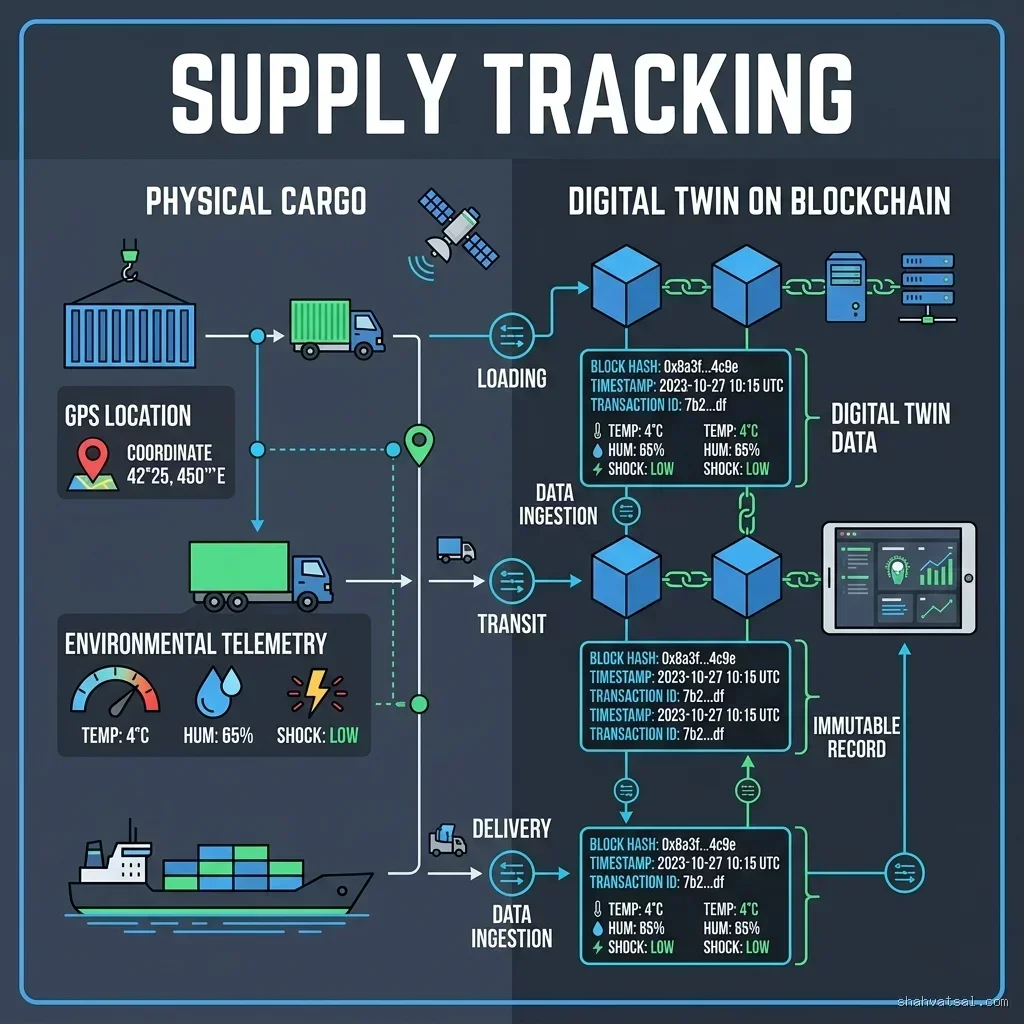
Every raw material, batch, or finished good is mapped to a unique Digital Twin on the ledger. This digital twin is a state machine that tracks:
- Current Custody: The identity of the wallet currently holding the digital twin.
- Geographical Location: Cryptographically signed GPS coordinates from tracking devices.
- Environmental Telemetry: Ambient logs (temperature, humidity, shock) recorded by IoT sensors.
Edge Verification Loops
When a container moves from a carrier to a warehouse, a verification loop is initiated. The carrier signs a "handover" transaction using their private key. The warehouse scanner scans the physical asset's cryptographic tag (RFID/NFC) and signs the "receipt" transaction.
Only when both signatures and the matching IoT telemetry are verified does the ledger update the digital twin's state. If a temperature breach occurred during transit, the smart contract flags the asset automatically, halting the workflow before the goods enter inventory.
5. Smart Contracts in Private Networks: Compliance and Multi-Party Execution
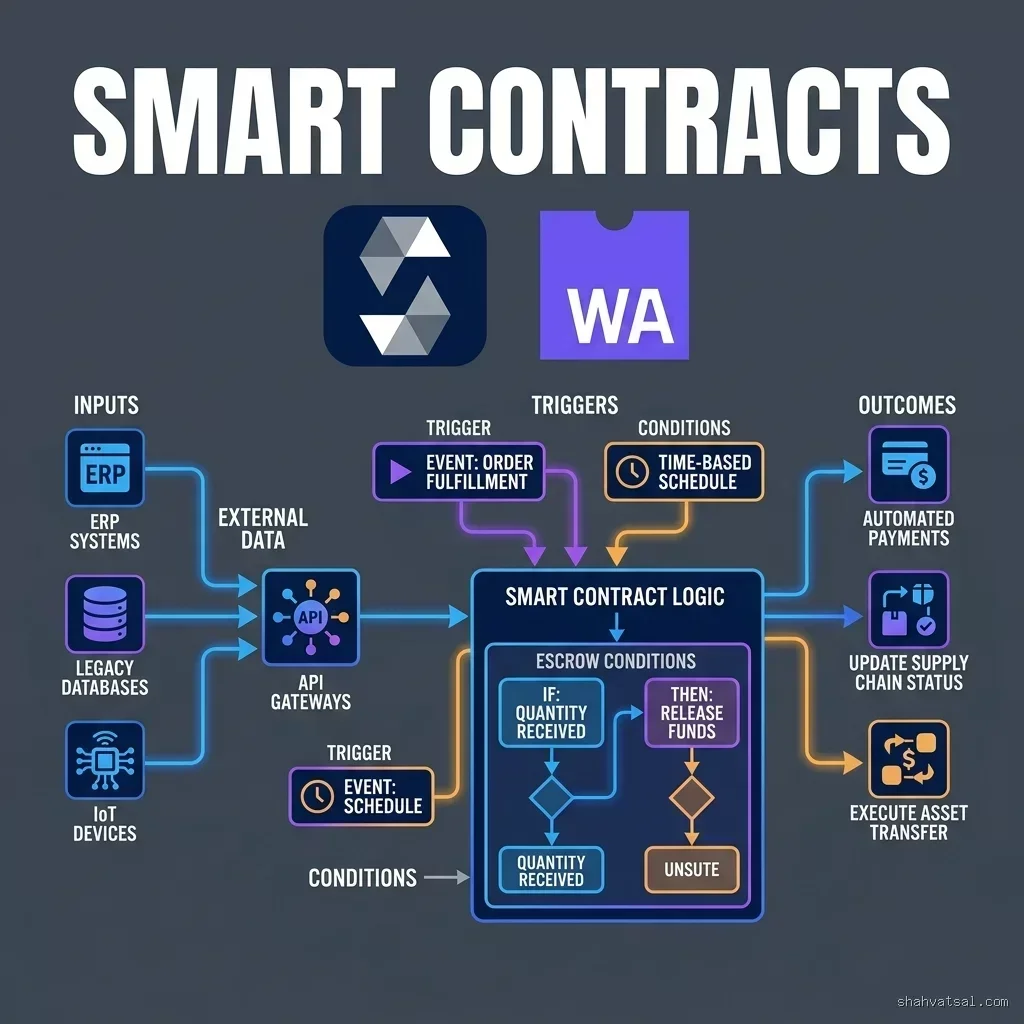
In a Sovereign Value Chain, business logic is encoded directly into Smart Contracts that execute automatically on the ledger nodes. This eliminates manual invoicing, auditing delays, and payment disputes.
Core Automation Use Cases
- Automated Escrow and Payment: Upon verification of delivery (completed via the cryptographic proof loop), a smart contract automatically triggers an outbound API call to a corporate banking network, initiating payment settlement within minutes instead of standard 90-day cycles.
- Customs and Compliance Filings: As goods cross regional borders, smart contracts assemble the required origin certificates, customs declarations, and tax records directly from the ledger history, signing and presenting them to customs portals automatically.
- Dynamic Penalties: If a carrier fails to deliver a shipment within a SLA-specified window, the smart contract calculates the delay fee and automatically deducts it from the payout escrow, ensuring instant financial accountability.
Sandboxed Isolation
To prevent bad code from compromising the network, smart contracts execute within secure, sandboxed runtimes (such as WebAssembly isolates or EVM micro-VMs). These runtimes restrict contract operations, ensuring they cannot read local host files, make unauthorized network requests, or exhaust node memory.
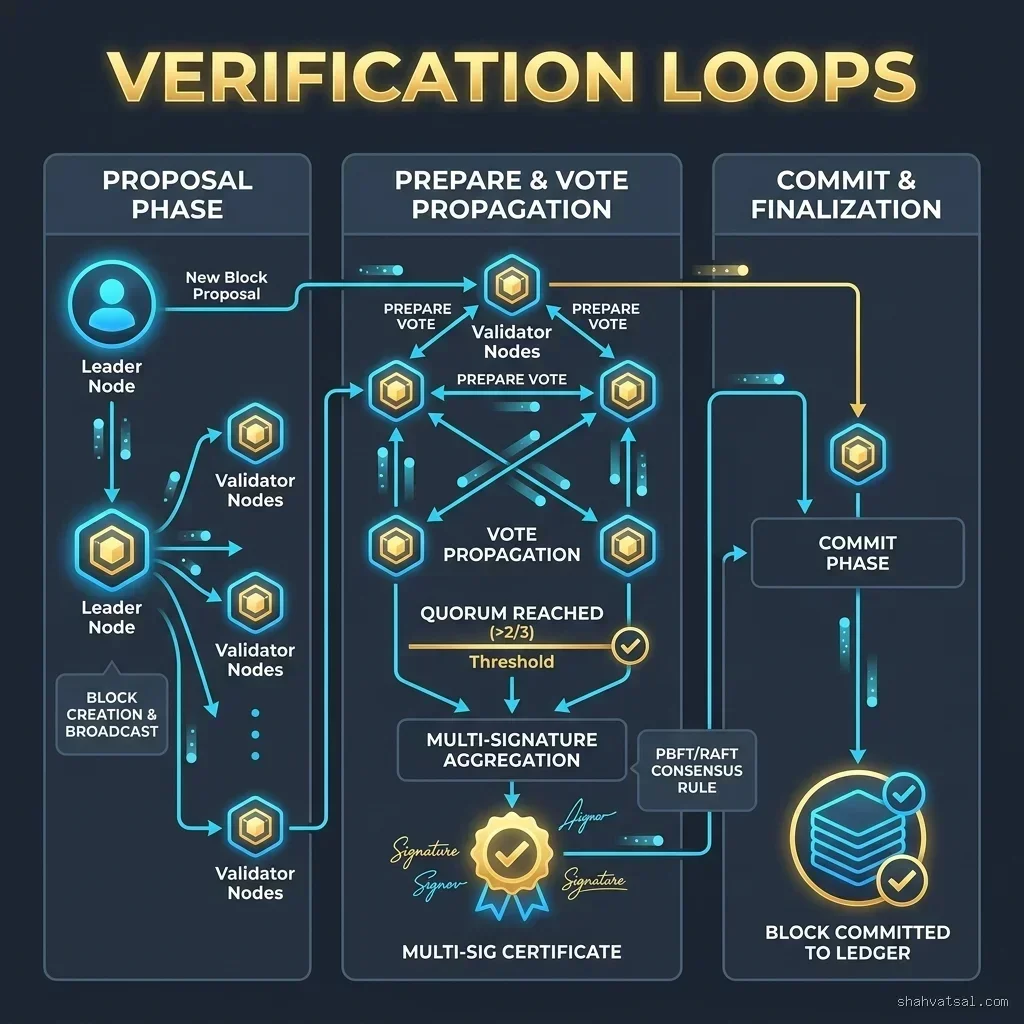
6. Consensus Security and Multi-Hop Verification Loops
In private distributed ledgers, consensus does not require energy-intensive Proof-of-Work (PoW) or speculative Proof-of-Stake (PoS) models. Because all network participants are known and authorized, consensus mechanisms are built for speed, determinism, and high throughput.
Enterprise Consensus Protocols
The three primary protocols used in Sovereign Value Chains are:
- Raft: A crash-fault-tolerant (CFT) consensus engine. It is exceptionally fast and suitable for networks where all parties are mutually cooperative but require a single, verified timeline (e.g., internal business units of a single multinational).
- Practical Byzantine Fault Tolerance (PBFT): A consensus mechanism that tolerates up to one-third of the validator nodes behaving maliciously or failing. It requires multiple rounds of voting, making it ideal for consortium networks with competing parties.
- QBFT (Istanbul BFT variant): An enterprise-grade, round-robin consensus algorithm designed for high transaction rates, featuring rapid block finality and low CPU overhead.
Multi-Hop Verification Loops
For complex global routes, transactions must pass through multiple validation hops. For instance, a shipment traveling from Germany to the United States requires validation from the exporting warehouse, the logistics provider, regional customs, the shipping line, and the receiving hub.
Each hop signs the transaction state, building a cryptographic chain of custody that cannot be altered or bypassed retrospectively.
7. Implementation Playbook: Setup, Configurations, and Code
To demonstrate how a Sovereign Value Chain operates, this section provides the configuration files and smart contract logic required to establish a secure transaction ledger for multi-party asset tracking.
Node Configuration (docker-compose.yml)
Below is the deployment blueprint for a local peer node in a private Hyperledger Fabric network. This node runs on local secure hardware, maintaining its database on a private volume.
version: &class="tok-cm">#039;3.8'

services:
  peer0.supplier.sovereign-supply.com:
    image: hyperledger/fabric-peer:2.5.6
    container_name: peer0.supplier.sovereign-supply.com
    environment:
      - CORE_VM_ENDPOINT=unix:class="tok-cm">///host/var/run/docker.sock
      - CORE_VM_DOCKER_HOSTCONFIG_NETWORKMODE=sovereign_supply_mesh
      - FABRIC_LOGGING_SPEC=INFO
      - CORE_PEER_TLS_ENABLED=true
      - CORE_PEER_PROFILE_ENABLED=false
      - CORE_PEER_TLS_CERT_FILE=/etc/hyperledger/fabric/tls/server.crt
      - CORE_PEER_TLS_KEY_FILE=/etc/hyperledger/fabric/tls/server.key
      - CORE_PEER_TLS_ROOTCERT_FILE=/etc/hyperledger/fabric/tls/ca.crt
      - CORE_PEER_ID=peer0.supplier.sovereign-supply.com
      - CORE_PEER_ADDRESS=peer0.supplier.sovereign-supply.com:7051
      - CORE_PEER_LISTENADDRESS=0.0.0.0:7051
      - CORE_PEER_CHAINCODEADDRESS=peer0.supplier.sovereign-supply.com:7052
      - CORE_PEER_CHAINCODELISTENADDRESS=0.0.0.0:7052
      - CORE_PEER_GOSSIP_BOOTSTRAP=peer1.supplier.sovereign-supply.com:7051
      - CORE_PEER_GOSSIP_EXTERNALENDPOINT=peer0.supplier.sovereign-supply.com:7051
      - CORE_PEER_LOCALMSPID=SupplierMSP
      - CORE_PEER_MSPCONFIGPATH=/etc/hyperledger/fabric/msp
      - CORE_LEDGER_STATE_STATEDATABASE=CouchDB
      - CORE_LEDGER_STATE_COUCHDBCONFIG_COUCHDBADDRESS=couchdb0.supplier.sovereign-supply.com:5984
    volumes:
      - /var/run/:/host/var/run/
      - ./organizations/peerOrganizations/supplier.sovereign-supply.com/peers/peer0.supplier.sovereign-supply.com/msp:/etc/hyperledger/fabric/msp
      - ./organizations/peerOrganizations/supplier.sovereign-supply.com/peers/peer0.supplier.sovereign-supply.com/tls:/etc/hyperledger/fabric/tls
      - peer0.supplier.sovereign-supply.com:/var/hyperledger/production
    working_dir: /opt/gopath/src/github.com/hyperledger/fabric/peer
    command: peer node start
    ports:
      - 7051:7051
    networks:
      - sovereign_supply_mesh

  couchdb0.supplier.sovereign-supply.com:
    image: couchdb:3.3.2
    container_name: couchdb0.supplier.sovereign-supply.com
    environment:
      - COUCHDB_USER=admin
      - COUCHDB_PASSWORD=SecurePrivatePassword2026!
    volumes:
      - couchdb0_data:/opt/couchdb/data
    networks:
      - sovereign_supply_mesh

volumes:
  peer0.supplier.sovereign-supply.com:
  couchdb0_data:

networks:
  sovereign_supply_mesh:
    name: sovereign_supply_mesh
Multi-Party Asset Tracking Smart Contract (Solidity)
This smart contract manages the lifecycle of physical assets on a private EVM network (such as Quorum or Hyperledger Besu). It enforces validation signatures from carriers and receivers, automating compliance flags if temperatures cross safety margins.
class="tok-cm">// SPDX-License-Identifier: MIT
pragma solidity ^0.8.20;

contract SovereignValueChain {
    enum AssetState { Created, InTransit, Delivered, Flagged }

    struct EnvironmentalLog {
        uint256 timestamp;
        int256 temperature;
        int256 humidity;
        string location;
    }

    struct Asset {
        string assetId;
        string description;
        address owner;
        address supplier;
        address carrier;
        address receiver;
        AssetState state;
        int256 maxTempLimit;
        int256 minTempLimit;
        EnvironmentalLog[] logs;
    }

    mapping(string => Asset) private assets;
    mapping(address => bool) public authorizedValidators;

    event AssetCreated(string assetId, address supplier, address receiver);
    event AssetHandover(string assetId, address carrier, AssetState state);
    event AssetTelemetryLogged(string assetId, int256 temp, int256 humidity, string location);
    event AssetDelivered(string assetId, address receiver, bool flagged);

    modifier onlyAuthorized() {
        require(authorizedValidators[msg.sender], class="tok-str">"SVC-001: Caller not an authorized validator node");
        _;
    }

    constructor() {
        authorizedValidators[msg.sender] = true;
    }

    class="tok-kw">function addValidator(address validator) external onlyAuthorized {
        authorizedValidators[validator] = true;
    }

    class="tok-kw">function createAsset(
        string memory _assetId,
        string memory _description,
        address _receiver,
        int256 _minTemp,
        int256 _maxTemp
    ) external {
        require(assets[_assetId].supplier == address(0), class="tok-str">"SVC-002: Asset already exists on ledger");

        Asset storage newAsset = assets[_assetId];
        newAsset.assetId = _assetId;
        newAsset.description = _description;
        newAsset.owner = msg.sender;
        newAsset.supplier = msg.sender;
        newAsset.receiver = _receiver;
        newAsset.state = AssetState.Created;
        newAsset.minTempLimit = _minTemp;
        newAsset.maxTempLimit = _maxTemp;

        emit AssetCreated(_assetId, msg.sender, _receiver);
    }

    class="tok-kw">function assignCarrier(string memory _assetId, address _carrier) external {
        Asset storage asset = assets[_assetId];
        require(msg.sender == asset.supplier || msg.sender == asset.owner, class="tok-str">"SVC-003: Not authorized to assign carrier");
        require(asset.state == AssetState.Created, class="tok-str">"SVC-004: Asset must be in Created state");

        asset.carrier = _carrier;
        asset.state = AssetState.InTransit;

        emit AssetHandover(_assetId, _carrier, asset.state);
    }

    class="tok-kw">function logTelemetry(
        string memory _assetId,
        int256 _temp,
        int256 _humidity,
        string memory _location
    ) external {
        Asset storage asset = assets[_assetId];
        require(msg.sender == asset.carrier || authorizedValidators[msg.sender], class="tok-str">"SVC-005: Unauthorized telemetry log");
        require(asset.state == AssetState.InTransit, class="tok-str">"SVC-006: Asset is not currently in transit");

        EnvironmentalLog memory newLog = EnvironmentalLog({
            timestamp: block.timestamp,
            temperature: _temp,
            humidity: _humidity,
            location: _location
        });

        asset.logs.push(newLog);

        class="tok-kw">if (_temp > asset.maxTempLimit || _temp < asset.minTempLimit) {
            asset.state = AssetState.Flagged;
            emit AssetHandover(_assetId, asset.carrier, asset.state);
        }

        emit AssetTelemetryLogged(_assetId, _temp, _humidity, _location);
    }

    class="tok-kw">function confirmDelivery(string memory _assetId) external {
        Asset storage asset = assets[_assetId];
        require(msg.sender == asset.receiver, class="tok-str">"SVC-007: Only receiver can confirm delivery");
        require(asset.state == AssetState.InTransit || asset.state == AssetState.Flagged, class="tok-str">"SVC-008: Invalid state for delivery confirmation");

        bool hasBeenFlagged = (asset.state == AssetState.Flagged);
        class="tok-kw">if (!hasBeenFlagged) {
            asset.state = AssetState.Delivered;
            asset.owner = asset.receiver;
        }

        emit AssetDelivered(_assetId, msg.sender, hasBeenFlagged);
    }

    class="tok-kw">function getAssetDetails(string memory _assetId) external view returns (
        string memory description,
        address supplier,
        address carrier,
        address receiver,
        AssetState state,
        uint256 totalLogs
    ) {
        Asset storage asset = assets[_assetId];
        class="tok-kw">return (
            asset.description,
            asset.supplier,
            asset.carrier,
            asset.receiver,
            asset.state,
            asset.logs.length
        );
    }

    class="tok-kw">function getTelemetryLog(string memory _assetId, uint256 index) external view returns (
        uint256 timestamp,
        int256 temperature,
        int256 humidity,
        string memory location
    ) {
        Asset storage asset = assets[_assetId];
        require(index < asset.logs.length, class="tok-str">"SVC-009: Log index out of bounds");
        EnvironmentalLog storage log = asset.logs[index];
        class="tok-kw">return (log.timestamp, log.temperature, log.humidity, log.location);
    }
}
Conclusion: Resilient Value Chains for a Post-Cloud Era
In 2026, relying on standard cloud databases for multi-party coordination is no longer viable. As data localization mandates tighten and cloud egress costs grow, the Sovereign Value Chain offers a stable path forward.
By using private distributed ledgers, enterprises can automate multi-party compliance, secure their logistics networks from exposure, and transition from reactive oversight to proactive coordination. Reclaiming control of your value chain is not simply an IT upgrade; it is a critical strategy to preserve digital independence and build a resilient enterprise.
How does private DLT handle high transaction throughput (TPS) compared to traditional databases?
Private DLTs utilize fast, non-mining consensus algorithms like QBFT, which achieve transaction finality in milliseconds. By operating on permissioned, high-bandwidth nodes, enterprise consortia regularly process over 2,000 transactions per second (TPS). This is more than sufficient for global inventory updates, and scales horizontally across regional channels.
Is it possible to integrate private DLT networks with legacy mainframe systems?
Yes. Integration is typically handled through transaction queue middleware (like Apache Kafka or RabbitMQ) and secure API microservices. The middleware parses mainframe updates, wraps them in cryptographic signatures using the host node's hardware security module (HSM), and commits them to the private ledger.
How do private ledgers manage data pruning as the blockchain database grows?
Private DLT systems use State Database Pruning. While transaction history (the blockchain log) is stored sequentially, the current state of all digital twins is indexed in a standard database (like CouchDB). The history can be archived to secure, off-chain sovereign cold storage, keeping peer node databases small and fast.
How is identity managed on a private distributed network?
Enterprise networks use Public Key Infrastructure (PKI) and Decentralized Identifiers (DIDs). A central, consortium-approved Certificate Authority (CA) issues cryptographically signed x.509 certificates to each node. Only entities with a valid certificate are permitted to establish peer connections or sign transactions.
About the Author
Vatsal Shah is a principal Solutions Architect and the systems designer behind the Sovereign Industrial Blueprint. He specializes in building distributed DLT meshes, enterprise integration architectures, and resilient transaction networks for global manufacturing and logistics innovators. Vatsal advises global GCC nodes on security, cloud-independence, and deterministic ledger engineering.
Additional Intelligence Assets