EU Parliament Passes Digital Omnibus to Amend AI Act, Pushing High-Risk Deadlines
By Vatsal Shah · June 18, 2026 · Regulation · Source: European Parliament Press
AI SUMMARY
- On June 16, 2026, the European Parliament voted to adopt the EU Digital Omnibus AI Act 2026 amendments, reshaping the timeline and scope of the landmark AI regulation.
- The compliance deadline for standalone high-risk AI systems (Annex III) has been pushed to December 2, 2027, providing developer organizations an extra year to audit their models.
- For AI embedded in regulated products (such as medical devices or aviation), the deadline has been set to August 2, 2028.
- A new AI watermarking obligation requires all generated multimedia to carry cryptographic metadata indicators by December 2026.
- The amendments introduce a strict ban on nudifier apps and simplify compliance processes for SMEs via funded regulatory sandboxes.
- Organizations must align their internal auditing matrices to match these revised milestones to avoid heavy regulatory penalties.
What Happened
In a decisive session on June 16, 2026, the European Parliament approved the Digital Omnibus amendments to the EU AI Act. This legislative adjustment represents the most significant recalibration of enforcement timelines and compliance rules since the framework was originally finalized. Designed to address industry friction, implementation backlogs, and emerging technology threats, the Omnibus package changes key compliance milestones for both general-purpose and specialized artificial intelligence models.
The primary catalyst for these amendments was the technical and administrative bottleneck facing conformity assessment bodies (CABs) across member states. The original timelines threatened to freeze deployment pipelines for standalone high-risk AI models due to a shortage of certified auditors. By extending the standalone high-risk AI compliance deadline to December 2, 2027, the European Parliament has given the ecosystem needed breathing room, while concurrently introducing strict prohibitions and consumer protections.

Beyond scheduling adjustments, the vote added a strict ban on "nudifier" software and simplified compliance for Small and Medium-sized Enterprises (SMEs). The amendments now await final adoption by the European Council, which is expected to occur in the third quarter of 2026, followed by publication in the Official Journal of the European Union.
Recalibrating the Enforcement Timeline
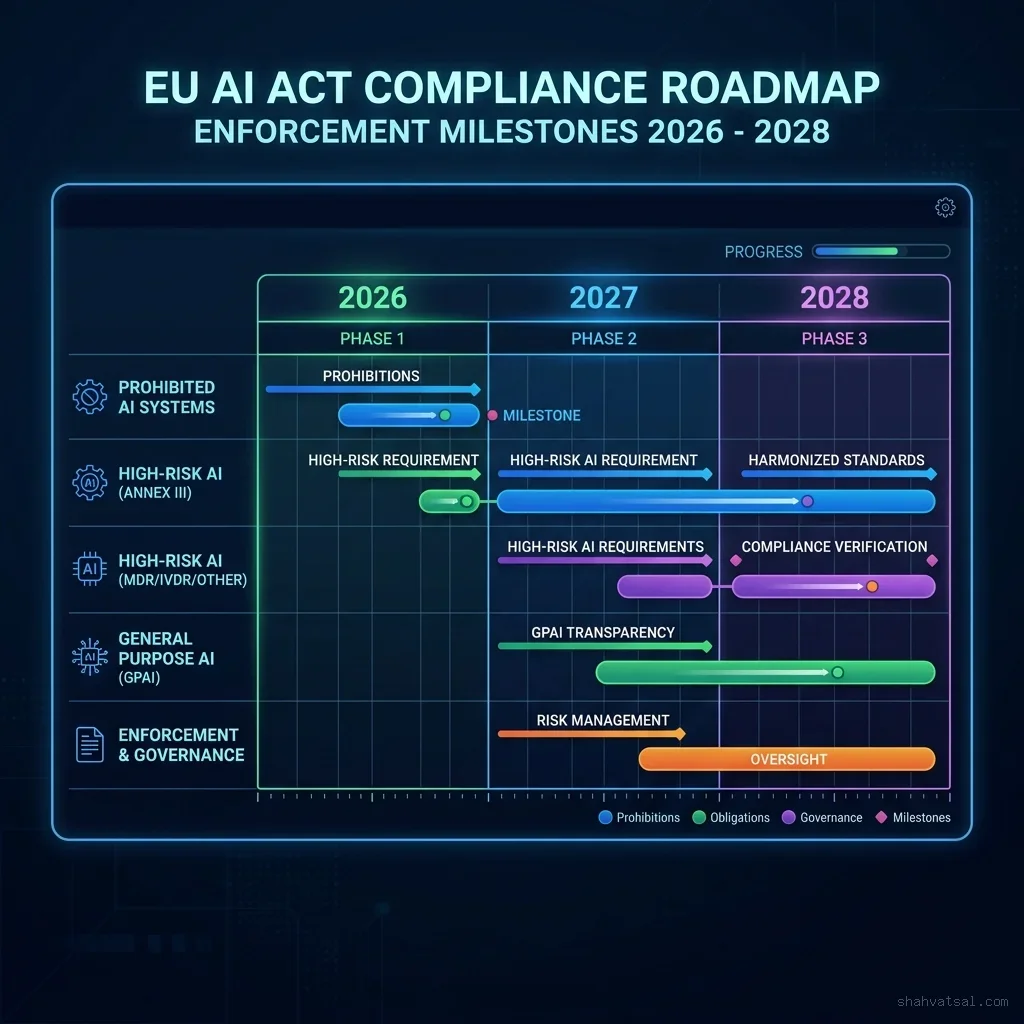
The defining impact of the EU Digital Omnibus AI Act 2026 is the restructuring of compliance deadlines. The legislation divides systems into standalone high-risk applications and embedded safety components, assigning distinct compliance paths to each.
Standalone High-Risk AI Systems (Annex III)
Standalone systems include AI models deployed in critical infrastructure, employment evaluation, credit scoring, law enforcement, and border control. Under the original Act, these systems were subject to strict audit obligations by late 2026. The new deadline is now set to December 2, 2027, granting developers a twelve-month extension to:
- Establish formal data governance and quality management systems.
- Document training pipelines, alignment steps, and logging features.
- Apply for third-party conformity audits where required.
Embedded Regulated Products
AI models that act as safety components in products already regulated under the EU's New Legislative Framework (NLF)—including civil aviation, marine equipment, automotive vehicles, and medical machinery—now face a compliance deadline of August 2, 2028. This delay allows regulatory bodies to align the AI Act’s conformity assessments with existing industry certifications, preventing redundant audits.
Prohibitions vs. Obligations: The Regulatory Balance
The Omnibus amendments clarify the distinction between absolute prohibitions and conditional compliance obligations. The legislation targets synthetic media threats while providing structural frameworks for standard deployments.
1. The Nudifier Ban
The most notable addition to the list of prohibited AI practices is the ban on nudifier apps. The amendment outlaws the development, distribution, and commercial use of AI tools designed to generate non-consensual synthetic nudity or sexual depictions. This ban targets deepfake technologies that manipulate personal imagery without consent. Under the revised rules, hosting providers, application marketplaces, and foundation model APIs must implement filters to prevent the execution of such generation tasks within European jurisdictions.
2. The AI Watermarking Obligation
By December 2026, developers of generative AI models (including text, audio, image, and video generators) must ensure their outputs carry detectable watermarks. These watermarks must be:
- Imperceptible: Invisible or inaudible to human users under normal consumption conditions.
- Robust: Resistant to simple deletion attacks, file compression, cropping, or format conversion.
- Standardized: Interoperable with detection engines developed by platforms, research bodies, and security tools.
This obligation aims to restore trust in digital media and prevent synthetic content from skewing public discourse or corporate communications. We analyzed the enterprise implications of managing such compliance indicators in our guide on Surviving Shadow AI & Architecting Enterprise Governance.

SME AI Compliance Simplification
Recognizing that strict regulatory compliance can place an outsized burden on startups and mid-market developers, the Digital Omnibus includes targeted simplifications for SMEs:
- Subsidized Sandboxes: Member states are now legally mandated to establish at least one operational regulatory sandbox by early 2027. SMEs and startups will receive priority access, allowing them to test and validate their models under the supervision of national authorities without fear of administrative fines.
- Standardized Templates: The European AI Office will release standardized documentation templates for risk assessment, technical logging, and conformity declarations. This reduces the need for expensive legal consulting during registration.
- Proportional Auditing Fees: Conformity assessment bodies must charge fees that scale proportionally to the developer's revenue and employee headcount, preventing compliance costs from bottlenecking startup innovation.
Comparative Deadlines: Original vs. Amended Timeline
To help compliance officers adjust their planning schedules, the table below compares the original timelines with the amended deadlines established by the Digital Omnibus:
| Regulatory Class | Original Deadline | Digital Omnibus Deadline | Key Action Required |
|---|---|---|---|
| Unacceptable Risk Banned Apps | November 2, 2024 | Immediate / June 2026 Addition | Audit APIs for deepfake or banned biometric filtering. |
| AI Watermarking Mandate | August 2, 2026 | December 2, 2026 | Integrate C2PA or cryptographic metadata watermarks. |
| Standalone High-Risk (Annex III) | August 2, 2026 | December 2, 2027 | Establish QA system, verify logs, register in EU DB. |
| Embedded Safety (NLF Products) | August 2, 2027 | August 2, 2028 | Coordinate compliance with primary NLF audit paths. |
Why It Matters
A Strategic Grace Period for Enterprise Tech
For multinational organizations, the extension to December 2027 is a significant operational relief. Many enterprises were facing the prospect of stalling their AI product rollouts in Europe due to a lack of clear compliance guidelines. This extra year provides time to implement the robust monitoring, logging, and data-lineage frameworks required by the law.
For an in-depth look at how these regulations interact with other jurisdictions, review the Great American AI Act & Federal Preemption analysis.
Restoring Trust in Generative Outputs
The December 2026 deadline for AI watermarking will drive rapid adoption of open metadata standards like C2PA (Coalition for Content Provenance and Authenticity). Organizations that deploy generative models internally or externally must integrate watermark injection pipelines into their rendering steps. This helps mitigate the risks discussed in the EU AI Act GPAI Enforcement & Governance updates.
What to Watch Next
- European Council Adoption: The final vote by the EU Council is scheduled for September 2026. While expected to pass smoothly, minor adjustments to fine calculation metrics may still occur.
- AI Office Guidance: The European AI Office is scheduled to publish draft guidelines on watermarking standards and verification procedures by January 2027.
- National Sandbox Launch: Look for individual member states to announce their sandbox registration portals and funding allocation programs throughout late 2026.
Source
European Parliament Press — Digital Omnibus AI Act Timeline Revisions (Jun 16, 2026)
Additional context: Sidley Austin Regulatory Update · DLA Piper Global AI Policy Tracker
Related on shahvatsal.com:
- EU AI Act GPAI Enforcement & Governance Timeline 2026
- Great American AI Act & Federal Preemption Revisions
- Surviving Shadow AI: Architecting Enterprise Governance