
STRATEGIC OVERVIEW
I led this program to 85% Autonomous Ticket Deflection. The Problem: The "RAG Ceiling" and Support Fatigue Our client sat at the center of a massive logistical web.
The Problem: The "RAG Ceiling" and Support Fatigue
Our client sat at the center of a massive logistical web. When a customer asked, "Where is my order?", the existing RAG-based chatbot would pull the generic shipping policy and tell them it takes 3-5 days.
This didn't solve the customer's problem. The customer wanted to know their specific order status, why it was delayed in the Tokyo hub, and if they could change the delivery address.
We identified three structural failures in the "Old AI" approach:
- Passive vs. Active AI: The system could only read information; it lacked the "agency" to perform actions (like updating a database or re-routing a shipment).
- Context Fracture: In complex queries, the LLM would lose track of the user's ultimate goal while navigating through different chunks of text.
- The "Black Box" Handoff: When the bot failed, it dumped the user into a human queue without any context, forcing the user to repeat their entire story.
The Strategic Solution: Multi-Agent Orchestration Mesh
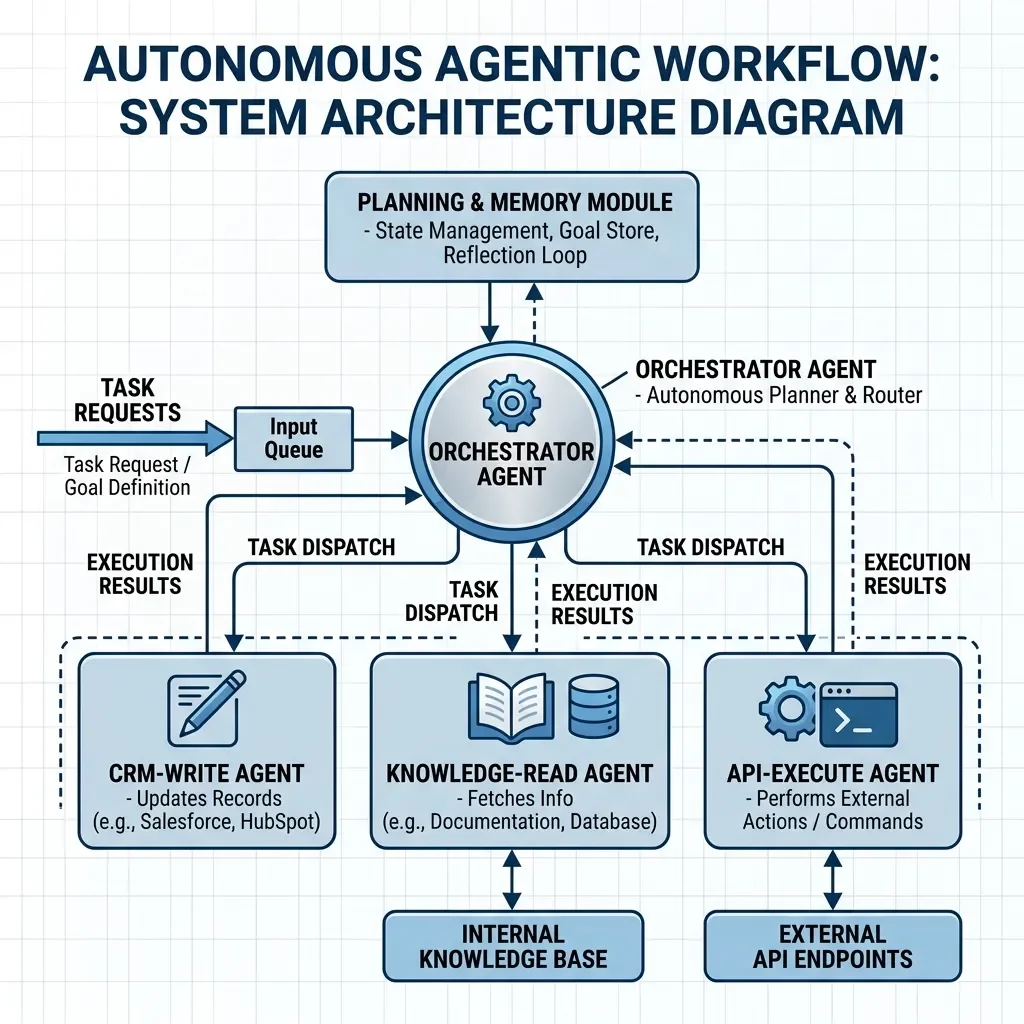
We re-architected the entire support surface area using an Agentic Swarm Pattern. Instead of one large model trying to be everything, we created a hierarchy of specialized agents governed by a central Orchestrator.
1. The Conductor Pattern (Orchestration)
At the heart of the stack is the Orchestrator Agent. Think of this as the "Air Traffic Controller." It doesn't write to the CRM or read the FAQ; its sole job is to Plan and Route.
- Step A: Analyze intent and sentiment.
- Step B: Decompose the task into sub-steps (e.g., 'Verify User', 'Check Inventory', 'Initiate Refund').
- Step C: Delegate to specialized worker agents and consolidate the final response.
2. Specialized Worker Agents (The Workforce)
We built four primary "Workers," each with its own specific toolset and prompt constraints:
- The Triage Agent: Identifies intent, language, and urgency.
- The Logistics Agent: Has read/write access to the shipping API. It can track, hold, or re-route packages.
- The Billing Agent: Securely interacts with Stripe/Stedi to verify transactions and process refunds within policy.
- The Knowledge Agent: Performs advanced "Graph-RAG" lookups on company policies.
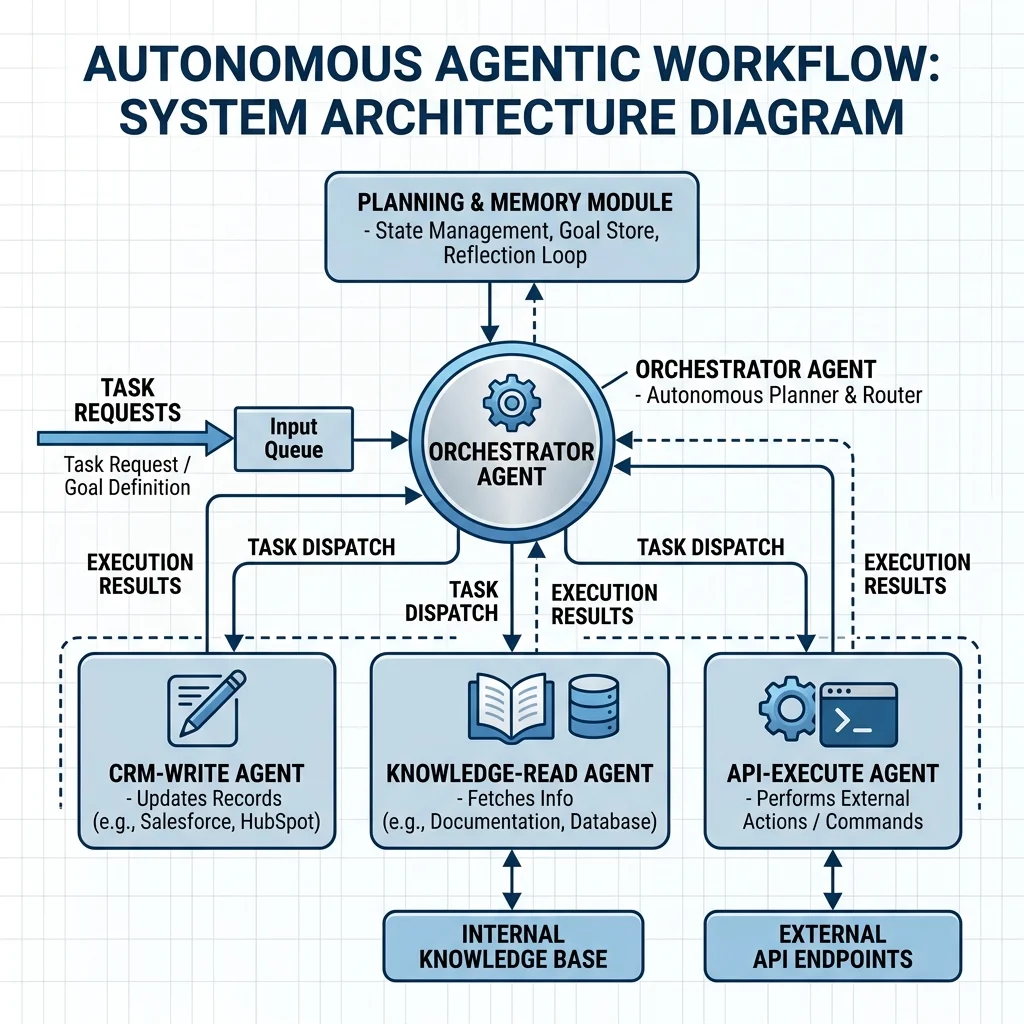 Fig 1.0: Architectural blueprint of the Orchestrator-Worker swarm mesh, showing the autonomous 'Tool Bus' integration.
| Capability | Legacy Chatbot (RAG) | Agentic Swarm |
|---|---|---|
| Primary Action | Information Retrieval | Autonomous Resolution |
| Multi-Step Tasking | None (Single turn) | Decomposition & Planning |
| Tool Integration | Read-Only | Read/Write (Deep Action) |
| Accuracy | Probabilistic (Guessing) | Deterministic (Verification loops) |
| Deflection Potential | 30% - 40% | 80% - 95% |
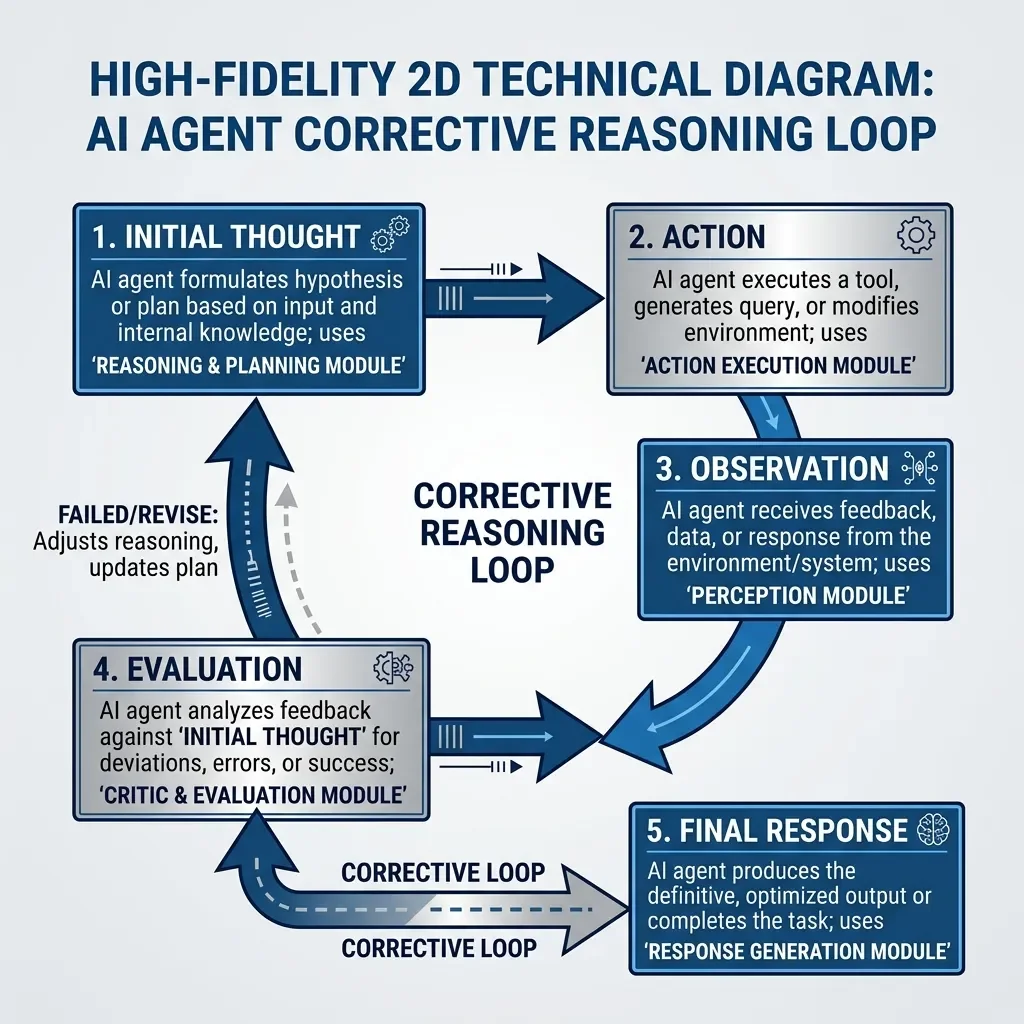
3. "Self-Correcting" Reasoning Loops
One of the most critical "Expert" configurations we implemented was the Corrective Loop. If the Billing Agent attempts to process a refund but receives an API error, it doesn't just error out. The system recognizes the failure, asks the Logistics Agent for an update, and potentially tries an alternative resolution—exactly like a high-performing human agent would.
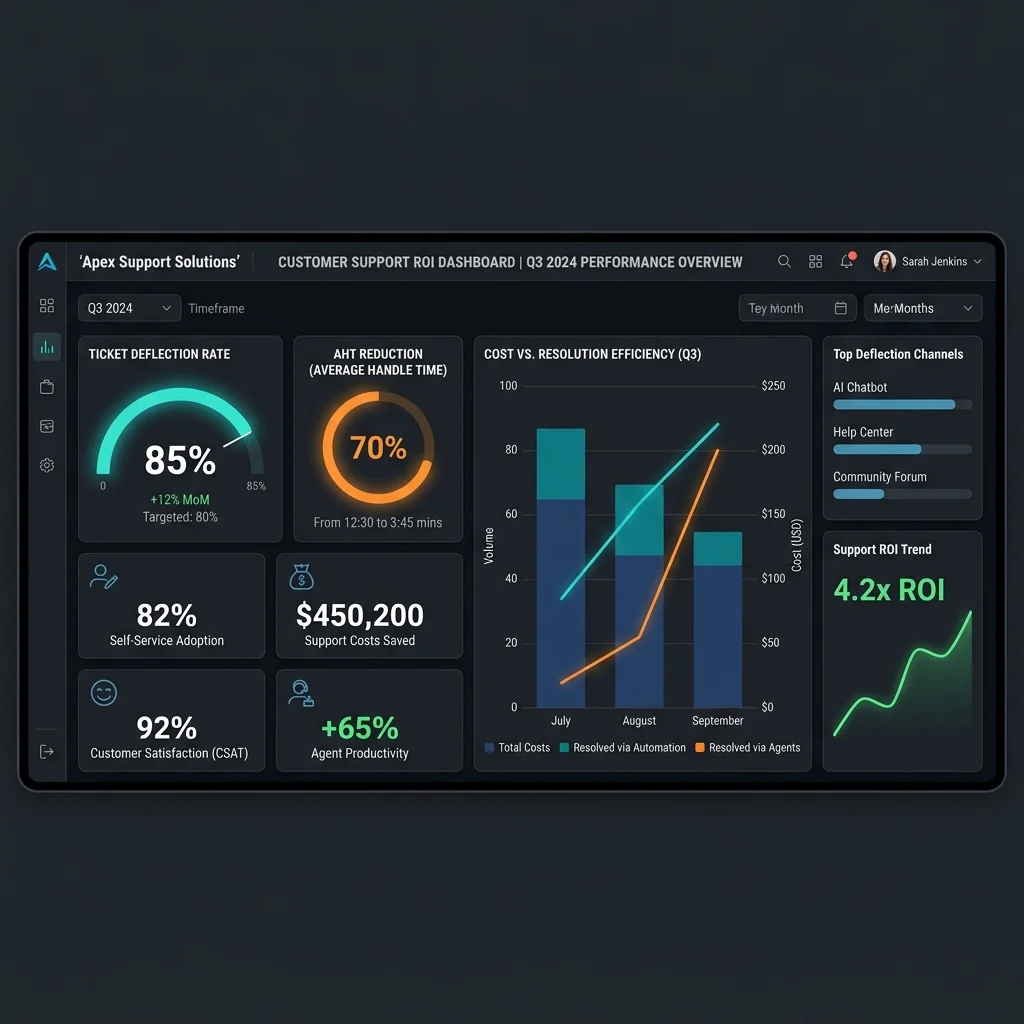
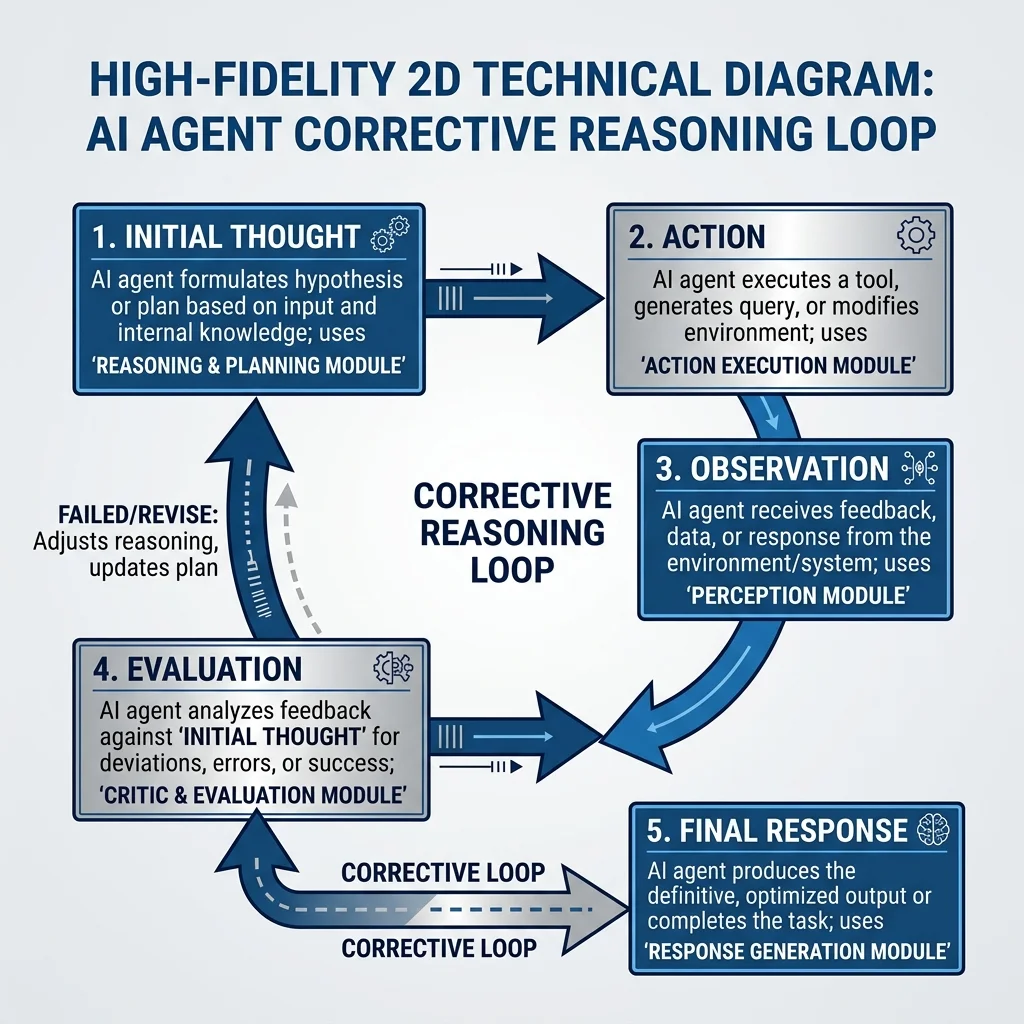 Fig 3.0: Internal logic of the Corrective Reasoning loop, showcasing the agent's ability to plan, evaluate, and self-correct prior to any tool execution.
Validation & Results: The 85% Benchmark
The deployment was staged as a "Champion-Challenger" test. Within 60 days, the Agentic Swarm was outperforming the human-assisted baseline across every major KPI.
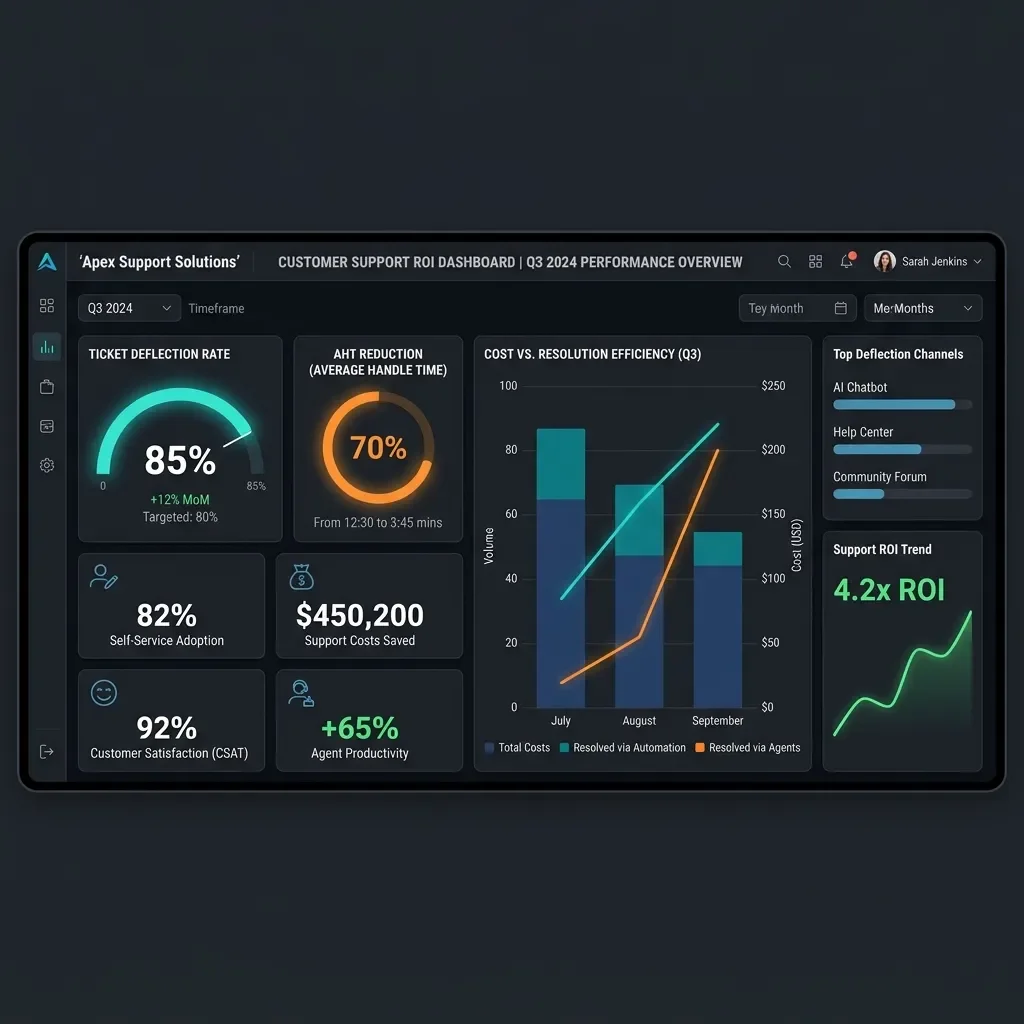
- 85% Absolute Deflection: For every 100 tickets, 85 were resolved end-to-end by the AI workforce. This included complex "Deep-Action" items like address changes and partial refunds.
- 70% Reduction in AHT: Resolution that previously took 15 minutes of manual navigation and human double-checking now happens in 45 seconds.
- Revenue Recovery: By resolving logistics issues 10x faster, the client saw a 12% reduction in "Return-to-Sender" costs and a massive boost in customer retention.
| PROS of Agentic Swarms | CONS of Agentic Swarms |
| ✅ Massive ROI through labor cost reduction | ⌠Complexity of orchestration logic |
| ✅ Deterministic, policy-driven actions | ⌠Higher startup cost for tool-integration |
| ✅ Scalability for peak seasonal surges | ⌠Requires robust observability stack |
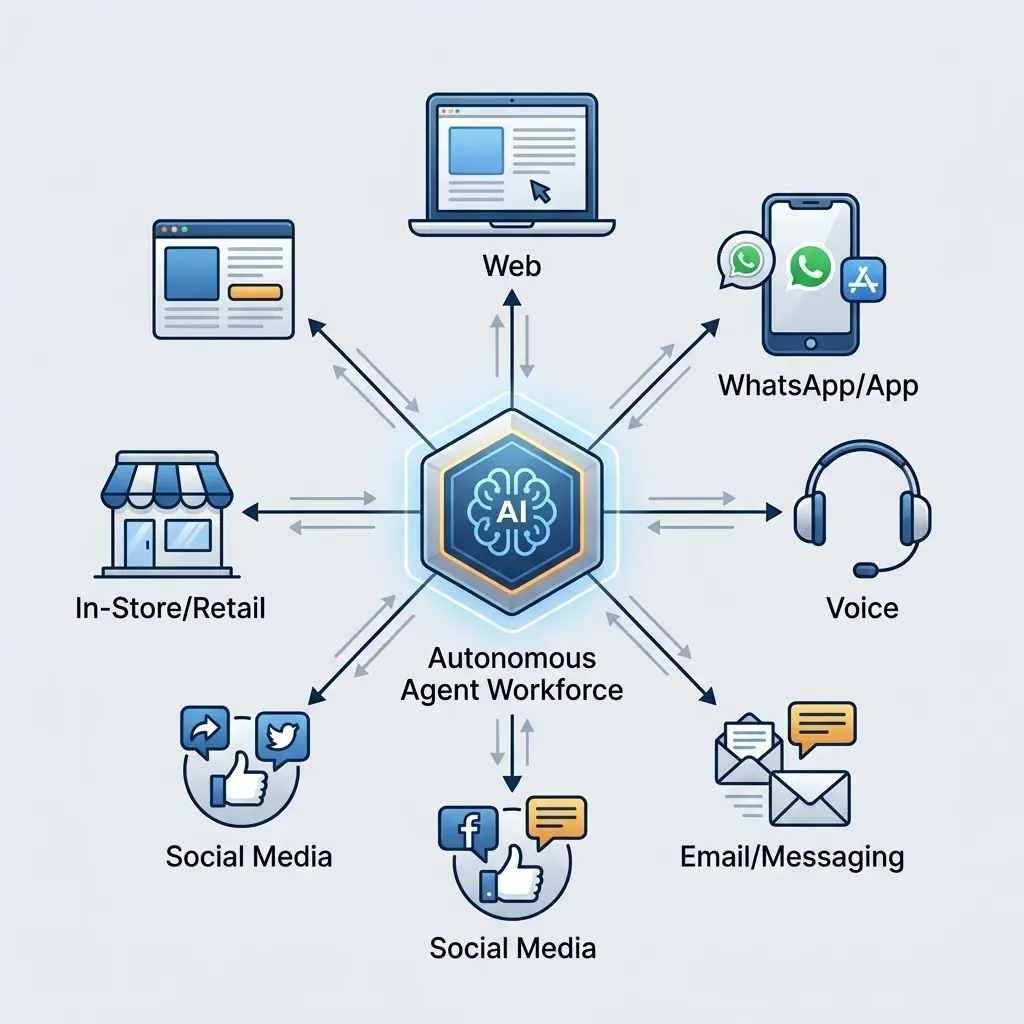
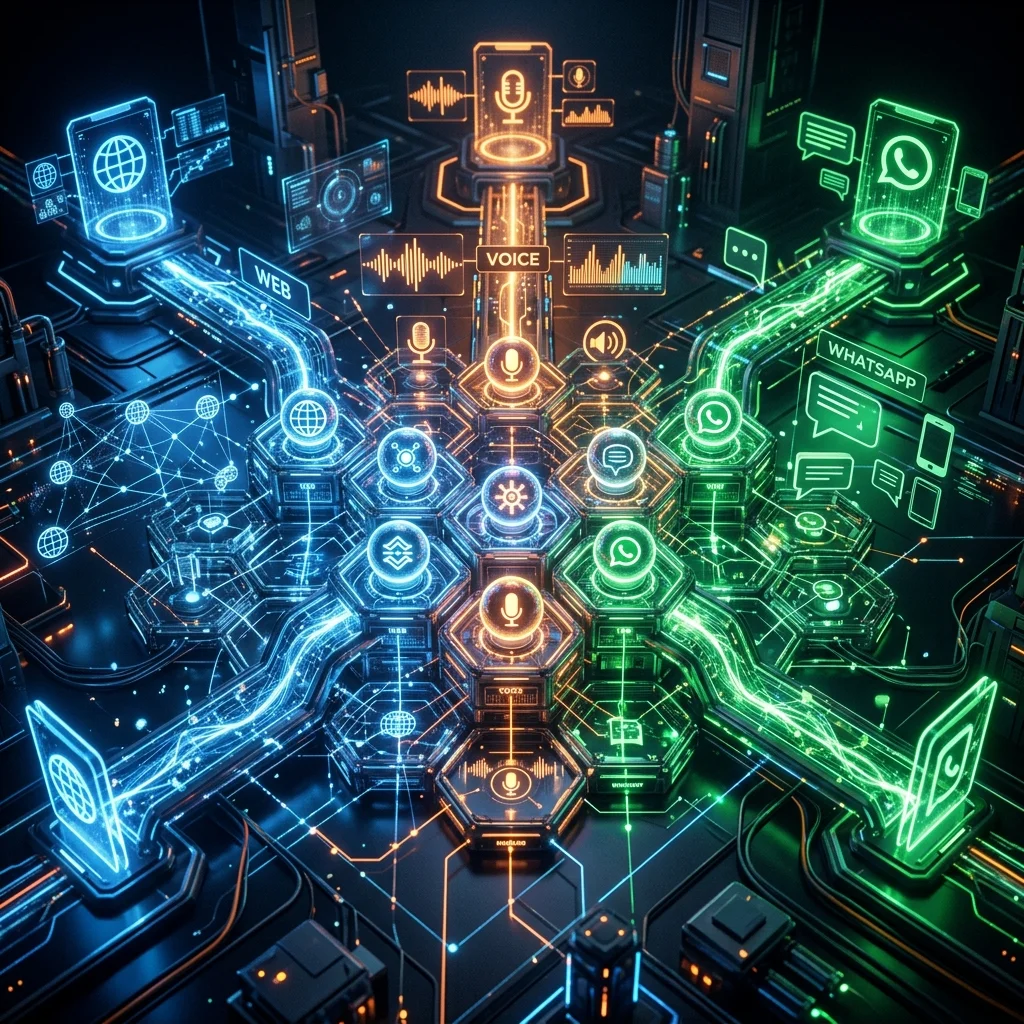
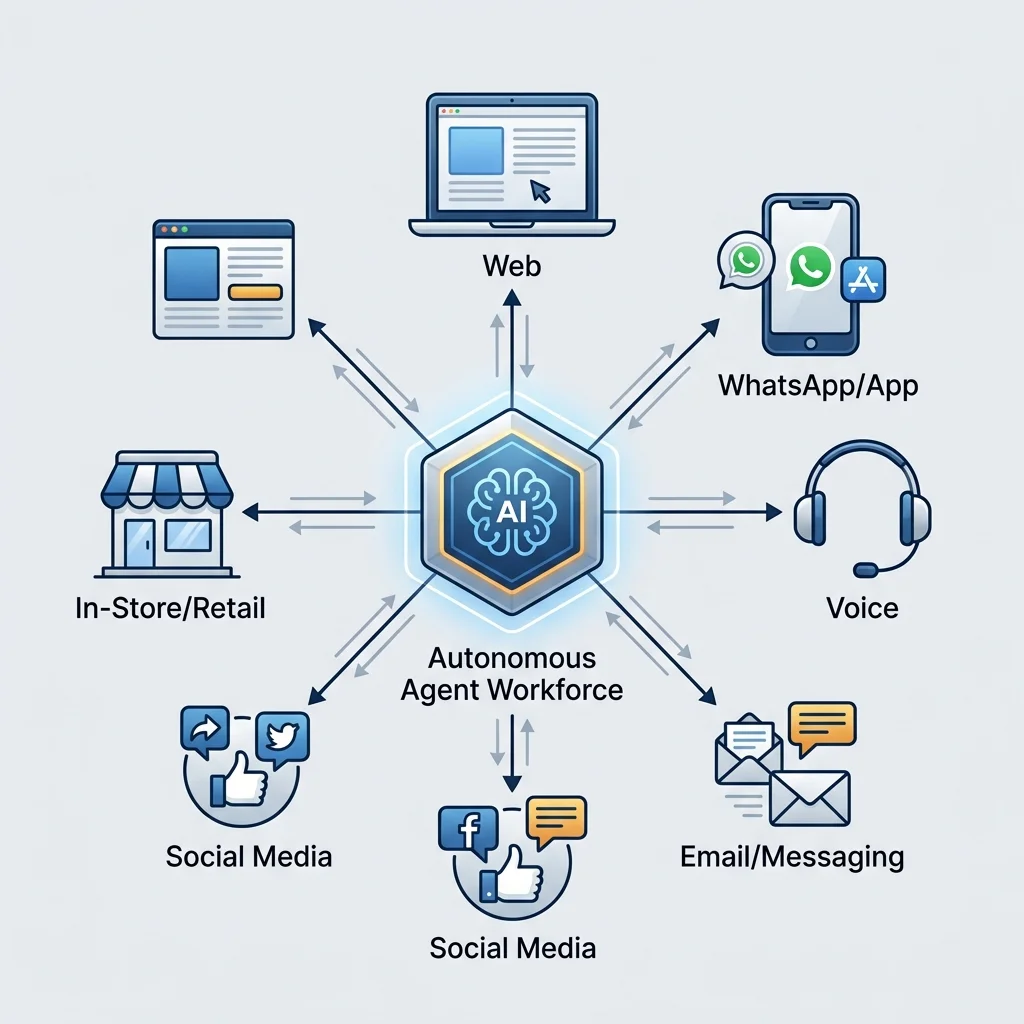 Fig 4.0: Universal Agentic Workforce illustration, showing how a single 'Orchestration Mesh' serves customers across Web, Voice, and Mobile channels with 100% resolution parity.
What is the difference between a chatbot and an agentic support system?
A chatbot typically follows rigid decision trees or performs simple RAG to answer questions. An agentic system uses specialized 'workers' that can plan, use tools (like CRM or Billing APIs), and collaborate to actually *resolve* the issue (e.g., processing a refund or tracking a lost package) rather than just talking about it.
How do you ensure agents don't make unauthorized refunds?
We implement a multi-layered 'Compliance & Guardrail' agent. Before any write-action is taken, the Orchestrator routes the proposed action to a dedicated Auditor Agent that verifies the request against the company's real-time policy graph. If confidence is below 98%, it triggers an immediate Human-in-the-Loop (HITL) escalation.
Can this system integrate with legacy ticketing tools like Zendesk or Salesforce?
Yes. Our architecture uses a 'Tool Bus' abstraction. We build specialized connectors that allow agents to read and write to standard APIs. The agents treat these tools as 'capabilities' they can invoke during their planning phase to fulfill a user request end-to-end.
How does the system handle frustrated or angry customers?
We use a 'Sentiment Triage Agent' that analyzes every turn. If high-intensity frustration or a specific trigger word is detected, the Orchestrator bypasses the autonomous loop and performs a 'Warm Handoff' to a human supervisor, providing a full summarized context of the interaction to ensure zero friction.
Technical Learnings
- The Importance of Orchestration: Monolithic agents fail on long-context tasks. Decomposing the "State" is the difference between success and total hallucination.
- Observability is Mandatory: You cannot "set and forget" an agentic workforce. We use LangSmith and custom telemetry to audit every tool call and decision branch.
- Policy Graphs: We found that "Free-text" policies were too ambiguous. We converted the client's support manual into a Policy Graph that agents could query with 100% precision.
Additional Intelligence Assets

| Ticket ID | Customer | Issue | Channel | Priority | Agent | Status | |
|---|---|---|---|---|---|---|---|
#CX-4821 | Sarah M. | Order not delivered (order #88421) | High | Logistics-01 | Processing | ||
#CX-4820 | James K. | Billing discrepancy $45.00 | Chat | Med | Billing-01 | Processing | |
#CX-4819 | Ana R. | Return request – damaged item | Med | Unassigned | Queued | ||
#CX-4818 | Tom W. | Wrong item delivered | Phone | High | Triage-01 | Escalated | |
#CX-4817 | Lucy F. | Password reset not received | Chat | Low | Knowledge-01 | Resolved | |
#CX-4816 | Mark D. | Product question – compatibility | Low | Knowledge-01 | Resolved |
| Agent | Specialization | Active Tickets | Success Rate | Avg Handle Time | HITL Rate | Status |
|---|---|---|---|---|---|---|
| Triage-01 | Routing & Classification | 4 | 99.1% | 2s | 0.4% | Running |
| Logistics-01 | Shipping & Order Issues | 12 | 88.2% | 34s | 6.1% | Running |
| Billing-01 | Payments & Disputes | 5 | 92.4% | 41s | 4.8% | Running |
| Knowledge-01 | FAQ & Product Info | 26 | 97.8% | 12s | 0.2% | Running |
| Orchestrator | Coordination & Routing | 47 | 99.9% | 1s | 0.0% | Orchestrating |
| Title | Category | Confidence | Used Today | Last Updated | |
|---|---|---|---|---|---|
| Shipping delay compensation policy | Shipping | 0.97 | 18 | Jun 20, 2026 | |
| Billing dispute auto-refund rules | Billing | 0.95 | 9 | Jun 19, 2026 | |
| Return & exchange process (damaged items) | Returns | 0.93 | 7 | Jun 18, 2026 | |
| Password reset troubleshooting steps | Account | 0.91 | 12 | Jun 15, 2026 | |
| Product compatibility guide 2026 | Products | 0.87 | 5 | Jun 10, 2026 |
| Ticket | Customer | Reason for Escalation | Agent | Waiting | Action |
|---|---|---|---|---|---|
#CX-4818 | Tom W. | Wrong item — high frustration detected | Logistics-01 | 8 min | |
#CX-4815 | Priya S. | Repeated contact (3x) — no resolution | Knowledge-01 | 14 min | |
#CX-4810 | Robert A. | Mentioned legal dispute | Billing-01 | 22 min |