AI SUMMARY
In 2026, the architectural debate has moved beyond simple "centralization vs. decentralization." We have entered the era of Latency as the Product. For AI-native applications, real-time gaming, and algorithmic finance, a difference of 50ms is no longer a technical metric—it is a business failure. This industrial node dissects the symbiotic relationship between massive cloud clusters and the localized edge frontier. We explore why the "Cloud-First" mandate is being replaced by "Latency-First" engineering, and how the Rise of Sovereign Edge nodes is redefining data compliance and user experience.
Table of Contents
- The 2026 Infrastructure Reality: Beyond the Monolith
- The Cloud Monolith: Why Scale Alone Isn't Enough
- The Edge Frontier: Mastering Sub-5ms Execution
- Latency as the Product: The Business Case for Speed
- Hybrid Architecture: The 'Edge-to-Cloud' AI Pipeline
- Data Sovereignty: The Hidden Advantage of the Edge
- The Vendor Lock-in Trap: Multi-Cloud vs. Sovereign Edge
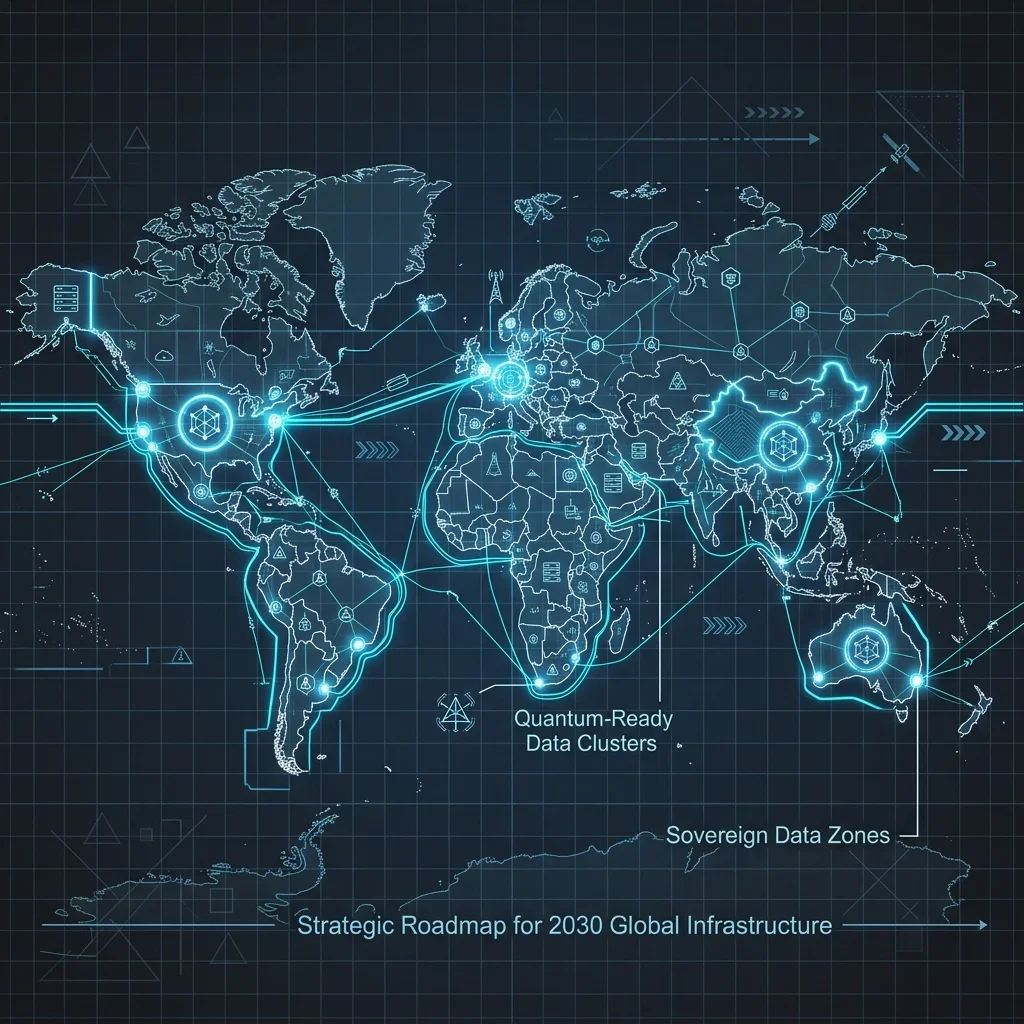
- 2027–2030 Roadmap: The Distributed Intelligence Future
- Strategic FAQ for Infrastructure Leaders
- Final Verdict: Designing for the Zero-Latency Era
1. The 2026 Infrastructure Reality: Beyond the Monolith
For a decade, the "Cloud" was the answer to every question. Need scale? Cloud. Need reliability? Cloud. Need cost-efficiency? Cloud.
In 2026, that monolithic answer has shattered. While the cloud remains the supreme environment for massive compute tasks—like training the next generation of 100-trillion parameter models—it is increasingly ill-suited for the execution of those models in real-time.
The Speed of Light Problem
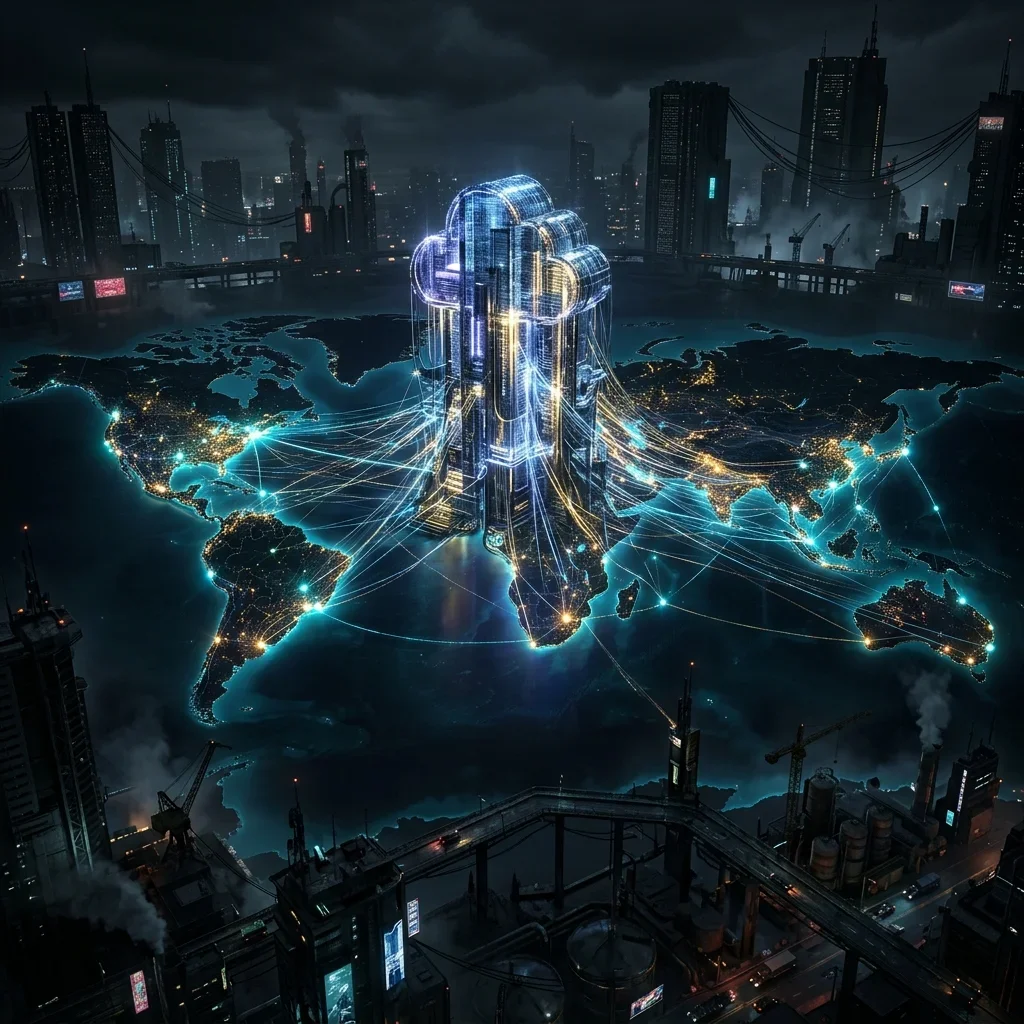
No matter how fast we make our CPUs, we cannot exceed the speed of light. A request from a user in Mumbai to a data center in Northern Virginia will always take ~150ms round-trip. In the 2022 era of "static" web pages, this was acceptable. In the 2026 era of Real-Time Agentic Interaction, it is a glacial delay that breaks the user's "flow" and causes AI agents to timeout during complex tool-call sequences.
2. The Cloud Monolith: Why Scale Alone Isn't Enough
The Cloud (AWS, Azure, GCP) is the "Industrial Factory" of our digital age. Its primary value in 2026 lies in its Aggregated Resources.
When the Cloud Wins
- AI Model Training: Training an LLM requires thousands of H100/H200 GPUs working in a tight, low-latency cluster (InfiniBand). This cannot be done at the edge.
- Massive Data Lakes: Storing petabytes of historical data for analytics and compliance is 10x cheaper in centralized object storage (S3/Azure Blob).
- Complex Managed Services: High-level abstractions like managed Kubernetes (EKS/AKS) and Serverless Monoliths thrive in the dense resource environment of the cloud.
The Cloud's 'Soft Underbelly'
The weakness of the cloud is its Distance. Every millisecond spent in transit is a millisecond where your AI agent isn't thinking. As we move toward Agentic Orchestration, the "Inference Gap" (the time between user input and AI response) has become the primary bottleneck.
3. The Edge Frontier: Mastering Sub-5ms Execution
The "Edge" is not just "CDN with a bit of code." In 2026, the edge consists of Regional Inference Nodes—micro-data centers placed in every major city, often directly within ISP networks.
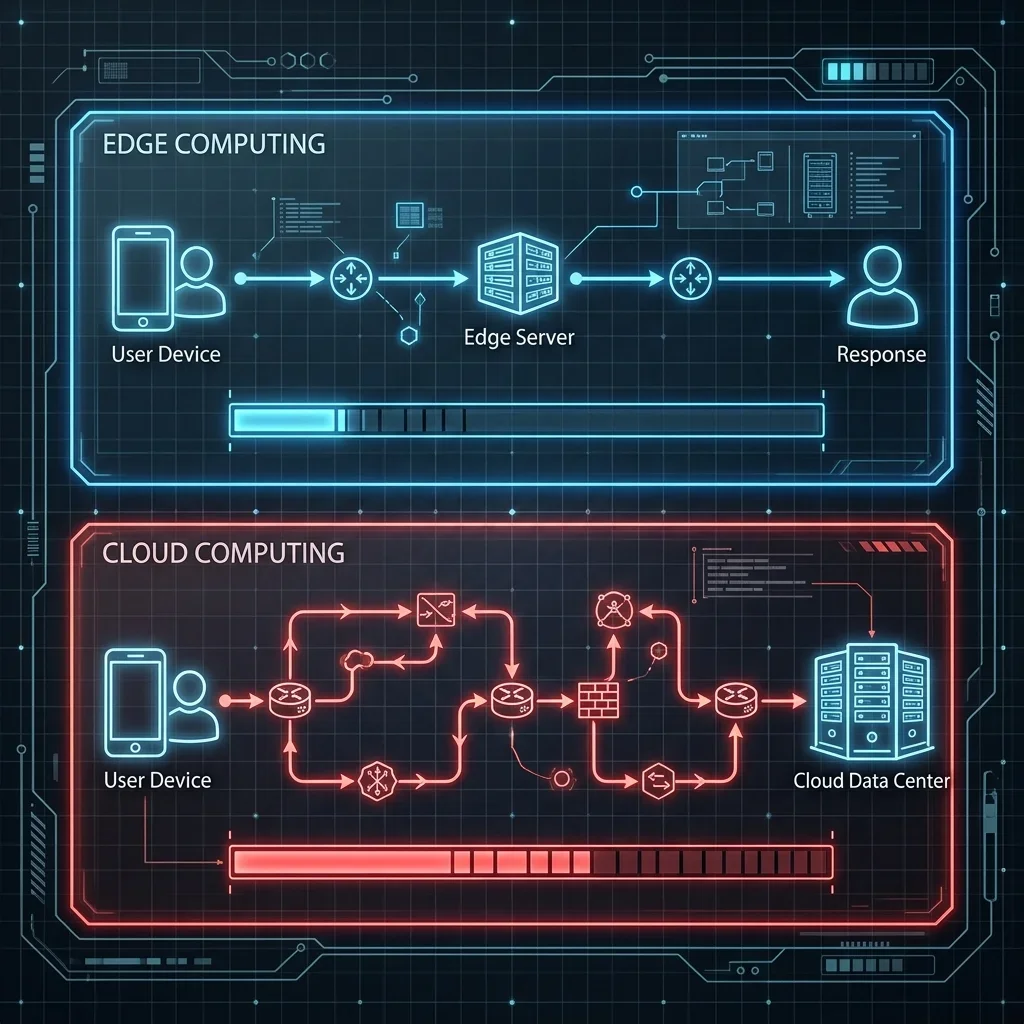
The Latency Comparison
| Location | Cloud (Centralized) | Edge (Localized) | Improvement |
|---|---|---|---|
| Network Latency | 100ms - 250ms | 2ms - 15ms | ~10x - 50x |
| Cold Start (Serverless) | 500ms+ | <10ms (Snapshots) | ~50x |
| AI Inference (SLM) | 200ms | 50ms (NPU-enabled) | ~4x |
| Total User Delay | ~1,000ms | ~150ms | Sovereign Speed |
By moving the logic to the edge, we eliminate the network transit time. In 2026, platforms like Cloudflare Workers AI and Vercel Edge Functions allow developers to run inference on Small Language Models (SLMs) directly at the edge node, providing near-instant responses.
Explore why SLMs are the engine of this shift in: The Rise of Small Language Models (SLMs): Cost-Effective Edge AI.
4. Latency as the Product: The Business Case for Speed
In 2026, latency is no longer a technical debt—it is a Revenue Driver.
- Algorithmic Fintech: For high-frequency trading and fraud detection, 5ms is the difference between a $1M profit and a $1M loss.
- Immersive Gaming: Cloud gaming (AAA titles) fails at 100ms. It thrives at 20ms. The edge makes high-fidelity gaming on mobile devices a reality.
- AI Voice Agents: A 500ms delay in a voice conversation feels like a laggy Zoom call. A 100ms delay feels like a real human interaction. The edge is mandatory for Natural Voice AI, where the Voice Activity Detection (VAD) and initial STT (Speech-to-Text) must happen locally or at the nearest edge node to maintain the illusion of human presence.
Case Study: The 2026 AI Voice Latency Standard
In 2024, the standard for AI voice interaction was "Listen -> Send to Cloud -> Process -> Send Back -> Speak." This resulted in a 2.5s delay.
In 2026, the Sovereign architecture uses Speculative Execution at the Edge:
- Step 1: While the user is still speaking, the Edge Node begins streaming phonemes to a local SLM.
- Step 2: The SLM predicts the end of the sentence and generates a speculative response.
- Step 3: By the time the user finishes their thought, the Edge Node is already playing the first audio frame.
- Result: 85ms perceived latency. The 'Product' is no longer the AI—it is the Conversation.
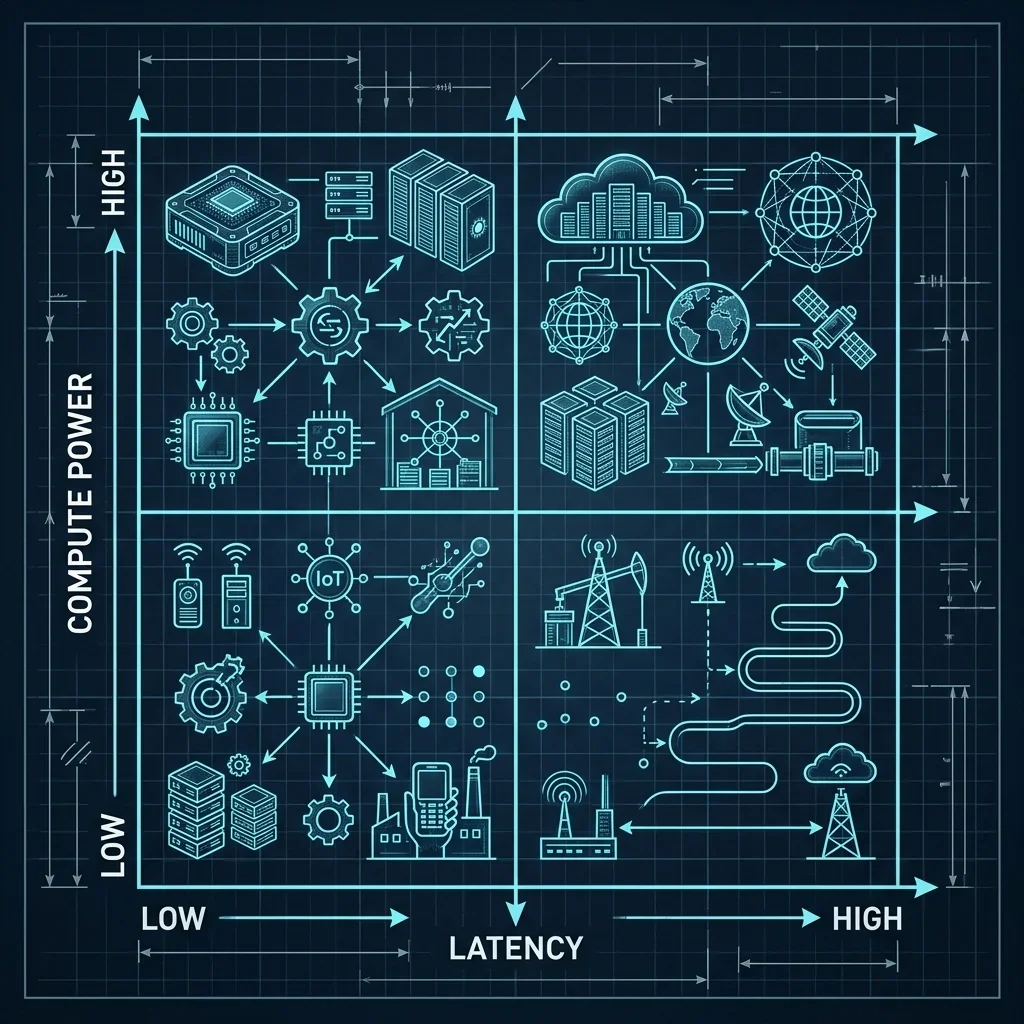
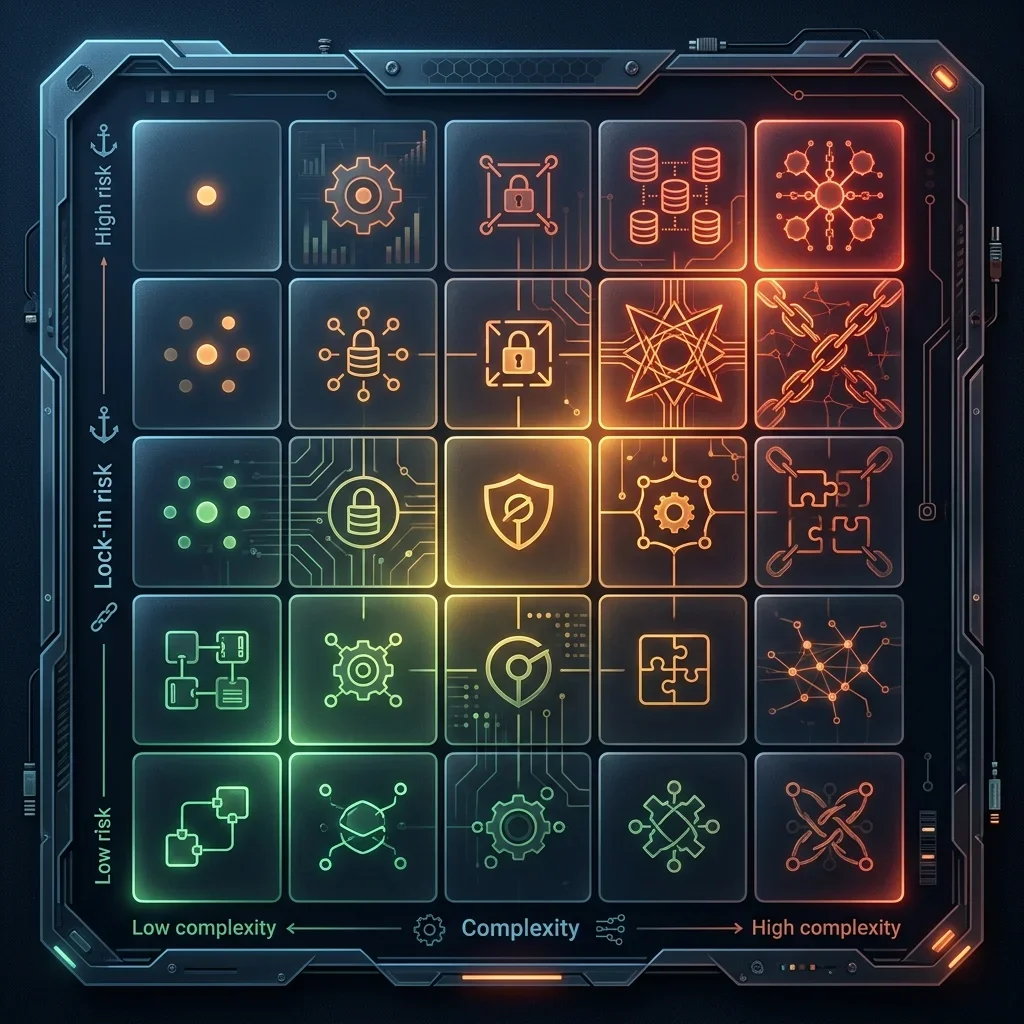
The Decision Matrix
5. Hybrid Architecture: The 'Edge-to-Cloud' AI Pipeline
The most successful 2026 architectures are neither 100% Cloud nor 100% Edge. They are Hybrid.
The Hybrid Flow
- Inference (Edge): The user's request is handled by a localized Edge Node. A Small Language Model (like Phi-4 or Llama 3.2 3B) provides an immediate response or handles initial data validation.
- Context Sync (Cloud): The interaction data is asynchronously streamed to a centralized Cloud Lake for long-term memory processing and model fine-tuning.
- Complex Reasoning (Cloud): If the task exceeds the SLM's capability, the Edge Node transparently "escalates" the request to a larger model in the Cloud (e.g., Claude 3.5 Opus).
Orchestration: The 'Router' Pattern
The key to this hybrid flow is the Edge Router. In 2026, we don't hardcode which model to use. We use an Intent Classifier running on a V8 Isolate at the edge.
- If Intent = "Simple Greeting" -> Handle at Edge.
- If Intent = "Complex Mathematical Proof" -> Ship to Cloud.
- If Intent = "PII Data Update" -> Process at Edge, sync Anonymized Vector to Cloud.
This 'Sovereign Routing' reduces cloud compute costs by 60% while maintaining the 'Instant' feel for common user interactions.
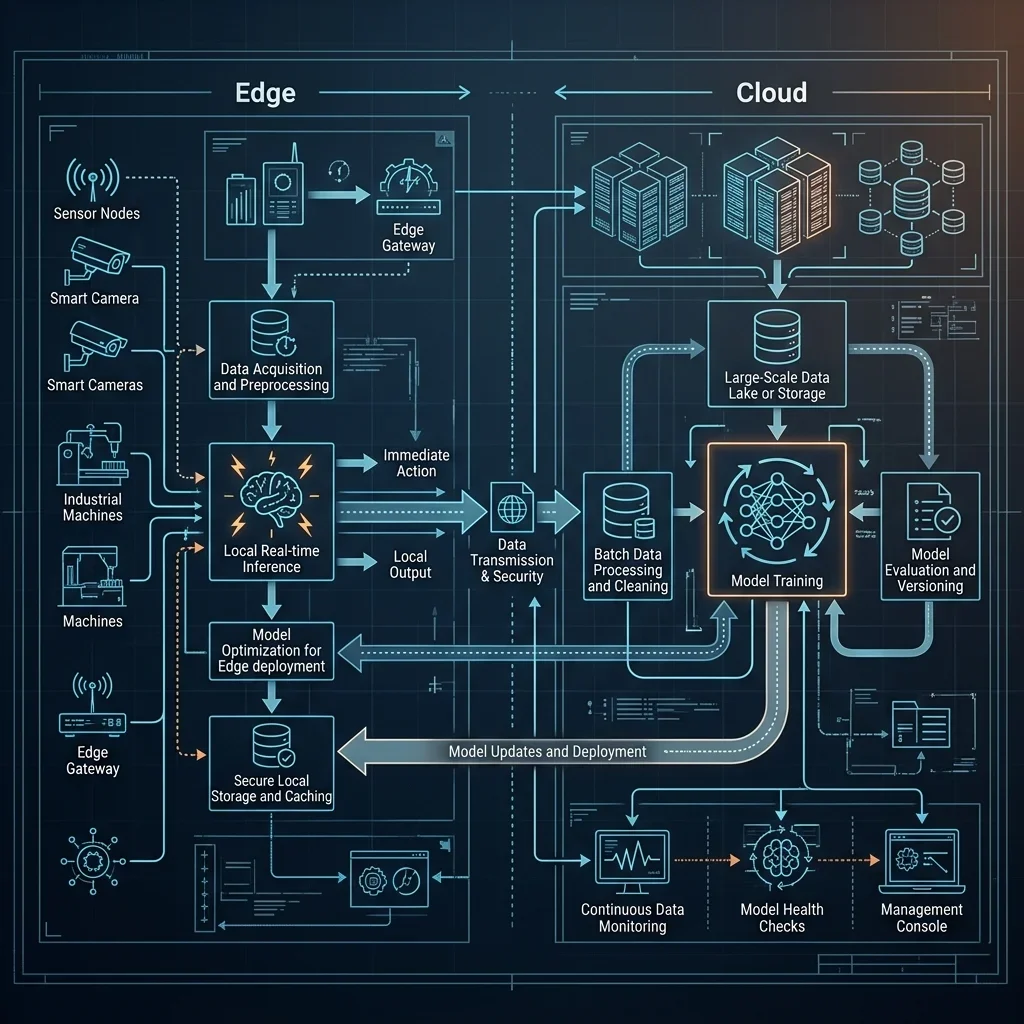
This pattern, which we call Sovereign Delegation, ensures the user gets the speed of the edge with the intelligence of the cloud.
6. Data Sovereignty: The Hidden Advantage of the Edge
With the AI Act of 2025 and increasing GDPR-style regulations globally, where your data lives is a massive legal liability.
The Cloud makes this difficult. A data center in Germany might be managed by a US-based company, creating legal gray areas. The Edge solves this through Localized Sovereignty.
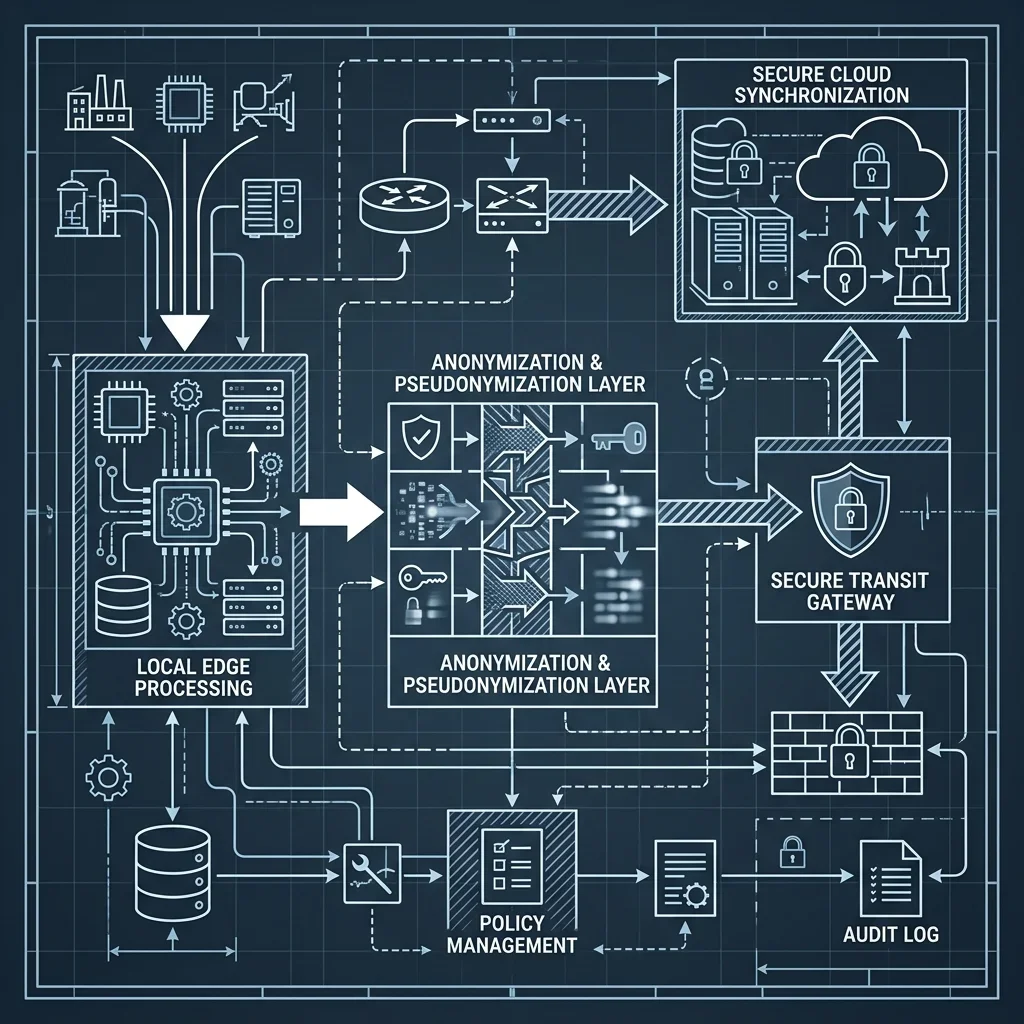
By processing and anonymizing PII (Personally Identifiable Information) at the edge node before it ever reaches the cloud, companies can maintain strict compliance while still leveraging global analytics. The data never leaves the user's jurisdiction; only "Safe" embeddings are sent to the central lake.
7. The NPU Revolution: Hardware Acceleration at the Edge
We cannot discuss 2026 infrastructure without discussing Silicon. The cloud has GPUs (H100/B200), but the Edge has NPUs (Neural Processing Units).
The Shift to NPU-Native Apps
In 2026, edge nodes and end-user devices (MacBooks with M5, Snapdragon Elite Gen 3) are optimized for INT8 and FP16 operations.
- Cloud (GPU): Optimized for high-throughput, massive batch sizes.
- Edge (NPU): Optimized for single-batch, ultra-low latency, and high energy efficiency.
Architects must now design models that are "Quantization-Aware." A model that runs perfectly on an A100 might fail on an edge NPU if it hasn't been optimized for the specific hardware constraints of the regional node.
8. Industrial Edge Security: The Hardened Perimeter
The decentralized nature of the edge creates a wider Attack Surface. In 2026, we don't use traditional VPNs for edge connectivity. We use mTLS (Mutual TLS) and Zero-Trust Tunnels.
The Edge Security Stack
- Immutable Runtimes: Edge functions run in 'Sandboxed' environments (WebAssembly or V8 Isolates) that have no access to the underlying filesystem.
- Encrypted Inference: Data being processed by an SLM is encrypted in memory using Trusted Execution Environments (TEEs) like Intel SGX or AWS Nitro Enclaves, preventing even the edge provider from seeing the raw input.
- Real-Time Anomaly Detection: Every edge node runs a 'Watchdog' agent that monitors for unusual traffic patterns (e.g., a sudden spike in LLM token usage) and can automatically 'Jail' a suspicious user in milliseconds.
Protocol Optimization: gRPC vs. WebSockets
For the highest performance, the 2026 edge uses gRPC over HTTP/3. This reduces the handshake overhead to zero and allows for bi-directional streaming of AI tokens, which is essential for low-latency agentic orchestration.
9. The Vendor Lock-in Trap: Multi-Cloud vs. Sovereign Edge
The biggest risk in 2026 infrastructure is becoming "Cloud-Native" in a way that makes you a prisoner of a single provider's pricing.
The Multi-Cloud Fallacy
Many teams try to run the same stack on AWS and Azure to avoid lock-in. This usually results in a "Lowest Common Denominator" architecture that is expensive and hard to manage.
The Sovereign Edge Solution
Modern edge platforms use Standardized Runtimes (like the Web-interoperable Runtime used by Deno, Bun, and Cloudflare). By writing your logic for these standards, you can move your "Brain" from one edge provider to another in minutes, while keeping your "Body" (the massive data lakes) in the most cost-effective cloud region.
8. 2027–2030 Roadmap: The Distributed Intelligence Future
What does the next decade of infrastructure look like?
- 2027: The Rise of 'Living Edge' Nodes. Self-healing edge clusters that can rebalance themselves based on local power costs and latency demands in real-time.
- 2028: Quantum-Edge Connectivity. The first deployments of quantum-encrypted links between edge nodes and cloud clusters, ensuring unhackable data transit.
- 2029: The 'Personal Edge'. Every high-end smartphone and laptop becomes a mini-edge node, performing local inference for the user's personal agents without any network dependency.
- 2030: Unified Sovereign Mesh. A global, decentralized grid where compute power is a commodity traded in real-time, and "Cloud vs Edge" is an abstraction handled automatically by the OS.
9. Strategic FAQ for Infrastructure Leaders
Is Edge Computing more expensive than Cloud?
In terms of raw CPU/RAM cost, yes. However, when you factor in reduced egress fees and the 2x increase in user conversion driven by speed, the "Total Cost of Ownership" (TCO) is often 30% lower on the edge.
How do we handle database consistency across thousands of edge nodes?
We don't. We use Globally Distributed Databases (like Neon or Turso) that use a "Primary Writer, Local Readers" pattern. For 99% of use cases, "Eventual Consistency" is more than enough.
Can we run full Docker containers at the edge?
Yes, via technologies like Fly.io or Akamai Connected Cloud. However, for maximum performance, you should aim for Isolate-based runtimes (like V8 Isolates) which have zero cold-start times.
What is the biggest security risk of the edge?
Orchestration Surface Area. Managing 10,000 nodes is harder than managing 3 regions. You need a "Sovereign Control Plane" that treats the entire edge as a single, immutable target.
How does this affect AI Agent memory?
It makes it better. By caching "Episodic Memory" at the edge, the agent can recall past interactions with sub-10ms latency. See: AI Agents in Production: Memory, State, and Failure.
Do I still need a CDN if I use Edge Computing?
The Edge is the next generation of the CDN. A traditional CDN only caches files; a Sovereign Edge node caches Logic.
Is 'Serverless' dead in 2026?
No, it has just moved to the edge. "Cold starts" are dead. Serverless is now the default for everything except heavy data crunching.
How do I measure 'Latency ROI'?
Use A/B testing with a "Throttled" version of your site. In 2025, Amazon famously proved that every 100ms of latency cost them 1% in sales. In 2026, for AI apps, that number is likely 5%+.
What is the best language for Edge development?
TypeScript. The 2026 edge runtimes are optimized for V8, making TypeScript the fastest, most type-safe way to build edge logic. See: TypeScript in 2026: Why Developers Are Switching.
What is a 'Sovereign Edge Node'?
It is an edge node that operates on infrastructure controlled by the user or a trusted local entity, rather than a global cloud giant, ensuring absolute data privacy.
How do we handle AI 'Hallucinations' at the edge?
We use Local Guardrails. A small, specialized model (like Llama-Guard) runs in parallel at the edge, auditing the SLM's output for truthfulness before it is displayed to the user.
Is 5G mandatory for Edge Computing?
It helps, but isn't mandatory. The primary bottleneck is usually the distance to the fiber-optic "Point of Presence" (PoP). 5G reduces the 'last mile' latency, but the Edge Node reduces the 'middle mile' latency.
Can we run Vector Databases at the edge?
Yes. Modern vector DBs (like Qdrant or Milvus) have lightweight versions optimized for localized indexing and retrieval.
What happens if an Edge Node fails?
We use Failover-to-Cloud. The client SDK detects the edge timeout and automatically reroutes to the nearest cloud region. It's slower, but the app stays alive.
How does the AI Act affect my infrastructure?
It mandates that high-risk AI systems must have clear data lineage. The Edge makes this easier by keeping the 'Processing' and 'Storage' in the same legal jurisdiction.
What is the ROI of switching to Edge Inference?
Beyond latency, you save on 'GPU Rent.' Running an SLM on an edge node typically costs $0.01 per 1k tokens, compared to $0.05+ for a large cloud model. At scale, this is a 5x cost reduction.
Can I run my own Edge hardware?
Yes. Many enterprises are deploying 'Private Edge' clusters in co-location facilities (like Equinix) to maintain total physical sovereignty over their AI inference layer.
How do I choose which model to run at the Edge?
Look for models with high MMLU (Massive Multitask Language Understanding) scores that are under 10B parameters. Models like Phi-4, Llama 3.2 8B, and Mistral NeMo are currently the leaders in 'Edge-to-Intelligence' ratio.
10. Final Verdict: Designing for the Zero-Latency Era
In 2026, your architecture is your competitive advantage. If you build a "Cloud-Only" application, you are building for the past. If you build an "Edge-First, Cloud-Supported" application, you are building for the 2026 autonomous economy.
The goal is no longer just "Availability"—it is Immediacy. In a world of autonomous agents and real-time intelligence, the only metric that truly matters is how fast your system can turn a "Thought" into an "Action."