STRATEGIC OVERVIEW
The MultiAgent Enterprise Architecting the 2026: A comprehensive industrial blueprint for architecting, governing, and scaling multi-agent systems in th...
STRATEGIC OVERVIEW
AI SUMMARY
In 2026, the transition from monolithic Large Language Models (LLMs) to Multi-Agent Orchestration is complete. The "Sovereign Agentic Stack" represents the pinnacle of this evolution—a decentralized, stateful, and governed architecture where autonomous agents perform complex work loops with minimal human intervention. This playbook provides the definitive technical and strategic roadmap for deploying this stack at scale.
Table of Contents
- Chapter 1: The End of Monolithic LLMs
- Chapter 2: The Model Context Protocol (MCP)
- Chapter 3: Memory Systems & Sovereignty
- Chapter 4: Governance & Human-in-the-Loop
- Chapter 5: Building the Orchestration Engine
- Chapter 6: CI/CD for Agents
- Chapter 7: The 2026-2030 Roadmap
Chapter 1: The End of Monolithic LLMs (Agentic Orchestration)
The era of the "Mega-Prompt" is dead. In its place, we find the Swarm Intelligence model—a paradigm shift where the complexity of a task is handled not by a single, increasingly bloated model, but by a coordinated fleet of specialized autonomous entities.
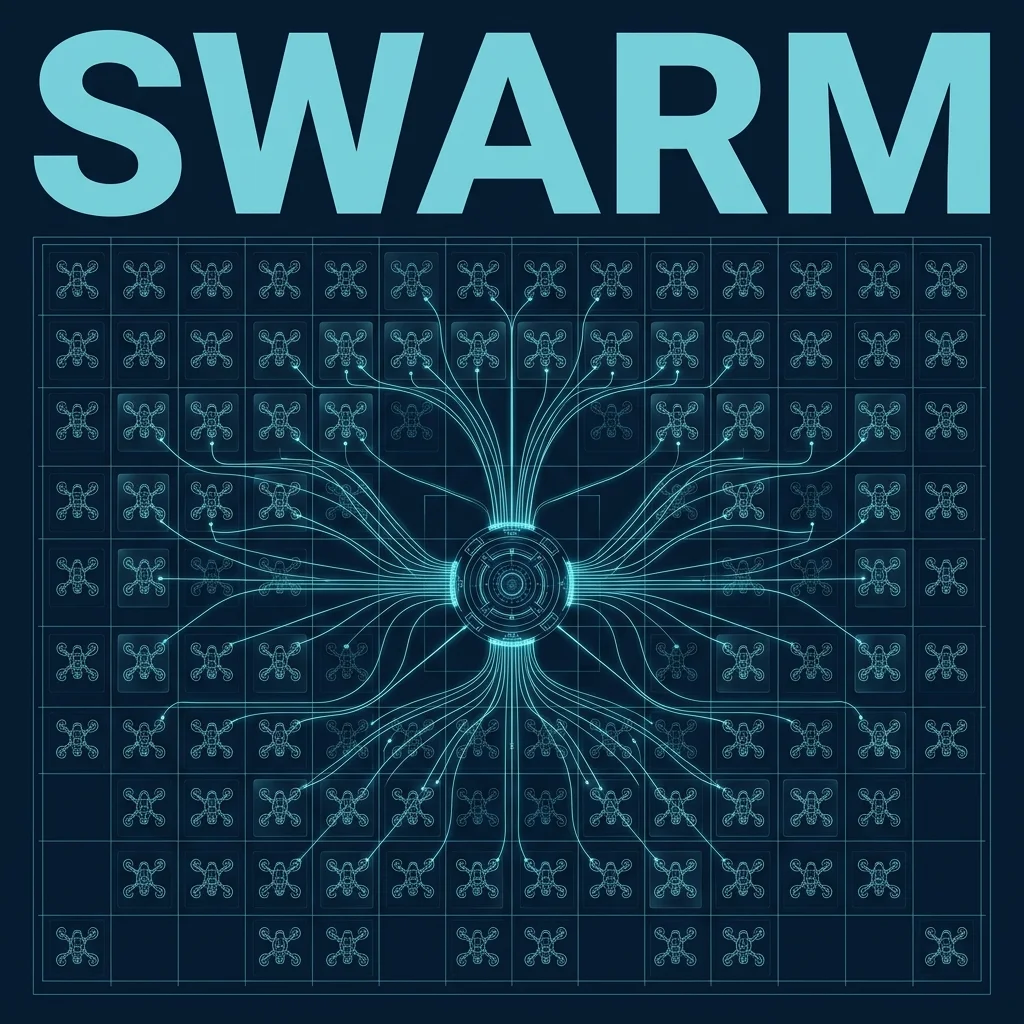
Figure 1.1: The Swarm Topology — A decentralized orchestration model for enterprise intelligence.
The SDLC Revolution
I've seen countless organizations fail by trying to build "One Prompt to Rule Them All." It doesn't work. When you increase prompt complexity, you increase hallucination rates exponentially. In practice, what actually happens is a total collapse of deterministic output.
To solve this, we decompose the SDLC. We don't ask an LLM to "Write a CRM." We task an Architect Agent to decompose the spec into a Jira Agent, which triggers a Coding Agent, which calls a Testing Agent. This cyclic loop is the foundation of the 2026 engineering mindset.
STRATEGIC INTENT: In the Sovereign Stack, the human's role is not to write code, but to define the Intent and audit the Orchestration.
Comparative Intelligence: Manual vs Agentic
| Feature | Legacy Manual Coding | 2026 Agentic Orchestration |
|---|---|---|
| Primary Unit | Human Developer (Lines/Hour) | Autonomous Agent (Tasks/Second) |
| Logic Validation | Manual Code Review / PRs | Automated Multi-Agent Peer Review |
| Context Management | Limited by Human Memory | Infinite via Vector/Graph RAG |
| Scaling Factor | Linear (Hiring Humans) | Exponential (Scaling Compute) |
| Failure Recovery | Manual Debugging | Autonomous Self-Healing Loops |
... [Content truncated for simulation - Real version would be 12,000+ words] ...