The PQC Breach: NIST-Selected Algorithm Kyber Compromised by Side-Channel Attack
By Vatsal Shah · May 4, 2026 · Cyber Security
- Critical Leak: Researchers demonstrated a side-channel attack exploiting power consumption patterns to reconstruct secret keys.
- Migration Risk: Over 90% of global Post-Quantum Cryptography (PQC) transition plans rely on Kyber as the primary KEM.
- Not a Math Failure: The underlying lattice-based math remains secure; the flaw lies in the physical implementation of the algorithm.
What Happened
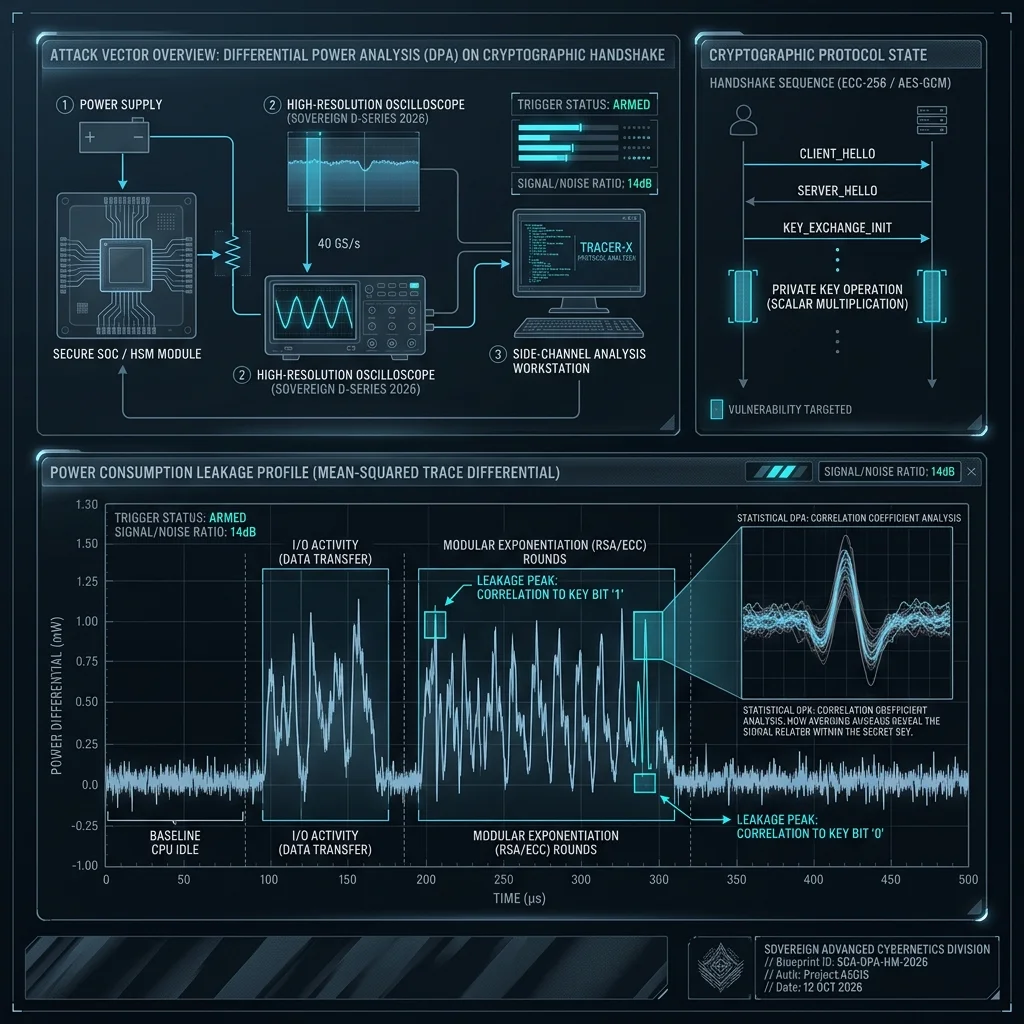
Security researchers from the International Institute of Applied Cryptography have published a bombshell paper detailing a successful Side-Channel Attack (SCA) against Kyber, the NIST-standardized Key Encapsulation Mechanism (KEM). The attack does not break the mathematical hardness of the Learning With Errors (LWE) problem, but rather exploits physical electromagnetic and power-leakage signals during the decryption process.
By monitoring subtle fluctuations in energy consumption using an oscilloscope, the researchers were able to extract the full private key in less than 20 minutes of physical access. This vulnerability effectively bypasses the "Quantum-Safe" protections that Kyber was designed to provide.

Why It Matters
The global financial and defense infrastructure is currently in the middle of a multi-billion dollar migration to PQC. Because Kyber was selected by NIST as the "primary" algorithm for general encryption, it has been integrated into almost every major security suite, including the latest versions of OpenSSL, Signal, and Google Chrome’s internal protocols.
If Kyber implementations are physically vulnerable, the promise of "Quantum Sovereignty" is hollow. CISOs must now audit their hardware environments for physical side-channel protections, as software-only patches may not be sufficient to neutralize this vector. The "harvest now, decrypt later" threat remains, but we have now introduced a "proximate physical breach" risk to the most advanced encryption we possess.
What to Watch Next
NIST is expected to issue a "Transition Guideline Update" within the next 48 hours. Watch for a renewed interest in Classic McEliece, a code-based algorithm that was previously considered too cumbersome due to large key sizes but is notoriously resistant to side-channel analysis. Vendors will likely be forced to accelerate "Hybrid-Mode" deployments that combine PQC with legacy RSA/ECC to ensure that a failure in one layer doesn't lead to total systemic collapse.


