AWS and Google Cloud GA Managed VPC Interconnect - Ending DIY Multicloud Networking
By Vatsal Shah | June 28, 2026 | 7 min read | Source: Google Cloud Connectivity Portal
- Native Cross-Cloud Peering: Direct physical interconnects bypass the public internet, integrating Google Cross-Cloud Interconnect with AWS Transit Gateway.
- Hardware-Level Security: MACsec encryption is active by default at the physical link layer, ensuring secure multi-Gbps throughput without CPU processing overhead.
- Console-Based Routing: BGP route propagation is managed natively via cloud consoles, eliminating custom router configurations and DIY VPN troubleshooting.
Lead Paragraph
SEATTLE, Washington — In a major shift for enterprise network design, Amazon Web Services (AWS) and Google Cloud have officially launched a managed AWS Google Cloud VPC interconnect. The direct network gateway establishes high-bandwidth physical links between adjacent AWS Direct Connect and Google Cloud Interconnect locations. Operating with quad-redundant fiber paths and native BGP routing, this managed service allows enterprises to peer VPCs across providers directly from their cloud console, eliminating the need to deploy and monitor complex DIY VPN tunnels or third-party SD-WAN appliances.
What Happened
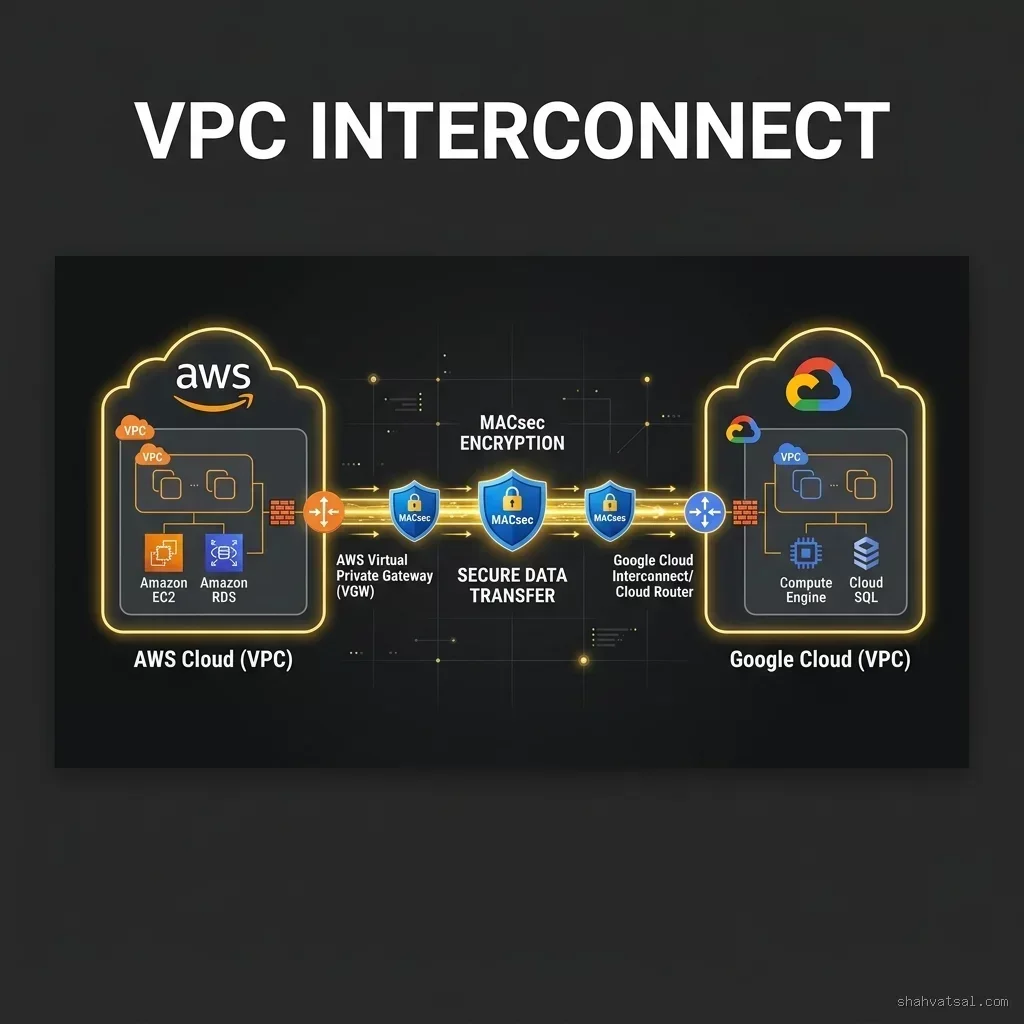
The joint release introduces a direct, high-capacity interconnect pipeline between AWS and Google Cloud regions. The hardware infrastructure is configured with default MACsec (IEEE 802.1AE) encryption at the physical link layer, guaranteeing data confidentiality at rates up to 100 Gbps. Key features of the managed interconnect include:
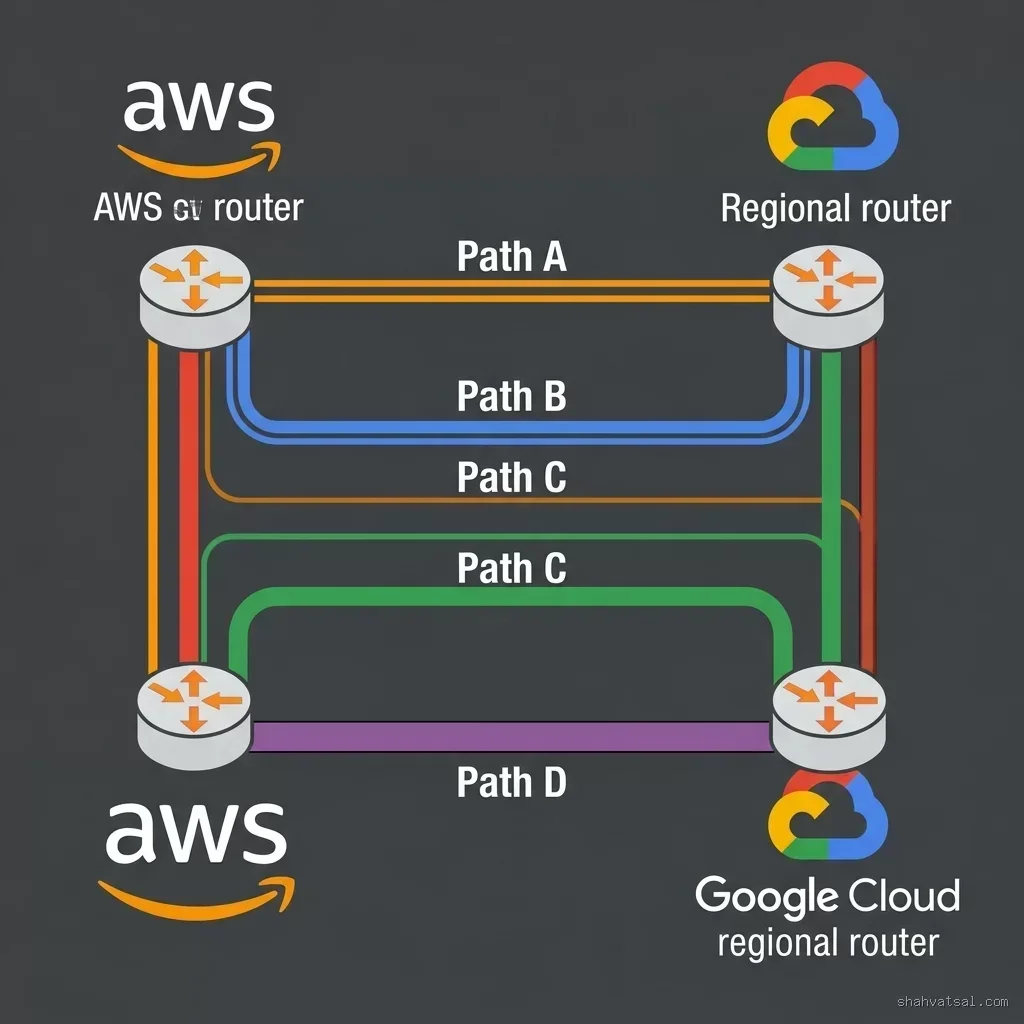
- Quad-Redundancy: Four separate physical fiber paths split across independent routing equipment to guarantee a 99.99% availability SLA.
- Native Console Peering: Developers can select adjacent VPCs from the console, which automatically triggers BGP peer sessions and exchanges route advertisements.
- Reduced Data Transfer Fees: Peering via the managed interconnect reduces standard outbound data transfer (egress) rates by up to 50% compared to internet-routed transit.
                         VPC INTERCONNECT ARCHITECTURE
+--------------------------------------------------------------------------+
|  AWS VPC (US-East-1)                                                     |
|         │                                                                |
|         ▼ (AWS Transit Gateway / Direct Connect Gateway)                 |
|  [ Quad-Redundant Fiber Path ] ──► [ MACsec Encrypted physical link ]     |
|         │                                                                |
|         ▼ (Google Cross-Cloud Interconnect / Cloud Router)               |
|  Google Cloud VPC (us-east4)                                             |
+--------------------------------------------------------------------------+
Why It Matters
For enterprise cloud architects and infrastructure engineering leaders, this managed interconnect resolves a persistent engineering bottleneck. Previously, linking AWS and Google Cloud environments required either deploying third-party colocation facilities (like Equinix or Megaport) or configuring complex, software-defined IPsec VPN tunnels. VPN options restricted throughput to 1.25 Gbps per tunnel, introduced significant CPU processing latency, and required ongoing configuration updates to avoid route flapping and MTU bottlenecks.
By replacing custom VPN tunnels with managed VPC interconnects, enterprises can run low-latency, high-bandwidth applications across multiple cloud ecosystems. Data-intensive workloads—such as replicating transactional databases, streaming real-time analytics, and querying distributed machine learning databases—can execute across AWS and Google Cloud with sub-5ms latency, matching local regional performance.
H2: Quad-Redundancy Fiber Path
The foundation of the managed VPC interconnect is the physical placement of hardware. AWS and Google Cloud have established co-located routing infrastructure in major metropolitan carrier hotels globally. These locations are linked by quad-redundant fiber paths.
Additionally, the default enforcement of MACsec hardware encryption ensures that data is secured directly at the physical network layer. Traditional IPsec tunnels encrypt traffic at the software layer, which consumes router CPU cycles and reduces throughput. MACsec encryption is performed natively by the network interface cards (NICs) at line-rate speed, allowing enterprises to transfer petabytes of data securely without experiencing throughput degradation or latency spikes.
H2: Console Routing Logic
The software integration between AWS Transit Gateway and Google Cloud Router simplifies BGP route propagation. Instead of manually coordinating IP prefixes and configuring autonomous system numbers (ASNs), the managed console pipeline automates the negotiation process.
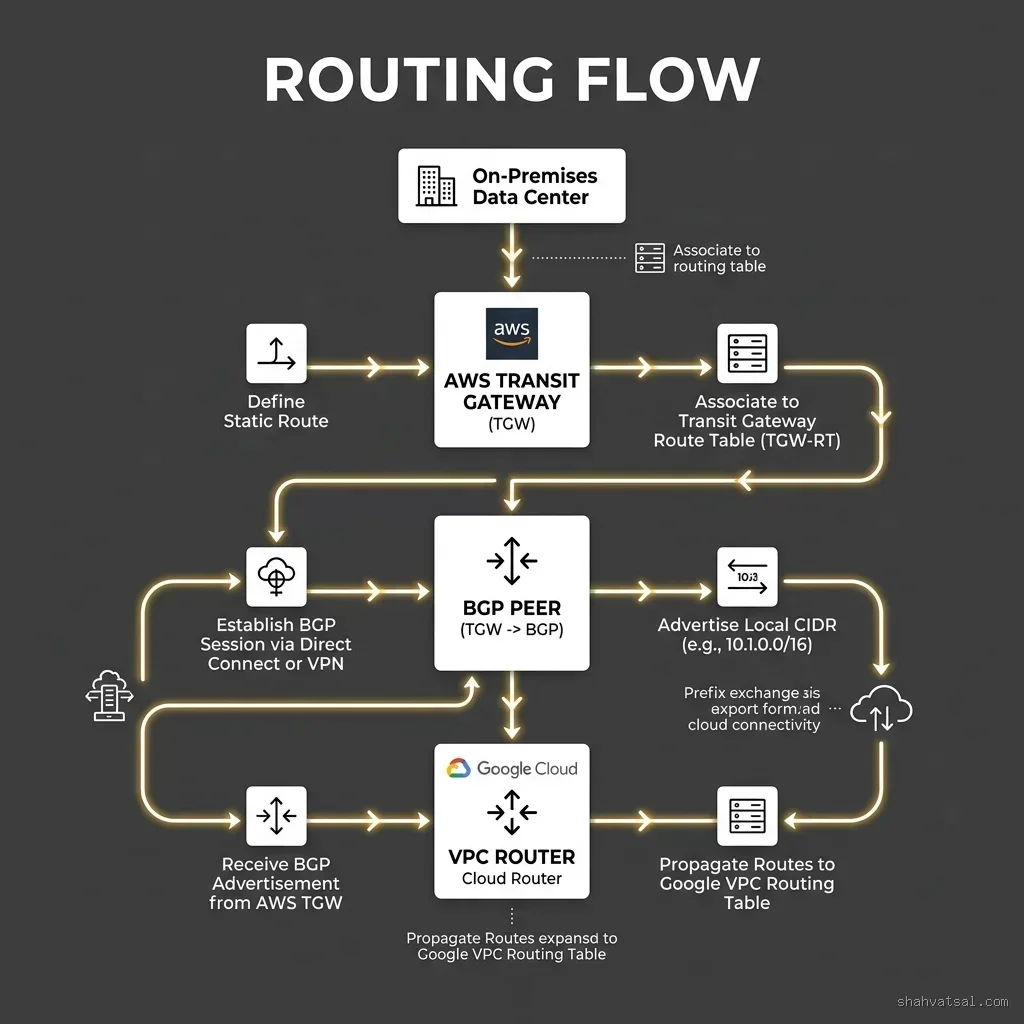
Once a connection is authorized in both consoles, the BGP routers exchange route tables, advertising the subnets of each cloud VPC. The network controllers automatically configure failover priorities. If Path A experiences a packet loss event, the BGP session immediately shifts traffic to Path B with zero connection drop-offs.
To test cross-cloud connectivity in Terraform, cloud architects can declare these peering resources:
class="tok-cm"># Infrastructure Peering Declaration - AWS and Google Cloud managed link

provider class="tok-str">"aws" {
  region = class="tok-str">"us-east-1"
}

provider class="tok-str">"google" {
  project = class="tok-str">"enterprise-multicloud-core"
  region  = class="tok-str">"us-east4"
}

class="tok-cm"># AWS side: Transit Gateway attachment configuration
resource class="tok-str">"aws_ec2_transit_gateway_dx_gateway_attachment" class="tok-str">"multicloud_link" {
  transit_gateway_id = aws_ec2_transit_gateway.core.id
  dx_gateway_id      = aws_dx_gateway.cross_cloud.id
  vpn_connection_id  = null class="tok-cm"># No longer utilizing DIY VPN
}

class="tok-cm"># Google Cloud side: Cross-Cloud Interconnect attachment
resource class="tok-str">"google_compute_interconnect_attachment" class="tok-str">"aws_peer" {
  name                     = class="tok-str">"aws-cross-cloud-attachment"
  edge_availability_domain = class="tok-str">"AVAILABILITY_DOMAIN_1"
  type                     = class="tok-str">"PARTNER"
  router                   = google_compute_router.cross_cloud_router.name
  admin_enabled            = true
}

class="tok-cm"># Configure BGP Peer Session on GCP Cloud Router
resource class="tok-str">"google_compute_router_interface" class="tok-str">"aws_interface" {
  name       = class="tok-str">"aws-peering-interface"
  router     = google_compute_router.cross_cloud_router.name
  ip_range   = class="tok-str">"169.254.20.1/30"
  vpn_tunnel = null
}

resource class="tok-str">"google_compute_router_peer" class="tok-str">"aws_bgp_peer" {
  name                      = class="tok-str">"aws-bgp-session"
  router                    = google_compute_router.cross_cloud_router.name
  peer_ip_address           = class="tok-str">"169.254.20.2"
  peer_asn                  = 64512
  interface                 = google_compute_router_interface.aws_interface.name
  advertise_mode            = class="tok-str">"CUSTOM"
  advertised_route_priority = 100
}
What to Watch Next
- Regional Footprint Expansion: Watch for the rollout of this managed peering service to smaller, edge-tier data centers and newer cloud regions.
- Third-Party Cloud Peering: Monitor if Microsoft Azure or Oracle Cloud Infrastructure (OCI) adopt similar managed VPC Interconnect standards to integrate their core compute databases.
- Advanced MACsec Telemetry: Look for console-integrated audit logging that reports real-time encryption state and physical port status directly to SIEM pipelines.
Read the official documentation on Google Cloud → Network Interconnect Guide
Key Takeaways
- DIY VPNs Obsoleted: Managed VPC interconnects eliminate the latency, limits, and maintenance overhead of software IPsec tunnels.
- Physical Port Peering: Low-latency link matches local data center performance for cross-cloud query executions.
- Built-in Encryption: Line-rate MACsec protects data directly at the physical hardware layer without CPU performance costs.
- Quad-Redundant Setup: Direct paths are routed through separate routers to ensure high-availability SLAs.
- Dynamic Route Exchange: BGP peering is established and managed natively from the cloud provider consoles.