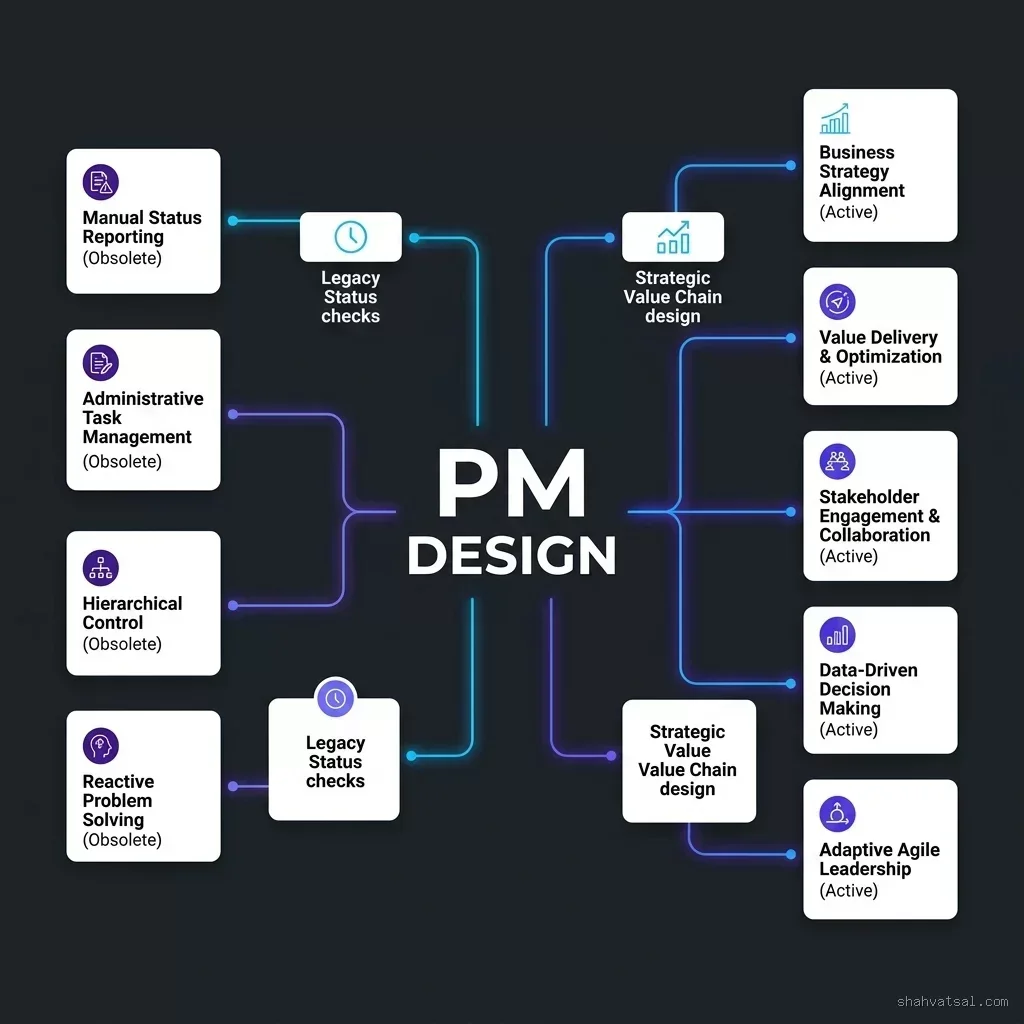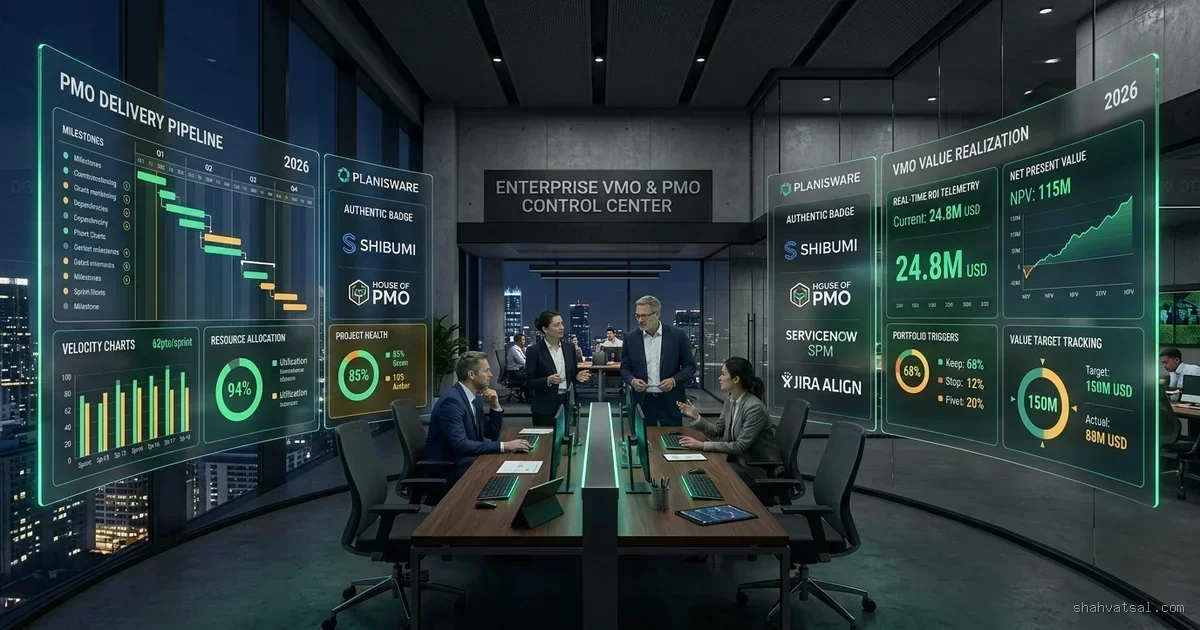
STRATEGIC OVERVIEW
Practitioner breakdown of Engineering Leadership vs. Management: The 2026 Sovereign Evolution — written for CTOs, VP Engineering, and India GCC leads shipping production AI with measurable ROI.
1. The 2026 Pivot: From Synchronous to Asynchronous Leadership
In 2024, leadership was synchronous. We sat in meetings to build consensus, performed manual code reviews to ensure quality, and held 1:1s to track status.
In 2026, leadership is Asynchronous and Intent-Driven.
The modern leader doesn't oversee workers; they oversee Workflows. Instead of telling a person what to do, you define the Guardrails (technical and organizational) that allow an autonomous pod of human architects and agents to execute with 100% alignment.
As a result, the value of a leader is now measured in "Influence Latency"--"how fast a strategic decision propagate through the agentic mesh and results in a production outcome.
2. The New Hierarchy: IC Track vs. Management Track 2.0
While the formal tracks remain, their leverage models have been radically upgraded.
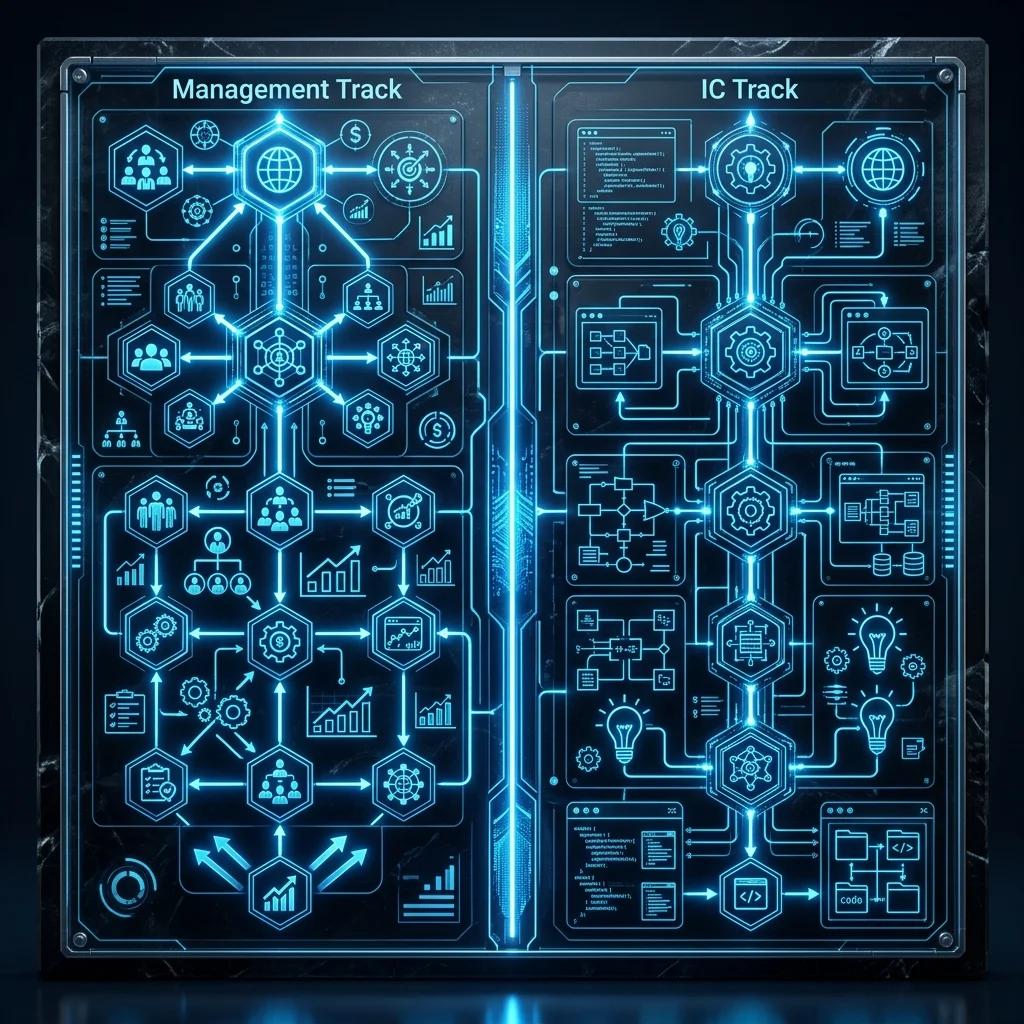
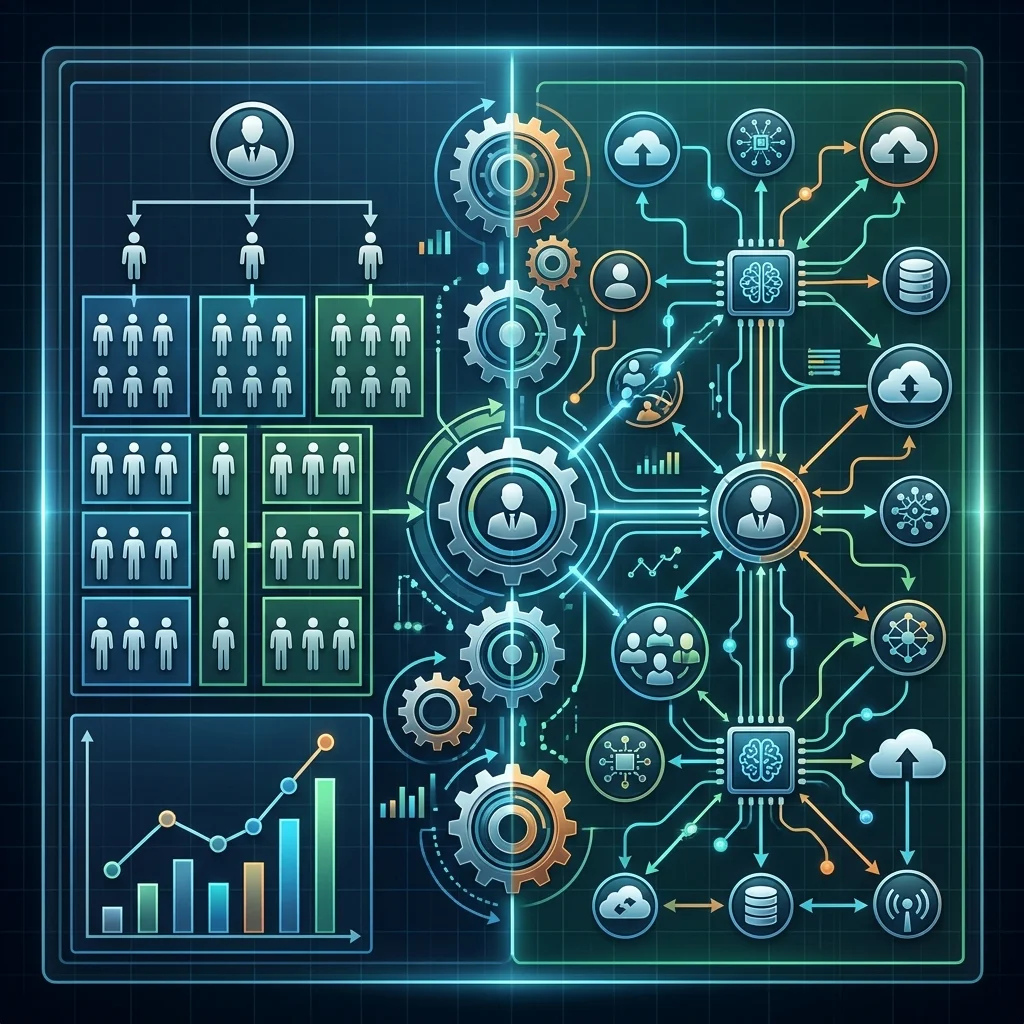
Figure 2: The Leadership Matrix --" Mapping the convergence of organizational and technical paths in the agentic era.
3. Influence Without Code: Leading Through Guardrails
In an era where 'Clean Code" is largely a byproduct of well-architected prompts and verification loops, the source of leadership authority has shifted.
Great technical leaders in 2026 don't win arguments by being the best at C++ or Rust. They win by being the best at Conceptual Synthesis. They are the ones who can look at five different sub-swarms and identify the architectural drift that will cause a billion-dollar failure in six months.
The "Intent Handoff"
Influence now happens at the Intent Layer. A Principal Engineer "leads" by defining the system prompts and MCP (Model Context Protocol) handshakes that govern how agents interact with the organization's private data. This is Leadership-as-Infrastructure.
Practitioner Insight: The End of the 'Manual' Code Review
Last year, I lead a migration for a 400-person fintech. If we had done 'manual' leadership--"reviewing every PR and holding every design session ourselves--"the migration would have taken 24 months. Instead, we built Verification Scaffolding. We defined the architectural rules in an 'Auditor Agent' and focused our leadership on the 2% of edge cases the auditor flagged. We finished in 5 months. Leadership in 2026 is about building the systems that lead for you.
4. The Translation Loop: The Staff Engineer's Greatest Asset
In 2026, the most valuable skill in technical leadership is Tactical Translation. Staff and Principal Engineers act as a high-fidelity bridge between the "Probabilistic Potential" of AI models and the "Deterministic Reality" of business requirements.
The Translation Cycle
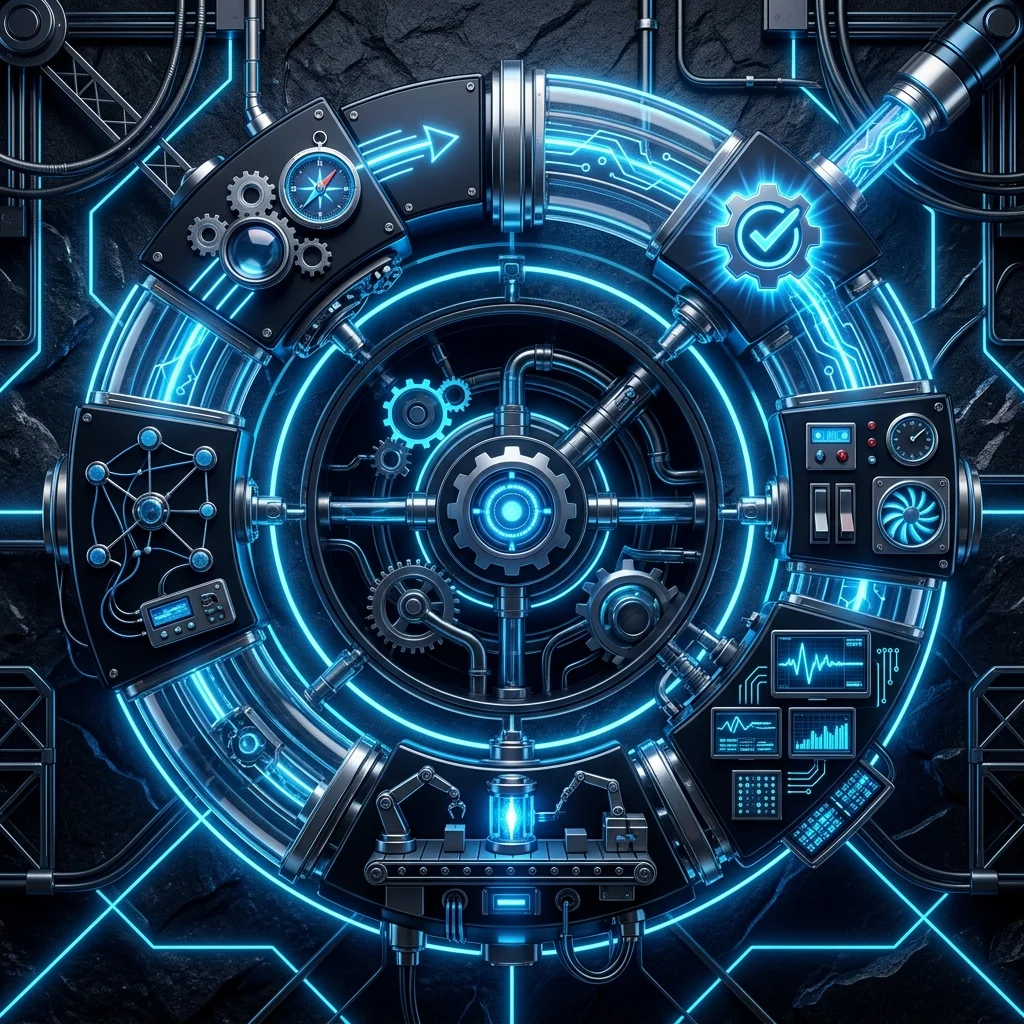
Figure 3: The Translation Loop --" Bridging Business Voids with Agentic Precision.
5. Metrics 2.0: Measuring Impact in the Hybrid Era
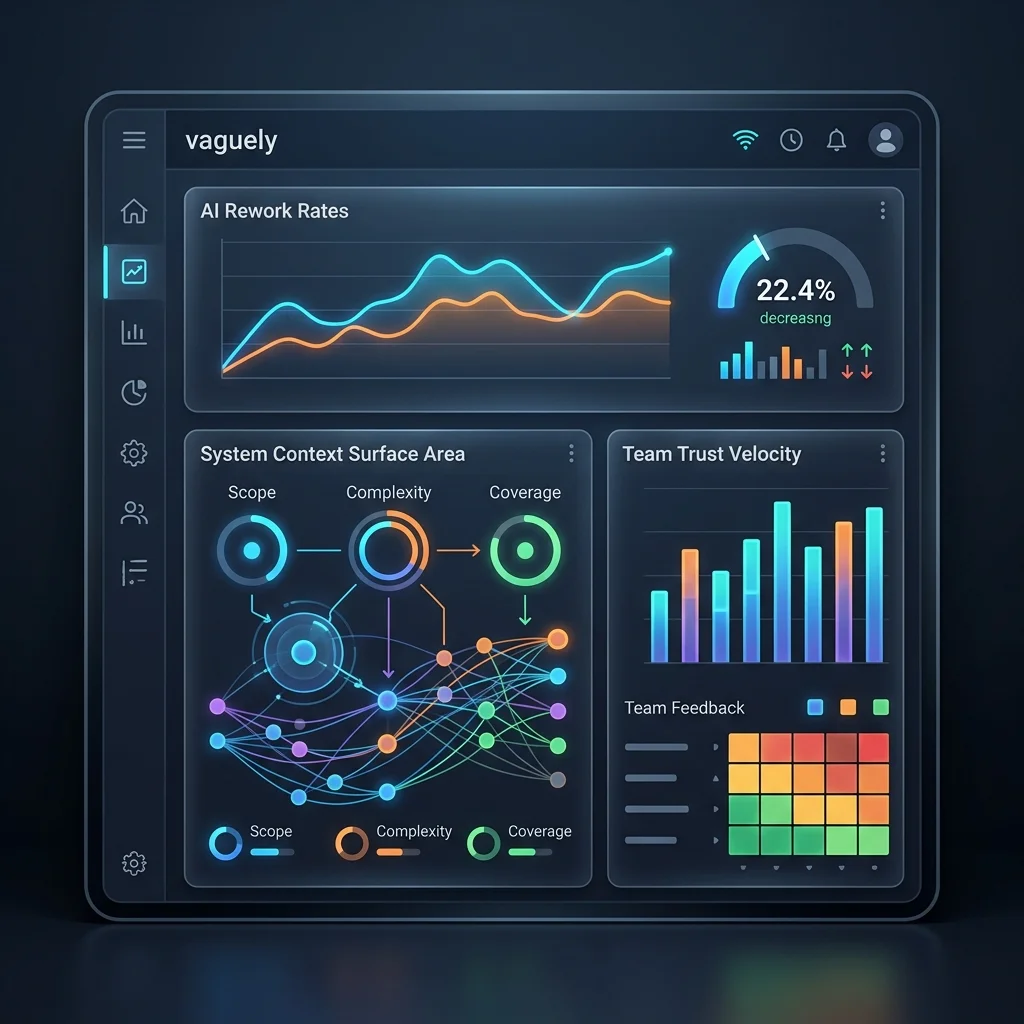
We have already established in Engineering Management v2.0 that DORA metrics are no longer sufficient. Leaders in 2026 must focus on Quality-Driven Indicators (QDIs).
Key Leadership Metrics
- AI Rework Rate: What percentage of agent-generated code requires human intervention to meet architectural standards?
- System Trust Velocity: How quickly can a new agentic node be integrated into a critical path before it reaches 99.9% reliability?
- Cognitive Leverage Ratio: The ratio of 'Strategic Outcome" vs. "Managerial Input Task."
A leader's value is now found in their ability to lower the Rework Rate and increase the Trust Velocity across the entire organization.
6. Consensus Building Under Uncertainty
One of the few remaining "Human-Only" domains in 2026 is High-Risk Conflict Resolution. Agents can suggest the "mathematically optimal" solution, but they cannot navigate the political and cultural complexities of a 5,000-person organization.
Leadership 2.0 is about Consensus Orchestration. It is the ability to facilitate a decision where perfect information is missing and the stakes are existential.
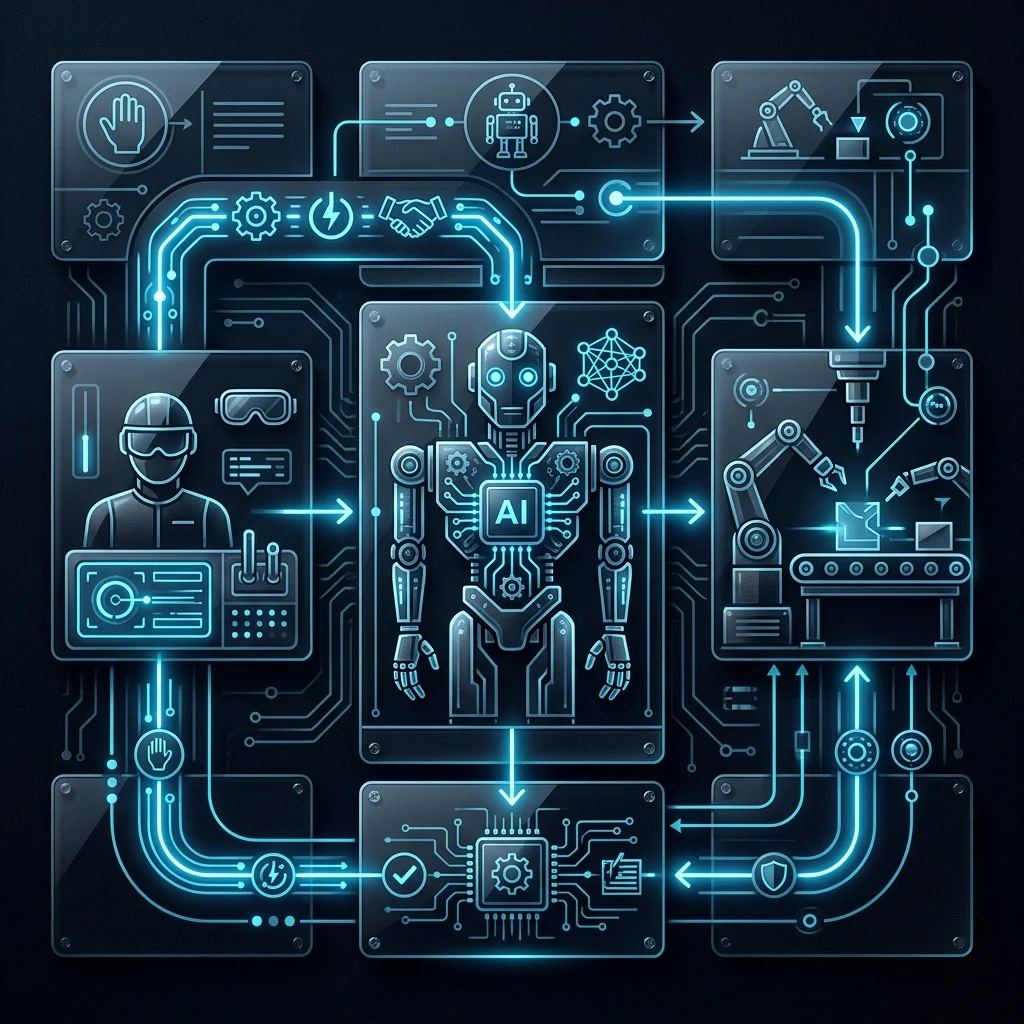
Figure 4: The Consensus Cycle --" Navigating Human Complexity in a Machine-Driven Pipeline.
The 2030 Horizon: Toward Intelligence Orchestration careers
By 2030, the 'Org Chart" will be replaced by an "Intelligence Map." Careers will no longer be defined by who you manage, but by the Surface Area of Intelligence you orchestrate. The leaders of 2030 will be "Systems Ethicists" and "Strategic Architects" who view humans and agents as a single, fluid workforce.
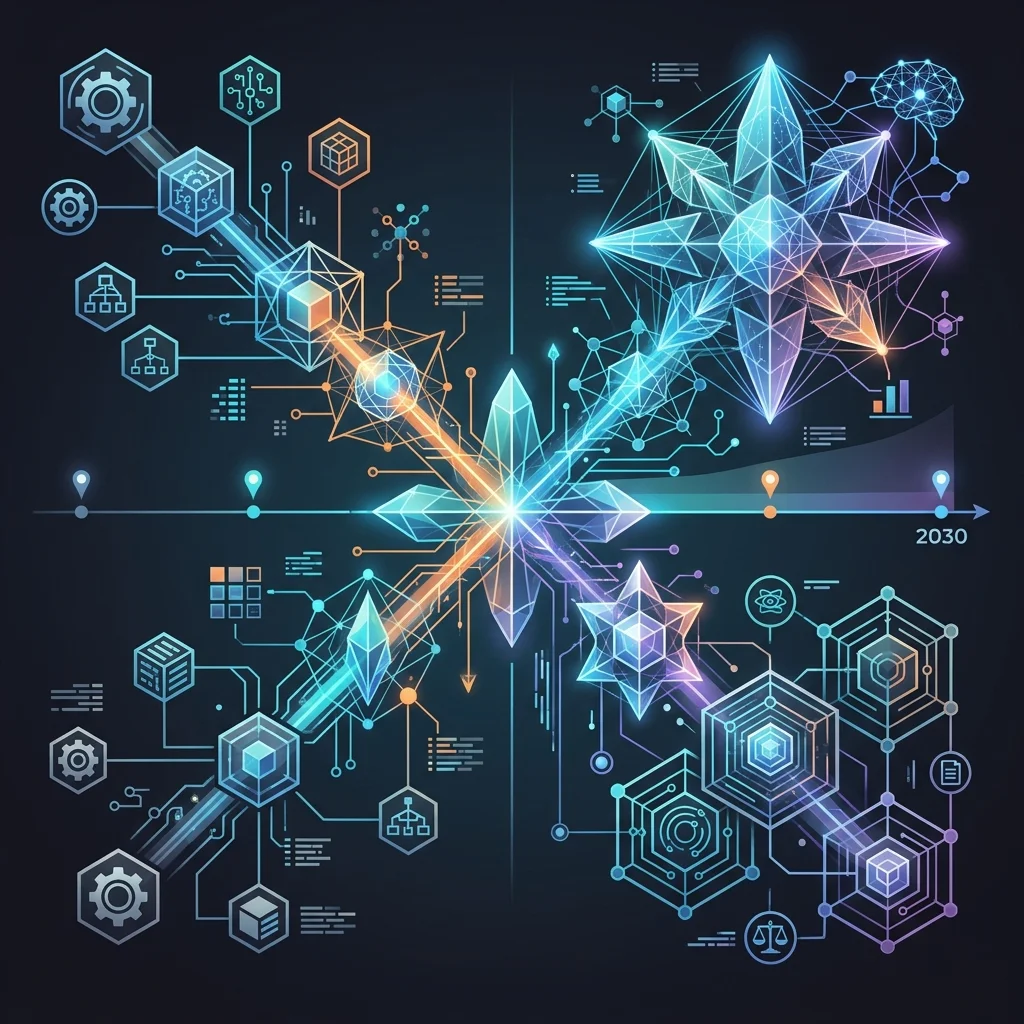
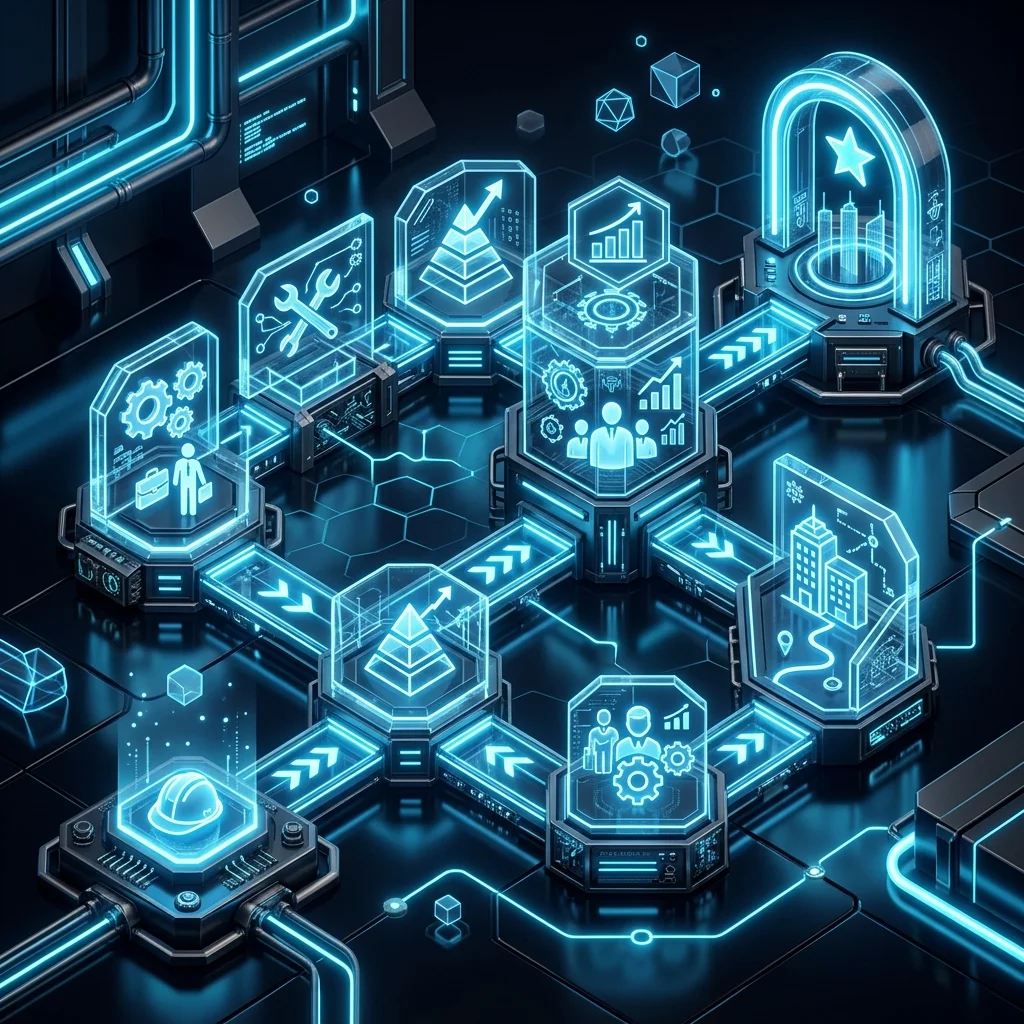
Figure 5: The Career Evolution --" Transitioning from roles to intelligence orchestration.
4. The Translation Loop: The Staff Engineer's Greatest Asset
In 2026, the most valuable skill in technical leadership is Tactical Translation. Staff and Principal Engineers act as a high-fidelity bridge between the 'Probabilistic Potential" of AI models and the "Deterministic Reality" of business requirements.
The Loop in Action
- Objective Extraction: Converting vague executive goals into strict technical schemas.
- Architectural Handoff: Designing the agentic prompts and guardrails that ensure the solution is reproducible.
- Governance Verification: Applying the final human signature to the output, ensuring it meets the enterprise's "Sovereign Standard."
This is the transition from "Being the expert" to "Orchestrating the Expertise."

5. Metrics 2.0: Measuring Impact in the Hybrid Era
We have already established in Engineering Management v2.0 that DORA metrics are no longer sufficient. Leaders in 2026 must focus on Quality-Driven Indicators (QDIs).
Key Leadership Metrics
- AI Rework Rate: What percentage of agent-generated code requires human intervention to meet architectural standards?
- System Trust Velocity: How quickly can a new agentic node be integrated into a critical path before it reaches 99.9% reliability?
- Cognitive Leverage Ratio: The ratio of "Strategic Outcome" vs. "Managerial Input Task."
A leader's value is now found in their ability to lower the Rework Rate and increase the Trust Velocity across the entire organization.
6. Consensus Building Under Uncertainty
One of the few remaining "Human-Only" domains in 2026 is High-Risk Conflict Resolution. Agents can suggest the "mathematically optimal" solution, but they cannot navigate the political and cultural complexities of a 5,000-person organization.
Leadership 2.0 is about Consensus Orchestration. It is the ability to facilitate a decision where perfect information is missing and the stakes are existential. This requires deep empathy, long-term trust, and a "Moral Compass" that AI cannot simulate.

The 2030 Horizon: Toward Intelligence Orchestration careers
By 2030, the "Org Chart" will be replaced by an "Intelligence Map." Careers will no longer be defined by who you manage, but by the Surface Area of Intelligence you orchestrate. The leaders of 2030 will be "Systems Ethicists" and "Strategic Architects" who view humans and agents as a single, fluid workforce.
Is the 'Individual Contributor' (IC) track really equal to the 'Management' track in 2026?
In 2026, the IC track (Staff/Principal) is often considered more strategic than traditional management because it focuses on the Architectural Intent that governs the entire organization's agentic throughput. Leverage comes from technical influence, not headcount.
What is the 'AI Rework Rate'?
It is a critical leadership metric measuring the percentage of AI-generated work that fails verification and requires human re-authoring. Reducing this rate is the primary goal of modern technical leaders and architects.
Can an AI agent replace an Engineering Manager or a Technical Lead?
Only the mechanical parts. Agents handle status tracking, triage, and boilerplate. They cannot handle strategic alignment, complex human conflict resolution, or the "Moral Compass" required for existential business decisions.
How do I transition from a 2024 Leader to a 2026 Sovereign Leader?
Stop focusing on 'doing' and start focusing on 'defining.' Your goal is to move up the stack to the Intent Layer--"building the prompts, guardrails, and schemas that allow others (human or agent) to execute your vision autonomously.
What role does 'Translation' play in leadership?
It is the single most important skill. Technical leaders must translate vague business goals into precise technical instructions (Context Engineering) that are deterministic enough for agents but flexible enough for human innovation.
About the Author
Vatsal Shah is a world-class AI Solutions Architect and Sovereign Leadership Strategist. He specializes in the organizational restructuring of engineering teams for the 2026 AI era, helping companies transition from legacy hierarchies to high-performance intelligence meshes. Vatsal is the primary architect behind the 'Centaur Pod" and "Sovereign Translation" leadership frameworks.