STRATEGIC OVERVIEW
What are Edge Runtimes? Edge Runtimes are highly optimized, lightweight execution environments deployed across a distributed global network (the "Edge").
What are Edge Runtimes?
Edge Runtimes are highly optimized, lightweight execution environments deployed across a distributed global network (the "Edge"). Rather than routing user requests to a central server in us-east-1, code is executed on a CDN server physically close to the user.
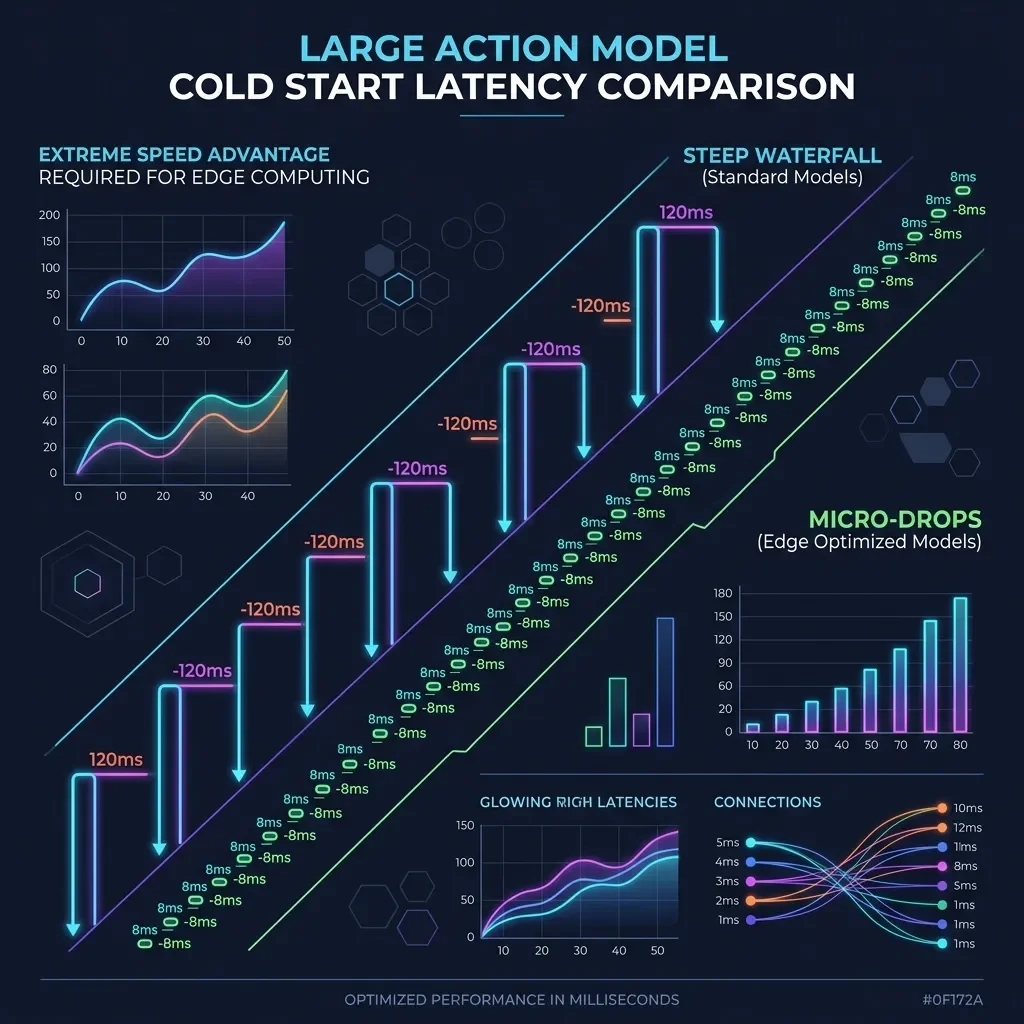
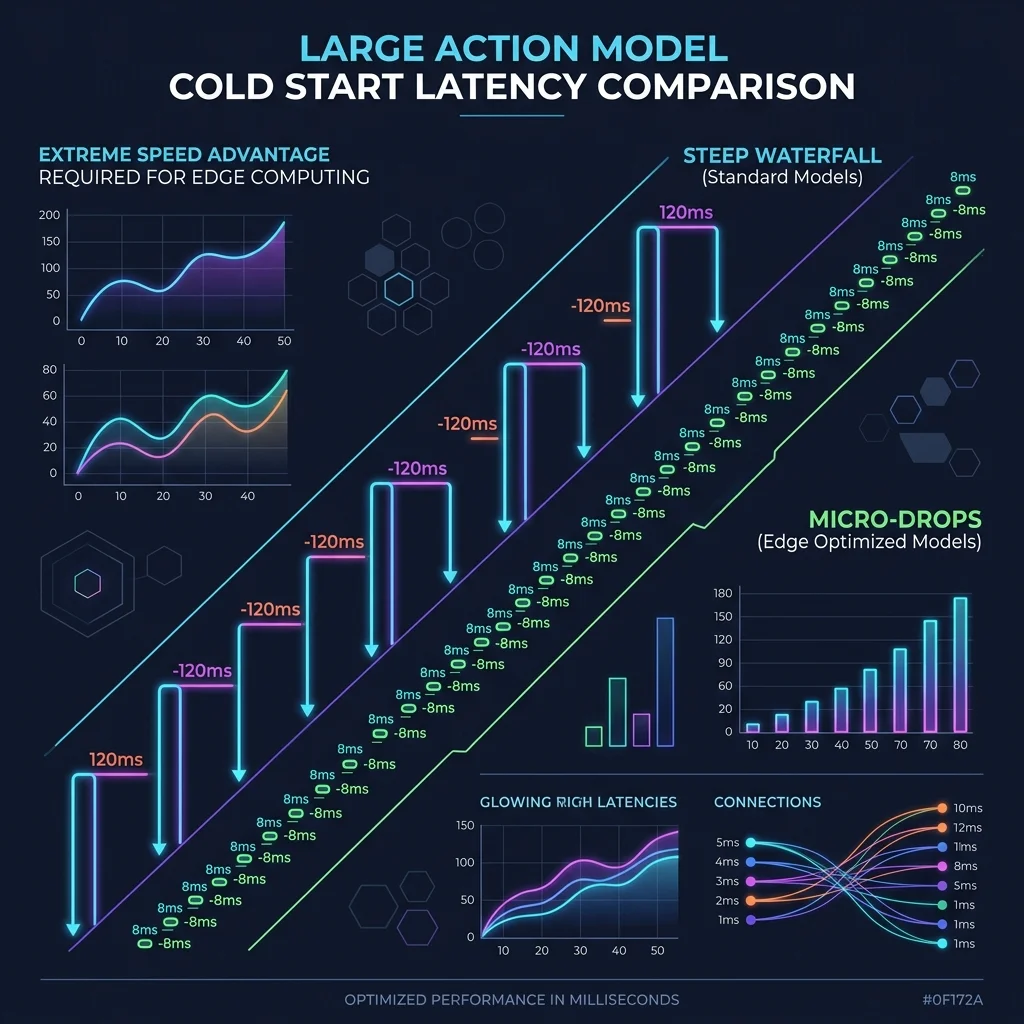
To make edge execution viable, runtimes must have microscopic memory footprints and nearly instantaneous startup times. The legacy approach of loading heavy Node processes and initializing a massive V8 context simply cannot operate within the strict 50ms total execution limits dictated by modern serverless providers.
Why the Runtime Benchmark Matters in 2026
The definition of "performance" has changed. In 2022, performance was measured by how many database rows a monolithic API could stream in a second. In 2026, performance is about Agentic Tool Execution.
When an autonomous system operates iteratively over a Model Context Protocol (MCP) stream, it triggers hundreds of serverless functions locally or on the edge. This is the Action Gap. The physical latency between an LLM deciding to execute a tool (like a DB lookup or an API POST) and the runtime mathematically fulfilling that request.
The Action Gap Reality:
If an AI agent triggers a Node.js edge function that takes 100ms to cold-start, 50ms to request, and 100ms to return, the 250ms delay compounds across 10-step reasoning chains. Your agent takes 2.5 seconds just waiting for standard compute. By transitioning to a Bun endpoint (12ms cold start), the total operational latency drops by mathematically significant margins.
Core Concepts: Engine Architectures
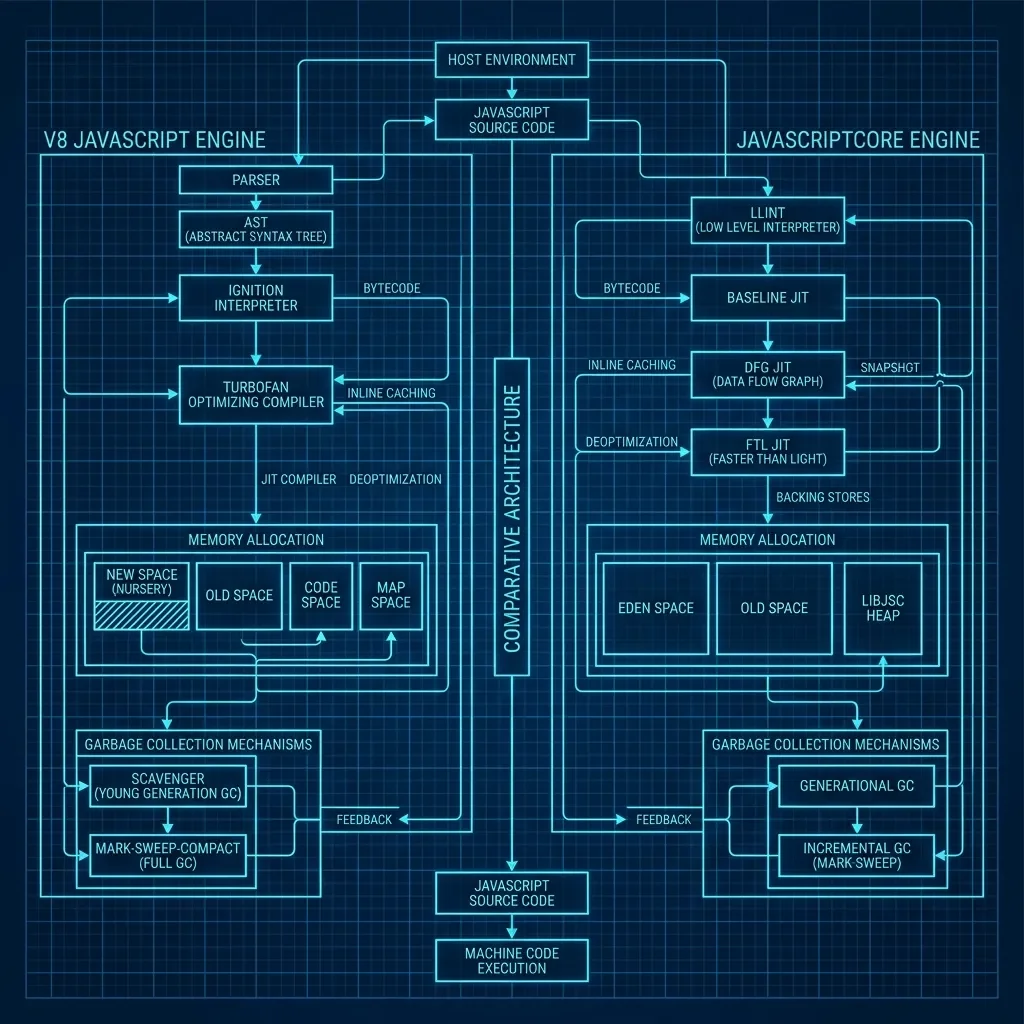
The battle between runtimes is fundamentally a battle of underlying engine integration. Both Node and Deno run on V8, while Bun diverges significantly.
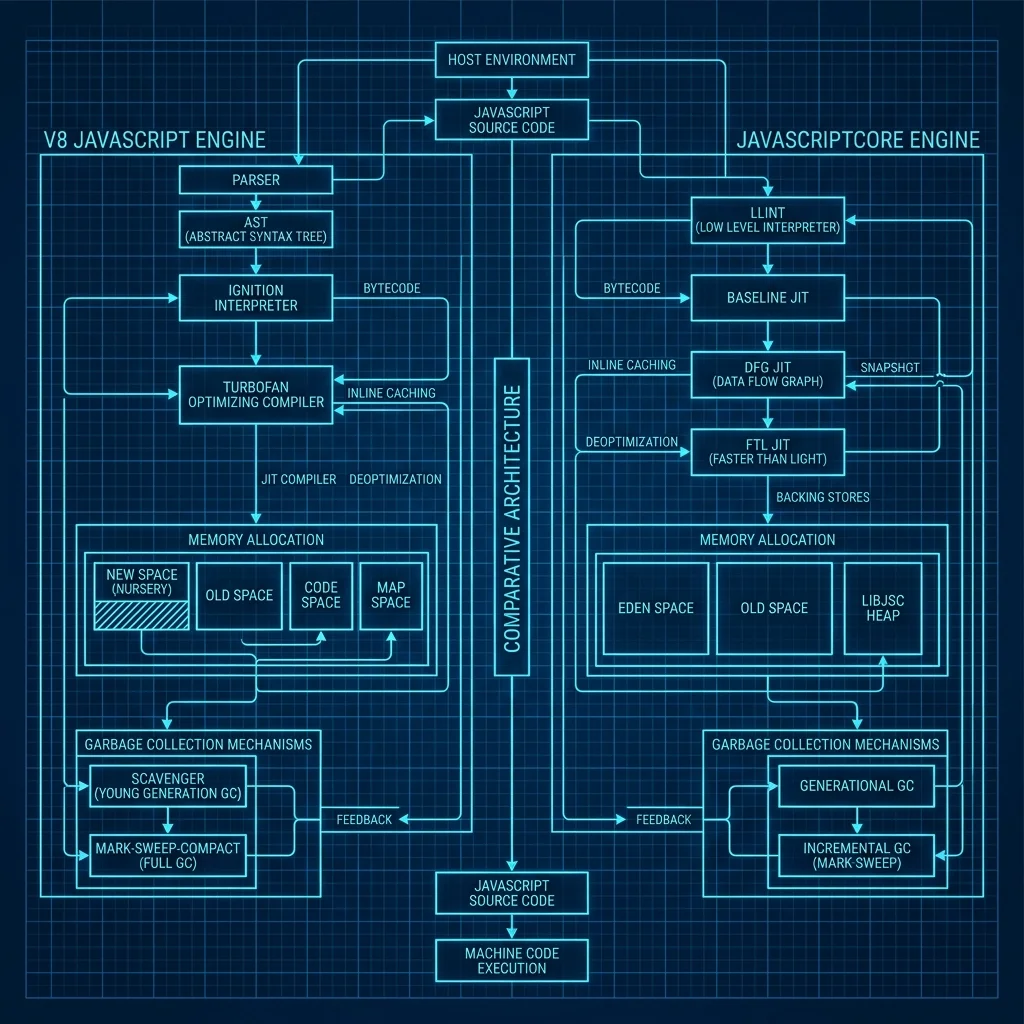
1. The V8 Juggernaut (Node.js & Deno)
Google's V8 engine powers Chrome. It uses a sophisticated two-tier pipeline:
- Ignition (Interpreter): Rapidly parses and executes JavaScript, collecting 'type feedback'.
- Turbofan (Optimizing Compiler): Identifies 'hot' functions and compiles them directly to highly optimized machine code based on the Ignition feedback.
While incredibly powerful for long-running processes (where Turbofan has time to optimize), V8 is inherently heavy. The start-up cost (initializing the V8 isolates) is the primary driver of Node's latency problem.
2. JavaScriptCore (Bun)
Bun is built on WebKit's JavaScriptCore (JSC) engine, written in Zig. JSC was inherently designed to perform on mobile devices (Safari on iOS), which prioritized rapid execution memory efficiency. Bun leverages this mobile-first architecture and couples it with native C/Zig bindings to strip out massive overhead layers, delivering its famous sub-20ms cold starts.
Deep Analysis: The 2026 Enterprise Throughput Benchmark
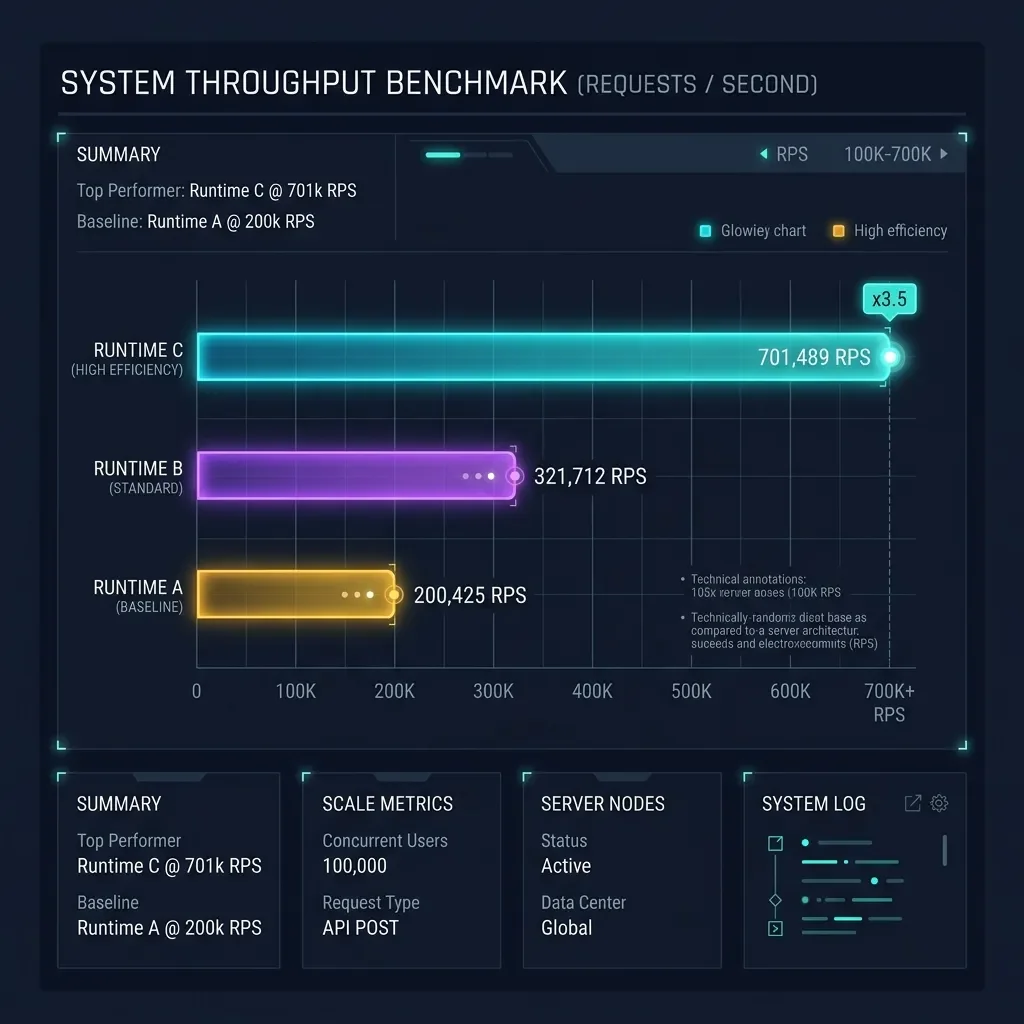
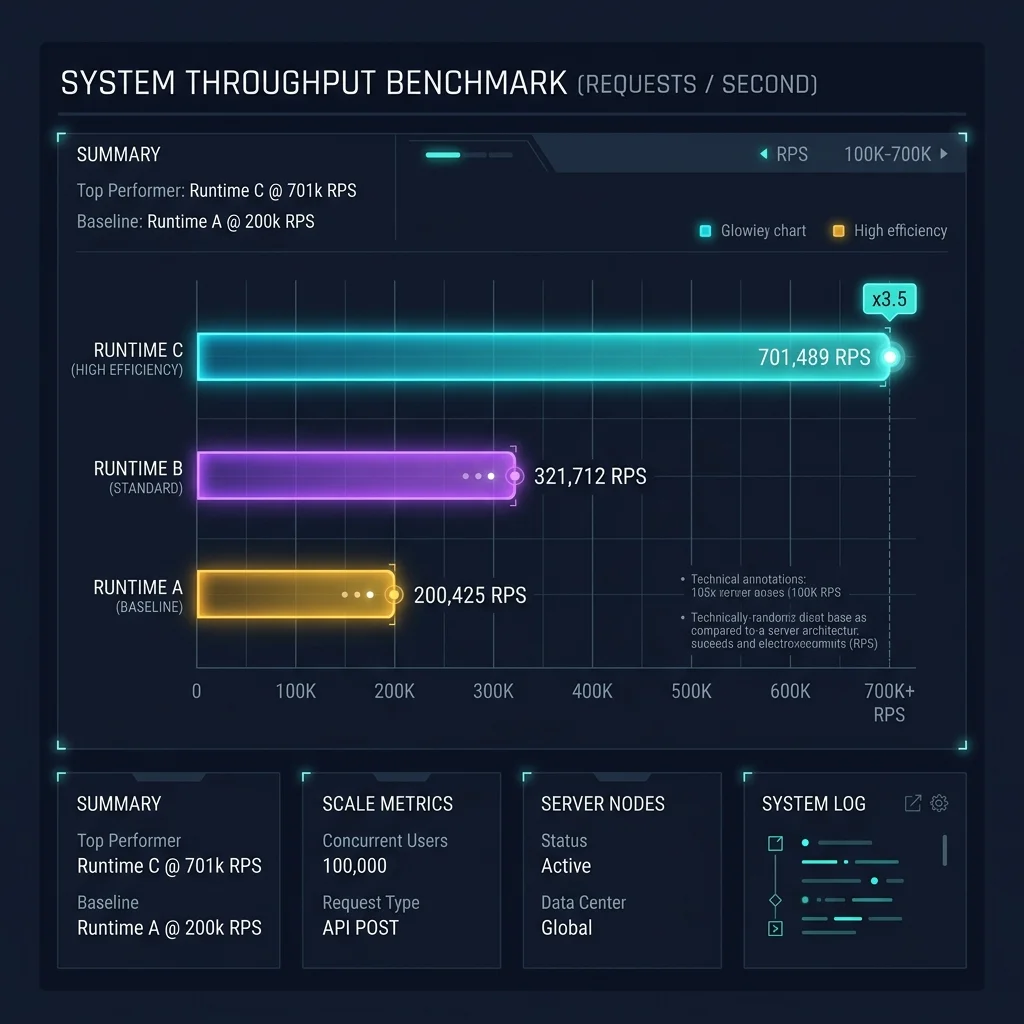
Let's look at the hard raw HTTP execution metrics. These tests isolate simple JSON deserialization and routing to remove network and complex DB overhead, testing the pure runtime overhead.
| Metric Vector | Node.js (v24 LTS) | Deno (v2.x) | Bun (v1.3.x) |
|---|---|---|---|
| HTTP Throughput (Req/Sec) | ~60,000 | ~95,000 | ~180,000+ |
| Cold Start Latency | 60ms --" 120ms | 40ms --" 60ms | 8ms --" 15ms |
| Memory Footprint (Idle) | ~35 MB | ~28 MB | ~12 MB |
| Package Install Speed | Baseline (npm/yarn) | Fast (URL native) | Lightning (Binary) |
| TypeScript Support | Requires Compilation (tsc) | Native | Native |
The data strictly supports that Bun completely transforms HTTP throughput thresholds, specifically when paired with highly optimized edge web frameworks like Hono.
Procedural Logic: Sandboxing & Enterprise Security
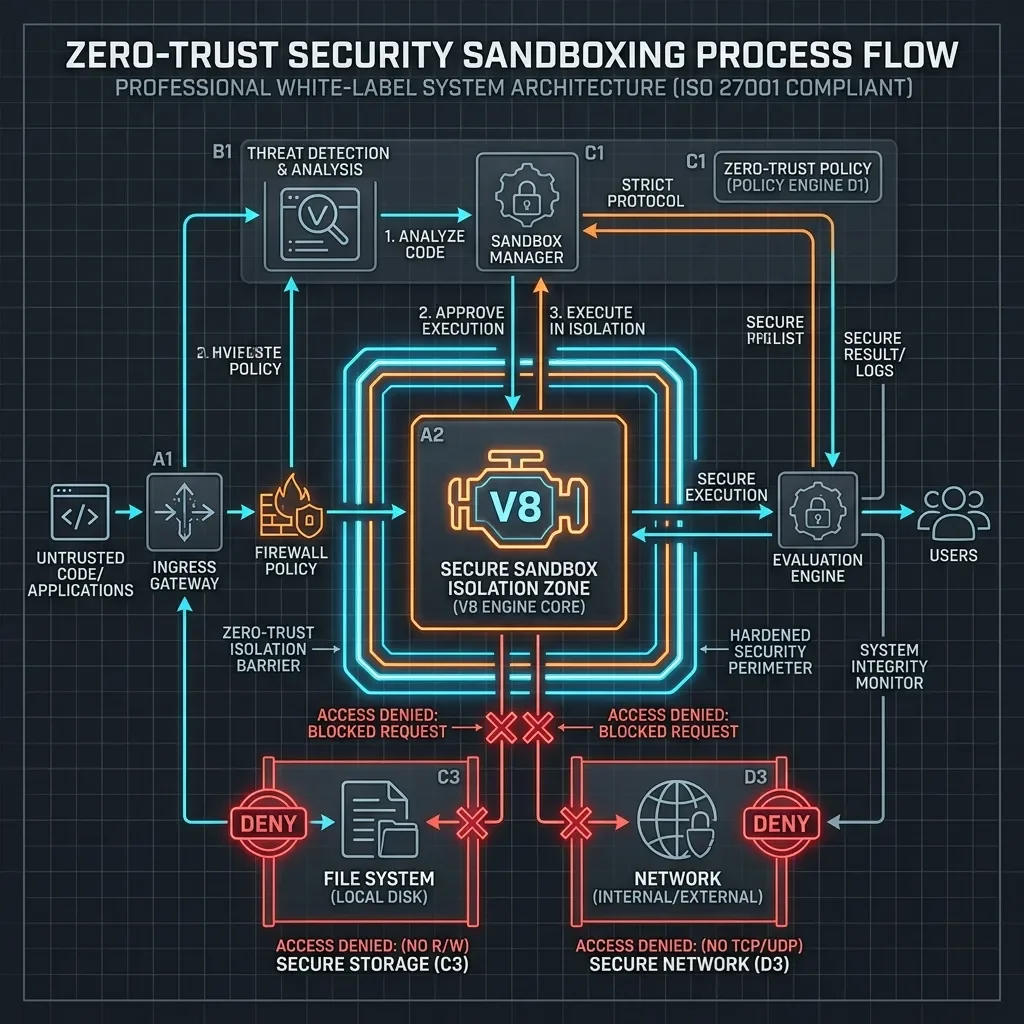
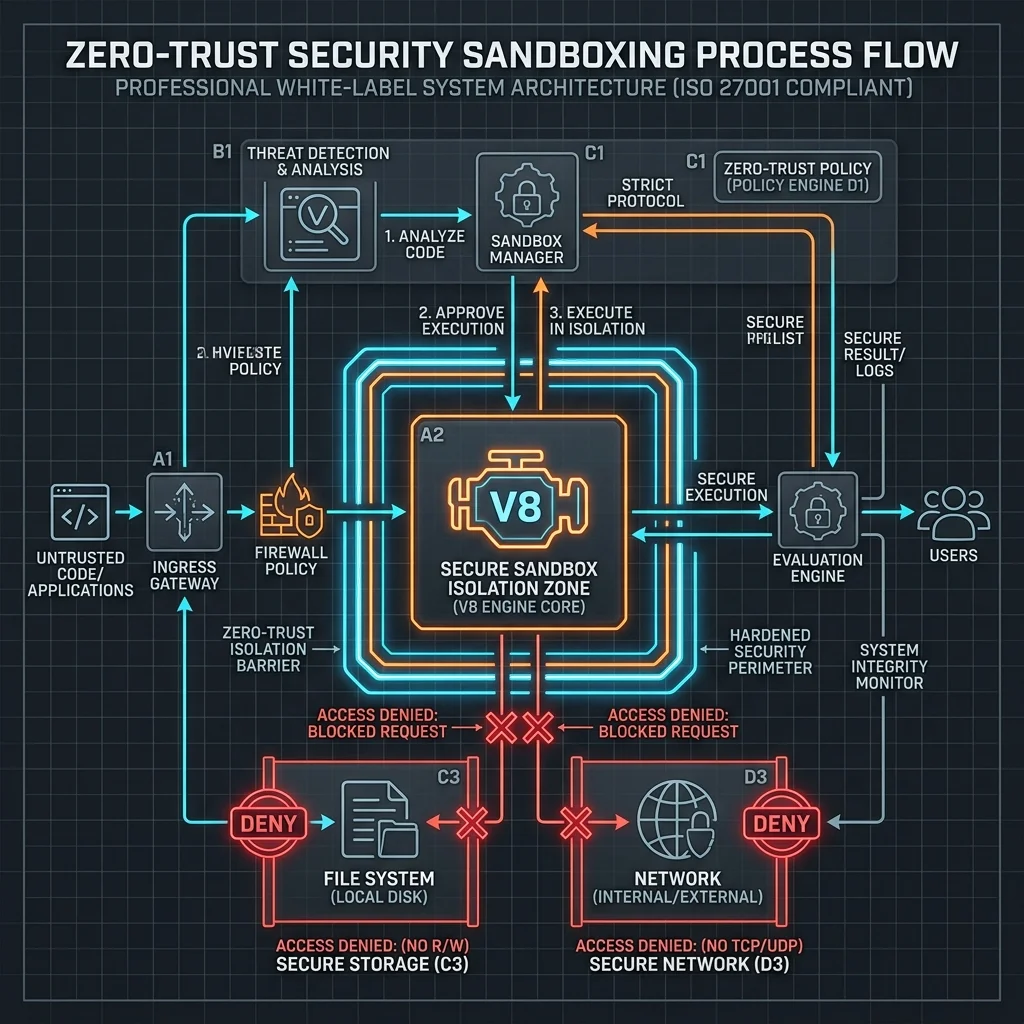
While Bun claims the speed crown, Deno commands the architectural high ground for Zero-Trust enterprise security.
By default, Node.js and Bun grant the executed script full access to the underlying network, environment variables, and filesystem. If a malicious NPM package is ingested in the pipeline, it can immediately exfiltrate data.
Deno's Sandboxing Principle: Deno executes in a strict containment field.
If an AI orchestrates a script in Deno, the script must explicitly request permissions upon execution: deno run --allow-net --allow-read app.ts. Without explicit permission arrays, the V8 isolate physically cannot step outside its memory perimeter.
Practitioner Insight: The LLM Orchestration Pivot
During the architecture of our Sovereign Agentic Mesh, we originally relied on Lambda functions deploying pure Node.js layers. We noticed unpredictable spike latencies of up to 400ms during tool execution bursts. By transitioning our dynamic LangChain Python orchestrator to call edge-deployed Bun endpoints for simple database hydration commands, our total inference cycle time decreased by over 28%. The speed is real.
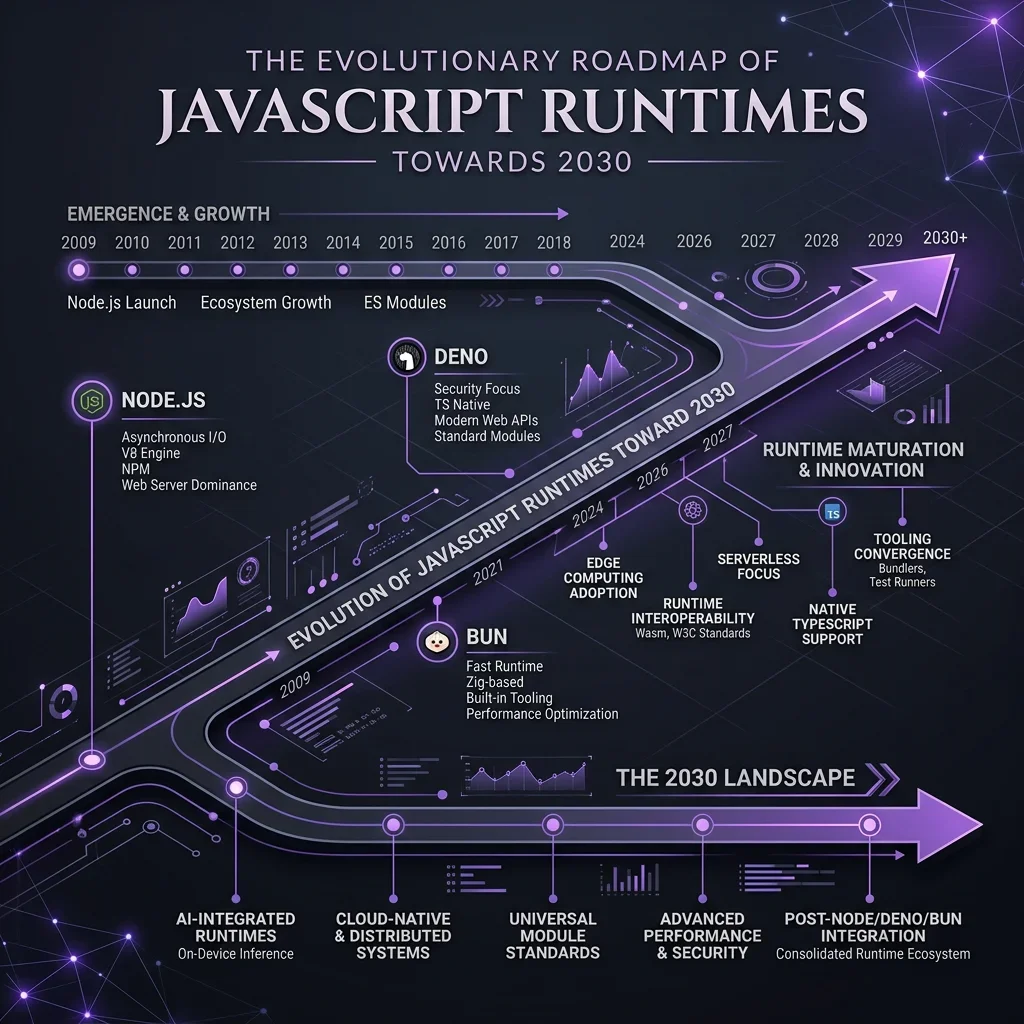
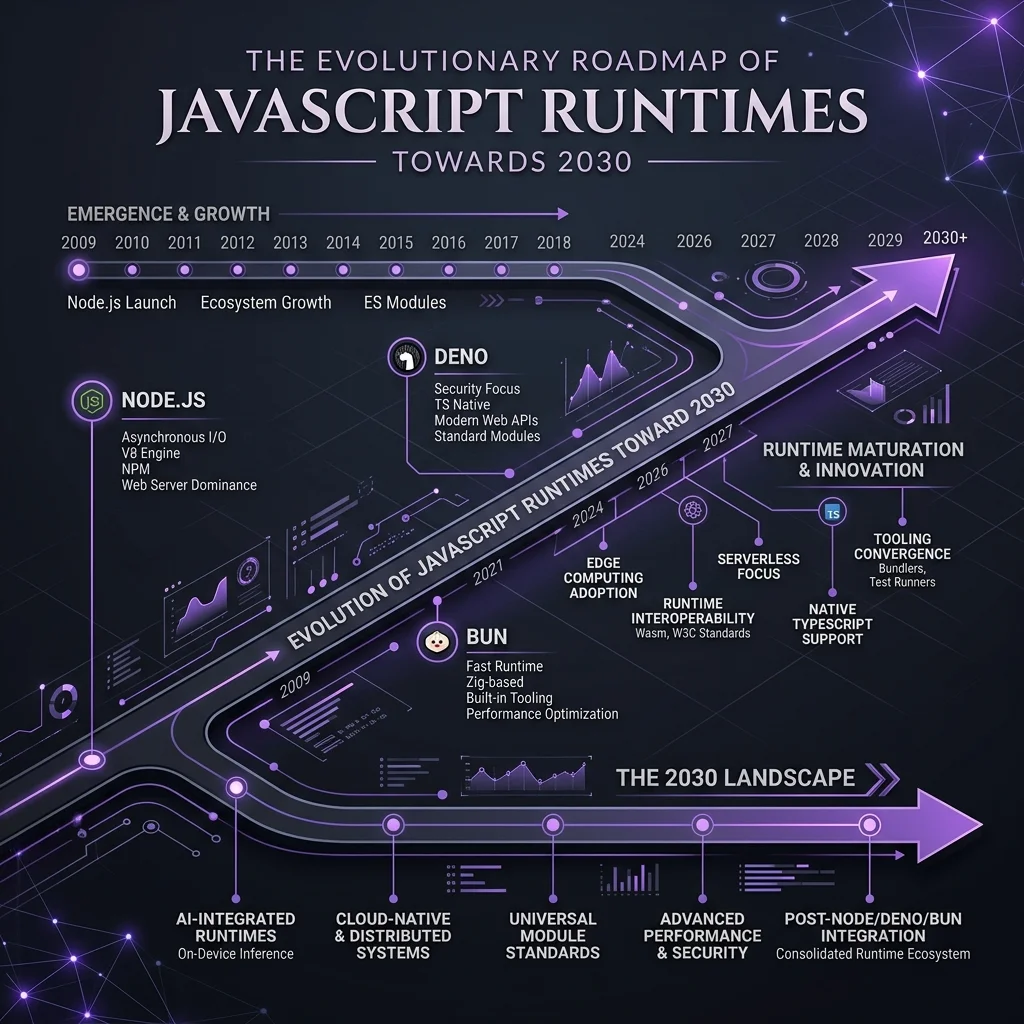
Futuristic Horizon: 2027-2030 Roadmap
As we scale toward 2030, the line between "Backend" and "Edge" will dissolve entirely.
- Embedded Monolithic Executables: Bun is aggressively pioneering the single-executable approach (
bun build --compile). We will see enterprises deploying backend microservices as single<10MBportable binaries with zero externalnode_modulesdependencies. - Wasm (WebAssembly) Takeover: V8 will evolve to execute dense Wasm representations of Rust logic concurrently with standard JavaScript handlers, bypassing garbage collection pauses completely for critical mathematical logic.
- Local LAM Integration: JavaScript runtimes will natively embed optimized ML inference operators (like specialized ONNX hooks) so edge workers can execute local Small Language Models (SLMs) without round-tripping to cloud GPU clusters.
Key Takeaways
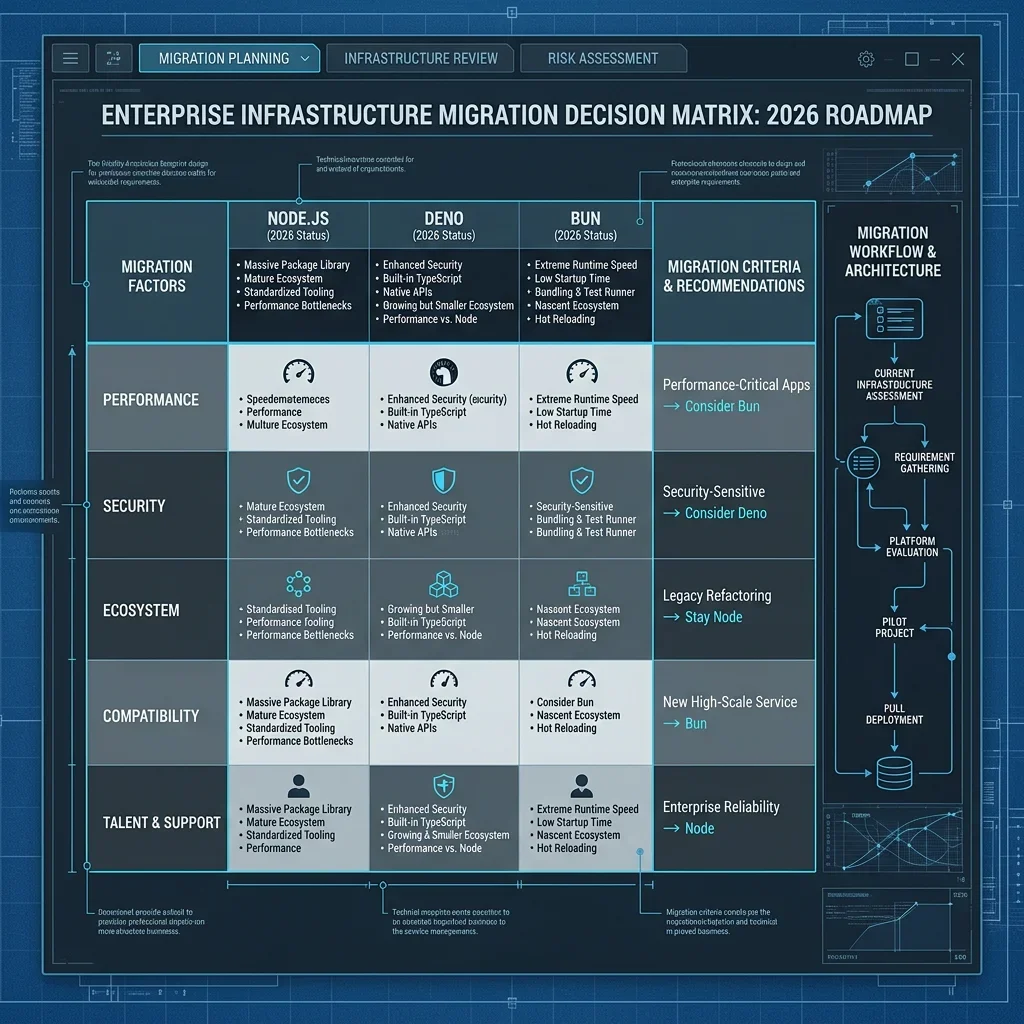
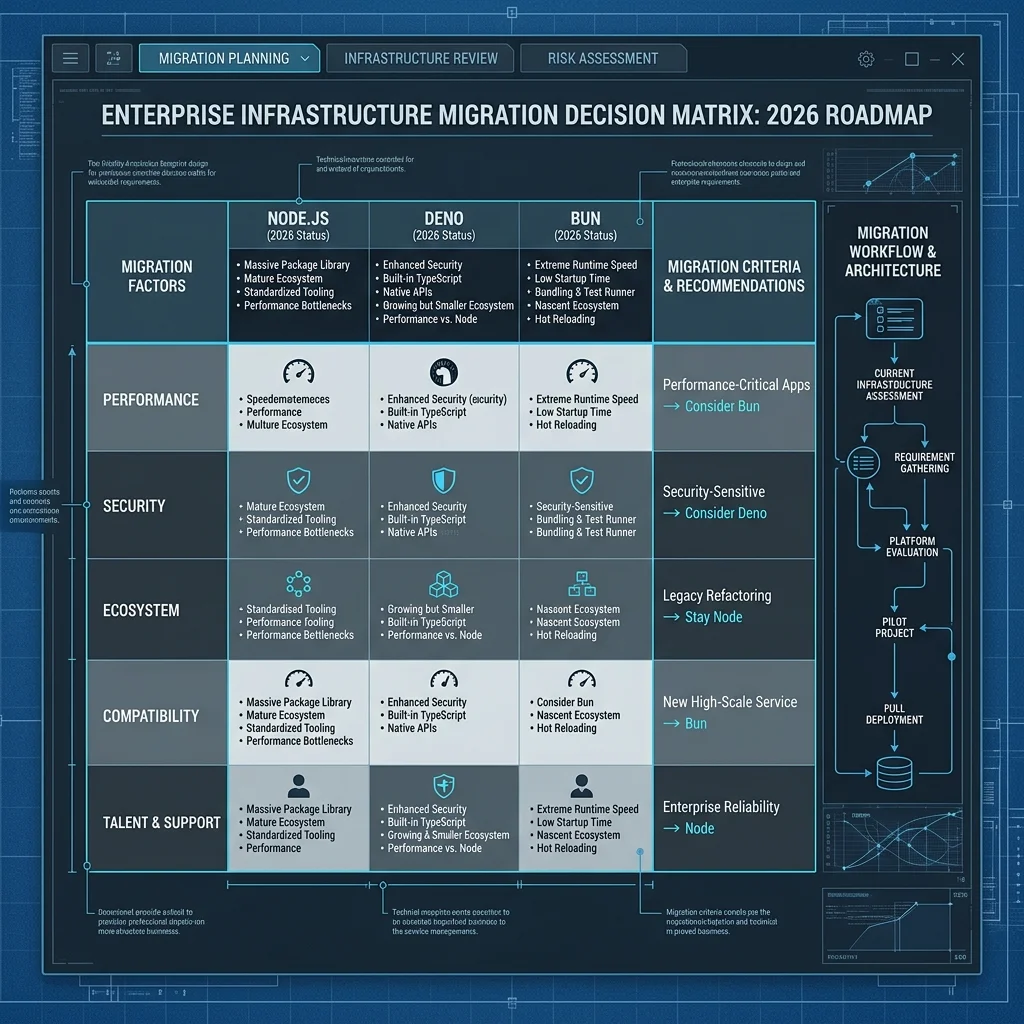
- Node.js Remains Stable: It isn't going anywhere. For massive stateful monolithic applications currently enjoying long-term support, stability outweighs the risk of migrating to newer runtimes.
- Bun is the Edge King: If you are building high-volume HTTP APIs, GraphQL federations, or serverless functions specifically designed to be called by autonomous agents, Bun is the mathematical superior option.
- Deno provides Zero-Trust Safety: Enterprise systems handling sensitive PII logic or running untrusted AI-generated code should strongly favor Deno's explicit sandboxing architecture.
- Death of the Build Step: With native TypeScript execution built into both Deno and Bun, the era of managing
.tscconfiguration matrices and complex Webpack build steps is reaching its terminal end.
Is it safe to migrate a massive production Node API to Bun?
Generally, no. While Bun boasts >95% Node API compatibility, edge cases in complex streams or legacy C-bindings exist. Bun excels when you architect new microservices natively on it, rather than 'lift-and-shifting' old Node monoliths.
Why doesn't Node simply adopt Bun's speed?
Node relies on Google's V8 which has incredible peak throughput but is heavy to start. Bun utilizes WebKit's JavaScriptCore, which was explicitly designed to start lightning-fast on restricted mobile devices. Node cannot physically swap its underlying engine without destroying its ecosystem.
Will npm disappear?
Unlikely, but the client is changing. Tools like bun install utilize binary execution to resolve package dependency trees concurrently in milliseconds instead of seconds. The registry will remain, but the slow Node package manager will be phased out of modern CI/CD pipelines.
How does Deno's security affect Large Action Models (LAMs)?
Vastly. If a LAM hallucinates and writes a destructive script, and you allow the model to auto-execute that script via Node, it can format your disk. Deno's sandbox ensures that even if the AI writes a malicious command, Deno throws a hard runtime exception blocking network or file write access.
Which one is better for integrating with modern React Server Components?
Both Node and Bun are heavily optimized for Next.js, but Bun's speed makes edge-based RSC streaming incredibly fast, eliminating 'Time To First Byte' delays.
About the Author
Vatsal Shah is a world-class AI Solutions Architect and Engineering Leader specializing in Industrial High-Performance Web Architecture. He specializes in building high-performance Agentic Mesh systems using modern edge runtimes (Bun/Deno), Next.js, and Rust-based AI orchestrators. Vatsal consults for enterprise firms on closing the 'Action Gap' and architecting deterministically scaled, latency-obsessed infrastructure.
Additional Intelligence Assets