STRATEGIC OVERVIEW
Practitioner breakdown of The Death of Legacy Microservices: Migrating to Serverless Edge Monoliths in 2026 — written for CTOs, VP Engineering, and India GCC leads shipping production AI with measurable ROI.
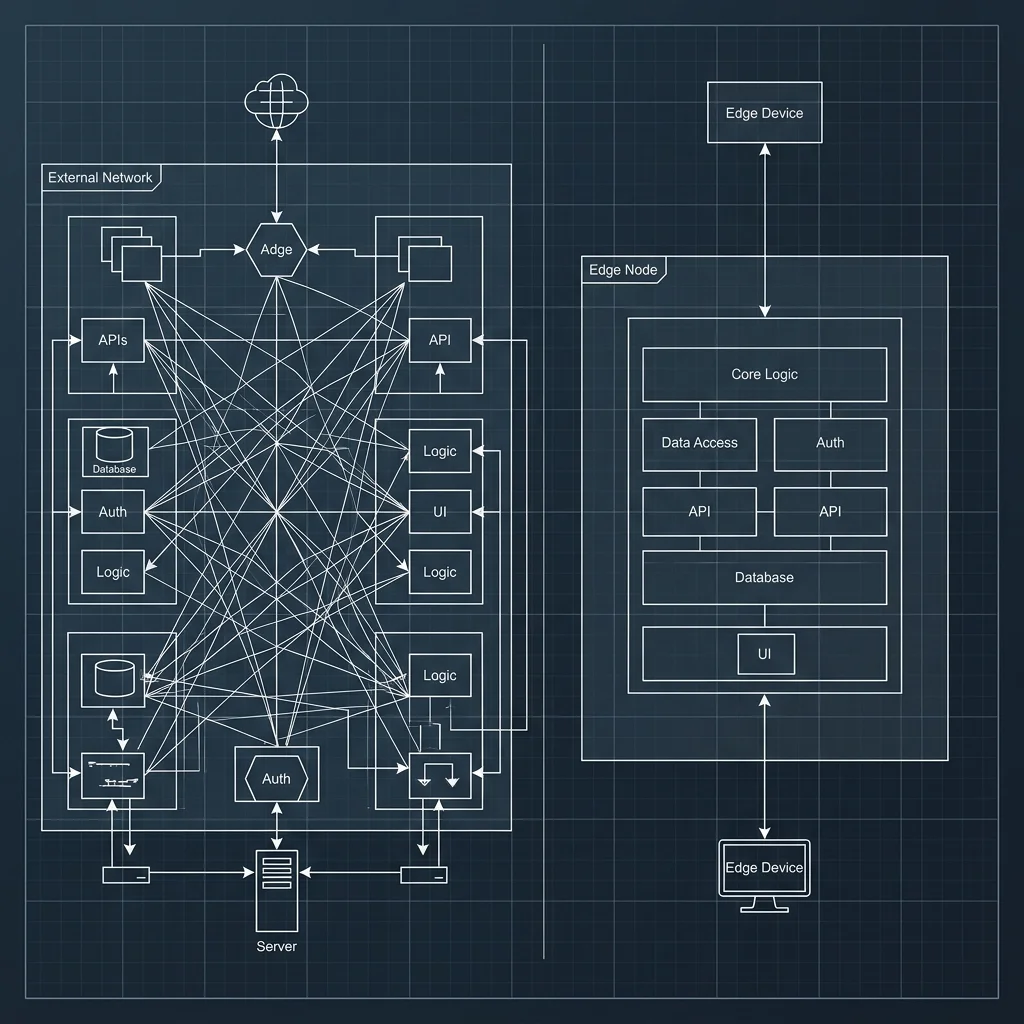
1. The Microservices Tax: Why Fragmented Systems are Dying
In 2024, the "Microservices Tax" was an annoyance. In 2026, it is an existential threat. As applications become more intelligent and agentic, the requirement for ultra-low latency and consistent state has made fragmented architectures untenable.
The Operational Collapse
Managing a fleet of 50 microservices requires a literal army of DevOps engineers. You need:
- Distributed Tracing (Jaeger, Honeycomb) just to find a single bug.
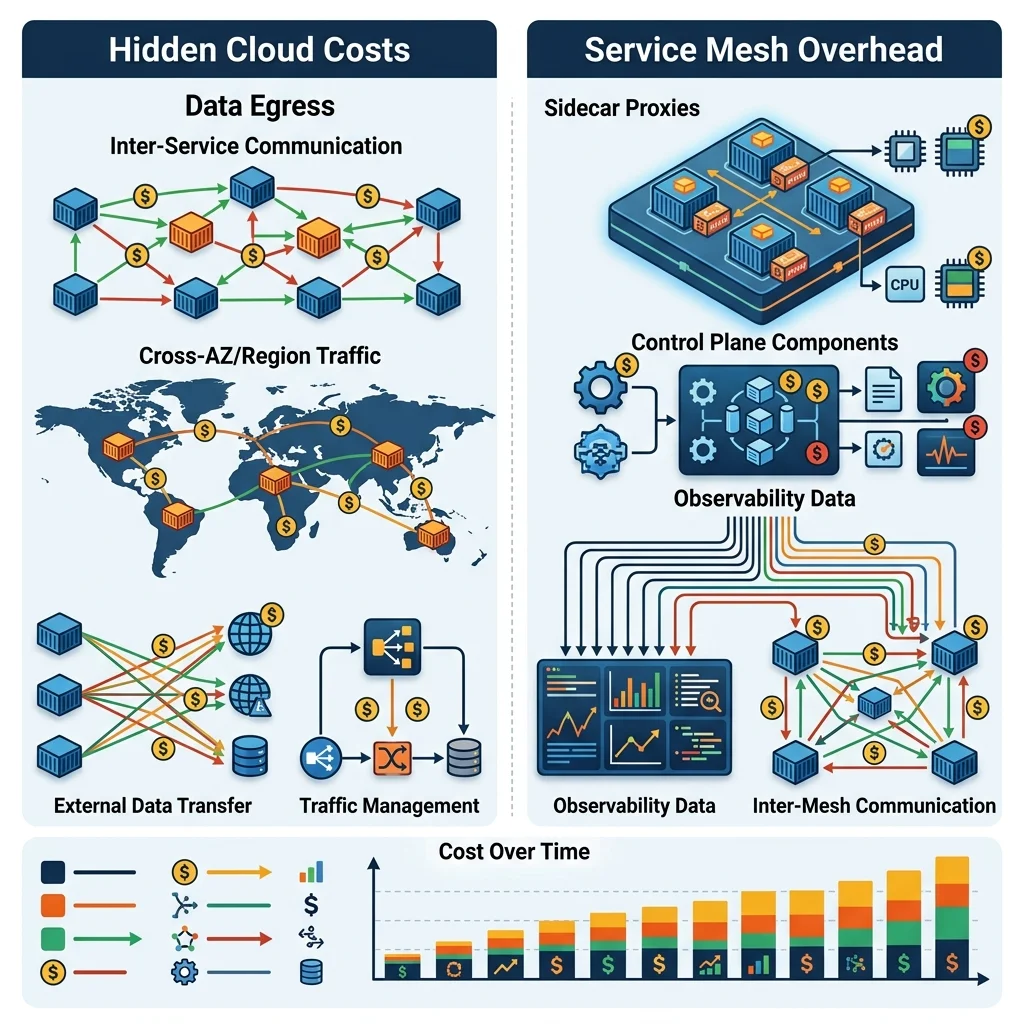
- Service Meshes (Istio, Linkerd) to manage the fragile network between services.
- CI/CD Orchestration that takes 45 minutes to deploy a single font change because 12 downstream services need to be "vatted."
The "Network Hop" Bottleneck
Every time Service A calls Service B, you pay a network penalty. Even in the same VPC, that's consistently 10ms to 50ms of overhead. For a single user request that traverses 5 services, you've lost 250ms before a single line of business logic has even executed.
2. Defining the Paradigm: What is a Serverless Edge Monolith?
The Serverless Edge Monolith is not a "return to legacy PHP apps on a VPS." It is a sophisticated, modular codebase that is:
- Modularly Decoupled: Each domain is isolated within the same repository (Monorepo) using strict boundaries.
- Globally Deployed: The entire application is deployed to "The Edge" (Cloudflare Workers, Vercel Edge) as a single execution unit.
- Universally Scalable: The runtime handles horizontal scaling, but the application logic benefits from In-Process Communication.
The Edge Distinction
Unlike traditional monoliths that sit in a single AWS region (us-east-1), the Edge Monolith is replicated to 330+ cities worldwide. Code executing in Tokyo doesn't need to call a service in Virginia--"the entire 'Monolith" is already there.
3. Performance Supremacy: Sub-Microsecond Logic
In 2026, user experience is measured in "Perceived Instantaneity."
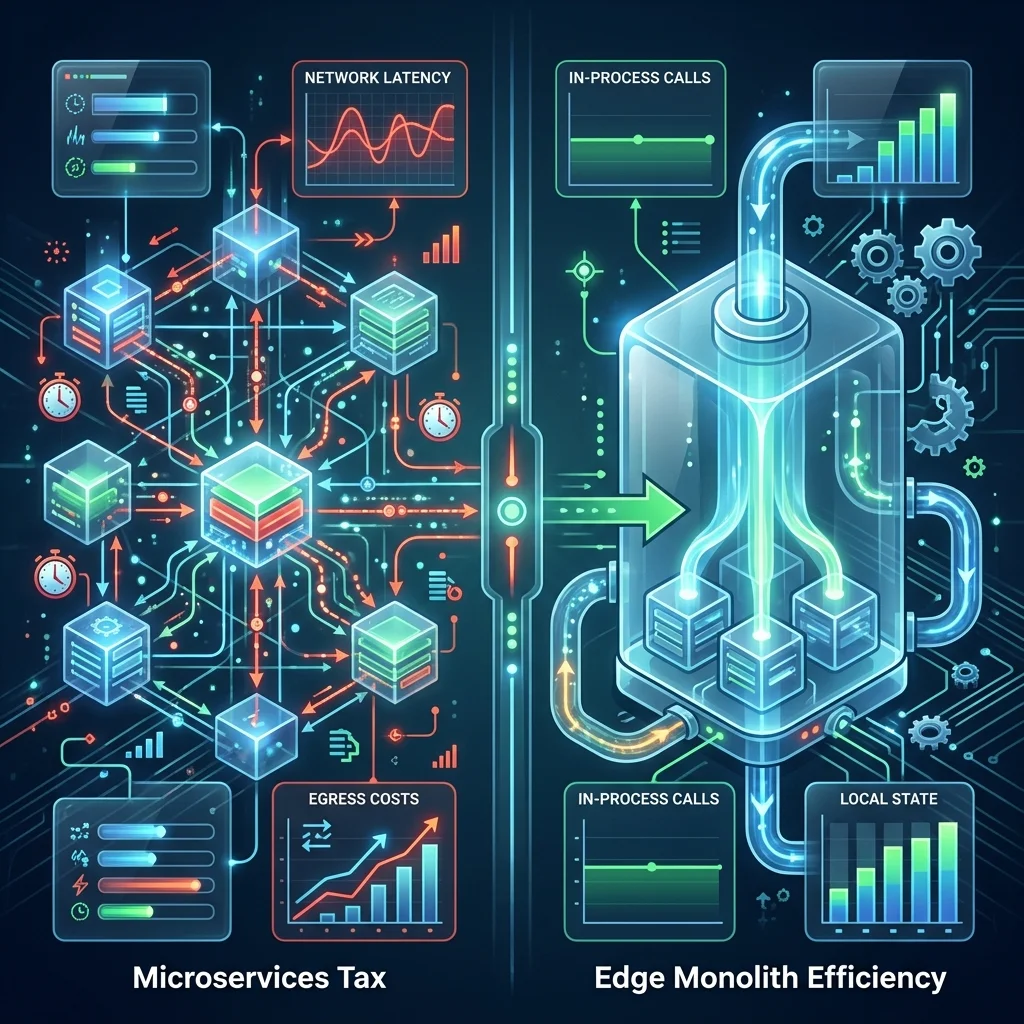
An Edge Monolith eliminates the network overhead entirely. When your OrderService needs to call your InventoryService in a monolith, that call happens in nanoseconds. It is a local function call, not an HTTP request.
The Data Locality Win
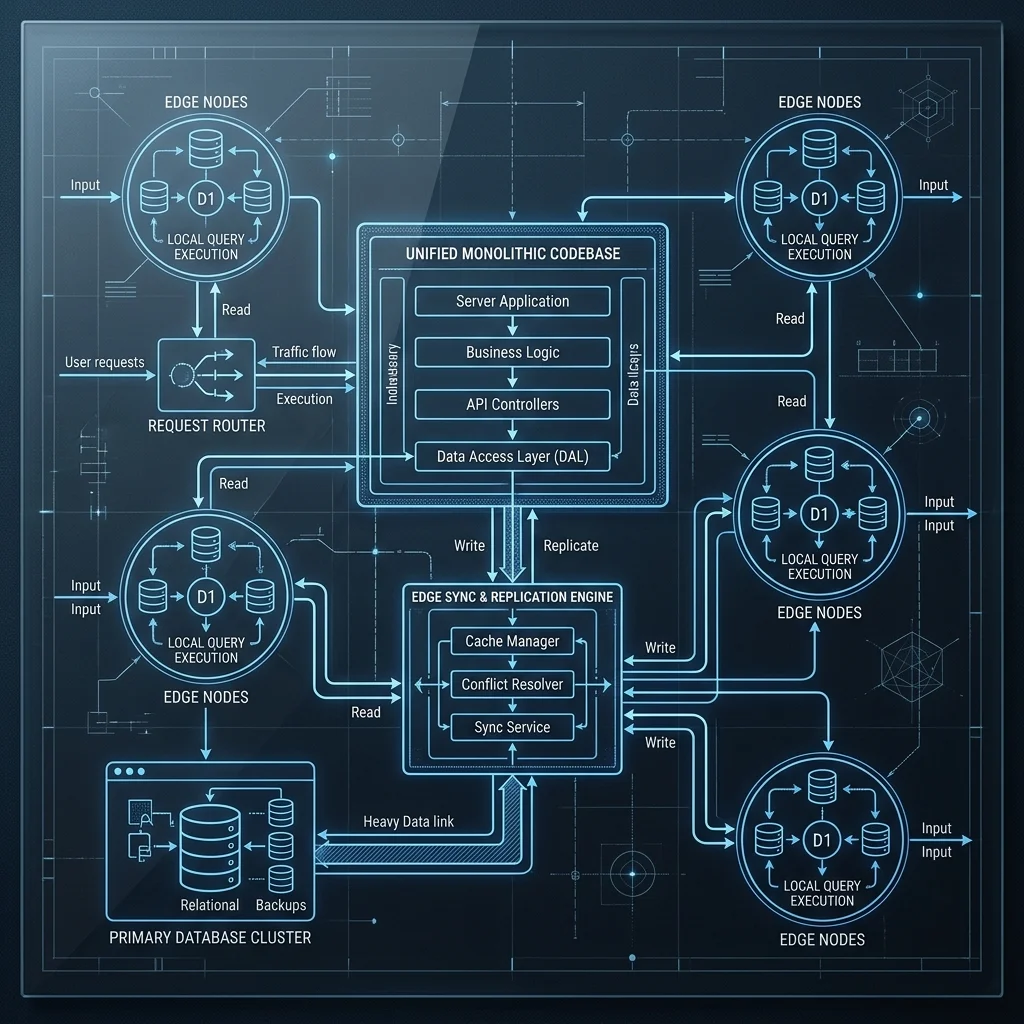
By pairing the Edge Monolith with Edge Databases (like Cloudflare D1, Turso, or PlanetScale), we bring the data to the code.
| Architecture | Introspective Call Latency | Total Request Latency (avg) |
|---|---|---|
| Legacy Microservices | 10ms - 50ms (Network) | 400ms - 800ms |
| Serverless Edge Monolith | <1μs (In-Process) | 15ms - 45ms |
Practitioner Insight: The 'Modular' Monolith Rule
Re-bundling doesn't mean writing 'Spaghetti Code.' In 2026, we use Strict Domain Boundaries. Service A cannot access Service B's database directly. Communication must still happen through a defined API--"the only difference is that the 'API Call' is a high-speed function execution, not a slow network packet.
4. Operational Sovereignty: The CI/CD Revolution
One of the greatest lies of the microservices era was that 'independent deployments" improved speed. In reality, it created a dependency nightmare. If Service A depends on a new field in Service B, you are still doing a coordinated deployment--"just with more steps and higher risk.
Deployment Consolidation
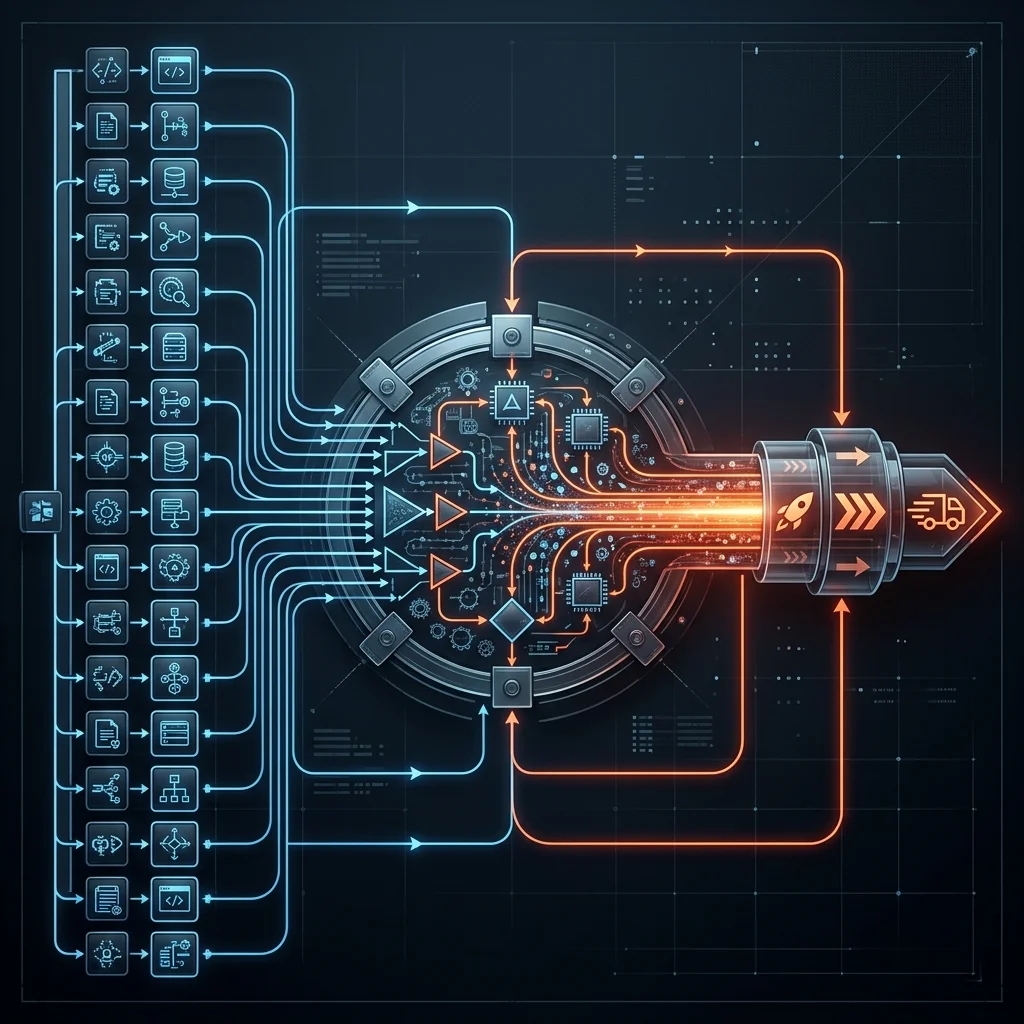
In a Serverless Edge Monolith, deployment is atomic.
- Single Source of Truth: One git commit represents the entire state of the application.
- Zero-Trust Boundaries: Security is enforced at the global entry point (the Edge Worker), not fragmented across 50 different API gateways.
- Instant Rollbacks: If something breaks, you roll back the entire platform in seconds.
5. The Infrastructure Backbone: Edge Databases & Durable Objects
The "Edge Monolith" only works if the data is as close to the user as the code.
Scaling State at the Edge
In 2026, we utilize Edge-Native Storage:
- Cloudflare D1 / Turso: Globally distributed SQL databases that replicate data to the Edge points of presence.
- Durable Objects: Providing strongly consistent, low-latency state for collaborative apps or real-time agentic workflows.
- Symmetric Multiprocessing (SMP): Modern Edge workers can now handle massive concurrency, allowing the "Monolith" to perform heavy computation across the global mesh simultaneously.
6. Migration Blueprint: Re-bundling Without Risk
You don't need to rebuild your entire infrastructure overnight. The migration to an Edge Monolith is an Incremental Simplification.
The Re-bundling Strategy
- Identify the "Chatty" Pairs: Find the microservices that call each other most frequently. Re-bundle them into a single repo first.
- Unified API Gateway: Point all traffic to your new Edge Monolith wrapper.
- Domain Absorption: Gradually move logic from legacy microservices into your modular domains within the monolith.
- Decommission the Tax: Turn off the service mesh, reduce your Kubernetes footprint, and watch your egress costs plummet.

The 2030 Horizon: Sovereign Intelligence Edges
By 2030, the concept of a "Central Cloud" will be a relic. We are moving toward Sovereign Intelligence Edges, where the "Monolith" doesn't just store data--"it orchestrates a global mesh of localized AI nodes. Architecture will be defined not by how small we can split our code, but by how intelligently we can unify our impact.

Figure 5: The Architectural Evolution --" The transition from fragmented cloud to unified global intelligence edges.
Isn't a monolith 'old school'? Why return to it in 2026?
The 'Edge Monolith' is a different beast. Unlike legacy monoliths that are heavy and single-region, Edge Monoliths are modular, lightweight, and globally replicated. We are returning to the simplicity of a single codebase but with the global infrastructure of 2026.
How does this impact team independence?
In a 'Modular Monolith' (Monorepo), teams still own their specific domains. They can deploy independently if the internal boundaries are strict enough, but the entire organization benefits from shared types, unified CI/CD, and zero-latency internal calls.
What about Cold Starts in a monolith at the Edge?
Modern V8-based Edge runtimes (like Cloudflare Workers) have zero cold starts. Because the monolith is modular and optimized, the binary remains small enough to be instantly hydrated at the Edge PoP.
Will egress costs be lower?
Dramatically. Most of the 'Microservices Tax' is hidden in inter-service egress. By keeping communication in-process, you eliminate 90% of the cross-AZ and cross-mesh data transfer costs.
Can an Edge Monolith handle heavy AI workloads?
Yes. By leveraging GPU acceleration at the Edge and asynchronous workers, the monolith acts as the orchestrator. It manages the UI and state, while offloading heavy 'Agentic Reasoners' to specialized compute nodes, all within the same unified logic framework.
About the Author
Vatsal Shah is a world-renowned Strategic Architect and a lead proponent of Architectural Re-bundling. He specializes in rescuing global enterprises from 'Microservice Sprawl" by implementing high-performance Edge Monoliths and Sovereign Infrastructure. Vatsal is a pioneer in the intersection of serverless deployment and enterprise-grade modular design.
Additional Intelligence Assets